

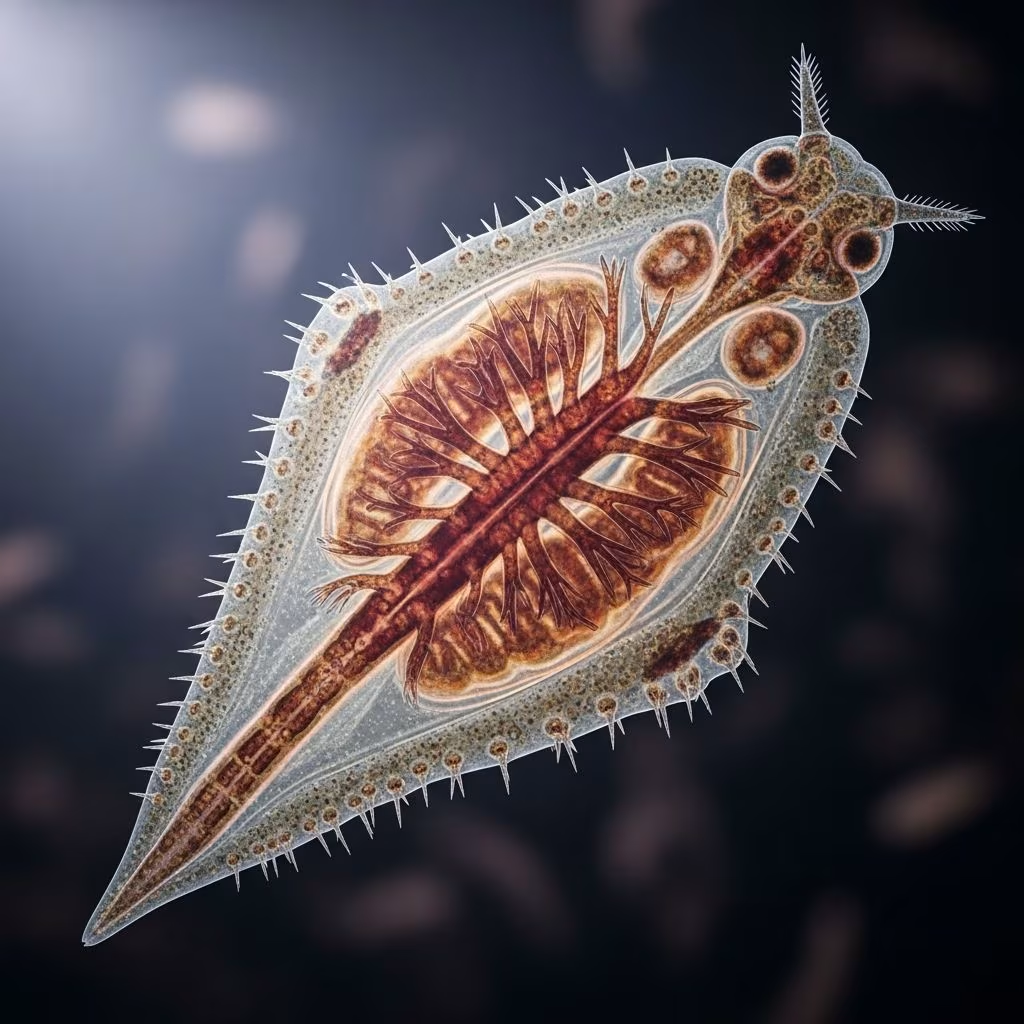
Fluke parasites represent a significant challenge in ruminant production, impacting animals such as cattle, sheep, and goats worldwide. These trematode worms thrive in moist environments and complete complex life cycles involving intermediate snail hosts, leading to infections that can cause substantial economic losses through reduced growth, milk production, and meat quality, as well as increased mortality in severe cases. Understanding their biology and management is crucial for farmers and veterinarians aiming to protect herd vitality.
Biology and Classification of Key Fluke Species
Ruminants are particularly susceptible to several fluke species, each targeting specific organs. The most prevalent include Fasciola hepatica, known as the common liver fluke, and various paramphistomes, often called rumen or stomach flukes. Fasciola hepatica is a leaf-shaped trematode measuring up to 3 cm in length, residing primarily in the bile ducts of the liver. Paramphistomes, by contrast, are funnel-shaped worms that attach to the rumen or reticulum walls in adults, though immature stages invade the small intestine. Less common but notable is Fascioloides magna, the giant liver fluke, which primarily affects wild cervids but can infect livestock aberrantly. These parasites are hermaphroditic, capable of self-fertilization, enabling rapid population expansion under favorable conditions.
Complex Life Cycles Demanding Environmental Control
The life cycles of these flukes are indirect, requiring specific aquatic snails as intermediate hosts, which dictates their distribution to wet, poorly drained pastures. For Fasciola hepatica, eggs passed in infected feces embryonate in water above 10°C, releasing free-swimming miracidia that penetrate snails like Galba truncatula. Inside the snail, the parasite multiplies through sporocysts, rediae, and cercariae stages over 4-7 weeks, depending on temperature. Cercariae then encyst as metacercariae on vegetation, the infective stage ingested by grazing ruminants.
Post-ingestion, juveniles excyst in the duodenum, penetrate the intestinal wall, traverse the peritoneum, and burrow into the liver parenchyma for 6-8 weeks, causing acute damage before maturing in bile ducts after 8-12 weeks. The prepatent period spans 2-3 months, with adults living up to years in sheep but shorter in cattle. Paramphistomes follow a similar snail-mediated cycle, but juveniles attach to duodenal mucosa, causing inflammation, while adults migrate to the rumen without significant pathogenesis in most cases. Fascioloides magna mirrors this but requires cervid definitive hosts for egg shedding; livestock act as dead-end hosts with erratic migrations leading to severe fibrosis.

Clinical Manifestations Across Infection Stages
Fluke infections manifest differently by species, host, and stage. Acute fascioliasis from migrating F. hepatica juveniles in sheep features sudden anemia, weakness, and sudden death due to liver hemorrhage; cattle show milder signs like lethargy. Chronic phases involve biliary obstruction, fibrosis, and secondary bacterial infections like black disease from Clostridium novyi activation. In cattle, bile ducts calcify, impairing liver function and reducing productivity.
Paramphistome immature stages cause severe enteritis in calves and lambs, with diarrhea, dehydration, and high mortality; adults rarely pathogenic. Giant liver fluke in sheep leads to fatal wandering through liver, lungs, and body cavities, forming fibrous capsules in cattle. Co-infections exacerbate issues, compounding anemia and weight loss across ruminants.
Diagnosis: From Field Signs to Lab Confirmation
Diagnosis combines history, clinical signs, and lab tests. Pasture exposure to flukey ground—muddy flushes, rushes—raises suspicion. Fecal egg counts via sedimentation detect patent infections but miss prepatents; ELISA serology identifies exposure earlier. Necropsy reveals characteristic liver tracks, bile flukes, or rumen attachments. Coproantigen tests offer rapid chronic detection. Monitoring via bulk milk antibodies aids dairy herds.
| Method | Target Stage | Pros | Cons |
|---|---|---|---|
| Fecal Egg Sedimentation | Adults (patent) | Low cost, quantitative | Misses immatures, intermittent shedding |
| Serology (ELISA) | Early infection | Detects prepatent, herd screening | Doesn’t distinguish active from past |
| Coproantigen ELISA | Adults | Rapid, specific to active | Less sensitive low burdens |
| Necropsy/Histology | All stages | Definitive | Invasive, post-mortem |
Strategic Treatment Options and Protocols
Treatment targets specific stages with efficacy varying by timing. Triclabendazole excels against juveniles and adults of F. hepatica, ideal for acute cases. Closantel and rafoxanide suit later stages; albendazole covers adults but not early migrators. For paramphistomes, oxyclozanide or bromoxanide effectively reduce burdens. No drugs fully treat F. magna; supportive care is key.
- Timing: Treat at high-risk periods—autumn for chronic, spring housing for immatures.
- Dosing: Weigh animals accurately; quarantine newcomers.
- Resistance emerging—rotate classes, confirm efficacy via fecal egg reduction tests.
Integrate with nutrition to bolster immunity during treatment.
Prevention and Control: Environmental and Management Tactics
Control hinges on breaking life cycles via snail management and grazing strategies. Fence off wet areas, improve drainage, and apply molluscicides like copper sulfate selectively. Avoid snail habitats during high-risk seasons; alternate pastures with dry ground. Resistant breeds like Finnish Landrace sheep show promise.
- Risk Assessment: Map flukey pastures using weather data—wet summers boost snail populations exponentially.
- Monitoring: Routine fecal/serology every 3 months in endemic zones.
- Vaccination: Experimental fluke vaccines under trial; none commercial yet.
- Biosecurity: Quarantine, clean equipment to prevent egg spread.
Climate change expands ranges, necessitating adaptive strategies.
Economic and Zoonotic Implications
Fluke diseases cost billions annually in lost production, condemnations, and treatments. In the UK, fascioliasis reduces cattle growth by 10-20%. Zoonotically, humans contract fascioliasis from contaminated aquatics, causing similar hepatobiliary disease. Wildlife reservoirs like deer perpetuate cycles.
Emerging Challenges and Research Frontiers
Drug resistance, global warming favoring snails, and wildlife interfaces pose hurdles. Integrated pest management, novel anthelmintics, and genomic tools for resistance detection lead research. Precision livestock farming with sensors for early signs offers future promise.
Frequently Asked Questions (FAQs)
What are the first signs of fluke infection in cattle?
Bottleneck-shaped feces, weight loss, and anemia; check bottle jaw swelling.
Can flukes be controlled without drugs?
Yes, via drainage, fencing wet areas, and dry pasture rotation to starve snail hosts.
How long do liver flukes live in hosts?
Up to several years in sheep bile ducts; 5-6 months typically in cattle.
Is liver fluke a risk for humans?
Yes, through undercooked aquatics; boil water in endemic areas.
What weather favors fluke outbreaks?
Warm, wet conditions (10-20°C) promoting snail multiplication and metacercariae survival.
References
- Stomach fluke (paramphistomes) in ruminants — NSW Department of Primary Industries. 2023. https://www.dpi.nsw.gov.au/animals-and-livestock/sheep/health/internal-parasites/stomach-fluke-ruminants
- Fasciola hepatica in Ruminants — Merck Veterinary Manual, Colorado State University. 2023-10-15. https://www.merckvetmanual.com/digestive-system/fluke-infections-in-ruminants/fasciola-hepatica-in-ruminants
- Liver Flukes — USDA National Agricultural Library. 2022. https://www.nal.usda.gov/exhibits/speccoll/exhibits/show/parasitic-diseases-with-econom/parasitic-diseases-with-econom/liver-flukes
- Fasciola hepatica — Western College of Veterinary Medicine, University of Saskatchewan. 2024. https://wcvm.usask.ca/learnaboutparasites/parasites/fasciola-hepatica.php
- Liver Fluke in Cattle — NADIS. 2023. https://clients.nadis.org.uk/planner-articles/liver-fluke-in-cattle/
- Lifecycle of Liver Fluke — SCOPS. 2023. https://www.scops.org.uk/internal-parasites/liver-fluke/lifecycle/
- A Livestock Producer’s Guide to Fascioloides Magna — Cornell University College of Veterinary Medicine. 2024-01-20. https://www.vet.cornell.edu/animal-health-diagnostic-center/testing-laboratories/parasitology/livestock-producers-guide-fascioloides-magna-giant-liver-fluke



