
Fluid Therapy For Dogs And Cats: Expert Clinical Guide
Discover why fluid therapy remains a cornerstone of modern veterinary care, enhancing patient outcomes across diverse clinical scenarios.
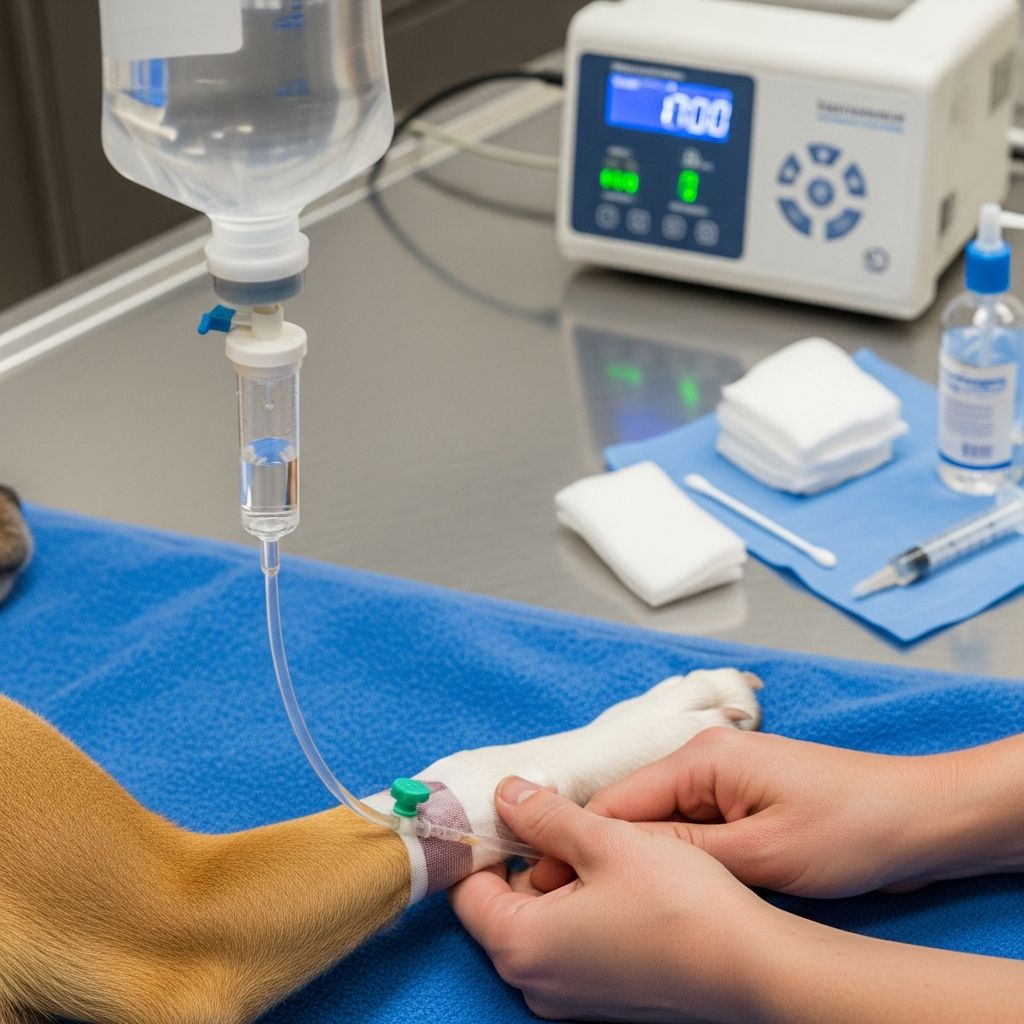
Fluid therapy stands as one of the most fundamental interventions in veterinary medicine, enabling practitioners to address a wide array of physiological imbalances in companion animals. By delivering precise volumes of fluids through various routes, veterinarians can restore hydration, support circulation, and facilitate recovery from illness or surgery. This comprehensive guide delves into the principles, methods, and clinical applications of fluid therapy, drawing on established guidelines and practices to highlight its indispensable role in small animal care.
Understanding Fluid Dynamics in Animals
The body of a dog or cat maintains a delicate balance of fluids across intracellular, extracellular, and intravascular compartments. Disruptions such as dehydration, blood loss, or electrolyte shifts can compromise organ function, leading to poor tissue perfusion and systemic failure. Fluid therapy works by replenishing these compartments, correcting deficits, and preventing further losses.
Key fluid compartments include:
- Intravascular volume: Blood plasma that ensures oxygen delivery to tissues.
- Interstitial space: Fluid surrounding cells, vital for nutrient exchange.
- Intracellular fluid: Maintains cellular homeostasis.
Assessing a patient’s status begins with a thorough physical exam, evaluating skin tensity, mucous membrane color, capillary refill time, heart rate, and pulse quality. These indicators help quantify dehydration levels, typically ranging from 5% in mild cases to over 10% in severe shock.
Primary Goals of Fluid Administration
Veterinarians initiate fluid therapy to achieve specific objectives tailored to the patient’s condition. These include rapid volume expansion in emergencies, gradual rehydration for chronic issues, and maintenance during fasting or anesthesia.
| Goal | Clinical Indications | Typical Approach |
|---|---|---|
| Resuscitation | Shock, hypovolemia | Bolus doses (20 ml/kg dogs, 10 ml/kg cats) |
| Rehydration | Dehydration from vomiting/diarrhea | Calculate deficit over 24-48 hours |
| Maintenance | Surgery, anorexia | 50-60 ml/kg/day |
| Ongoing Losses | GI disease, polyuria | Monitor and replace measured losses |
This structured approach, informed by AAHA guidelines, ensures fluids act like a precise medication with monitored dosing to avoid overload.
Routes of Fluid Delivery: Pros and Cons
Selecting the appropriate route depends on the urgency, patient size, and condition severity. Each method offers unique advantages for different scenarios.
Intravenous (IV) Administration
IV fluids provide immediate access to the bloodstream, ideal for critically ill patients requiring rapid resuscitation. Veterinary technicians place catheters in peripheral veins, allowing continuous infusion of crystalloids, colloids, or medications. This route is essential during surgery to maintain blood pressure and prevent hypotension.
- Benefits: Fast absorption, precise rate control, compatible with drugs/transfusions.
- Drawbacks: Requires skill for placement, risk of infection/phlebitis.
In emergencies like septic shock, an initial bolus of 25% shock dose is given while monitoring response parameters such as lactate levels and blood pressure.
Subcutaneous (SQ) Fluids
SQ administration involves injecting fluids into the loose skin of the neck or back, commonly used for mild dehydration or chronic kidney disease (CKD) in cats. Absorption occurs gradually over hours, making it unsuitable for acute crises but perfect for outpatient or home care.
- Benefits: Easy to teach owners, cost-effective, minimal stress.
- Drawbacks: Slow onset, not for hypovolemic shock.
For geriatric cats with CKD, daily SQ fluids mimic dialysis, extending quality life for years by supporting renal function.
Intraosseous (IO) Access
In neonates, tiny pets, or when IV fails, IO needles deliver fluids directly into bone marrow, rapidly reaching circulation. Proven comparable to central lines, it’s a lifesaver in pediatric emergencies.
Fluid Types and Selection Criteria
Choosing the right fluid hinges on the patient’s electrolyte profile, acid-base status, and underlying disease. Crystalloids like Lactated Ringer’s (LRS) are first-line for most cases due to balanced composition mimicking plasma.
- Isotonic crystalloids: LRS, Normosol – for general rehydration.
- 0.9% Saline: Limited to hypochloremic alkalosis or hypercalcemia.
- Colloids: Hetastarch for hypoalbuminemia, though use cautiously due to risks.
Hypertonic saline (7.5%) boluses treat severe hyponatremia or intracranial hypertension but require dilution monitoring.
Calculating and Monitoring Therapy
Precise calculations prevent under- or over-treatment. The formula for dehydration correction is: Deficit (L) = % Dehydration × Body Weight (kg). Add maintenance (2-6 ml/kg/hr) and ongoing losses.
Example Calculation for a 5 kg Cat at 8% Dehydration:
- Deficit: 0.08 × 5 = 0.4 L
- Maintenance: 5 × 60 ml/day = 250 ml/day
- Total first 24 hrs: 650 ml, infused at ~27 ml/hr.
Monitoring involves serial exams: heart rate, CRT (<2 sec normal), urine output (>1 ml/kg/hr), and advanced metrics like CVP or PPV in ICU settings. Goal-directed therapy uses fluid challenges (e.g., 5 ml/kg bolus) to assess stroke volume response via PPV >13%.
Applications in Common Conditions
Critical Care and Shock
In hypovolemic or distributive shock, prompt IV boluses optimize cardiac output. Studies show dogs normalizing SAP (>90 mmHg) post-bolus have better survival.
Gastrointestinal Disorders
Vomiting/diarrhea patients need aggressive replacement of deficits plus losses. Outpatient SQ for mild cases; IV for severe.
Chronic Kidney Disease
SQ fluids flush kidneys, reduce azotemia, and improve appetite in CKD cats, often managed at home.
Anesthesia and Surgery
Intraoperative fluids prevent hypotension, with rates adjusted per blood pressure and PPV.
Risks and Prevention Strategies
While beneficial, fluids can cause overload, leading to pulmonary edema or coagulopathy. Risk factors include cardiac disease, hypoalbuminemia. Use minimum effective dose, monitor weight daily (gain >5% signals overload), lung sounds, and echo for pleural effusion.
De-escalation: Transition to oral intake once stable, following ROSE protocol (Resuscitation, Optimization, Stabilization, De-escalation).
Owner Education and Home Care
Empowering owners with SQ training enhances compliance for chronic cases. Demonstrate technique, needle handling, and complication signs like swelling.
Frequently Asked Questions (FAQs)
What signs indicate my pet needs fluids?
Lethargy, dry gums, sunken eyes, prolonged CRT, or tachycardia signal dehydration.
Can I give SQ fluids at home?
Yes, for stable CKD or mild dehydration; vet training required.
How do vets choose fluid types?
Based on bloodwork, clinical signs, per AAHA guidelines.
Is fluid overload common?
Rare with monitoring; watch for coughing, rapid breathing.
What’s the difference between IV and SQ?
IV for emergencies (fast); SQ for maintenance (slow).
Future Directions in Veterinary Fluid Therapy
Goal-directed approaches using advanced monitoring (SVV, PPV) minimize risks, with ongoing research into balanced solutions and GDFT for tailored care.
References
- The Basics of Fluid Therapy for Small Animal Veterinary Technicians — Today’s Veterinary Nurse. 2023. https://todaysveterinarynurse.com/internal-medicine/the-basics-of-fluid-therapy-for-small-animal-veterinary-technicians/
- Fluid Therapy in Cats & Dogs — Long Beach Animal Hospital. Accessed 2026. https://lbah.com/feline/fluid-therapy/
- AAHA publishes fluid therapy guidelines for dogs, cats — AVMA. 2019-10-07. https://www.avma.org/news/aaha-publishes-fluid-therapy-guidelines-dogs-cats
- Clinical Application of the Fluid Challenge Approach in Goal-Directed Fluid Therapy — Frontiers in Veterinary Science. 2021-07-22. https://www.frontiersin.org/journals/veterinary-science/articles/10.3389/fvets.2021.701377/full
- Fluid Therapy in Critical Care — Today’s Veterinary Practice. 2023. https://todaysveterinarypractice.com/internal-medicine/fluid-therapy-in-critical-care/
- 2024 AAHA Fluid Therapy Guidelines for Dogs and Cats — AAHA. 2024. https://www.aaha.org/resources/2024-aaha-fluid-therapy-guidelines-for-dogs-and-cats/
- Editorial: Fluid Therapy in Animals: Physiologic Principles and New Horizons — PMC. 2021. https://pmc.ncbi.nlm.nih.gov/articles/PMC8563835/
Similar Articles








Read full bio of medha deb


