

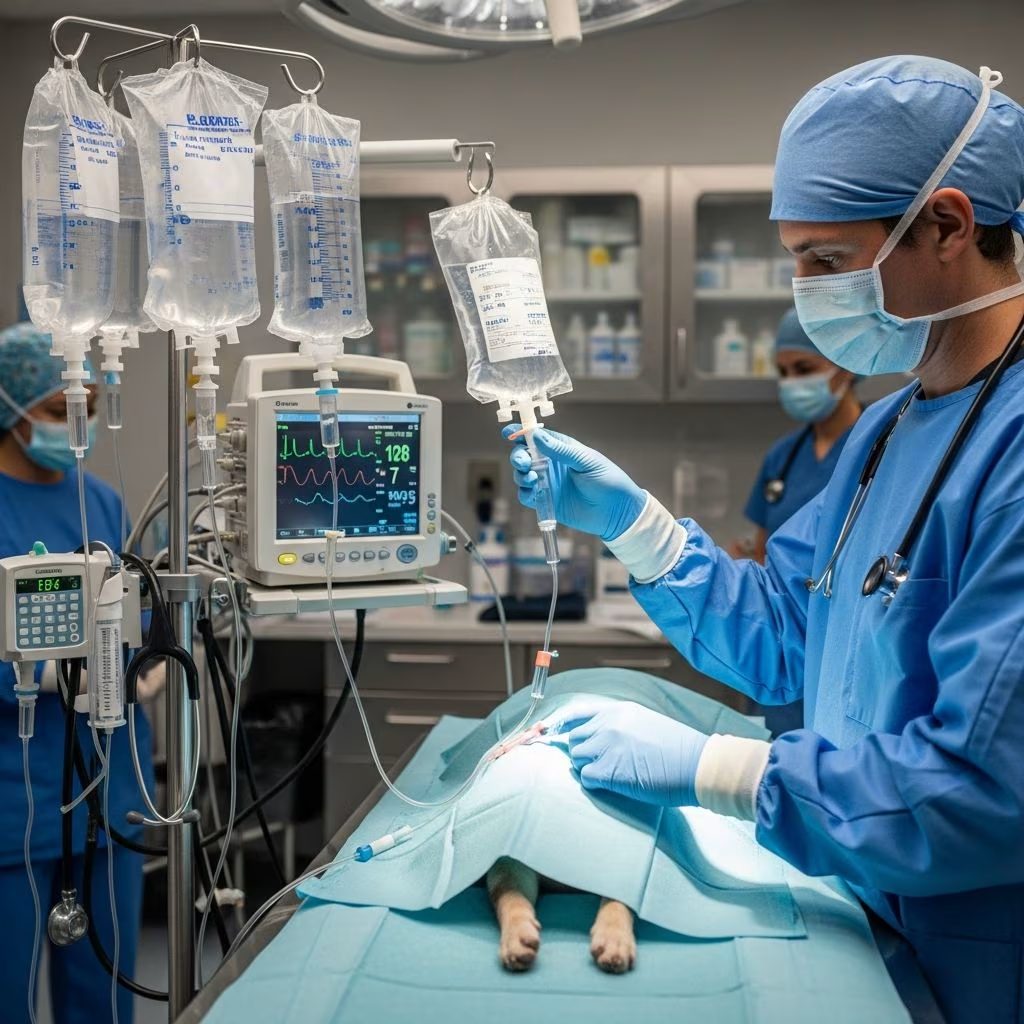
Fluid resuscitation forms the cornerstone of emergency veterinary treatment for animals experiencing hypovolemia or shock. This critical intervention rapidly restores intravascular volume, enhances tissue perfusion, and supports organ function during life-threatening conditions. By systematically evaluating fluid deficits, selecting optimal solutions, defining clear therapeutic goals, and employing precise administration methods, veterinarians can significantly boost survival rates in dogs and cats.
Understanding Fluid Compartments and Deficits
The body distributes fluids across intravascular, interstitial, and intracellular compartments. In hypovolemic states, the intravascular space suffers the most acute depletion due to hemorrhage, dehydration, or third-spacing into body cavities. History-taking reveals potential causes like trauma, vomiting, or diarrhea, while physical exams assess parameters such as heart rate, mucous membrane color, capillary refill time (CRT), and pulse quality.
Deficits are categorized by location: intravascular losses demand immediate volume expansion, whereas interstitial or intracellular issues require slower correction to avoid complications like pulmonary edema. Accurate localization guides therapy, preventing overzealous administration that could exacerbate conditions like heart failure or renal compromise.
Choosing the Right Fluids for Resuscitation
Isotonic crystalloids, such as lactated Ringer’s solution (LRS) or Plasma-Lyte, serve as first-line agents due to their balanced electrolyte composition mirroring plasma osmolarity. These expand intravascular volume effectively, though up to 75% may shift to extravascular spaces within minutes.
Hypertonic saline (7% NaCl) offers rapid osmotic pull of water into vessels, ideal for initial boluses in hypotensive patients, provided euhydration in other compartments exists. Colloids like hydroxyethyl starch (HES) or stroma-free hemoglobin maintain oncotic pressure longer, reducing total crystalloid needs, especially in protein-losing states or hemorrhage. Blood products, including whole blood or packed red blood cells, are indispensable for oxygen-carrying deficits post-hemorrhage.
- Crystalloids: Buffered isotonic (e.g., LRS, Normosol-R) at 10-20 mL/kg boluses.
- Colloids: HES 5-10 mL/kg; plasma 5-10 mL/kg.
- Hypertonics: 3-4 mL/kg 7% saline over 10-15 minutes.
- Blood products: Matched transfusions for anemia or coagulopathy.
Potassium supplementation is deferred until stabilization, then added at ≤0.5 mEq/kg/hr to maintenance fluids.
Defining and Monitoring Resuscitation Goals
Success hinges on achieving targeted perfusion endpoints rather than rigid formulas, accommodating variables like renal function or comorbidities. Early goal-directed therapy involves frequent reassessment of subjective (e.g., CRT 1-2 sec, strong pulses) and objective metrics (e.g., blood pressure, lactate levels).
| Parameter | Supranormal Targets | Hypotensive Targets |
|---|---|---|
| Systolic BP (mmHg) | 90-120 | 80-90 |
| Mean Arterial Pressure (mmHg) | 80-90 | 60-80 |
| Central Venous Pressure (cm H2O) | 6-8 | 3-5 |
| Heart Rate (Dog) | <140 bpm | <140 bpm |
| Heart Rate (Cat) | 160-200 bpm | 160-200 bpm |
| CRT | 1-2 sec | 1-2 sec |
| Femoral Pulse | Strong | Strong |
Supranormal goals suit aggressive resuscitation in healthy patients, while hypotensive targets minimize risks in trauma or cardiac cases. Serial measurements every 15-30 minutes guide adjustments.
Large-Volume Resuscitation Approaches
For dogs in profound hypovolemic shock without contraindications, large-volume protocols deliver 20-50 mL/kg isotonic crystalloids rapidly over 15-30 minutes, followed by colloids (5-15 mL/kg HES) if needed. This expands plasma volume swiftly, targeting supranormal endpoints.
Reassessment post-bolus determines further needs; additional crystalloids or blood products address persistent deficits. This method excels in distributive shock or overt hemorrhage but risks overload in enclosed spaces.
Small-Volume and Conservative Techniques
Cats and dogs prone to fluid overload—such as those with head trauma, pulmonary injury, oliguria, or cardiogenic shock—benefit from conservative dosing. Start with 5-10 mL/kg crystalloids in cats or 10-15 mL/kg in dogs over 15-30 minutes, augmented by 2-5 mL/kg colloids.
Stroma-free hemoglobin at 2-5 mL/kg suits low-volume needs. Repeat boluses until endpoints are met, prioritizing minimal effective volume to avert edema or hypertension.
Integration with Broader Fluid Therapy Phases
Resuscitation transitions to rehydration (correcting dehydration at 50-100 mL/kg/day) and maintenance (40-60 mL/kg/day dogs; 30-40 mL/kg/day cats), accounting for ongoing losses. 2024 AAHA guidelines emphasize staged therapy: hypovolemia first, then dehydration, followed by sustenance.
Anesthesia protocols recommend 3-5 mL/kg/hr isotonic fluids, with boluses for hypotension. Traumatic brain injury may combine crystalloids, HES, hypertonics, and blood.
Potential Complications and Monitoring
Over-resuscitation precipitates pulmonary edema, coagulopathy from dilution, or electrolyte derangements. Vigilant monitoring—urine output (>1 mL/kg/hr), lactate clearance, central venous pressure—prevents iatrogenic harm.
Contraindications include hyponatremia with hypertonics or renal failure without diuresis. Tailor plans to species, size, and comorbidities for safety.
Practical Implementation in Clinic
Secure IV/IO access promptly. Administer boluses via pressure bags if needed. Document trends in perfusion parameters. Collaborate with diagnostics to address underlying causes concurrently.
Frequently Asked Questions (FAQs)
What is the initial bolus for a hypovolemic dog?
15-20 mL/kg isotonic crystalloid over 15-30 minutes, reassess, and repeat as needed.
When should colloids be used?
In non-responders to crystalloids, hemorrhage, or hypoalbuminemia; e.g., 5 mL/kg HES.
How do you know resuscitation is complete?
When endpoints like normal HR, BP, CRT, and strong pulses are achieved, confirmed serially.
Are hypertonic solutions safe for all patients?
No; ensure adequate hydration elsewhere to avoid cellular dehydration.
What about potassium in resuscitation fluids?
Avoid initially; add post-stabilization at low rates.
Case Examples
Trauma Dog: 25 kg shepherd with hemorrhage receives 500 mL LRS (20 mL/kg), then 125 mL HES (5 mL/kg). BP rises from 60/40 to 100/70 mmHg.
Septic Cat: 4 kg with SIRS gets 40 mL crystalloid (10 mL/kg) + 20 mL colloid (5 mL/kg) boluses, targeting hypotensive goals to avoid overload.
These strategies, grounded in evidence, optimize outcomes when applied judiciously.
References
- Updated Fluid Therapy Guidelines, What’s Changed? — VETgirl. 2024. https://vetgirlontherun.com/updated-fluid-therapy-guidelines-whats-changed-vetgirl-veterinary-continuing-education-blog/
- The Fluid Resuscitation Plan in Animals — Merck Veterinary Manual. 2023-02-24. https://www.merckvetmanual.com/therapeutics/fluid-therapy/the-fluid-resuscitation-plan-in-animals
- AAHA publishes fluid therapy guidelines for dogs, cats — AVMA. 2024-06-07. https://www.avma.org/news/aaha-publishes-fluid-therapy-guidelines-dogs-cats
- Section 5: Fluid Therapy in Ill Patients — AAHA. 2024. https://www.aaha.org/resources/2024-aaha-fluid-therapy-guidelines-for-dogs-and-cats/section-5-fluid-therapy-in-ill-patients/
- 2024 AAHA Fluid Therapy Guidelines for Dogs and Cats — AAHA (PubMed). 2024-06. https://pubmed.ncbi.nlm.nih.gov/38885492/



