

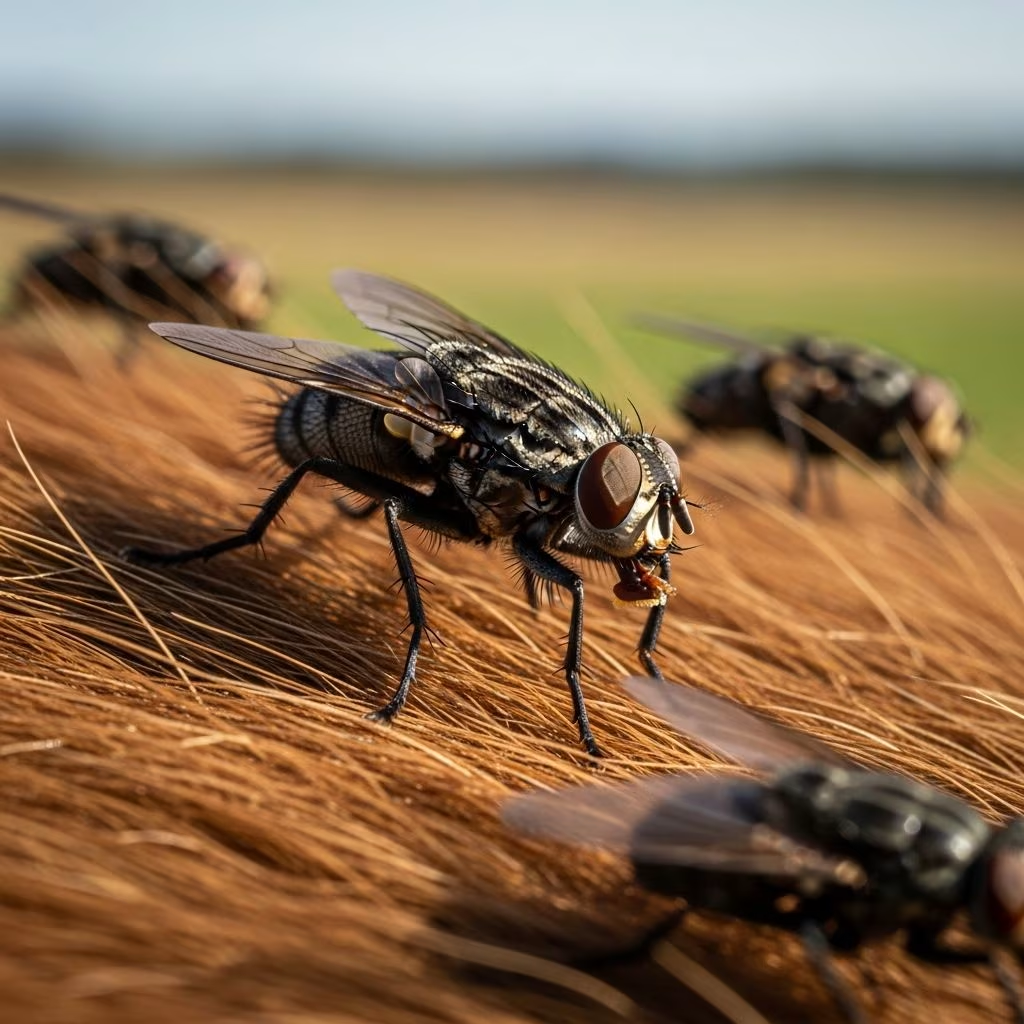
Flies represent one of the most pervasive insect challenges in veterinary medicine, inflicting direct damage through feeding and oviposition while serving as vectors for pathogens that compromise animal health across domestic, companion, and wild populations. These dipteran pests thrive in warm, humid conditions, exploiting wounds, manure, and decaying matter to proliferate rapidly and affect productivity in agriculture and conservation efforts alike.
Biology and Life Stages of Key Fly Species
Understanding the developmental phases of flies is crucial for timely interventions. Most species undergo complete metamorphosis: eggs hatch into larvae (maggots), which pupate before emerging as adults. This cycle can complete in as little as 7-10 days under optimal conditions, enabling explosive population growth.
- Stable Flies (Stomoxys calcitrans): Blood-feeding pests with painful bites, targeting legs and flanks of cattle and horses. Larvae develop in decaying vegetation or soiled bedding.
- Horn Flies (Haematobia irritans): Obligate blood-feeders on cattle, clustering around shoulders and backs, causing irritation and anemia.
- Face Flies (Musca autumnalis): Feed on ocular and nasal secretions, facilitating pinkeye transmission in cattle.
- House Flies (Musca domestica) and False Stable Flies: General filth feeders that mechanically transmit bacteria from manure to feed or wounds.
- Blow Flies (Calliphoridae) and Flesh Flies (Sarcophagidae): Primary agents of cutaneous myiasis, laying eggs on living tissues.
Environmental factors like temperature and humidity dictate generation times, with multiple broods per season amplifying infestations.
Health Impacts and Disease Transmission
Flies inflict multifaceted harm: direct annoyance reduces grazing time by up to 20-30%, leading to weight loss; blood loss from biting species causes stress and reduced milk yield; and pathogen dissemination exacerbates infections.
| Fly Species | Primary Damage | Diseases/Conditions Transmitted |
|---|---|---|
| Stable Fly | Biting, anemia | Anaplasmosis, mastitis bacteria |
| Horn Fly | Blood loss, hide damage | Keratoconjunctivitis |
| Face Fly | Eye irritation | Pinkeye (Moraxella bovis) |
| House Fly | Filth spotting | Salmonellosis, E. coli |
| Blow Fly | Tissue invasion | Myiasis, secondary infections |
Biting flies alter host behavior, increasing cortisol levels and suppressing immune responses, which heightens susceptibility to opportunistic pathogens. In wildlife, such interactions disrupt foraging and predator avoidance, impacting biodiversity.
Recognition of Fly Infestations
Early detection hinges on observing behavioral cues and physical signs. Animals bunch together, stomp feet excessively, or seek shade; skin shows rubbing lesions, hair loss, or crusted wounds. Heavy populations cluster on undersides or faces, with manure pats teeming with larvae signaling breeding sites.
- Aggressive tail-switching or head-throwing in horses and cattle.
- Weight gain plateaus despite adequate nutrition.
- Ocular discharge and corneal opacity from face flies.
- Foul odors from myiasis sites where maggots burrow.
Regular scouting using sticky traps or sweep nets quantifies fly counts, guiding treatment thresholds (e.g., 10-20 stable flies per leg).
Environmental and Seasonal Influences
Fly dynamics shift with climate. Spring surges follow winter pupae emergence, peaking mid-summer. Droughts concentrate breeding in residual moisture, while floods create vast larval habitats. Anthropogenic changes, including deforestation and intensive farming, exacerbate outbreaks by altering microclimates. In wildlife habitats, habitat fragmentation intensifies fly-host contacts.
Integrated Pest Management Strategies
Effective control combines sanitation, biological agents, and targeted chemicals, minimizing resistance risks.
Sanitation and Cultural Practices
Remove manure weekly, using composters to kill larvae via heat. Drag pastures post-grazing to expose pupae to desiccation and predators. Ensure dry, well-drained housing prevents moisture buildup.
Biological Controls
Introduce parasitic wasps (e.g., Muscidifurax raptorellus) that target pupae, achieving 70-90% suppression in integrated systems. Dung beetles compete with larvae for resources, naturally reducing populations.
Chemical Interventions
Ear tags with pyrethroids or organophosphates provide season-long relief for horn and face flies. Pour-ons and sprays target stable flies, rotated annually to avert resistance. Avoid broad-spectrum use near water sources to protect pollinators.
Physical Barriers
Oilers and back rubbers deliver self-applied insecticides; fans in barns disrupt flight patterns.
IPM programs integrating these reduce fly numbers by over 80%, boosting animal performance.
Special Concerns: Myiasis and Wound Management
Obligatory myiasis from screwworm (Cochliomyia hominivorax) or wolf hirst (Wohlfahrtia vigil) involves maggots consuming live tissue. Predisposing factors include castration wounds, navel infections, or diarrhea. Treatment demands surgical debridement, ivermectin injections, and sterile bandaging. Preventive fly repellents on vulnerable sites are essential.
In tropical regions, New World screwworm eradication via sterile insect technique showcases IPM success, preventing billions in losses.
Flies in Companion Animals and Wildlife
Dogs and cats suffer from blow fly strike on soiled hindquarters; horses endure summer sores from Gad flies. Wildlife faces amplified threats: deer harassed by black flies alter migration; birds lose feathers to louse flies. Veterinary entomology’s expansion to these groups underscores ecological interconnections.
Monitoring and Thresholds for Action
Deploy fluorescent traps for horn flies (threshold: 200/day/cow) and sticky cards for house flies. Digital apps now track populations via citizen science, aiding predictive modeling.
Future Directions in Fly Control
Gene drives targeting fly reproduction and microbiome manipulations to deter larval development promise sustainable solutions. Climate-resilient IPM, informed by GIS mapping, will address shifting distributions.
Frequently Asked Questions (FAQs)
What attracts flies to my livestock operation?
Moist organic matter like fresh manure, spilled feed, and decaying carcasses serve as prime breeding grounds.
Are fly repellents safe for pregnant animals?
Pyrethrin-based products are generally safe; consult labels and veterinarians for specifics.
How do I differentiate stable flies from horn flies?
Stable flies bite legs and have a pointed proboscis; horn flies stay on backs and are smaller.
Can natural predators eliminate fly problems?
They significantly reduce but rarely eradicate; combine with sanitation for best results.
What’s the economic impact of fly infestations?
Global losses exceed $2 billion annually from reduced gains and treatment costs.
References
- Highlights of veterinary entomology, 2023: beyond the barnyard — Journal of Medical Entomology, Oxford Academic. 2024-12-01. https://academic.oup.com/jme/article/62/1/1/7821522
- An Overview on Medical and Veterinary Entomology — Longdom Publishing. 2023-01-01. https://www.longdom.org/open-access/an-overview-on-medical-and-veterinary-entomology-106060.html
- Medical and Veterinary Entomology (11:370:406) — Rutgers University Entomology. 2025-01-01. https://entomology.rutgers.edu/undergraduate/courses/11-370-406.html
- Highlights of Veterinary Entomology, 2022 — PubMed/NCBI. 2024-02-01. https://pubmed.ncbi.nlm.nih.gov/38373248/
- Veterinary Entomology — UT Beef and Forage Center, University of Tennessee. 2020-11-01. https://utbeef.tennessee.edu/wp-content/uploads/sites/127/2020/11/35-MullensEtAlVetEnt18.pdf
- Veterinary Entomology: An Education Resource — VeterinaryEntomology.org. 2025-01-01. https://www.veterinaryentomology.org



