

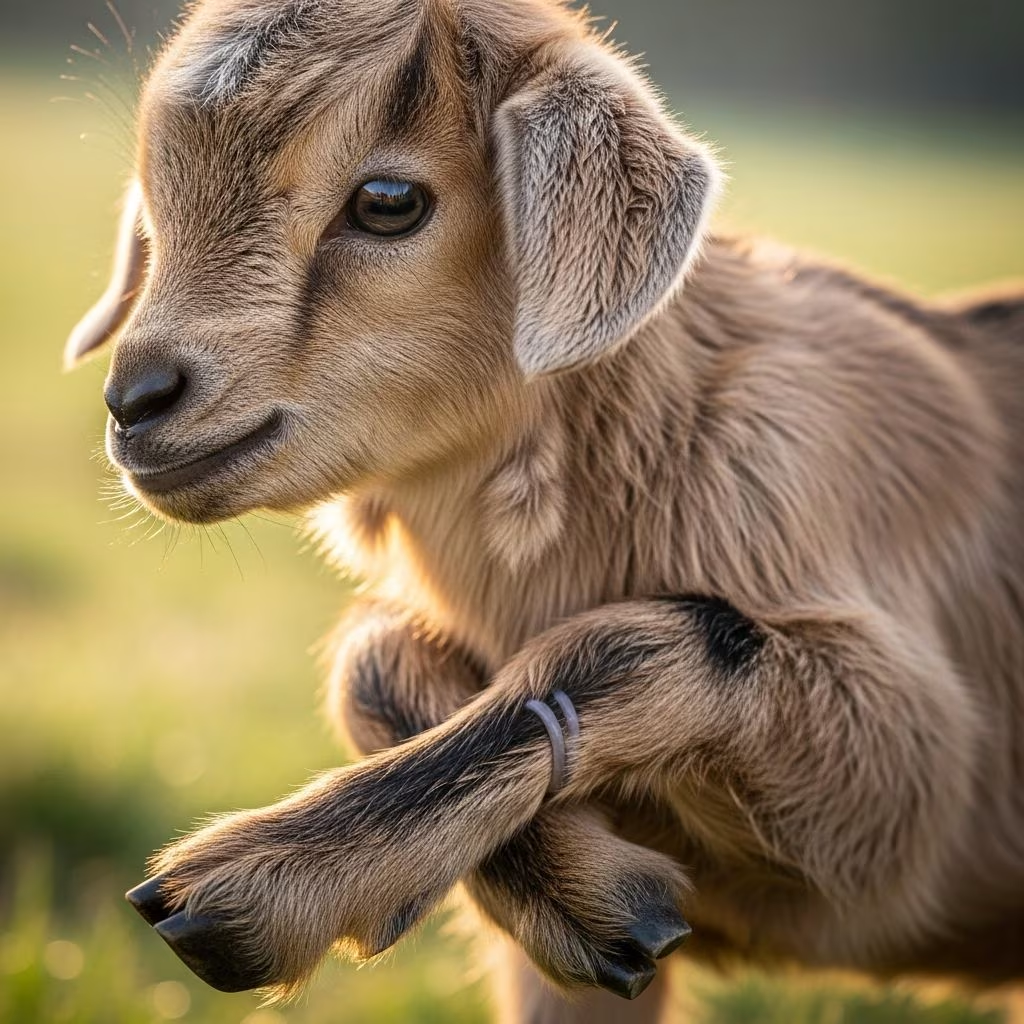
Flexed tendons represent a frequent musculoskeletal issue in newborn goat kids, characterized by overly tight or shortened tendons that cause the legs to bend abnormally at birth. This condition often resolves spontaneously but may require supportive interventions in moderate to severe instances to promote normal mobility and prevent long-term complications.
Recognizing the Signs in Young Goats
Newborns with flexed tendons typically display legs that are knuckled over or pulled up beneath the body, affecting the fetlocks, hocks, or both. In milder forms, kids can stand and nurse with some awkwardness, walking on their fetlocks rather than toes. Severe cases involve complete inability to rise, with limbs rigidly extended or hyperflexed, risking starvation if nursing is impossible.
- Commonly bilateral, impacting front or hind legs symmetrically.
- Associated signs may include a curled tail or general stiffness from uterine positioning.
- Distinguish from neurological issues by normal withdrawal reflexes and absence of tremors.
Early detection during the first hours post-birth is crucial, as timely support enhances outcomes without aggressive measures.
Primary Causes Behind the Condition
The most prevalent trigger is mechanical compression in the womb, especially in multiple births where space constraints lead to tendon contracture during late gestation. Nutritional imbalances in the dam, such as deficiencies in selenium, vitamin E, or vitamin A, can contribute by weakening muscle development, though these are less directly causal than positioning.
| Cause | Description | Prevalence |
|---|---|---|
| Uterine Crowding | Large litters compress limbs, shortening tendons | Most common |
| Selenium/Vit E Deficiency | Impairs muscle/tendon elasticity | Secondary factor |
| Genetic Factors | Breed predispositions like Anglo-Nubians | Rare |
| Lysosomal Storage Disease | Rare metabolic disorder with vacuolation | Very rare |
Unlike white muscle disease, which emerges later with distinct symptoms like tremors, flexed tendons appear immediately at birth and lack those neurological markers.
Step-by-Step Management Approaches
Conservative care prioritizes natural resolution, as most cases self-correct within 48-72 hours through movement and nursing. Assist weak kids by holding them to the dam’s udder, ensuring colostrum intake for strength.
- Gentle Physical Therapy: Flex and extend limbs softly several times daily to stretch tendons without force.
- Supportive Splinting: Use vet wrap, straw-filled tubes, or soft casts to maintain extension in moderate cases.
- Monitor Progress: Reassess every 12 hours; remove supports once weight-bearing improves.
For splinting, select breathable materials to avoid skin irritation, applying from pastern to knee/hock. Videos demonstrate techniques like tubing with tape for stability, allowing kids to hop while correcting alignment.
Nutritional Supplements: Pros, Cons, and Myths
Selenium-vitamin E injections (e.g., BoSe) are popularly recommended online, with anecdotes claiming rapid fixes. However, evidence suggests recovery occurs independently, attributing success to coincidence rather than causation. Routine use risks toxicity, especially in non-deficient herds.
- Reserve for confirmed deficiencies via blood tests.
- Alternatives like vitamin A-rich cod liver oil address potential gaps safely.
- Avoid over-supplementation; focus on dam’s prenatal nutrition.
Breeds like Anglo-Nubians may show higher incidence, prompting selective breeding to eliminate genetic lines.
Advanced Interventions for Persistent Cases
If no improvement after 3 days, veterinary evaluation rules out rare conditions like beta-mannosidase deficiency, identifiable by plasma assays and necropsy findings of cellular vacuolation. Surgical tendon release is a last resort, rarely needed.
Temporary aids like sock cuffs or figure-8 wraps enable standing and nursing, building strength akin to post-cast therapy.
Preventive Measures for Breeding Does
Proactive herd management minimizes risks:
- Supplement dams with balanced minerals during gestation, particularly in selenium-poor soils.
- Monitor body condition to avoid overfeeding, reducing large litters.
- Choose sires from low-incidence lines.
- Ensure ample exercise space pre-kidding.
Long-Term Prognosis and Herd Impact
With prompt care, over 90% of affected kids achieve full function, growing into productive adults. Persistent flexion may cause uneven wear or arthritis, but early intervention averts this. Cull carrier dams if recurrent in litters.
Frequently Asked Questions (FAQs)
Do all kids with flexed tendons need selenium shots?
No, most recover without; shots are for verified deficiencies only.
How long before a kid walks normally?
Typically 1-3 days with support; consult a vet if longer.
Can I use human bandages for splints?
Vet wrap or soft tubing works best; ensure no circulation issues.
Is this hereditary?
Possible in certain breeds; track pedigrees.
What if only one leg is affected?
Rare; treat similarly but monitor for other issues.
References
- Selenium Deficiency or Contracted Tendons? — Little Avalon Farm. Accessed 2026. https://littleavalonfarm.com/selenium-deficiency-or-contracted-tendons/
- Contracted Tendons in Goat Kids — Merck Veterinary Manual. Accessed 2026. https://www.merckvetmanual.com/musculoskeletal-system/lameness-in-goats/contracted-tendons-in-goat-kids
- How To Fix Kid Goats Born With Bent Legs — PackGoats.com (YouTube). 2025-04-25. https://www.youtube.com/watch?v=KapB_kBZ-tI
- Goat Care Pt. 5: Contracted Tendons in Kids — Another Day with the Goats (YouTube). Accessed 2026. https://www.youtube.com/watch?v=mZw4WRLkmiE



