

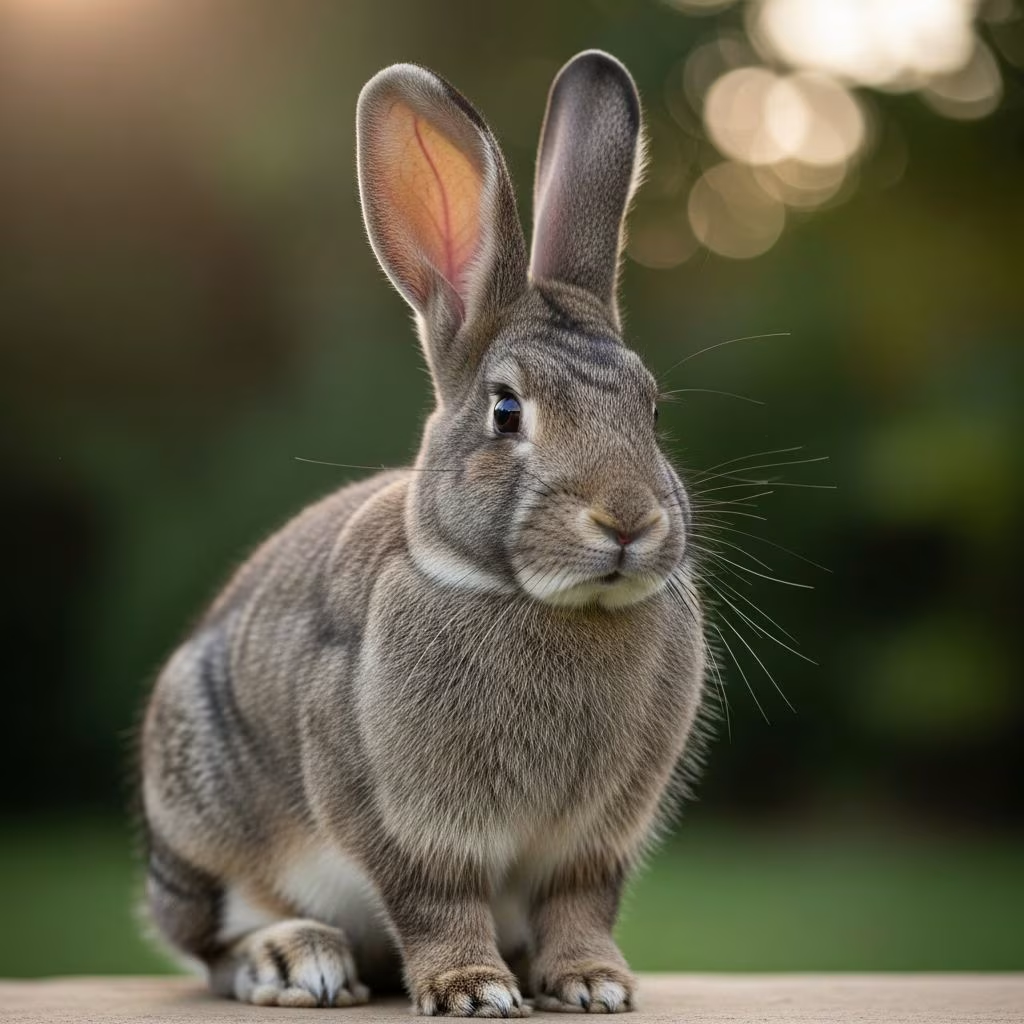
The Flemish Giant rabbit, affectionately known as the Gentle Giant, represents one of the largest and most impressive breeds of domestic pet rabbits available today. These magnificent animals have captured the hearts of rabbit enthusiasts worldwide with their impressive stature combined with their surprisingly docile and affectionate nature. Whether you’re considering adding one of these remarkable creatures to your family or simply curious about the breed, this comprehensive guide covers everything you need to know about Flemish Giant rabbits.
Understanding the Flemish Giant Rabbit
The Flemish Giant rabbit is distinguished primarily by its exceptional size, making it one of the most recognizable rabbit breeds. Adults typically weigh between 15 to 20 pounds, though some exceptional specimens have been recorded at weights exceeding 20 pounds. When fully stretched out, these rabbits can reach approximately 2.5 to 4 feet in length, making them longer than many average-sized dogs and significantly larger than typical domestic rabbit breeds.
Believed to have originated in Flanders, Belgium, the Flemish Giant was bred as early as the 16th century. The breed was subsequently exported to America in the early 1890s to help improve the size of meat rabbits during a period known as the great “rabbit boom.” This historical background has shaped the breed’s characteristics and purpose as both a utility and companion animal.
Physical Characteristics and Appearance
The Flemish Giant rabbit possesses distinctive physical features that set it apart from other rabbit breeds. These characteristics contribute to both their impressive appearance and their functional design.
Body Structure
One of the most striking features of the Flemish Giant is its distinctive semi-arched back, which starts behind the shoulders and carries through to the base of the tail, creating what enthusiasts describe as a “mandolin” shape. Their bodies are notably long and powerful, with broad hindquarters and powerful back legs that provide the strength necessary to support their considerable weight. This well-proportioned frame gives them an elegant appearance despite their impressive size.
Coat and Coloring
The Flemish Giant’s fur is renowned for its thickness, glossiness, and smoothness. Their coat features a dense undercoat that requires regular maintenance. The National Federation of Flemish Giant Rabbit Breeders recognizes seven distinct color varieties for the breed, including black, blue, fawn, light gray, sandy, steel gray, and white. The quality of their fur historically made them valuable for fur production, and their beautiful coat remains one of their most appealing features.
Distinctive Features
Flemish Giants have long, upright V-shaped ears and good eyesight, adaptations they have retained from their wild ancestors. They possess rounded tails and maintain the keen visual awareness characteristic of rabbits. These physical adaptations serve them well in both domestic and natural settings.
Sexual dimorphism is evident in Flemish Giants. Males are typically larger than females and have broader heads. Female Flemish Giants possess a distinctive dewlap—a fold of skin beneath their chin that they use to keep their baby rabbits warm. This dewlap is particularly pronounced in breeding females.
Lifespan and Reproduction
The typical Flemish Giant rabbit lifespan ranges between 8 to 10 years, which is consistent with other domestic rabbit breeds. Females have an impressive average litter size of 5 to 12 offspring, making them prolific breeders. Flemish Giants reach their adult size relatively quickly, typically attaining their full growth by approximately one and a half years of age. This rapid growth period requires careful attention to nutrition and environmental management to ensure healthy development.
Temperament and Personality
Despite their imposing size, Flemish Giant rabbits have earned their “Gentle Giant” nickname through their characteristically docile and affectionate nature. This combination of impressive stature with sweet disposition makes them exceptional pets for the right household.
Social Nature
Flemish Giants are known to be easygoing, calm, and remarkably patient animals. They are generally friendly and social creatures that thrive on interaction with their family members. These rabbits typically enjoy spending time outside their cage with their humans and may even befriend other pets in the home. Many Flemish Giants love to relax and spend time cuddling with their family members, demonstrating an affectionate side that surprises many who judge them by appearance alone.
Behavior with Children and Others
The gentle and tolerant nature of Flemish Giants makes them generally good companions for small children and other animals. However, like all rabbits, they should always be supervised around children to prevent accidental injury or distress. While they are typically extremely good-natured, Flemish Giants will bite or scratch if handled roughly or if their personal space is invaded when they feel uncomfortable. They do not appreciate aggressive handling and require respectful, gentle interaction.
Behavioral Issues and Isolation
It is important to note that Flemish Giant rabbits do not do well with prolonged isolation. If they become frustrated with too much time alone in their cage, they can develop behavioral issues including aggression, biting, or overgrooming. These rabbits require regular social interaction and enrichment to maintain their happy, docile demeanor.
Housing and Space Requirements
Perhaps the most critical consideration when bringing a Flemish Giant into your home is providing adequate space. These rabbits are among the largest of all rabbit breeds and require significantly more room than smaller breeds such as Holland Lops or Netherland Dwarfs.
Minimum Cage Requirements
The minimum cage size for a single Flemish Giant should be 36 inches wide, 36 inches tall, and 120 inches long to allow them to stretch out and move comfortably. Cage dimensions should be doubled for each additional rabbit living in the enclosure. Additionally, these large rabbits need lots of supervised time outside the cage to get exercise and socialization. They can jump as high as 3 feet, so their enclosure needs to be tall enough to prevent escape.
Environmental Considerations
Because of their thick, dense coats, Flemish Giants do not handle hot weather very well. They should be provided with a cool environment, adequate ventilation, and protection from extreme temperatures. Their heavy coats also make them more prone to fur mites and ear mites, necessitating careful monitoring and regular grooming.
Care and Maintenance
Grooming
Regular weekly grooming is advised to keep the Flemish Giant’s coat in top condition. Their glossy, dense fur requires consistent maintenance to prevent matting and reduce shedding throughout the home. During shedding seasons, more frequent grooming may be necessary.
Litter Box Training
Flemish Giant rabbits are, overall, fairly clean animals and can be trained to use a litter box. Litter box training is easiest if you start when the rabbit is young. Like dogs and cats, Flemish Giants are easily domesticated and can be kept indoors, making them suitable for apartment living despite their size, provided adequate space is available.
Veterinary Care
Flemish Giant rabbits need much the same type of veterinary care as other rabbits. They should be neutered or spayed and receive appropriate vaccines. However, because of their size, there are a few specific things to be careful of during veterinary procedures and handling. Finding a veterinarian experienced with large rabbit breeds is beneficial.
Training Your Flemish Giant
One of the advantageous characteristics of Flemish Giant rabbits is their trainability. Their friendly and social nature makes them eager to please. This eagerness, combined with typical rabbit intelligence, makes Flemish Giants relatively easy to train compared to some other rabbit breeds. They respond well to positive reinforcement and can learn various commands and behaviors when training is approached with patience and consistency.
Key Considerations for Potential Owners
Before deciding to bring a Flemish Giant rabbit into your home, consider the following important factors:
- Space Requirements: Ensure you have adequate room for a large enclosure and space for the rabbit to exercise outside the cage.
- Long-term Commitment: With a lifespan of 8-10 years, Flemish Giants require a long-term commitment from their owners.
- Social Needs: These rabbits thrive on interaction and do not do well when isolated for extended periods.
- Cost: Larger rabbits require more food, larger enclosures, and potentially more expensive veterinary care.
- Supervision with Children: While gentle, they require supervision around small children and should be handled carefully due to their size and fragility.
- Temperature Control: Their thick coats mean they need cool environments and are sensitive to heat.
Frequently Asked Questions
Q: Are Flemish Giant bunnies cuddly?
A: Yes, easygoing and affectionate Flemish Giants love to relax and spend time cuddling with their family members. Most enjoy being held and snuggled, provided they feel fully supported and are not handled roughly.
Q: Are Flemish Giants easy to train?
A: Yes, their friendly and social nature makes Flemish Giant rabbits eager to please. Combined with typical rabbit intelligence, this eagerness makes Flemish Giants easy to train with patience and positive reinforcement.
Q: How much space does a Flemish Giant need?
A: A minimum cage should be 36 inches wide, 36 inches tall, and 120 inches long. They also need substantial supervised time outside their cage for exercise and socialization.
Q: What colors do Flemish Giants come in?
A: The National Federation recognizes seven color varieties: black, blue, fawn, light gray, sandy, steel gray, and white.
Q: How long do Flemish Giants live?
A: The typical lifespan for Flemish Giant rabbits is between 8 to 10 years with proper care.
References
- Flemish Giant Rabbit — PetMD. 2024. https://www.petmd.com/rabbit/breeds/flemish-giant
- Flemish Giant Breed Information — PDSA (People’s Dispensary for Sick Animals). 2024. https://www.pdsa.org.uk/pet-help-and-advice/looking-after-your-pet/rabbits/flemish-giant
- What to Know About the Flemish Giant Rabbit — WebMD. 2024. https://www.webmd.com/pets/flemish-giant-rabbit
- Flemish Giant — American Rabbit Breeders Association (ARBA). 2024. https://arba.net/flemish-giant/
- Flemish Giant Rabbit — Cub Creek Science and Animal Camp. 2024. https://cubcreeksciencecamp.com/programs-activities/meet-our-animals/mammals/flemish-giant-rabbit/



