

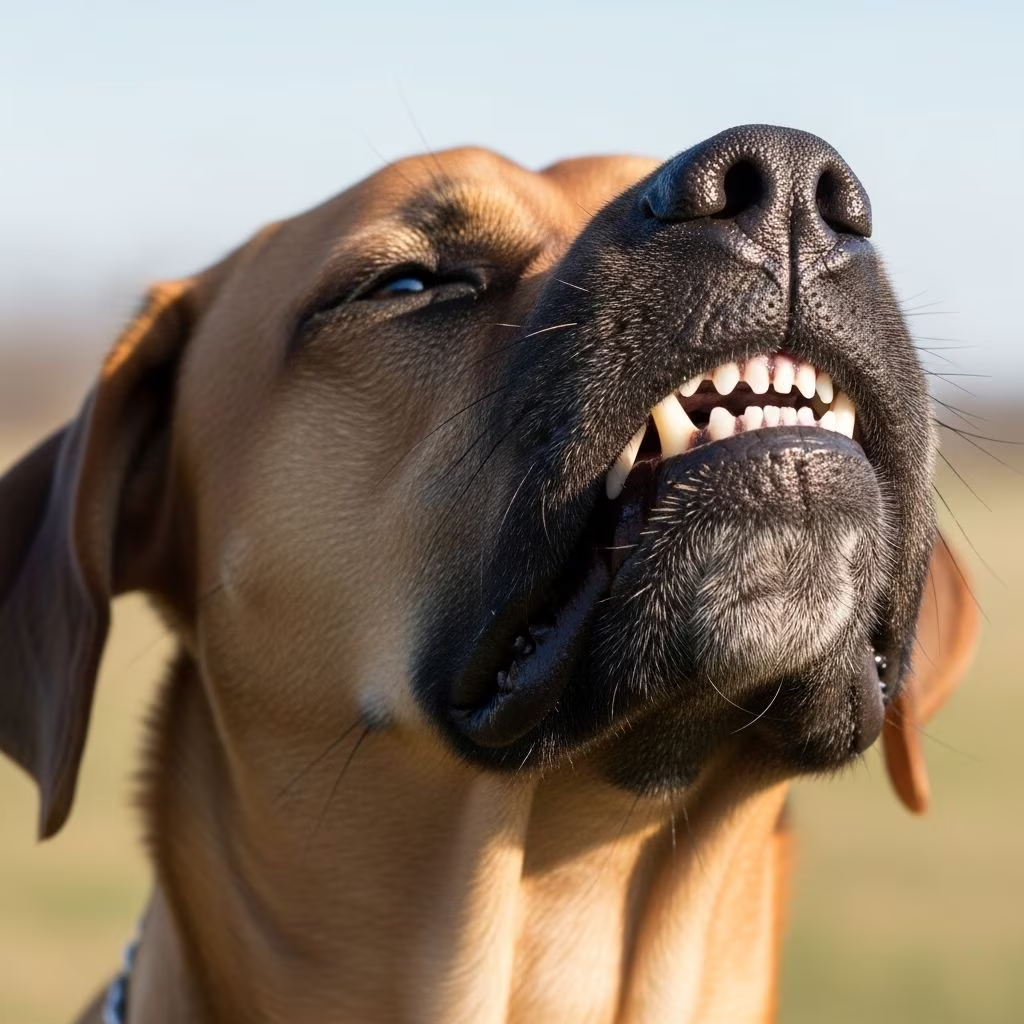
The flehmen response is a distinctive behavior observed in dogs where they curl back their upper lip, often exposing teeth, while inhaling deeply to process intriguing scents. This reaction primarily engages the vomeronasal organ to detect pheromones and chemical signals beyond standard smell.
The Science Behind the Flehmen Reaction
Dogs possess an extraordinary olfactory system, far surpassing human capabilities by 10,000 to 100,000 times in scent detection power. The flehmen response enhances this by directing non-volatile chemicals, like pheromones from urine or glandular secretions, into the vomeronasal organ (VNO), also called Jacobson’s organ. Located in the nasal cavity behind the incisors, this auxiliary structure connects to the brain’s secondary olfactory centers, processing social and reproductive cues.
Unlike volatile odors caught by the main olfactory epithelium, pheromones require direct contact and the flehmen posture to reach the VNO via ducts behind the front teeth. In dogs, the response may appear subtler than in horses or cats due to a rigid upper lip fixed by the frenulum, often manifesting as head lifting, mouth opening, tongue flicking, or teeth chattering rather than a pronounced lip curl.
Recognizing the Flehmen Response in Canines
Spotting flehmen in dogs requires attention to subtle cues, as it differs from the dramatic displays in other species. Key indicators include:
- Raised head and neck stretched forward.
- Upper lip retracted or curled, sometimes asymmetrically.
- Open mouth with tongue rapidly retracted or protruding briefly.
- Teeth chattering, especially in males near females.
- Wrinkled nostrils and prolonged inhalation with closed nostrils.
This behavior typically lasts seconds and occurs over scent sources like urine spots or when detecting distant animals. Panting from excitement might also facilitate VNO access, mimicking flehmen.
Primary Triggers for Flehmen in Dogs
Dogs trigger flehmen most commonly with urine, a rich source of pheromones conveying sex, health, and reproductive status. Males frequently respond to female estrus scents, combining flehmen with chattering to signal arousal.
Other stimulants encompass:
- Female dog pheromones during heat cycles.
- Amniotic fluids or newborn scents in breeding contexts.
- Inter-species odors, hinting at universal chemical signals.
- Unfamiliar or novel environmental scents.
| Trigger Type | Common Examples | Typical Response |
|---|---|---|
| Intra-species | Urine, estrus pheromones | Lip curl, chattering |
| Reproductive | Mare/foal fluids (cross-species analogy) | Head raise, inhalation |
| Novel/Threat | Unknown scents | Tongue flick, unilateral nostril use |
Research shows dogs may favor one nostril for novel threats, linking to right-hemisphere processing of arousing stimuli.
The Vomeronasal Organ: Dog’s Sixth Sense
Jacobson’s organ, discovered in 1813 by Danish physician Ludwig Levin Jacobson, resides in a bony capsule opening to the nasal base. In dogs, it lacks direct oral-nasal mouth breathing links like horses but functions via nasal ducts.
This organ deciphers non-volatile compounds undetectable by regular sniffing, relaying to brain areas triggering instincts like mating or territoriality. Experts liken it to a ‘sixth sense’ for chemical communication, vital for survival in pack dynamics.
Flehmen Across Species: Dogs in Context
While prominent in cats (strong lip curl) and horses (marked grimace), dogs show a modified version with upright posture and tongue action. Other mammals like elephants use trunk tips to deliver scents to their VNO, goats respond to multi-species urine via shared androgens, and big cats subtly open mouths.
- Horses: Pronounced lip curl over mare urine.
- Cats: Intense grimace to pheromones.
- Dogs: Subtle head lift, tongue retraction.
- Elephants: Trunk insertion to mouth roof.
Intraspecific communication dominates, conveying identity, status, and fertility; interspecific cues suggest evolutionary conservation.
Role in Canine Social and Reproductive Life
Flehmen facilitates chemical messaging essential for dog packs. It informs on hierarchy, kinship, and mate readiness, influencing behaviors like mounting or avoidance. Males use it to assess females, while females gauge potential sires.
Beyond reproduction, it aids environmental navigation, detecting predators or food via faint traces. In working dogs, heightened flehmen underscores olfaction’s role in detection tasks.
When Flehmen Might Signal Health Issues
Typically benign, excessive or context-inappropriate flehmen warrants veterinary review. Persistent response to own body areas could indicate dental disease, infections, or allergies irritating nasal passages. Sudden increases might link to neurological issues or tumors affecting the VNO.
Monitor for accompanying symptoms:
- Discharge from nose/mouth.
- Appetite loss or lethargy.
- Behavioral changes like aggression.
- Unusual frequency unrelated to scents.
Consult a vet for thorough examination, including oral inspection and possibly imaging if anomalies persist.
Variations by Breed and Individual
Brachycephalic breeds (e.g., Bulldogs, Pugs) may exhibit muted flehmen due to anatomical constraints on lip mobility and nasal airflow. Sighthounds or scent breeds like Bloodhounds show pronounced responses, leveraging superior olfaction.
Age influences too: puppies experiment with scents, adults refine for social cues, seniors may decline from sensory atrophy.
Practical Tips for Dog Owners
Observe flehmen to understand your dog’s world—avoid interrupting unless distressed. Enhance environments with scent games using safe items to stimulate natural behaviors. Training can incorporate it for nosework sports, boosting mental health.
Never punish this instinct; it’s core to canine identity. Clean urine marks promptly to minimize triggers in multi-dog homes.
Frequently Asked Questions (FAQs)
What exactly is the flehmen response in dogs?
A behavioral reflex where dogs curl their lip and inhale to funnel pheromones to the vomeronasal organ for analysis.
Is flehmen painful or a sign of aggression?
No, it’s a neutral sensory process, often mistaken for snarling but purely investigatory.
Why do male dogs chatter teeth during flehmen?
Teeth chattering aids pheromone pumping into the VNO, common near estrous females.
Can all dogs perform flehmen?
Yes, though flat-faced breeds show subtler versions due to anatomy.
Should I worry if my dog flehmens a lot?
Usually not, but pair with other symptoms like nasal discharge for vet check.
How does flehmen differ from regular sniffing?
Sniffing handles volatile smells; flehmen targets non-volatile pheromones needing direct VNO access.
References
- Flehmen Response in Dogs — Whole Dog Journal. 2022. https://www.whole-dog-journal.com/behavior/flehmen-response-in-dogs/
- Flehmen response — Wikipedia. 2024-01-15. https://en.wikipedia.org/wiki/Flehmen_response
- Flehmen response Definition and Examples — Biology Online Dictionary. 2023. https://www.biologyonline.com/dictionary/flehmen-response
- The Flehmen response and how it looks in different species — Wildlife Act. 2022. https://www.wildlifeact.com/blog/the-flehmen-response-and-how-it-looks-in-different-species
- Canine Olfaction: Physiology, Behavior, and Possibilities — PMC (PubMed Central). 2021-08-24. https://pmc.ncbi.nlm.nih.gov/articles/PMC8388720/



