

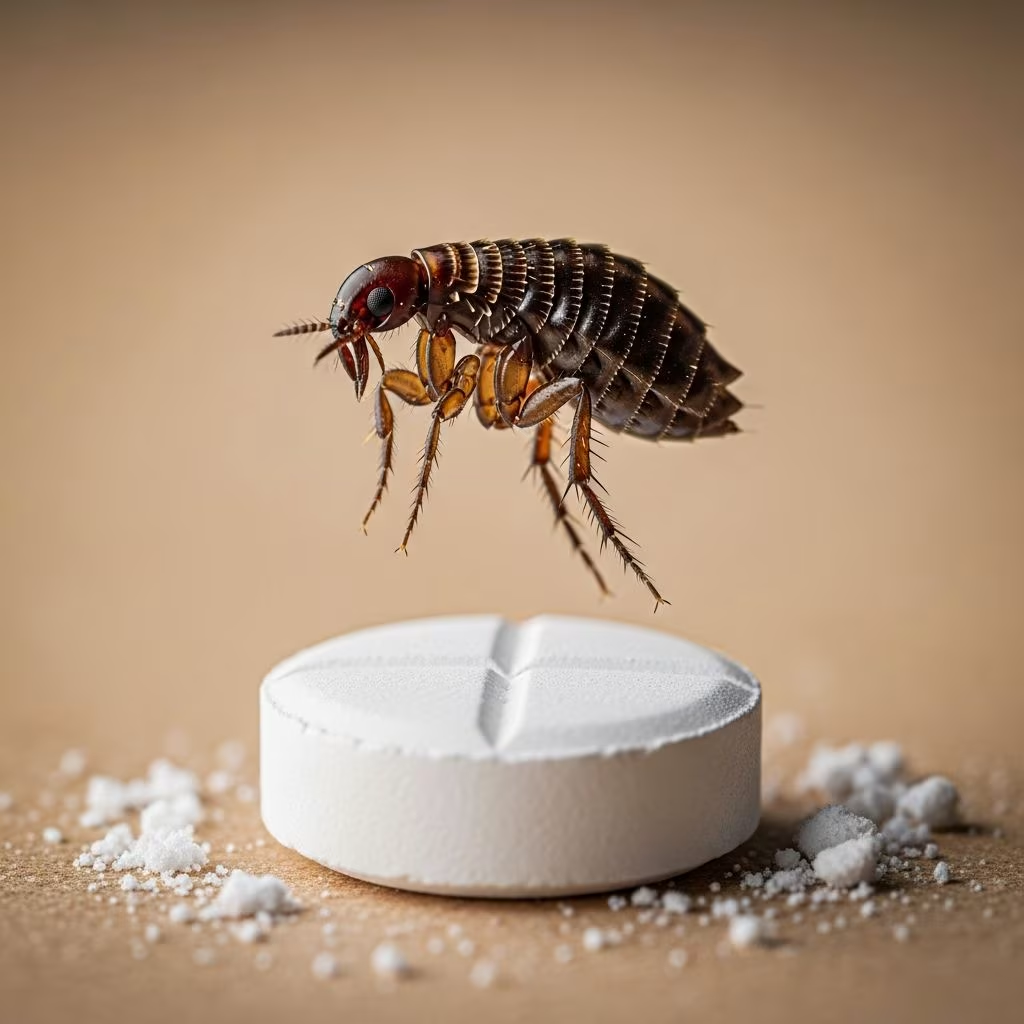
Flea infestations pose significant health risks to pets, causing itching, allergies, and disease transmission. Effective treatments disrupt the flea’s four-stage life cycle—egg, larva, pupa, and adult—primarily targeting adults on the pet while addressing environmental stages. Modern products use targeted insecticides and insect growth regulators (IGRs) for comprehensive control.
The Flea Life Cycle and Why It Matters
Fleas complete their life cycle in 2-3 weeks under ideal conditions, with 95% of the population off the pet in eggs, larvae, and pupae hidden in carpets and bedding. Adults represent only 5%, feeding on pets and laying up to 50 eggs daily. Breaking this cycle requires pet treatment combined with home sanitation like vacuuming, which removes 30% of larvae and eggs.
- Eggs: Slippery, white, and dispersed via pet movement; hatch in 1-10 days.
- Larvae: Feed on organic debris and dried blood; sensitive to IGRs.
- Pupae: Cocooned and resilient; emerge as adults triggered by warmth and vibration.
- Adults: Jump onto hosts, bite within minutes, and begin reproduction.
Understanding this informs treatment choice: quick-kill agents for adults, IGRs like methoprene or pyriproxyfen for immatures.
Topical Spot-On Treatments: Skin-Deep Protection
Spot-on liquids, applied monthly between shoulder blades (cats) or along the back (dogs), spread via sebaceous glands and natural oils. Active ingredients like fipronil, imidacloprid, or permethrin enter the parasite’s nervous system upon contact or bite, causing paralysis and death within hours. Many include IGRs to sterilize fleas or halt egg hatching.
| Product Example | Key Ingredients | Action Time | Duration |
|---|---|---|---|
| Frontline Plus | Fipronil, pyriproxyfen | Fleas: 24h; Ticks: 48h | 30 days |
| Advantage II | Imidacloprid, pyriproxyfen | Fleas: 12h | 30 days |
| Revolution | Selamectin | Fleas & Heartworm | 30 days |
These remain effective post-bath or swim, translocating through the coat. Avoid touching application sites until dry (24h) to prevent ingestion.
Long-Lasting Collar Innovations
Flea collars release active ingredients like imidacloprid and flumethrin over 8 months, absorbed into oils for contact-kill before biting. Repellent versions emit vapors; treatment collars kill on contact. Suitable for frequent swimmers, though efficacy may drop after monthly baths.
- Seresto Collar: Kills fleas in 24h, ticks in 48h; water-resistant.
- Check labels for species-specific use—never on cats if dog-formulated.
Collars complement spot-ons but rotate products to prevent resistance.
Oral Medications: Internal Defenses
Veterinary-prescribed pills or chews act systemically. Nitenpyram (Capstar) kills adults in 30 minutes for 48h, ideal for heavy infestations. Spinosad (Comfortis) provides 30-day protection via ingestion detection. Lufenuron (Program) inhibits egg/larval development but spares adults.
No oral tick preventives exist yet; pair with topicals for full coverage. Fast-acting for baths/swimming pets.
Sprays, Powders, and Shampoos: Immediate Contact Kill
Sprays/powders coat fur, killing on contact with ingredients like permethrin or dinotefuran; versatile for all ages and home use. Shampoos drown and poison existing fleas via lathering (5-10 min contact), repeatable weekly.
- Protect eyes/ears during application.
- Home sprays with IGRs target larvae in carpets.
Use cautiously; some odors irritate sensitive pets.
Environmental Control Strategies
Pet treatment alone fails—target premises. Vacuum daily (dispose bags), wash bedding hot, steam-clean upholstery. IGR sprays (pyriproxyfen) prevent larval development for months.
- Vacuum high-traffic areas, under furniture.
- Apply IGR foggers or direct sprays to cracks/crevices.
- Repeat every 2 weeks until no fleas seen.
Pupae survive 2 weeks post-treatment; monitor emergence.
Safety Guidelines for Pets and Families
Choose weight/species-appropriate products; under-dosing risks resistance, over-dosing toxicity. Watch for drooling, tremors (rare). Pregnant/nursing pets need vet approval. Keep kids/pets away during application; wash hands.
Rotate classes (e.g., neonicotinoids to isoxazolines) yearly. Consult vets for multi-pet homes.
Common Myths Debunked
- Flea dirt confirms infestation: Yes, but check with wet paper test for blood digestion.
- Winter means no fleas: Indoors thrive year-round.
- One treatment suffices: No—life cycle demands 3 months minimum.
Choosing the Right Treatment Plan
Assess lifestyle: swimmers prefer orals/collars; multi-pets need broad-spectrum. Year-round prevention in warm climates. Cost-benefit: monthlies cheaper than vet bills for anemia/dermatitis.
Frequently Asked Questions
Can I use dog flea products on cats?
No—permethrin is toxic to cats. Always species-specific.
How soon do flea treatments work?
Spot-ons: 12-48h; orals: 30min-4h.
What if fleas persist after treatment?
Treat environment; allow 24-72h for kill time. Vet check for resistance.
Are natural remedies effective?
Limited; essential oils risk toxicity. Vet-approved best.
Do flea combs help?
Remove adults mechanically; drown in soapy water. Adjunct only.
References
- Flea Control and Prevention — University of Kentucky Entomology. 2023. https://entomology.mgcafe.uky.edu/ef602
- Fleas — UC Statewide IPM Program. 2024. https://ipm.ucanr.edu/home-and-landscape/fleas/
- The Complete Guide to Flea and Tick Prevention and Treatment for Dogs — PetMD. 2025-02-10. https://www.petmd.com/dog/general-health/flea-and-tick-prevention-and-treatment-dogs
- Fleas — Cornell University College of Veterinary Medicine. 2024. https://www.vet.cornell.edu/departments-centers-and-institutes/riney-canine-health-center/canine-health-topics/fleas
- Safe use of flea and tick preventive products — American Veterinary Medical Association. 2025. https://www.avma.org/resources-tools/pet-owners/petcare/safe-use-flea-and-tick-preventive-products



