

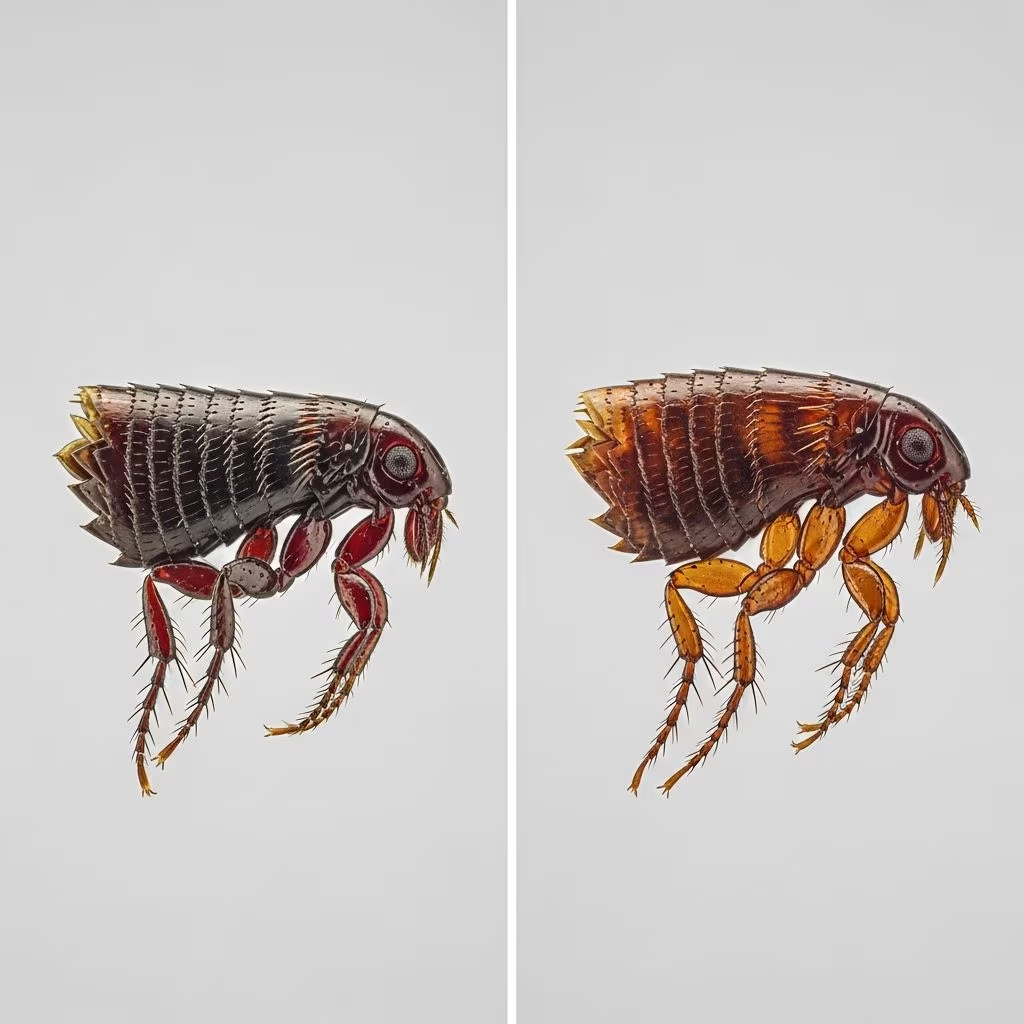
Fleas represent one of the most persistent pest challenges facing pet owners today. While many assume that cat fleas infest only cats and dog fleas target only dogs, the reality is far more complex. These parasitic insects operate with their own biological preferences and adaptive strategies that directly impact how pet owners should approach flea management. Understanding the distinct characteristics of each species can significantly improve your ability to protect your household and address infestations effectively.
Biological Classification and Species Identification
The two primary flea species affecting household pets belong to the genus Ctenocephalides. Cat fleas, scientifically designated as Ctenocephalides felis, represent the more prevalent species in most regions, particularly across North America. Dog fleas, known as Ctenocephalides canis, are considerably less common in many areas, though they remain a concern for dog owners in certain geographic locations.
Beyond their Latin nomenclature, these species exhibit subtle but significant physical differences. Cat fleas display a slender body structure with a reddish-brown coloration, typically measuring between 1 to 2 millimeters in length. Dog fleas, by contrast, tend to be slightly shorter and possess a darker overall appearance. These physical distinctions, while small, reflect deeper metabolic and biological differences that influence their behavior and survival strategies.
Host Preferences and Adaptive Capacity
Perhaps the most important distinction between these flea species relates to their host preferences and flexibility. Cat fleas demonstrate remarkable adaptability, readily infesting cats, dogs, rabbits, and even humans. This versatility represents a critical factor in why cat fleas have become the dominant flea species globally. Their ability to thrive on diverse hosts means they have multiple pathways to persist and spread throughout environments.
Dog fleas, conversely, exhibit greater selectivity in their host choice. These parasites demonstrate a strong preference for canine hosts and show considerably less interest in alternative hosts. However, even this species-specific preference does not represent an absolute barrier—under certain circumstances, dog fleas can still infest other animals when optimal hosts are unavailable.
This distinction carries profound practical implications. Many pet owners discover that their dogs harbor cat fleas rather than dog fleas, a situation arising from cat fleas’ superior adaptive capacity and prevalence. The widespread presence of cat fleas in the environment means they often represent the greatest threat to multi-pet households.
Reproductive Capacity and Population Growth
The reproductive strategies of these flea species differ substantially, affecting how quickly infestations can spiral out of control. Understanding these reproductive differences helps explain why prompt intervention proves so critical.
| Characteristic | Cat Fleas (Ctenocephalides felis) | Dog Fleas (Ctenocephalides canis) |
|---|---|---|
| Daily Egg Production | 20-30 eggs per day | Approximately 4,000 eggs distributed on host fur |
| Lifetime Egg Capacity | Up to 2,000 eggs total | Varies based on lifespan |
| Reproductive Rate | High but measured | Extremely high output per individual |
Cat fleas maintain a steady but prolific reproductive rate, producing approximately 20 to 30 eggs daily throughout their lifespan, culminating in production of up to 2,000 eggs per individual. Dog fleas, meanwhile, demonstrate even more aggressive reproduction patterns, depositing roughly 4,000 eggs on a host animal’s fur. These biological differences mean that infestations involving dog fleas may expand more rapidly than those exclusively involving cat fleas.
The implications extend beyond individual flea reproduction. Both species lay eggs that subsequently fall from the host animal into environmental substrates such as carpets, bedding, and furniture. This distribution creates a multi-stage population that continues developing even after removing fleas from the primary host. The environmental reservoir of flea eggs, larvae, and pupae often represents the greatest challenge in achieving complete infestation elimination.
Life Cycle Stages and Environmental Persistence
Both cat and dog fleas progress through four distinct life stages, though the timeline for each stage remains relatively consistent between species. This developmental cycle has critical implications for treatment strategy and household management.
- Egg Stage: Female fleas deposit eggs on the host, but these rapidly fall into carpets, bedding, furniture, and other environmental locations. Eggs hatch within 1 to 10 days, depending on temperature and humidity.
- Larval Stage: The emerging larvae resemble tiny worms and feed primarily on flea dirt—the digested blood excreted by adult fleas. This stage persists for approximately 5 to 11 days as larvae burrow deeper into fibers and crevices.
- Pupal Stage: Larvae spin sticky cocoons that protect them during transformation into adults. This stage can extend from weeks to several months, creating a hidden reservoir of developing fleas.
- Adult Stage: Mature fleas emerge and immediately seek a host to feed and reproduce. Adult fleas survive 2 to 3 months on an active host, though they may live longer in protected environmental locations.
The extended pupal stage represents a particular challenge for pest management. Fleas can remain dormant in cocoons for extended periods, waiting for environmental cues indicating a suitable host is nearby. This adaptation allows flea populations to persist through periods of adversity and re-emerge when conditions improve.
Transmission Pathways and Cross-Infestation Risks
Understanding how fleas move between hosts and throughout environments proves essential for comprehensive pest management. Fleas employ remarkable physical capabilities to facilitate their spread and persistence.
These parasites possess exceptional jumping ability, capable of propelling themselves over 150 times their own body height. This extraordinary athleticism enables them to leap between animals, furniture, bedding, and clothing with ease. For cat fleas, this jumping capacity combined with their host flexibility creates multiple transmission routes within multi-pet households. A single cat flea can readily jump from a cat to a dog, a dog to human bedding, and subsequently back to another pet, establishing a cycling pattern of infestation.
Dog fleas, while showing greater host preference, can similarly exploit these jumping capabilities to transfer between animals and contaminate household environments. Both species can spread through direct contact between animals, shared bedding and furniture, and even clothing or human contact with infested animals.
Health Impacts and Clinical Signs
Both cat and dog fleas produce remarkably similar health consequences in their hosts, despite their biological differences. Pet owners cannot reliably distinguish between cat flea and dog flea infestations based solely on clinical presentation.
Common symptoms affecting both cats and dogs include:
- Excessive scratching, licking, or chewing at the skin
- Red or inflamed skin patches
- Visible hair loss or thinning coat
- Development of scabs or open sores from self-trauma
- Presence of flea dirt—tiny black specks visible in the coat or on the skin
- Actual sighting of live fleas hopping through the fur
Beyond these surface-level signs, both flea species can trigger more serious health complications. Parasitic infections deplete hosts of blood and nutrients, leading to anemia in severe cases. Some animals develop flea allergy dermatitis, an exaggerated immune response to flea saliva that causes intense itching disproportionate to the actual flea burden. Additionally, both species can transmit tapeworms and other parasites through ingestion during grooming.
Early detection remains critical, as infestations can escalate rapidly. A flea comb—a specialized grooming tool with closely spaced teeth—proves invaluable for identifying live fleas or flea dirt in the early stages before populations explode.
Treatment Considerations and Species-Specific Products
While cat and dog fleas produce similar symptoms and can both infest either species, treatment options differ substantially based on the host animal rather than the flea species. This distinction carries serious safety implications that pet owners must understand.
Dog flea treatments frequently contain permethrin, a potent insecticide highly effective against fleas in canines but toxic to felines. Cats lack certain liver enzymes necessary for metabolizing permethrin, making even small quantities potentially dangerous. Applying dog-formulated treatments to cats can trigger severe neurological effects including tremors, seizures, and potentially fatal reactions.
Feline treatments typically utilize pyrethrin or other active ingredients formulated specifically for feline metabolism. These formulations prioritize safety for cats but may lack the potency needed to effectively treat larger dogs or may require more frequent application.
The difference extends beyond active ingredients. Dog flea products come in multiple dosage options calibrated to accommodate the wide size variation among canine breeds—from tiny Chihuahuas to giant breeds. Cat products typically offer fewer size variations since most cats fall within a narrower weight range.
Environmental and Lifestyle Factors
Treatment intensity and prevention strategies should also consider each pet’s lifestyle and environmental exposure. Indoor pets with minimal outdoor access face lower flea risk compared to animals with frequent outdoor exposure or those living in high-flea-population areas.
Certain products target only adult fleas, while others prevent reproduction or provide tick protection alongside flea control. Geographic location influences which flea species predominates and whether resistance to certain treatments has developed in the local population. Veterinarians continuously monitor these patterns to recommend products most likely to succeed in specific regions.
Comprehensive Prevention and Control Strategies
Effective flea management requires addressing fleas at every life stage within both the host and the environment. Single-intervention approaches consistently fail because of fleas’ complex life cycle and environmental persistence.
A comprehensive strategy should include:
- Year-round preventive treatments appropriate for each pet species and body weight
- Regular grooming with a flea comb to detect early infestations
- Thorough household cleaning including washing bedding, vacuuming carpets, and treating furniture
- Environmental treatments such as flea sprays or foggers when infestations become established
- Treatment of outdoor areas where pets spend time, particularly shaded locations where flea pupae thrive
- Veterinary consultation to ensure treatment selections are appropriate and safe for all household pets
Multi-pet households require particular attention since fleas can transfer between animals and reinfect treated pets. All animals in the household should receive concurrent treatment to prevent cross-contamination.
Frequently Asked Questions
Can cat fleas actually infest dogs?
Yes, cat fleas readily infest dogs and represent the most common flea species found on canines in many regions. Their exceptional adaptability allows them to thrive on diverse hosts.
Are dog fleas ever found on cats?
While dog fleas show stronger host preference for canines, they can occasionally infest cats under certain circumstances, though this occurs much less frequently than cat fleas infesting dogs.
Infestations can escalate rapidly due to high reproductive rates. An individual female flea can produce hundreds of offspring within weeks, and the environmental reservoir of eggs, larvae, and pupae ensures continued population growth. Many dog treatments contain permethrin, which felines cannot metabolize due to absent liver enzymes. This can cause seizures, tremors, and potentially fatal reactions even in small quantities. Flea dirt consists of digested blood excreted by adult fleas. Its presence on a pet’s skin indicates active flea infestation and should prompt immediate treatment.Why is it dangerous to use dog flea treatment on cats?
What is flea dirt and why does it matter?
References



