

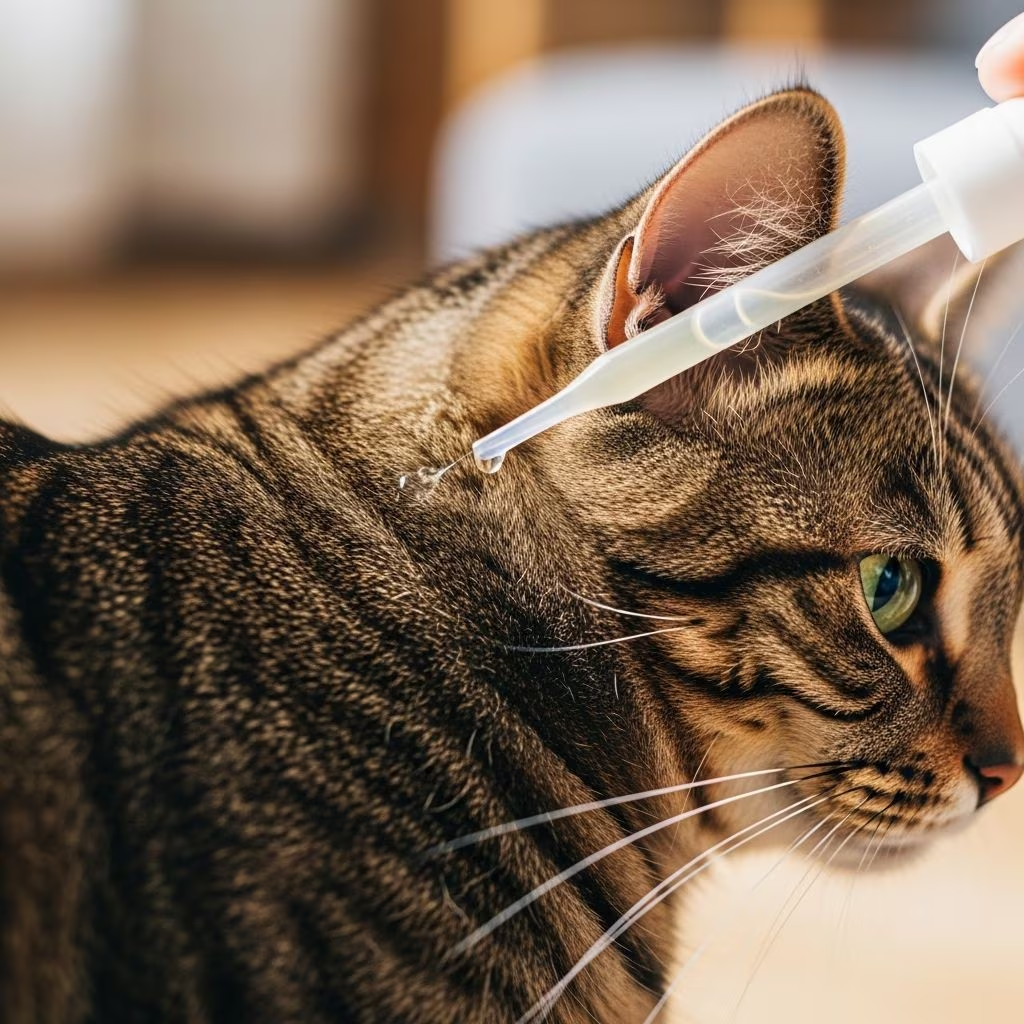
Flea infestations pose significant health risks to cats, causing discomfort, allergies, and potential disease transmission. Flea medicines operate by disrupting the parasites’ life cycle through targeted chemical actions, providing both immediate kill and long-term prevention.
The Flea Life Cycle: Why Comprehensive Control Matters
Fleas progress through four stages—egg, larva, pupa, and adult—completing a cycle in as little as two weeks under ideal conditions. Adult fleas represent only 5% of the infestation, with the majority hidden in the environment as eggs and larvae. Effective treatments must address all stages to prevent re-infestation.
- Eggs: Laid on the host, they fall off into surroundings, hatching in 1-12 days.
- Larvae: Feed on organic debris and dried blood, molting twice before pupation.
- Pupae: Cocoon-protected, emerging as adults when stimulated by heat, vibration, or CO2.
- Adults: Jump onto hosts, feed on blood, and begin egg-laying within 24-36 hours.
Understanding this cycle underscores the need for products that kill adults on contact while inhibiting immature stages.
Active Ingredients Powering Flea Control
Modern flea medicines rely on insecticides and insect growth regulators (IGRs). Key compounds include fipronil, which targets the flea’s nervous system by blocking GABA-gated chloride channels, leading to hyperexcitation, paralysis, and death. This occurs without the flea needing to bite, as the compound spreads via skin oils.
S-methoprene and similar IGRs mimic juvenile hormones, preventing larvae and pupae from maturing into reproductive adults. Combined formulations, like those with both fipronil and S-methoprene, achieve over 98% efficacy across the life cycle.
| Ingredient | Target Stages | Mechanism | Example Products |
|---|---|---|---|
| Fipronil | Adults, ticks | Nervous system disruption | Frontline, Frontline Plus |
| S-methoprene | Eggs, larvae, pupae | Hormone mimicry | Frontline Plus |
| Imidacloprid | Adults, larvae | Nicotinic receptor blocker | Advantage II |
| Spinosad | Adults | Nerve signal interference | Comfortis |
These ingredients ensure broad-spectrum protection, with many repelling parasites before contact.
Types of Flea Treatments for Feline Use
Topical Spot-On Applications
The most common format, applied between the shoulder blades, absorbs into the skin and distributes via sebaceous glands. Kill-on-contact formulas like Advantage II eliminate fleas within 12 hours without biting, lasting 30 days and remaining waterproof after 24 hours. Products such as Revolution Plus start in 12 hours, also combating heartworms and mites. Longer-acting options like Bravecto last 8-12 weeks, killing 100% of fleas in 8 hours.
Oral Medications
Tablets and chewables offer convenience, entering the bloodstream or fat stores to kill biting fleas rapidly. Capstar acts in 30 minutes, ideal for heavy infestations but requiring daily dosing. Monthly options like Comfortis (30 minutes onset, 98% efficacy in 4 hours) and Credelio (6 hours for fleas) suit ongoing prevention.
Flea Collars
Collars like Seresto release active ingredients continuously, killing fleas in 24 hours and new ones in 2 hours, repelling without bites. Effective for 8 months, they complement other treatments.
Shampoos and Powders
These provide instant kill but lack residual action; fleas can return within a day. Best as adjuncts for initial cleanups.
Timeline: How Quickly Do Treatments Act?
Efficacy varies by type and infestation severity. Oral meds like Capstar and Comfortis kill in 30 minutes to 4 hours. Topicals begin in 6-12 hours, achieving 98% kill in 24 hours. Collars match topicals for speed on new fleas. Full environmental control may take weeks due to pupal dormancy.
- Mild cases: Visible improvement in 24-48 hours.
- Severe infestations: Multiple treatments over 3 months to break the cycle.
Factors like cat age, health, and grooming habits influence speed.
Safe Application Guidelines for Cats
Never use dog products on cats, as they can cause toxicity. Consult vets for kittens under 8 weeks or pregnant queens. Part fur at the base of the skull, apply entire contents, and prevent licking for 30 minutes.
Dosage by Weight:
- Kittens 2-6 lbs: Pediatric formulas.
- Adults 6-18 lbs: Standard dose.
- Over 18 lbs: Vet-prescribed multiples.
Monitor for rare side effects like drooling or tremors; bathe only after 48 hours.
Environmental Strategies to Complement Treatments
Pet treatments alone miss 95% of fleas in the home. Vacuum daily, wash bedding in hot water, and use IGR sprays on carpets. Larvae die from desiccation in low-humidity areas.
Common Myths About Flea Control
Myth 1: Monthly bathing removes fleas permanently—no, it washes off treatments.
Myth 2: Indoor cats don’t need prevention—strays or visitors introduce fleas.
Myth 3: Natural remedies suffice—many lack evidence and efficacy.
Choosing the Right Product for Your Cat
Consider lifestyle: Outdoor cats need tick coverage; allergy-prone ones benefit from bite-prevention. Vets recommend rotation to prevent resistance. Cost-effectiveness favors monthly topicals or collars.
Frequently Asked Questions (FAQs)
How often should I apply flea medicine to my cat?
Most products last 30 days; collars up to 8 months. Reapply on schedule to maintain protection.
Can flea treatments harm my kitten?
Age-specific formulas start at 8 weeks/2 lbs. Always check labels.
What if my cat still has fleas after treatment?
Treat the environment and all pets. Pupae may emerge later.
Are flea collars safe with other treatments?
Yes, for multi-modal control, but consult a vet.
Do fleas die without feeding?
Kill-on-contact products yes; others require biting.
References
- Frontline Flea Treatment for Cats – How does it work? — Protect My Pet. 2023. https://www.protect-mypet.com/blog/frontline-flea-treatment-for-cats/
- How Long Does Tick and Flea Treatment for Cats Take to Work? — PetMD. 2024-10-15. https://www.petmd.com/cat/general-health/tick-and-flea-treatment-for-cats-how-long-to-work
- When and How Does Flea Medicine Work on Dogs and Cats — Pet Friendly Box. 2023. https://petfriendlybox.com/resource-center/how-does-flea-medicine-work
- How Do Flea Treatments Work? — Pet Drugs Online. 2024. https://www.petdrugsonline.co.uk/pet-advice/how-do-flea-treatments-work
- Flea Control in Cats — VCA Animal Hospitals. 2023-05-01. https://vcahospitals.com/know-your-pet/flea-control-in-cats



