

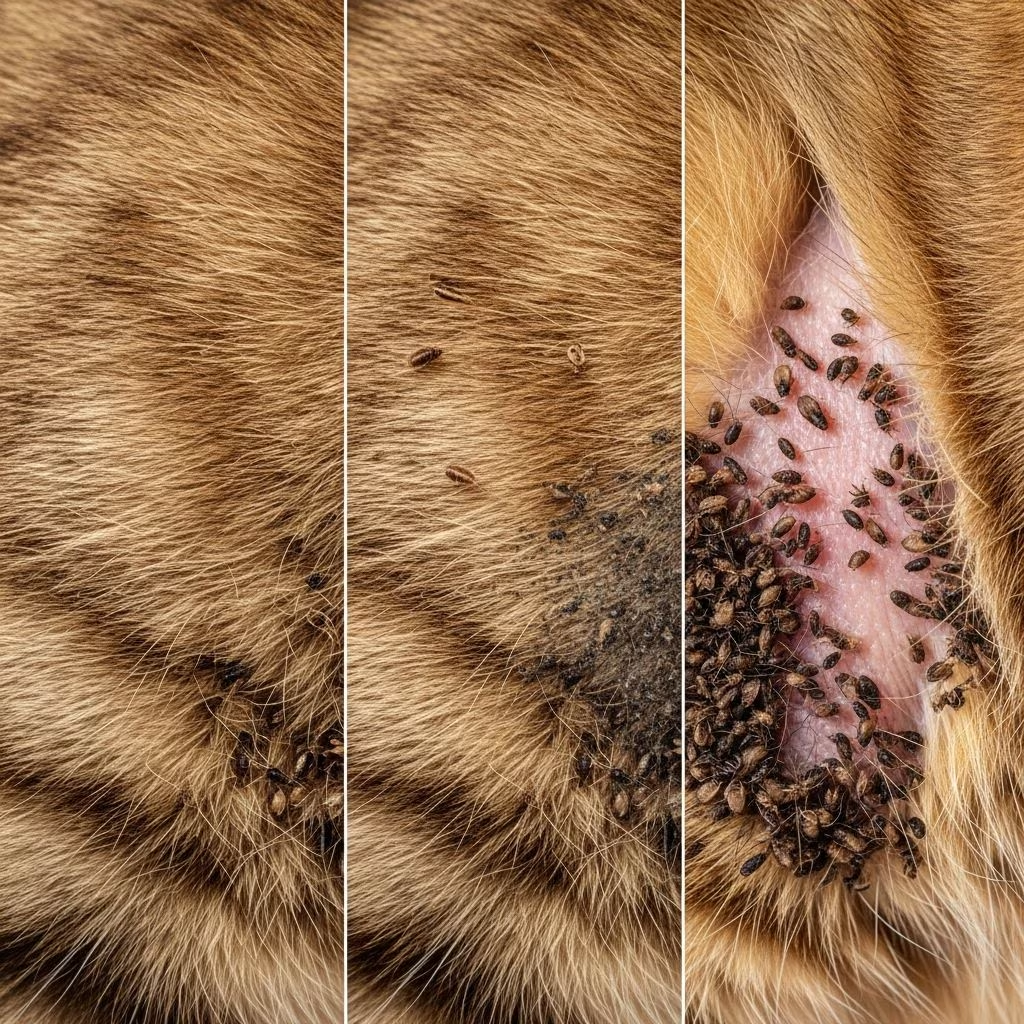
Fleas represent one of the most common parasitic challenges cat owners face, yet determining the severity of an infestation can be surprisingly difficult. Unlike some pet health conditions with clear diagnostic markers, flea infestations exist on a spectrum, and what constitutes a significant problem depends on multiple factors including your cat’s age, health status, immune response, and environmental circumstances. Recognizing the threshold between manageable flea presence and problematic infestation is essential for protecting your cat’s wellbeing and preventing secondary health complications.
The Spectrum of Flea Presence
Not every flea discovered on a cat represents an infestation requiring emergency intervention. A single flea or even a handful of fleas might indicate occasional exposure rather than an established population problem. However, determining precisely where the line falls between normal exposure and genuine infestation requires understanding both the biology of flea populations and the individual vulnerability of your specific cat.
Cats vary significantly in their susceptibility to flea-related complications. Some cats tolerate flea bites with minimal reaction, while others experience extreme discomfort from just a few bites. This variation stems partly from individual immune system differences and partly from whether a cat has developed flea allergy dermatitis, a hypersensitivity reaction where the cat’s immune system overreacts to proteins present in flea saliva. For cats with this condition, even a minimal flea population can trigger significant clinical signs.
Visual and Physical Indicators of Escalating Infestation
Identifying fleas directly on your cat provides the most straightforward evidence of their presence. Adult fleas appear as small, dark, fast-moving insects visible with careful examination or with the aid of a flea comb. Running a fine-toothed metal flea comb through your cat’s fur can reveal both adult fleas and flea eggs, which should be immediately dipped in hot soapy water to kill any parasites. This simple diagnostic tool often reveals infestations not immediately obvious through casual observation.
Beyond visible fleas themselves, flea dirt—the fecal matter left by fleas—provides another diagnostic clue. Flea excrement appears as reddish-black, pellet or comma-shaped particles, and notably, when placed in water or on damp paper towels, this material dissolves and produces a characteristic reddish-brown color, confirming the presence of blood in the flea waste. Finding numerous flea dirt particles concentrated in areas where your cat sleeps or frequently rests suggests an established population rather than casual exposure.
As infestation severity progresses, physical manifestations become increasingly apparent. Cats begin exhibiting excessive scratching, licking, chewing, and rubbing behaviors as they attempt to relieve intense itching caused by multiple flea bites. This excessive grooming can result in visible hair loss, particularly on the neck, ear base, tail base, groin area, and symmetrically along the back. More concerning are the skin lesions that develop—red scabs, bumps, or sores that may become raised, raw, weeping, or even bloody.
Recognizing Moderate Infestation Severity
A moderate flea infestation typically involves enough fleas that physical evidence becomes readily apparent through examination. You’ll consistently find fleas or flea dirt when combing your cat’s coat, and your cat displays noticeable behavioral changes including increased grooming and visible scratching episodes. The skin may show mild to moderate irritation with some scabbing or hair loss in localized areas.
At this stage, environmental contamination has likely occurred. Flea eggs and larvae are distributed throughout your cat’s sleeping areas, favorite resting spots, and other frequently visited locations in your home. Carpets, upholstered furniture, bedding, and baseboards may harbor developing flea life stages. Without intervention, the population will continue expanding as eggs hatch and develop into adult fleas.
Severe Infestation and Systemic Health Consequences
Severe flea infestations represent a medical concern requiring immediate attention. At this level, fleas are so numerous that detection becomes almost trivial—your cat visibly scratches constantly, exhibits significant hair loss in multiple body regions, and displays extensive skin damage including wounds, crusting, and secondary bacterial infections. Your cat may appear uncomfortable, restless, and unable to relax.
Perhaps most concerning is that severe infestations can lead to anemia in cats, particularly young kittens or elderly cats. When flea populations are large enough to continuously feed on your cat’s blood, cumulative blood loss becomes significant enough to affect your cat’s health status. Signs of anemia include lethargy, low energy levels, poor coat appearance, pale gums, and visible changes in body condition. These signs represent a medical emergency requiring immediate veterinary intervention.
Severe infestations also dramatically increase the risk of secondary bacterial skin infections resulting from your cat’s constant scratching and the introduction of bacteria into open wounds. These infections, medically termed pyoderma, can progress to serious conditions requiring prolonged antibiotic treatment. Additionally, cats ingesting fleas while grooming risk tapeworm infections, which may be observed as rice-like segments around the anus or in fecal matter.
Flea Allergy Dermatitis as an Infestation Multiplier
Cats with flea allergy dermatitis (FAD) experience disproportionate reactions even to minimal flea populations. In these cats, the immune system’s hypersensitivity to flea saliva proteins triggers intense inflammation, itching, and skin damage. Paradoxically, cats with severe FAD may actually show fewer visible fleas on their coat because they’re meticulous groomers and remove fleas quickly. Nevertheless, the damage is significant—reddish crusty bumps, scabs, and hair loss occur even in areas not obviously scratched.
For cats with FAD, what might be considered a minor infestation in a non-allergic cat constitutes a significant health problem. These cats require more aggressive flea prevention and control than their non-allergic counterparts, and any delay in flea elimination prolongs their suffering.
Environmental Contamination Levels
Infestation severity extends beyond what exists on your cat’s body to include the flea population present throughout your home environment. Once fleas establish breeding populations indoors, control becomes considerably more complex. Flea eggs and larvae burrow deep into carpets, settle in furniture crevices, and hide in baseboards where they’re protected from typical cleaning efforts.
A significant environmental infestation is present when careful vacuuming and standard cleaning fail to prevent new adult fleas from emerging on your cat despite topical or oral flea treatments. When you notice flea dirt accumulating on your cat’s bedding despite ongoing prevention efforts, this indicates that environmental flea populations remain active and your cat is being continually re-infested.
Diagnostic Approaches and Confirmation
Veterinarians employ several diagnostic methods to assess infestation severity beyond visual inspection. Skin scrapings and impressions allow microscopic examination for evidence of secondary skin infections and parasitic organisms. In cases where fleas are suspected but not readily visible—particularly with highly allergic cats—blood tests measuring antibodies against flea saliva components can confirm exposure and infestation.
For cats with unclear symptoms or suspected secondary infections, additional diagnostics may include fungal cultures to rule out ringworm and bacterial cultures to identify organisms causing secondary skin infections.
Prevention Thresholds and Year-Round Management
Rather than waiting to determine infestation severity, veterinarians recommend year-round flea prevention and control for all cats. Prevention proves far more cost-effective and practical than managing established infestations. Monthly preventive treatments recommended by your veterinarian maintain protection regardless of environmental flea pressure.
For cats with confirmed flea allergy dermatitis, strict year-round flea control becomes non-negotiable—even brief lapses in prevention can trigger clinical signs. Once resolved through proper treatment, the condition can return without adherence to consistent prevention protocols.
Treatment Timelines and Recovery Expectations
Understanding infestation severity helps set realistic expectations for recovery. Once appropriate flea control treatments begin, symptoms typically start improving within one to two weeks, though complete resolution may require additional time. Some flea products begin killing fleas within thirty minutes, but the associated inflammation and itching require longer to subside, sometimes taking two weeks or more for complete symptom clearance.
Frequently Asked Questions
How many fleas constitute an actual infestation requiring treatment?
Rather than a specific flea count, infestation status depends on symptom presence, your cat’s reaction to bites, and environmental contamination. If your cat shows scratching, skin irritation, or visible flea dirt, treatment is warranted regardless of how many adult fleas are visibly present.
Can my cat have fleas without showing obvious symptoms?
Yes, some cats tolerate flea bites better than others and may have established flea populations without dramatic symptoms. However, this doesn’t mean the infestation is harmless—ongoing blood loss, tapeworm risk, and the potential for allergy development remain concerns.
Why do some cats seem unaffected by fleas while others suffer greatly?
Individual immune system variation and whether a cat has developed flea allergy dermatitis explain these differences. Additionally, some cats are simply more tolerant of parasites than others, though all cats benefit from flea prevention.
How quickly do flea populations grow if untreated?
Flea populations can escalate rapidly, with the flea life cycle from egg to adult-producing flea occurring in as little as two weeks under optimal conditions, creating exponential population growth.
Is vacuuming alone sufficient to control a home infestation?
No. While vacuuming is essential, it alone cannot eliminate flea pupae and deeply embedded life stages. Combination approaches including pet treatment, environmental sprays with insect growth regulators, and frequent washing are necessary for complete control.
References
- What Is Flea Allergy Dermatitis in Cats? Symptoms, Causes and Treatment — PetMD. https://www.petmd.com/cat/conditions/skin/what-flea-allergy-dermatitis-cats-symptoms-causes-and-treatment
- Fleas On Cats – Symptoms To Look Out For — The Pet Vet. https://www.thepetvet.co.uk/pet-advice/fleas-cats-symptoms-look-out
- How to Get Rid of Fleas on Cats — PetVet Care Centers. https://www.petvetcarecenters.com/site/blog/2022/08/31/how-get-rid-fleas-cats
- Fleas: A Source of Torment for your Cat — Cornell Feline Health Center. https://www.vet.cornell.edu/departments-centers-and-institutes/cornell-feline-health-center/health-information/feline-health-topics/fleas-source-torment-your-cat
- Flea Control in Cats — VCA Animal Hospitals. https://vcahospitals.com/know-your-pet/flea-control-in-cats
- Fleas / Home and Landscape / UC Statewide IPM Program — UC Statewide IPM Program. https://ipm.ucanr.edu/home-and-landscape/fleas/
- Fleas of Cats – Cat Owners — Merck Veterinary Manual. https://www.merckvetmanual.com/cat-owners/skin-disorders-of-cats/fleas-of-cats



