

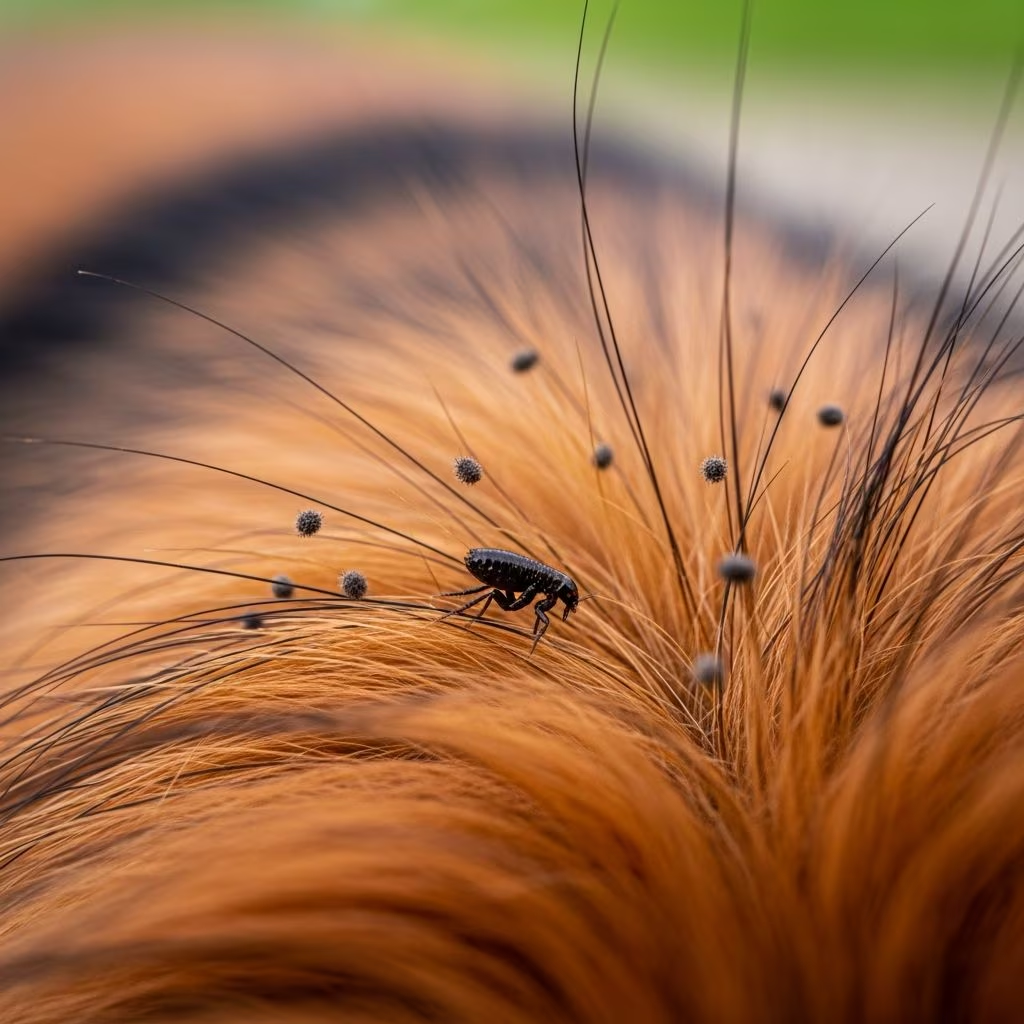
Every time you take your dog for a walk, you expose them to numerous environmental hazards, and among the most persistent are fleas. These tiny parasites are waiting in parks, yards, and natural areas, ready to latch onto your pet. Understanding how dogs acquire fleas during outdoor activities and what you can do to minimize this risk is essential for maintaining your dog’s health and comfort.
Understanding Flea Species and Their Prevalence
Fleas are among the most common external parasites affecting dogs, with over 2,200 species recognized worldwide. However, only a handful of these species commonly infest domestic pets in North America. The most prevalent species found on dogs is the cat flea, Ctenocephalides felis, accounting for 67.5% of all flea infestations. Other notable species include Pulex irritans (26.5%), Ctenocephalides canis (16.5%), and several less common varieties.
Understanding which flea species pose the greatest threat helps pet owners recognize infestation patterns and seek appropriate treatment. Female fleas are predominantly collected, which is significant because they are responsible for reproduction and the rapid escalation of infestations.
Quantifying Flea Exposure: From Single Parasites to Full Infestations
A critical question many dog owners ask is how many fleas constitute an actual infestation. The reality is more nuanced than a specific number. As few as 20 fleas may indicate your dog is infested, while severe infestations can involve 200 to 300 parasites. What makes this particularly concerning is that even observing a single flea on your dog should prompt action, as it signals the potential presence of many more hidden in your pet’s fur and throughout your home.
The speed at which flea populations explode is alarming. A female flea can begin laying eggs within just two days of landing on your dog. Within four to nine days, she produces 27 or more eggs daily. This exponential growth means that ignoring a few fleas can rapidly develop into a full-blown infestation affecting both your pet and your living environment.
Seasonal Patterns and Peak Flea Activity
Flea exposure is not uniformly distributed throughout the year. Seasonal variations dramatically influence the risk of your dog picking up fleas during walks. Research demonstrates clear seasonal patterns in flea infestation rates:
- Peak Season: Summer months, particularly August, show the highest infestation rates, with August recording a 24.7% infestation rate.
- Spring and Autumn: These transitional seasons still present significant flea activity as temperatures remain favorable for flea reproduction and survival.
- Winter Decline: January marks the lowest point in flea activity, with only 1.7% infestation rates recorded.
- February and March Exception: Interestingly, these winter months were the only period when fleas were not observed in certain regions.
These seasonal trends are driven by temperature and environmental humidity. Fleas thrive in warm, moist conditions, making warm seasons prime time for parasite activity. Climate significantly influences flea species distribution and prevalence, with temperate climates and higher rainfall showing the highest infestation rates.
Age, Gender, and Individual Susceptibility Factors
Not all dogs face equal risk of flea exposure and infestation. Certain demographic factors increase vulnerability:
| Factor | Details | Risk Level |
|---|---|---|
| Age | Dogs under 2 years old showed 62.7% infestation rate; dogs aged 2-4 years showed 35% rate; dogs over 4 years showed 2.4% rate | High in puppies, decreases with age |
| Gender | Female dogs showed 13.6% infestation rate; male dogs showed 9.4% infestation rate | Slightly higher in females |
| Geographic Location | Infestation rates varied from 2.4% in region 3 to 61.5% in region 1 | Highly variable by location |
Younger dogs face significantly higher infestation rates, possibly due to underdeveloped immune responses or behavioral differences in outdoor exposure. This variation emphasizes the importance of tailored prevention strategies based on your dog’s age and living environment.
The Biology of Flea Acquisition During Walks
When your dog walks through grass, brush, or areas frequented by other animals, fleas waiting in the environment detect vibrations and warmth from your pet’s body. Once they land on your dog, fleas begin feeding on blood within minutes of contact. This rapid feeding process means that even a brief exposure during a walk can result in active parasites drawing nourishment from your dog’s bloodstream.
The environment where your dog walks plays a crucial role in flea exposure risk. Parks, wooded areas, and yards where other animals frequent—particularly strays or wildlife—harbor flea populations. Even residential yards can harbor fleas that have been deposited by wildlife or other pets.
Regional Variations in Flea Risk
Geographic location dramatically influences flea exposure during walks. Different regions demonstrate vastly different infestation prevalence, with some areas showing infestation rates 25 times higher than others. In the United Kingdom, research indicates that between 6.82% and 14% of dogs carry fleas, providing context for varying regional risk levels.
Environmental factors contributing to regional differences include local climate patterns, humidity levels, wildlife populations, and the prevalence of untreated flea infestations in the community. Pet owners in high-risk regions should place particular emphasis on preventative measures.
The Timeline of Flea Infestation Development
Understanding how quickly a single flea exposure can escalate is critical for appreciating the importance of prevention. Within two days of arriving on your dog, a female flea matures and begins reproduction. The cycle progresses rapidly:
- Days 1-2: Flea lands on dog and begins feeding
- Days 2-3: Mating occurs and females become fertile
- Days 4-9: Female lays 27+ eggs daily in the dog’s coat
- Days 10-14: Eggs hatch into larvae in the environment
- Weeks 2-4: Larvae develop into pupae and eventually adults
- Weeks 4+: New adults emerge and infest the dog and environment
This rapid lifecycle demonstrates why early intervention upon discovering even a single flea is essential.
The Rising Trend of Flea Infestations
Recent years have witnessed a concerning increase in flea infestations among pets. In 2023 alone, flea infestation cases surged by 47%, indicating that dogs walking in outdoor environments face growing parasite exposure. This upward trend suggests that environmental flea populations are becoming increasingly robust, making preventative measures more critical than ever.
Effective Prevention Strategies for Outdoor-Active Dogs
Given the risks of flea exposure during walks, multiple prevention approaches should work together:
- Preventative Treatments: Spot-on treatments, oral medications, and flea collars provide ongoing protection. These should be applied consistently according to veterinary recommendations.
- Home Treatment: Regular treatment of your home environment, including floors, furniture, and your dog’s bedding, eliminates fleas at all life stages.
- Yard Management: Treating outdoor spaces where your dog spends time reduces environmental parasite reservoirs.
- Regular Monitoring: Using a flea comb weekly helps detect infestations before they become severe.
- Veterinary Guidance: Consulting with your veterinarian about appropriate preventative products based on your dog’s age, health status, and local flea prevalence is essential.
Understanding Flea Product Effectiveness
Many pet owners have misconceptions about how flea products work. A critical misunderstanding is that these products immediately kill all fleas or completely repel them. In reality, many flea products do not repel fleas, and long-acting products do not kill most fleas within minutes. Fleas may live for 6 to 24 hours and bite before being killed, meaning you might still observe fleas on your treated dog for up to 8 weeks as the infestation is eliminated. Understanding this timeline helps prevent frustration and ensures you continue treatment protocols as recommended.
Recognition of Flea Infestation Signs
Early detection of flea exposure prevents minor problems from becoming infestations. Watch for these signs that your dog may have picked up fleas during walks:
- Excessive scratching, biting, or licking of the skin
- Hair loss, particularly around the tail base, hindquarters, and back legs
- Red, inflamed, or irritated skin
- Small dark specks (flea feces) in the coat or bedding
- Presence of actual fleas visible on the skin or in the fur
- Behavioral changes such as restlessness or difficulty sleeping
Frequently Asked Questions
How many fleas can a dog pick up on a single walk?
The number varies greatly based on environmental conditions, season, and location. While a dog might encounter only a few fleas on a winter walk in a low-risk area, summer walks in high-flea environments could result in dozens of flea exposures.
Can indoor dogs get fleas?
Yes, fleas can be brought indoors on clothing, other pets, or wildlife. However, the primary source of flea exposure for active dogs is outdoor environments.
Is there a safe time to walk dogs without flea risk?
Winter months, particularly January through March, show significantly lower flea activity. However, even during these months, fleas can still be present, especially in warm microclimates or heated environments.
What’s the most effective flea prevention for dogs who walk frequently?
Veterinarians recommend year-round preventative treatment for dogs with regular outdoor exposure, combined with regular home and yard treatments and weekly flea comb inspections.
Conclusion
Flea exposure during dog walks represents a significant health concern that requires proactive management. From understanding the biology of different flea species to recognizing seasonal risk patterns and individual susceptibility factors, pet owners have multiple tools to reduce their dog’s flea burden. By combining regular preventative treatments, environmental management, and close monitoring, you can keep your dog comfortable and healthy despite the persistent threat of fleas in outdoor environments.
References
- Fleas of Dogs – Dog Owners — Merck Veterinary Manual. https://www.merckvetmanual.com/dog-owners/skin-disorders-of-dogs/fleas-of-dogs
- Survey of Flea Infestation in Dogs in Different Geographical Regions — National Center for Biotechnology Information (NCBI). 2010. https://pmc.ncbi.nlm.nih.gov/articles/PMC2892570/
- How Many Fleas on a Dog Is Considered an Infestation? — ADAMS Pet Care. https://www.adamspetcare.com/expert-care-tips/flea-and-tick-pest-education/how-many-fleas-on-a-dog-is-considered-an-infestation
- Seasonality and other risk factors for fleas infestations in domestic dogs — Medical and Veterinary Entomology, Wiley Online Library. https://resjournals.onlinelibrary.wiley.com/doi/10.1111/mve.12636
- Why was there a 47% increase in flea infestations in 2023? — Itch Pet. https://www.itchpet.com/blog/post/why-was-there-a-47-increase-in-flea-infestations-in-2023



