

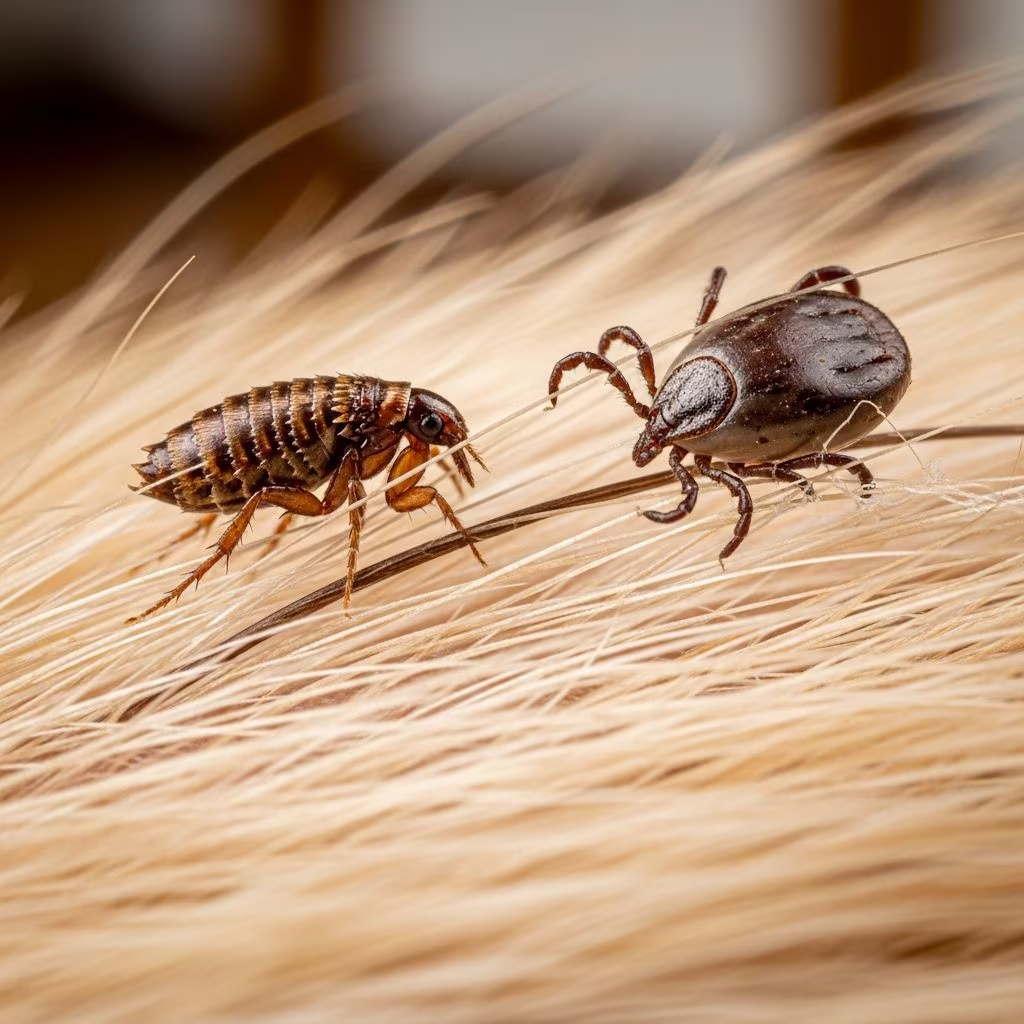
Flea and Tick Prevention: Protecting Your Pet and Home
Flea and tick prevention consists of a variety of products that control flea and/or tick infestations on your pet and prevent infestations inside your home. These parasites are more than just a nuisance—they pose significant health risks to both your pets and your family. Understanding the importance of prevention and the available options can help you make informed decisions about your pet’s health and safety.
Understanding Fleas and Ticks
Fleas are small, parasitic insects that feed on blood from animals and people, while ticks are a type of arachnid similar to spiders, scorpions, and mites. These parasites thrive in various climates and can live both on your warm pet and inside your home. Their ability to adapt to different environments makes them a year-round concern for pet owners in many regions.
Why Flea and Tick Prevention Is Essential
Fleas and ticks create two primary problems for pet owners and their animals. First, they cause immediate discomfort and skin irritation through their bites. In some cases, pets and people can experience severe allergic reactions to these bites, leading to intense scratching, hair loss, and secondary skin infections.
Second, and perhaps more importantly, fleas and ticks carry diseases that can be deadly or cause severe, chronic, and lifelong illness. Tick species are known to transmit specific infectious diseases, including Lyme disease, ehrlichiosis, anaplasmosis, babesiosis, Rocky Mountain spotted fever, rickettsiosis, tularemia, cytauxzoonosis, and hepatozoonosis. Prevention is key to avoiding these serious health complications.
Prevention is also critical because fleas and ticks can infest your entire home. Because they have different life cycles, treating an active infestation is much more difficult and costly than preventing one in the first place. Once parasites establish themselves in your home’s carpets, furniture, and bedding, eradication becomes a lengthy and expensive process.
Identifying Fleas and Ticks on Your Pet
Fleas and ticks are small and can sometimes be difficult to identify on your pet, especially on cats that are constantly grooming. However, physical examination is the easiest way to identify signs of infestation. Here are key areas to check:
- For cats: Focus on the head and neck area where fleas prefer to hide
- For dogs: Check the rump and tail area where fleas are commonly found
Using a flea comb can help identify the presence of adult fleas or flea dirt. Flea dirt (flea feces) looks like brownish-black, granular “dirt” that dissolves and turns red when placed on a wet paper towel. This distinctive reaction is a reliable indicator of flea presence.
Sometimes finding a flea or tick is difficult, especially in early stages of infestation. Sometimes the only sign of fleas and ticks is unexplained skin irritation, and in these cases, flea and tick prevention is used as a treatment trial to determine if parasites are the underlying cause.
Year-Round Prevention Recommendations
While fleas and ticks are present year-round in some areas of the world, others have distinct flea and tick seasons. However, many veterinary professionals agree that year-round prevention is recommended when possible. This is because both fleas and ticks can survive in a variety of climates and can live inside your home and on your warm pet throughout the year, even in colder regions.
The indoor environment of your home provides ideal conditions for these parasites to thrive regardless of the season outside, making continuous protection the safest approach.
Types of Flea and Tick Prevention Products
There are many products on the market to prevent fleas and ticks. Your veterinarian will help you choose a product that works best for you and your pet based on your lifestyle, your pet’s lifestyle, and your needs and preferences. Products vary in their application method, frequency, and coverage:
Topical Flea Products
Applied directly to the skin, these products include Activyl®, Advantage® II, and Cheristin®. They are absorbed through the skin and provide flea protection without being ingested.
Oral Flea Products
Administered by mouth, these products include Capstar®, Comfortis®, Sentinel® (which acts as a growth regulator only), and Credelio®. These are convenient for pets that may resist topical treatments.
Topical Tick Products
Preventic® is designed for dogs only and provides tick-specific protection through topical application.
Topical Combination Products
These provide protection against both fleas and ticks in a single application. Options include Frontline®, K9 Advantixx® II (dogs only), Bravecto®, Revolution®, Seresto® (collar format), Vectra 3D® (dogs only), Effipro® Plus, and Effitix® (dogs only).
Oral Combination Products
Available for dogs only, these include Bravecto®, NexGard®, Trifexis®, Simparica™, and Credelio®. These convenient chewable options protect against multiple parasites.
Application Frequency Options
Prevention products are available with various dosing schedules:
- Daily applications for some oral preventatives
- Monthly applications for most topical and oral products
- Quarterly or longer-lasting options for certain formulations
How Different Products Work
Understanding the mechanisms of action helps you appreciate why certain products are recommended for your pet’s situation. There are very effective products designed to be administered once per month or once every three months. Some contain adulticide ingredients that kill adult fleas and remain active between scheduled doses, while others contain insect growth regulators (IGRs) that prevent the larval stages from maturing into adults.
Newer products have combined advantages of both adulticides and IGRs, providing comprehensive protection through multiple mechanisms. These advanced formulations are available through your veterinarian and represent the most effective prevention options currently available.
Safety and Side Effects
Flea and tick prevention products are generally safe when recommended by your veterinarian and when manufacturer guidelines are followed. Rarely, side effects can occur and may include:
- Skin irritation where a topical preventative was applied
- Vomiting or diarrhea
- Tremors or seizures (more likely to occur when applied to the wrong species or if overdosed)
In most cases, the risk of side effects from an appropriate preventative is much lower than the risk of serious disease from flea and tick-borne illnesses. Ask your veterinarian for a recommendation specific to your pet, taking into account your pet’s current and past health condition. Your vet can help you weigh the benefits against any potential risks based on your individual pet’s medical history.
Environmental Treatment and Home Control
Successful flea and tick control involves both eliminating parasites from your pet and controlling them in your environment. Several products are available to kill the adult and larval stages of fleas and stop the flea life cycle:
- Adulticide sprays for use in the house
- Sprays containing IGRs for use in the house
- Insecticides applied by professional pest control companies
Sprays should be used in places where flea eggs, larvae, and pupae are likely to be. Treat the entire household first and then concentrate on hot spots—your pet’s favorite napping spots, such as soft furniture, beds, and carpets. Once larvae hatch from eggs, they move away from light and burrow deep into carpets and other nooks and crannies where they are difficult to reach.
Be sure to move cushions, furniture, and beds to spray under them. Larvae are also likely to live in baseboards and the cracks and crevices between floor seams or floorboards. It is helpful to vacuum before using a spray for the house because the vibrations will encourage newly developed fleas to emerge from pupae and be killed by the insecticide.
Removing Flea Eggs and Pupae
Flea eggs and pupae are extremely tough and resistant to insecticides. To remove eggs and dead fleas, wash your pet’s bedding in hot water or replace it entirely. Regular and thorough vacuuming of your carpets, floors, and soft furnishings can remove many flea eggs, larvae, and pupae. You will need to throw away the vacuum bag to prevent eggs and larvae from developing inside the vacuum cleaner.
Treating Outdoor Areas
Flea exposure is inevitable when your pet goes outside, so ensure you are using a veterinary-recommended flea preventive. Another way to reduce flea exposure is to discourage other animals like raccoons and opossums from spending time in your yard. If your yard is heavily infested, you can consider spraying a product containing an IGR and repeating every 14–21 days for three to five applications. Concentrate on dark, shaded areas and the areas where your pet sleeps, including bedding areas.
It’s important to note that yard sprays may have a negative effect on other insect populations outdoors, so use them judiciously and only when necessary.
Long-Term Management After Infestation
If your pet has experienced a flea or tick infestation, it is important to continue administering flea control to all pets in the house for 3–6 months following the initial infestation to allow time for any remaining flea life stages to be eliminated. This extended treatment period ensures complete eradication and prevents reinfestation.
Resistance and Prevention Effectiveness
There is no evidence of fleas developing resistance to insecticides, especially once-a-month topical flea preventives that contain a sterilizing agent or IGR in addition to the adulticide. Most flea and tick problems can be overcome by using a veterinarian-recommended preventive product regularly on your pet in addition to treating your home environment.
Frequently Asked Questions
Q: Can my pet get fleas or ticks even if they stay indoors?
A: Yes, fleas and ticks can enter your home through open doors, windows, or on your clothing and shoes. Additionally, if you have other pets that go outdoors, they can bring parasites inside. Year-round prevention is recommended for all pets.
Q: How often should I check my pet for fleas and ticks?
A: Regular checking is essential for early detection. You should examine your pet at least weekly, and daily during peak season or if you notice your pet scratching excessively. Use a flea comb and check favorite resting areas.
Q: What should I do if I find a tick on my pet?
A: Remove the tick using tweezers by grasping it close to the skin and pulling steadily outward. Do not twist or squeeze the tick. Clean the area with antiseptic. Consult your veterinarian if the tick is difficult to remove or if your pet shows signs of illness.
Q: Is it safe to use flea and tick prevention on senior pets?
A: Flea and tick prevention can be used on senior pets, but consult with your veterinarian first. Your vet will consider your pet’s age, health status, and any existing medical conditions to recommend the safest option.
Q: Can I use dog flea prevention on my cat?
A: No, never use dog flea prevention on cats. Many products that are safe for dogs can be toxic to cats. Always use products specifically labeled for your pet’s species and follow dosing instructions carefully.
Q: How long does it take for flea and tick prevention to work?
A: Most prevention products begin working within hours of application. Topical treatments typically start killing fleas within 24-48 hours, while oral medications may work even faster. Always follow the product instructions for best results.
References
- Flea and Tick Prevention — VCA Animal Hospitals. Accessed 2025-11-28. https://vcahospitals.com/know-your-pet/flea-and-tick-prevention
- Flea Control in Dogs — VCA Animal Hospitals. Accessed 2025-11-28. https://vcahospitals.com/know-your-pet/flea-control-in-dogs
- Flea Control in Cats — VCA Animal Hospitals. Accessed 2025-11-28. https://vcahospitals.com/know-your-pet/flea-control-in-cats
- Illness from Mosquito, Tick and Flea Bites Tripled in the United States — Today’s Veterinary Business. Accessed 2025-11-28. https://todaysveterinarybusiness.com/on-high-alert/



