

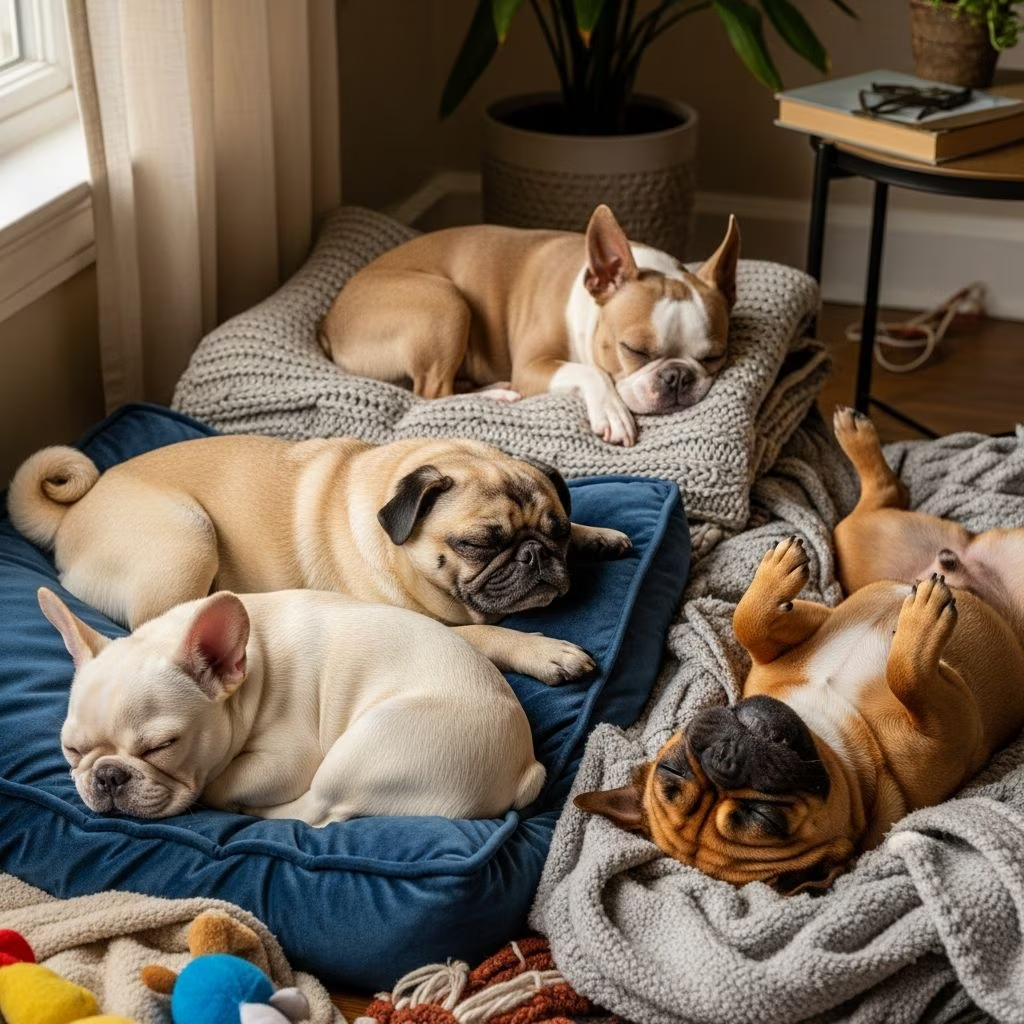
Flat-faced or brachycephalic dogs, such as French Bulldogs, English Bulldogs, Pugs, and Boston Terriers, face unique sleep challenges due to their extreme head shapes. These breeds often experience **obstructive sleep apnea (OSA)**, disrupted sleep architecture, and excessive daytime sleepiness, all stemming from **brachycephalic obstructive airway syndrome (BOAS)**. Recent studies confirm that their shortened muzzles and crowded airways lead to breathing difficulties during sleep, fragmented rest, and even potential cognitive impacts from altered brain waves.
This article delves into why these popular breeds sleep poorly, the science behind their struggles, unusual sleep positions they adopt, health consequences, and actionable advice to improve their sleep quality. Understanding these issues is crucial, as poor sleep affects not just rest but overall welfare, learning, and longevity in brachycephalic dogs.
What Are Brachycephalic (Flat-Faced) Dog Breeds?
**Brachycephalic** refers to dogs with short, wide skulls and flat faces, characterized by a high **cephalic index (CI)**—a measurement of skull width relative to length. Breeds with CI values above 60% are considered extremely brachycephalic, including:
- French Bulldog
- English Bulldog
- Pug
- Boston Terrier
- Shih Tzu
- Cavalier King Charles Spaniel (mildly brachycephalic)
While their cute, baby-like features appeal to many owners, selective breeding for this morphology has crammed the nose, tongue, soft palate, and teeth into a tiny space, drastically reducing airway size. This anatomy predisposes them to BOAS, where soft tissues collapse during relaxation, especially in sleep.
According to veterinary experts, brachycephaly correlates with over 40 health disorders, with respiratory issues topping the list. Sleep problems are a direct extension, as gravity and muscle relaxation exacerbate airway obstruction at night.
How Does Brachycephaly Affect Sleep?
Brachycephalic dogs’ sleep is profoundly disrupted by anatomical constraints. During sleep, throat muscles relax, allowing excess soft palate, thickened tongue bases, and narrow nostrils to block airflow. This triggers **sleep-disordered breathing (SDB)**, including snoring, gasping, pauses in breathing (apnea), and frequent arousals.
A 2023 University of Helsinki study used human-designed neckbands to monitor canine sleep, revealing flat-faced dogs endure significantly more apnea events and snoring than long-nosed breeds. English Bulldogs, in particular, model human OSA so closely they’re used in research.
Key mechanisms include:
- Narrow nostrils (stenotic nares): Limit inhalation, worsening during sleep.
- Elongated soft palate: Vibrates (snoring) and obstructs the trachea.
- Thickened tongue base: Falls back, sealing the airway.
These issues cause **hypoxia** (low oxygen), **hypercapnia** (high CO2), and sleep fragmentation, leading to chronic fatigue.
Sleep Apnea in Flat-Faced Dogs
**Obstructive sleep apnea (OSA)** in dogs mirrors the human condition: intermittent upper airway collapse causes breathing pauses lasting 10+ seconds, oxygen desaturation, and arousals. Brachycephalic breeds suffer disproportionately; one study found they have 5-10 times more SDB events per hour than mesocephalic (normal-faced) dogs.
Symptoms include:
| Symptom | Description |
|---|---|
| Loud snoring | Continuous or cyclical, often with gasps. |
| Apneic pauses | Breathing stops for 10-30 seconds; dog startles awake. |
| Restlessness | Frequent position changes to reopen airways. |
| Daytime sleepiness | Excessive napping due to poor nighttime sleep. |
BOAS severity scales classify dogs from mild (occasional snoring) to severe (life-threatening apnea). Untreated OSA reduces lifespan and quality of life, with links to heart strain and cognitive deficits.
Brain Waves and Sleep Patterns in Brachycephalic Dogs
Beyond breathing, brachycephaly alters **sleep EEG patterns**. A landmark 2023 study in Comparative Cognition & Behavior Reviews analyzed resting EEG in 30 dogs, finding high-CI breeds show:
- Increased delta power (1-4 Hz) and decreased beta power (12-30 Hz) in REM sleep—patterns linked to low intelligence in humans and poor learning in dogs.
- Higher sleep spindle frequency but lower intrinsic frequency, associated with white matter loss.
- Prolonged REM sleep (puppy-like), with more REM episodes and total sleep time.
These changes suggest neuroanatomical distortions from brachycephaly—like compressed brains—affect cognition. Brachycephalic dogs slept longer overall, likely compensating for apnea-induced sleepiness. Co-author Ivaylo Iotchev noted: “Brachycephalic dogs had decreased beta waves and increased delta… This pattern has previously been associated with poorer learning”.
Unusual Sleep Positions in Flat-Faced Dogs
To combat airway collapse, brachycephalic dogs adopt compensatory positions:
- Sitting up or propped: Against walls or pillows to keep head elevated.
- Chin raised: Extends neck to open airways.
- Back-sleeping: Tongue falls forward; common despite obesity risks.
- Toy-in-mouth: Held between teeth to prop jaw open.
- Open-mouth sleeping: Affects 10% of severe cases.
These adaptations highlight welfare concerns—dogs aren’t truly resting comfortably.
Health Consequences of Poor Sleep
Chronic sleep disruption in flat-faced dogs leads to:
- Daytime fatigue: More naps, reduced activity.
- Cognitive deficits: Poorer learning from abnormal EEG.
- Cardiovascular strain: Hypoxia stresses the heart.
- Weight gain: Lethargy promotes obesity, worsening BOAS.
- Behavioral issues: Irritability, anxiety from sleep debt.
Studies link BOAS severity to sleep quality, urging early intervention.
Tips to Help Flat-Faced Dogs Sleep Better
Owners can mitigate issues with these evidence-based strategies:
- Weight management: Ideal body condition score reduces tissue collapse.
- Elevated bedding: Wedge pillows or harnesses keep airways open.
- Cool environment: Fans/AC prevent heat-exacerbated panting.
- BOAS surgery: Alar flare, palate resection for moderate-severe cases.
- Monitor with wearables: Future vet tools like neckbands.
- Avoid sedatives: Relax muscles further, worsening apnea.
Consult a BOAS-certified vet for personalized plans.
FAQs
Do all flat-faced dogs have sleep apnea?
Not all, but most experience some SDB. Severity varies by breed and BOAS grade.
Can surgery fix sleep problems in brachycephalic dogs?
Surgery improves airflow in 70-90% of cases, reducing apnea, but isn’t always curative.
Why do brachycephalic dogs sleep more during the day?
Poor nighttime sleep from apnea causes compensatory napping.
Are puppy-like sleep patterns harmful?
Prolonged REM may indicate immature brain development or pathology, linked to learning issues.
How can I tell if my Pug is having sleep apnea?
Look for snoring, pauses, thrashing, or daytime lethargy. Video sleep and consult a vet.
References
- Flat-Faced Dogs Suffer More Sleep Problems — Bark & Whiskers. 2024-03-29. https://www.barkandwhiskers.com/2024-03-29-brachycephalic-dog-breeds-sleep-apnea/
- Sleep-physiological correlates of brachycephaly in dogs — PMC (Peer-reviewed). 2023-10-01. https://pmc.ncbi.nlm.nih.gov/articles/PMC10587206/
- Recognition & Diagnosis of BOAS — University of Cambridge Veterinary Medicine (.ac.uk). Accessed 2026. https://www.vet.cam.ac.uk/boas/about-boas/recognition-diagnosis
- The BOAS Patient: Sleep Disorders — Virtual Veterinary Specialists. Accessed 2026. https://www.vvs.vet/the-boas-patient-sleep-gi-disorders/
- The shape of dogs’ heads affects their sleep — EurekAlert! (AAAS). 2024. https://www.eurekalert.org/news-releases/1010973
- Evaluation of risk factors for sleep-disordered breathing in dogs — Wiley Online Library (Peer-reviewed). 2024. https://onlinelibrary.wiley.com/doi/10.1111/jvim.17019
- Brachycephalic Syndrome — American College of Veterinary Surgeons (.org). Accessed 2026. https://www.acvs.org/small-animal/brachycephalic-syndrome/



