

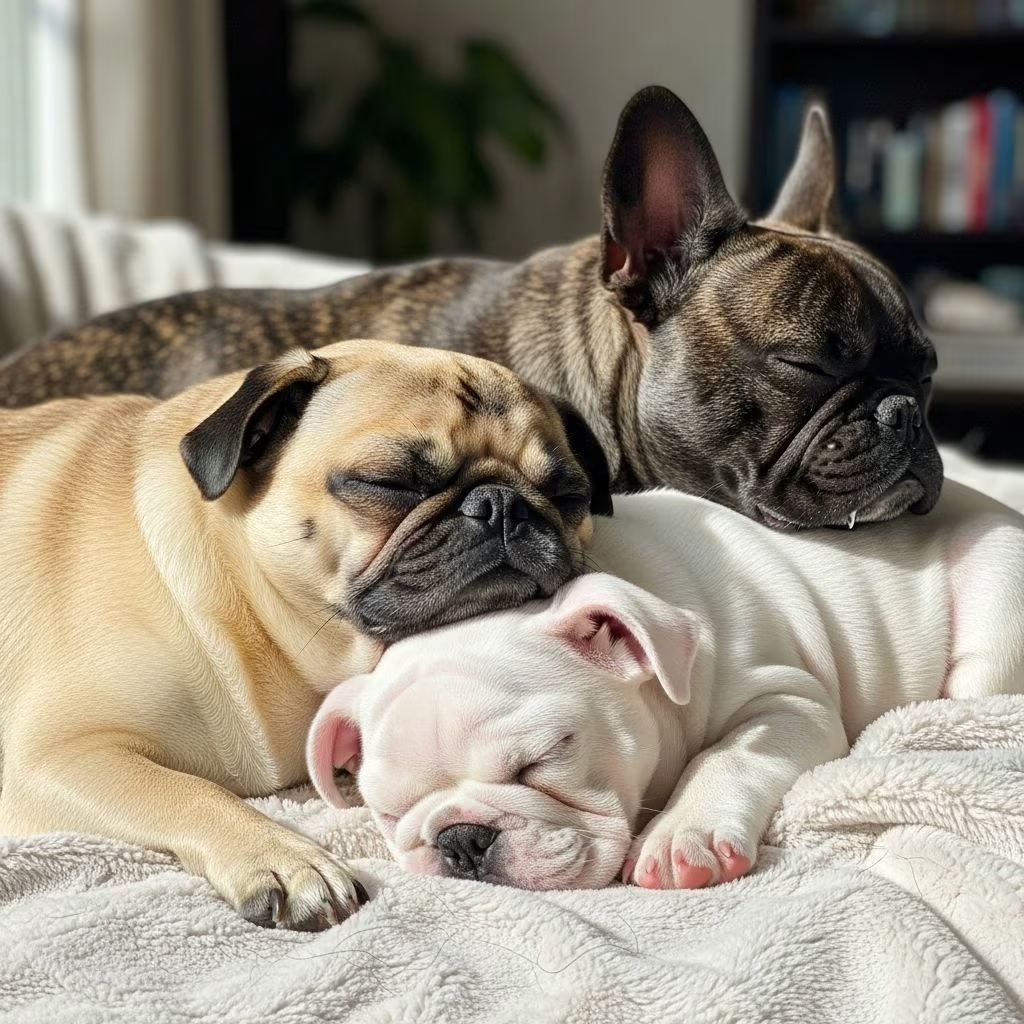
Flat-faced or brachycephalic dogs—breeds like French Bulldogs, English Bulldogs, Pugs, and Boston Terriers—face unique challenges when it comes to rest. Their shortened muzzles and compacted airways lead to brachycephalic obstructive airway syndrome (BOAS), causing snoring, gasping, and full-blown sleep apnea that fragments their sleep cycles. Recent studies reveal these dogs not only sleep poorly at night but also nap excessively during the day, potentially impacting learning and overall well-being.
What Makes Flat-Faced Dogs Different?
Brachycephalic breeds are defined by a high cephalic index (CI), measuring skull shortness and facial flatness. This extreme breeding for aesthetics crams the nose, tongue, soft palate, and teeth into a tiny space, narrowing airways dramatically. Unlike dogs with longer snouts, flat-faced pups can’t breathe efficiently, especially during sleep when muscles relax.
- Anatomical Issues: Thickened tongue base, elongated soft palate, narrow nostrils, and hypertrophied nasal turbinates obstruct airflow.
- Breathing Struggles: Even awake, they pant heavily; asleep, airways collapse, mimicking human obstructive sleep apnea (OSA).
- Prevalence: Affects up to 45% of brachycephalic dogs severely, worsening with obesity or heat.
These traits, prized for “cute” appearances, trace back to selective breeding emphasizing juvenile features, retaining puppy-like sleep patterns into adulthood.
Sleep Apnea in Brachycephalic Dogs
Obstructive sleep apnea (OSA) strikes when relaxed throat tissues block airways, causing breathing pauses (apnea), gasps, and arousals. In dogs, it’s a hallmark of BOAS, with brachycephalic breeds showing far more events than longer-nosed counterparts.
A 2023 University of Helsinki study used human-designed neckbands to monitor sleep-disordered breathing. Results: Flat-faced dogs had significantly higher apnea episodes, snoring, and irregular patterns, leading to fragmented rest and daytime fatigue. English Bulldogs, often human OSA models, suffer intermittent airway collapse even awake, causing hypoxia and oxygen desaturation.
| Breath Event Type | Brachycephalic Dogs | Non-Brachycephalic Dogs |
|---|---|---|
| Apnea Episodes/Night | High (e.g., 10-50+) | Low (<5) |
| Snoring Frequency | Common (80%+) | Rare |
| Sleep Fragmentation | Severe | Minimal |
| Daytime Sleepiness | Increased Naps | Normal |
Symptoms include choking sounds, open-mouth sleeping (10% only manage this), and positional changes like sitting up or chin-raising to open airways. Untreated, it reduces quality of life and raises cardiovascular risks.
How Poor Sleep Affects Brain Waves and Learning
Beyond breathing, brachycephaly alters sleep EEG patterns. A landmark study in PNAS Nexus analyzed resting EEG in 66 dogs, finding high-CI breeds spend more total sleep time, with prolonged REM over non-REM.
- REM Changes: Less beta power (linked to intelligence), more delta power (slow-wave, immature sleep). Mimics puppyhood or human low-IQ profiles.
- Non-REM Issues: Lower fast frontal spindle frequency, tied to white matter loss and poor learning in dogs/humans.
- Implications: Potential cognitive deficits; brachycephalics may retain juvenile brain patterns, affecting memory consolidation.
Co-author Ivaylo Iotchev noted: “Brachycephalic dogs had decreased beta waves and increased delta… associated with poorer learning in dogs and loss of white matter in humans.” Anatomical brain distortions from extreme brachycephaly likely contribute.
Daytime Consequences: Fatigue and Behavioral Changes
Poor nighttime sleep drives excessive daytime napping in brachycephalics, as apnea-induced sleepiness demands compensation. Owners report lethargy, reduced play, and irritability.
Chronic fragmentation impairs:
- Cognitive Function: Weaker memory, slower learning due to disrupted spindles/REM.
- Behavior: Heightened anxiety, lower trainability; some studies link to juvenile retention.
- Health: Obesity risk (from inactivity), heart strain, heat intolerance.
Brachycephalics often sleep with toys in mouths or on backs to prop airways open, signaling severe compromise.
Diagnosis and Veterinary Insights
Spotting sleep issues requires vigilance. Key signs:
- Noisy breathing/snoring escalating to pauses.
- Sudden awakenings with gasps.
- Excessive daytime sleep despite full nights.
- Positional sleeping (upright, head extended).
Vets use neckband monitors (research gold standard) or overnight oximetry for confirmation. BOAS grading assesses severity via rhinoscopy, CT scans. Early diagnosis prevents progression.
Tips to Improve Sleep for Flat-Faced Dogs
While breeding reforms are ideal, owners can help:
- Weight Management: Keep lean; obesity worsens collapse.
- Sleep Setup: Elevated head bedding, cool rooms (<68°F), harnesses not collars.
- Positioning: Encourage back-sleeping; avoid tummy positions.
- Exercise: Moderate daily activity without overheating.
- Surgery: BOAS correction (palate trim, nostril widening) dramatically improves sleep.
Avoid sedatives, as they relax airways further. Monitor with pet cams for apnea events.
Frequently Asked Questions (FAQs)
Do all flat-faced dogs have sleep apnea?
Not all, but most (especially severe brachycephalics) show disordered breathing. Risk rises with age/weight.
Can surgery fix sleep problems in brachycephalic dogs?
Yes, BOAS surgeries often resolve 70-90% of airway issues, reducing apnea and improving rest.
Why do brachycephalic dogs sleep more during the day?
Nighttime disruptions cause sleep debt, leading to naps. EEG shows inefficient REM/non-REM cycles.
Are puppy-like sleep patterns harmful?
Potentially; prolonged REM/delta may hinder adult learning/memory consolidation.
How can I tell if my Pug/Bulldog has BOAS-related sleep issues?
Listen for snoring/gasps; note daytime fatigue. Vet evaluation with monitoring confirms.
Flat-faced dogs’ sleep woes underscore breeding ethics. Prioritizing health over looks could prevent these issues. Consult vets for tailored care.
References
- Flat-Faced Dogs Suffer More Sleep Problems — Bark & Whiskers. 2024-03-29. https://www.barkandwhiskers.com/2024-03-29-brachycephalic-dog-breeds-sleep-apnea/
- Sleep-physiological correlates of brachycephaly in dogs — PMC (Peer-reviewed). 2023-10-01. https://pmc.ncbi.nlm.nih.gov/articles/PMC10587206/
- Recognition & Diagnosis of BOAS — University of Cambridge Veterinary Medicine (.edu). Accessed 2026. https://www.vet.cam.ac.uk/boas/about-boas/recognition-diagnosis
- The BOAS Patient: Sleep Disorders — Virtual Veterinary Specialists. Accessed 2026. https://www.vvs.vet/the-boas-patient-sleep-gi-disorders/
- The shape of dogs’ heads affects their sleep — EurekAlert! (AAAS). 2024. https://www.eurekalert.org/news-releases/1010973
- Evaluation of risk factors for sleep-disordered breathing in dogs — Wiley Online Library (Peer-reviewed). 2024. https://onlinelibrary.wiley.com/doi/10.1111/jvim.17019



