

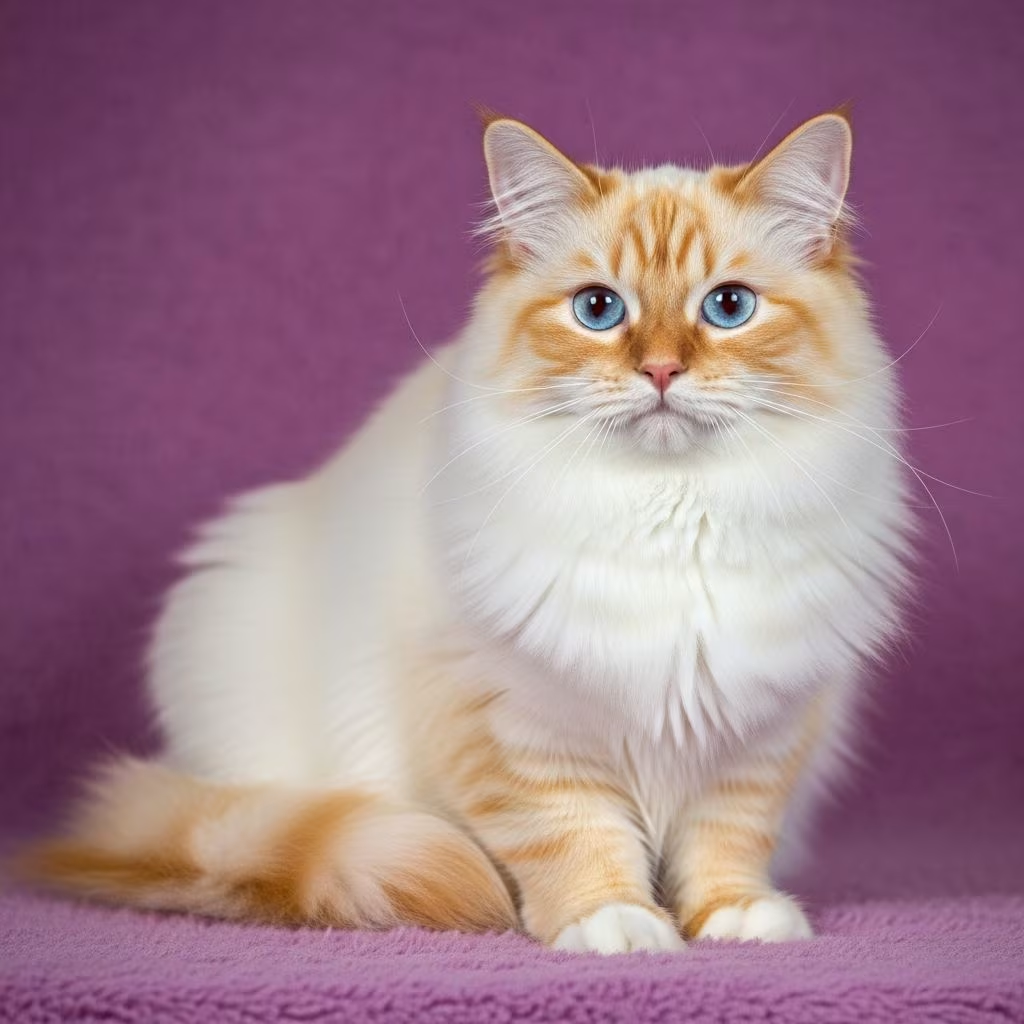
The Flame Point Himalayan stands out as a mesmerizing feline variety, combining the plush longhair of the Persian with the distinctive colorpoint pattern of the Siamese. This breed variant features a pale body accented by warm, fiery red hues on the ears, face, paws, and tail, paired with striking blue eyes that captivate onlookers. Renowned for their docile nature and luxurious appearance, these cats thrive in tranquil environments where they can bask in affection without overstimulation.
Origins and Development of the Breed
The Himalayan cat emerged in the early 20th century through deliberate breeding efforts to merge Persian coat length and body structure with Siamese’s signature colorpoint genetics. Breeders in the United States and England began crossing these two iconic breeds around the 1930s, aiming to create a longhaired version of the Siamese pattern. The first recognized litters appeared in the 1950s, with official acceptance by cat fancier associations like the Cat Fanciers’ Association (CFA) in 1957, initially as a standalone breed before merging back with Persians in some registries.
The Flame Point coloration, also called Red Point, arises from the same temperature-sensitive enzyme that produces Siamese points. Kittens are born pure white, with points developing over weeks as cooler body extremities darken to a rich orange-red shade. This genetic trait, linked to the albino gene variant, ensures the body remains creamy white or pale fawn, creating dramatic contrast. While chocolate and lilac points prove challenging to breed consistently, Flame Points are prized for their vivid, warm tones ranging from deep rust to bright flame.
Today, Flame Point Himalayans symbolize refined breeding artistry, with ongoing efforts to preserve type standards emphasizing heavy boning, round heads, and lustrous coats. Their development reflects decades of selective pairing to balance aesthetics, health, and temperament.
Distinctive Physical Traits
Flame Point Himalayans exhibit a compact, cobby build typical of the breed: medium to large size with males weighing 9-15 pounds and females slightly lighter at 7-12 pounds. Their sturdy frames feature broad chests, short thick legs, and a proportionally short tail, conveying power beneath a plush exterior. The head is massive and rounded, with small, rounded ears set wide apart and a short, snub nose creating a pronounced facial stop.
The most iconic feature is the face: large, round blue eyes that gleam with intelligence and expressiveness. Two facial types exist—traditional ‘doll-face’ with a longer muzzle and extreme ‘peke-face’ with an ultra-flat profile akin to a pug’s. Both enhance the breed’s endearing, teddy-bear charm. The coat demands attention: long, dense, and silky with a thick undercoat forming a ruff, frill, and tufts on ears and toes. Flame Points specifically showcase cream-to-white bodies with bold red extremities, occasionally accented by tabby markings or subtle ghost patterns.
| Physical Attribute | Description |
|---|---|
| Body Type | Cobby, heavy-boned, medium-large |
| Head | Round, broad with short nose and stop |
| Eyes | Round, vivid blue |
| Coat | Long, glossy; cream body, red points |
| Weight | 7-15 lbs (females lighter) |
| Life Expectancy | 9-15 years |
Personality and Daily Behavior
These cats embody serene elegance, blending Persian placidity with subtle Siamese playfulness. Flame Point Himalayans are affectionate companions who favor lap-sitting and gentle petting over high-energy antics. They communicate softly—rarely vocalizing beyond melodic chirps—and rely on their luminous eyes to convey needs. Expect bursts of kitten-like zoomies, chasing toys or batting catnip mice, but they quickly return to loafing in sunbeams or prime furniture spots.
- Gentle and devoted to family members
- Tolerant of calm children and respectful dogs
- Prefers quiet homes; may stress in chaotic settings
- Independent yet craves human interaction
- Smart and trainable for tricks or fetch
Not overly demanding, they adapt to routines but protest neglect with soulful stares or soft meows. Their low activity suits apartment living, though daily play prevents boredom.
Grooming and Maintenance Essentials
The opulent coat requires commitment: daily brushing with a slicker and comb prevents mats, especially around the ruff and britches. Bathing every 4-6 weeks keeps gloss intact, using cat-specific shampoos. Flat faces trap tears, causing staining—gently wipe daily with chamomile solutions. Trim nails biweekly, clean ears weekly, and brush teeth to combat periodontal issues common in brachycephalics.
Litter training succeeds with covered boxes to shield long fur. Provide shallow bowls to avoid whisker fatigue. Nutrition matters: high-protein, low-carb diets control weight gain in sedentary cats. Interactive feeders or puzzle toys encourage movement.
Health Considerations and Wellness Tips
With lifespans of 9-15 years, Flame Points face breed-typical issues from brachycephaly and genetics. Breathing difficulties, tear staining, and dental malocclusion arise from flat faces. Polycystic kidney disease (PKD) affects up to 30-50% of lines—opt for screened parents. Hypertrophic cardiomyopathy (HCM) and progressive retinal atrophy (PRA) warrant annual vet checks, ultrasounds, and eye exams.
- Brachycephalic syndrome: Snoring, heat sensitivity
- PKD: Ultrasound screening recommended
- Dental disease: Daily brushing essential
- Obesity: Monitor portions, encourage play
Choose reputable breeders providing health guarantees. Spay/neuter prevents cancers. Early socialization fosters confidence.
Ideal Living Environments and Lifestyle Fit
Flame Point Himalayans flourish in peaceful households: apartments, condos, or homes without rowdy pets/kids. They relish elevated perches, window seats, and soft beds. Climate control is key—avoid extremes due to thick fur and respiratory limits. Travel tolerably in carriers but prefer stability.
Compatibility shines with adults or gentle families. They bond deeply with one person yet greet guests politely. Multi-cat homes work if introductions are gradual.
Bringing Home Your Flame Point Himalayan
Acquire from CFA/ACA-registered catteries emphasizing health testing. Kittens cost $800-$2500, adults $500-$1500 via rescues. Prepare with scratching posts, litter setups, and vet visits. Transition slowly: quarantine, pheromone diffusers aid settling.
Training leverages food motivation for litter, scratching, and recall. Enrichment via wand toys, tunnels, and vertical space combats lethargy.
Fun Facts and Variations
- Flame Points uniquely express red without tabby—purest in males
- Historical name: ‘Persian Longhair Colorpoint’
- Show standards penalize ghost tabby markings
- Some registries lump with Persians; others separate
Frequently Asked Questions (FAQs)
Are Flame Point Himalayans hypoallergenic?
No, their dense undercoat sheds profusely despite grooming.
How often should I bathe my Flame Point Himalayan?
Every 4-6 weeks or as needed; daily brushing suffices otherwise.
Do they get along with dogs?
Yes, with calm, non-dominant dogs; supervise introductions.
What’s the difference between Flame and Cream Point?
Flame is vivid red-orange; Cream is pale, cool-toned.
Are they prone to eye issues?
Yes, flat faces cause tearing and potential ulcers; clean daily.
References
- The Himalayan, a calm and loving cat — Mondou. 2023. https://www.mondou.com/en-CA/blogs/advice/cat/the-himalayan-a-calm-and-loving-cat-ac6.html
- Himalayan Cat — Trouble & Trix. 2024. https://troubleandtrix.com/nz/cat-breeds/himalayan-cat/
- Himalayan Cat Facts — ASPCA Pet Health Insurance. 2025-01-15. https://www.aspcapetinsurance.com/resources/himalayan-cat-facts/
- Himalayan Cat Breed — Hill’s Pet Nutrition. 2024. https://www.hillspet.com/cat-care/cat-breeds/himalayan
- What to Know About the Himalayan Cat — WebMD. 2025-06-10. https://www.webmd.com/pets/cats/what-to-know-about-the-himalayan-cat



