Understanding Fish Mucus: Biology and Function
Discover why fish are slimy and how mucus protects aquatic life
The Biological Purpose Behind Fish Slime Coating
The slimy texture covering nearly every fish species is far more than an unpleasant tactile experience for anglers and aquarium enthusiasts. This coating represents one of nature’s most sophisticated biological solutions, addressing multiple survival challenges in aquatic environments simultaneously. The mucus layer that gives fish their characteristic slipperiness is a product of specialized cellular mechanisms refined through millions of years of evolutionary adaptation. Understanding this biological feature reveals how fish have developed integrated systems to thrive in their watery habitats.
The Cellular Origin of Fish Mucus Production
Fish mucus originates from specialized cells embedded within the epidermis, the outermost layer of fish skin. These cells, known as goblet cells, function as biological factories continuously manufacturing the substance that covers the fish’s body. The goblet cells produce glycoproteins, which are complex molecules composed of proteins and carbohydrate chains. When these glycoproteins combine with water, they transform into the characteristic slimy mucus that coats fish bodies.
The production of mucus varies considerably among fish species. Some fish maintain a thin, barely perceptible layer, while others produce such abundant mucus that it visibly coats their skin and can be easily wiped away. This variation in mucus production relates to each species’ specific environmental needs and ecological niche. Fish inhabiting particularly disease-prone or temperature-unstable waters tend to produce thicker mucus layers for enhanced protection.
The Protective Barrier System
Perhaps the most critical function of fish mucus is its role as a first-line defense against environmental threats. The mucus layer acts as a physical and chemical barrier that protects the underlying skin from numerous pathogens and parasites. This protective system operates through multiple mechanisms simultaneously:
- Physical barrier function that prevents microorganisms from reaching the skin surface
- Antimicrobial compounds including enzymes that directly attack harmful bacteria and fungi
- Antibodies that recognize and neutralize pathogenic invaders
- Mucus shedding that removes trapped parasites and bacteria before they can establish infection
- Specialized proteins such as lysozyme that destroy bacterial cell walls
The antimicrobial properties contained within fish mucus have attracted significant attention from medical researchers. Scientists have isolated compounds from rainbow trout mucus that demonstrate effectiveness against both gram-positive and gram-negative bacteria. These discoveries suggest potential applications for treating human infections, highlighting the sophisticated nature of fish immune defenses.
Osmoregulation and Fluid Balance
Living in water presents a paradoxical challenge for fish: they exist in an aquatic environment yet require careful regulation of internal water and electrolyte levels. Without the mucus layer, fish would experience continuous fluid loss through osmosis, where their body fluids would gradually diffuse into the surrounding water, leading to dangerous dehydration.
The mucus layer functions as a selective barrier that maintains appropriate osmotic balance. It controls the movement of electrolytes, which are essential minerals that regulate muscle contractions, nerve signals, and overall metabolic function. By regulating ion concentrations flowing in and out of the body, the mucus layer helps fish maintain correct internal balances relative to the water’s chemical composition. This osmoregulatory function is particularly critical for fish that migrate between freshwater and saltwater environments, where ionic concentrations differ dramatically.
Enhanced Locomotion Through Reduced Drag
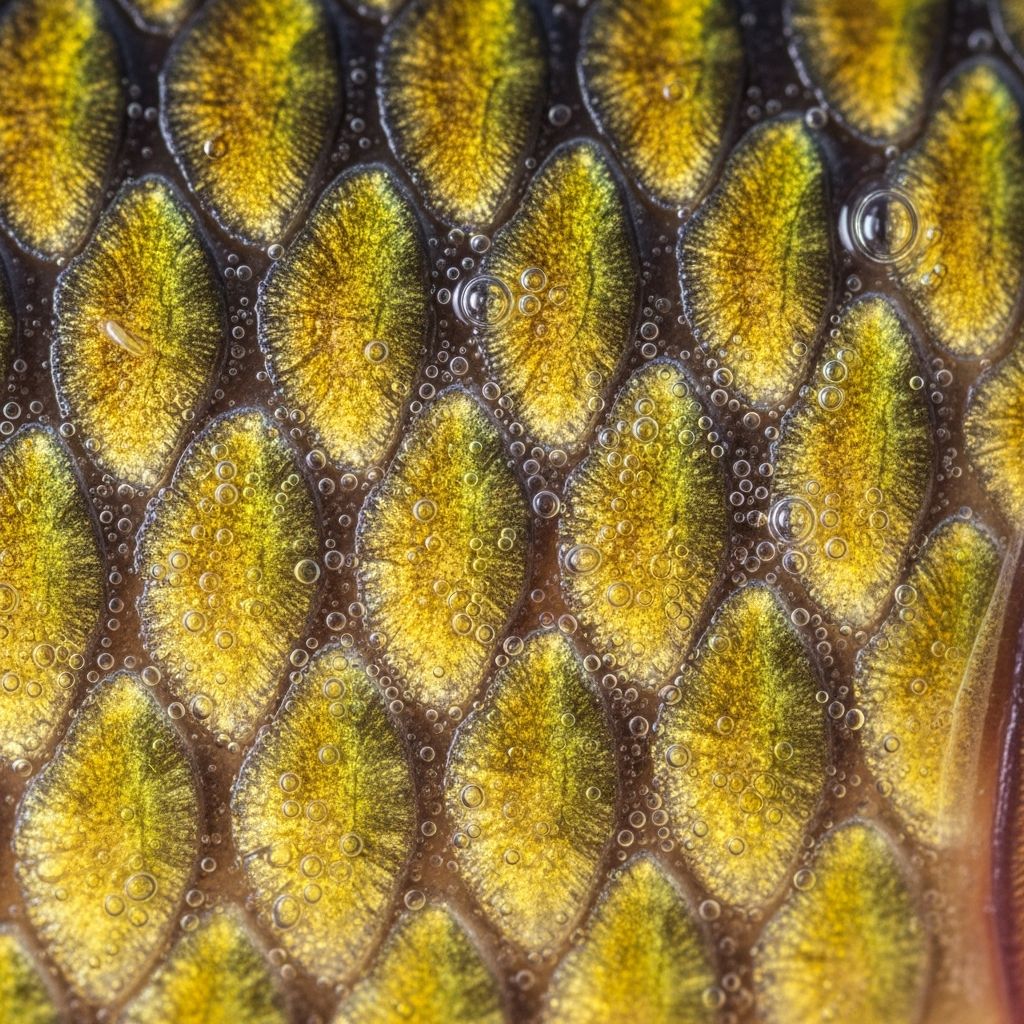
The streamlined efficiency of fish movement depends significantly on the slipperiness provided by their mucus coating. Fish scales create an inherently irregular surface with gaps and overlapping edges that would normally generate considerable friction as the fish moves through water. The mucus layer smooths these irregularities by filling microscopic gaps between scales, creating a more hydrodynamically efficient outer surface.
This reduction in drag offers substantial advantages to fish survival. By minimizing water resistance, fish can maintain higher speeds with less muscular effort, conserving energy that can be directed toward feeding, reproduction, or other survival activities. The energy conservation becomes particularly crucial during predatory encounters, where the ability to rapidly accelerate and maneuver can mean the difference between escape and capture. Scientists have confirmed through experimental studies that mucus genuinely reduces drag, allowing fish to swim more efficiently.
Respiratory Gas Exchange Optimization
Fish respire by exchanging oxygen and carbon dioxide across their skin surface, a process that differs fundamentally from the lung-based respiration of terrestrial animals. The mucus layer, while protective, must remain permeable enough to allow these vital gases to pass through. Rather than hindering respiration, the mucus actually enhances gas exchange efficiency across the skin surface. The mucus composition facilitates the movement of dissolved gases while maintaining the barrier functions that protect against pathogens.
Specialized Defensive Adaptations in Specific Fish Species
While all fish produce mucus for basic protective functions, certain species have evolved specialized chemical defenses within their mucus coatings. Some fish incorporate toxins into their slime that can immobilize prey or deter predators. Certain species produce mucus so potent that it can reportedly interrupt a shark’s bite mid-strike. Reef fish have evolved another specialized adaptation, incorporating mycosporine-like amino acids into their mucus that provide protection against sun damage by absorbing harmful radiation. These reef fish accumulate the greatest concentrations of these protective compounds on their dorsal surfaces, which receive the most direct sunlight exposure.
Scale Type and Mucus Production Relationships
An interesting relationship exists between the type of scales a fish possesses and the quantity of mucus it produces. Fish scales fall into several categories based on their structure: cycloid scales, ctenoid scales, and ganoid scales each have different surface characteristics. Fish species with smoother scale types tend to produce thicker mucus layers, potentially to compensate for less efficient natural hydrodynamics or to provide additional pathogen defense. This demonstrates how fish biology optimizes multiple systems to achieve survival objectives.
Fish Health Indicators Through Mucus Appearance
The condition of a fish’s mucus coating provides valuable information about its overall health status. A healthy fish typically displays a consistent, clear, and uniformly distributed mucus layer that is neither excessive nor insufficient. Deviations from this normal appearance can signal various health problems:
- Excessive mucus production may indicate stress, poor water conditions, or infection
- Discolored mucus can suggest bacterial or fungal infections
- Patchy or uneven mucus distribution indicates potential disease or environmental injury
- Complete loss of mucus coating results in a condition called slime coat syndrome
Slime coat syndrome represents a serious health condition where mucus is produced in such excessive quantities that it sloughs off the fish, leaving a ragged and unhealthy appearance. Common causes include exposure to chlorine or chloramine in water, particularly after tap water additions without proper dechlorination. Other stressors that trigger excessive mucus production include sudden temperature changes, acidic water conditions, and polluted environments.
Evolutionary Significance of the Mucus System
Fish species that developed more efficient mucus production mechanisms gained significant survival advantages over their competitors. The ability to produce superior mucus coatings enabled fish to withstand pathogens more effectively, conserve hydration more efficiently, and move through water with greater ease. These evolutionary advantages accumulate across generations, reinforcing the development of increasingly sophisticated mucus production systems. Modern fish species continue to rely heavily on this ancient biological adaptation, demonstrating its enduring importance to aquatic survival.
Interconnected Defense Layers
The mucus layer operates not in isolation but as part of an integrated defense system. Beneath the mucus lies the fish’s scales, which provide structural armor and physical protection. Below the scales rests the fish’s skin tissue, which contains additional immune components and sensory structures. Together, these three layers create a comprehensive protective system that keeps harmful elements out while maintaining essential internal conditions.
Medical researchers studying fish mucus recognize its potential applications for human health. The complex compounds within fish slime demonstrate antimicrobial properties and wound-healing qualities that could inform treatments for human infections and injuries. This research direction highlights how understanding fish biology can generate practical benefits for human medicine and health.
The Multifunctional Nature of Fish Mucus
Perhaps the most remarkable aspect of fish mucus is how it simultaneously addresses multiple biological challenges through a single elegant adaptation. The slime coating reduces drag while protecting against pathogens, maintains osmotic balance while facilitating gas exchange, and provides both mechanical and chemical defense through its layered composition. This multifunctionality demonstrates the efficiency of evolutionary adaptation, where a single biological mechanism serves numerous survival requirements.
Understanding fish mucus provides insight into how aquatic organisms have adapted to their environments over millions of years. The slimy coating that might seem unpleasant to human touch represents a sophisticated biological solution refined through countless generations of evolutionary selection. From the microscopic level of antimicrobial proteins to the macroscopic efficiency of reduced drag, fish mucus exemplifies how nature integrates multiple functions into elegant biological systems.
References
- The Science Behind Fish’s Slippery Coating — Vet Today. https://vettoday.com/blog/pet-health/the-science-behind-fishs-slippery-coating/
- Fish Slime — Delta Journal by Bob Thomas, Loyola University. https://lucec.loyno.edu/natural-history-writings/fish-slime
- The Science of Slime — Dakota Edge. https://dakotaedge.com/2018/06/17/the-science-of-slime/
- Fish Slime — Dun Magazine. https://dunmagazine.com/posts/fish-slime
- Slime Coat — Wikipedia. https://en.wikipedia.org/wiki/Slime_coat
- Dragging Dead Fish Around Reveals Super Power of Mucus — Popular Science. https://www.popsci.com/environment/fish-mucus-study/
- Slime Coat Syndrome on a Fish — Aquarium Science. https://aquariumscience.org/index.php/11-13-slime-coat/
- Epidermal Mucus, a Major Determinant in Fish Health — National Center for Biotechnology Information, PMC. https://pmc.ncbi.nlm.nih.gov/articles/PMC6056142/
Similar Articles








Read full bio of medha deb