

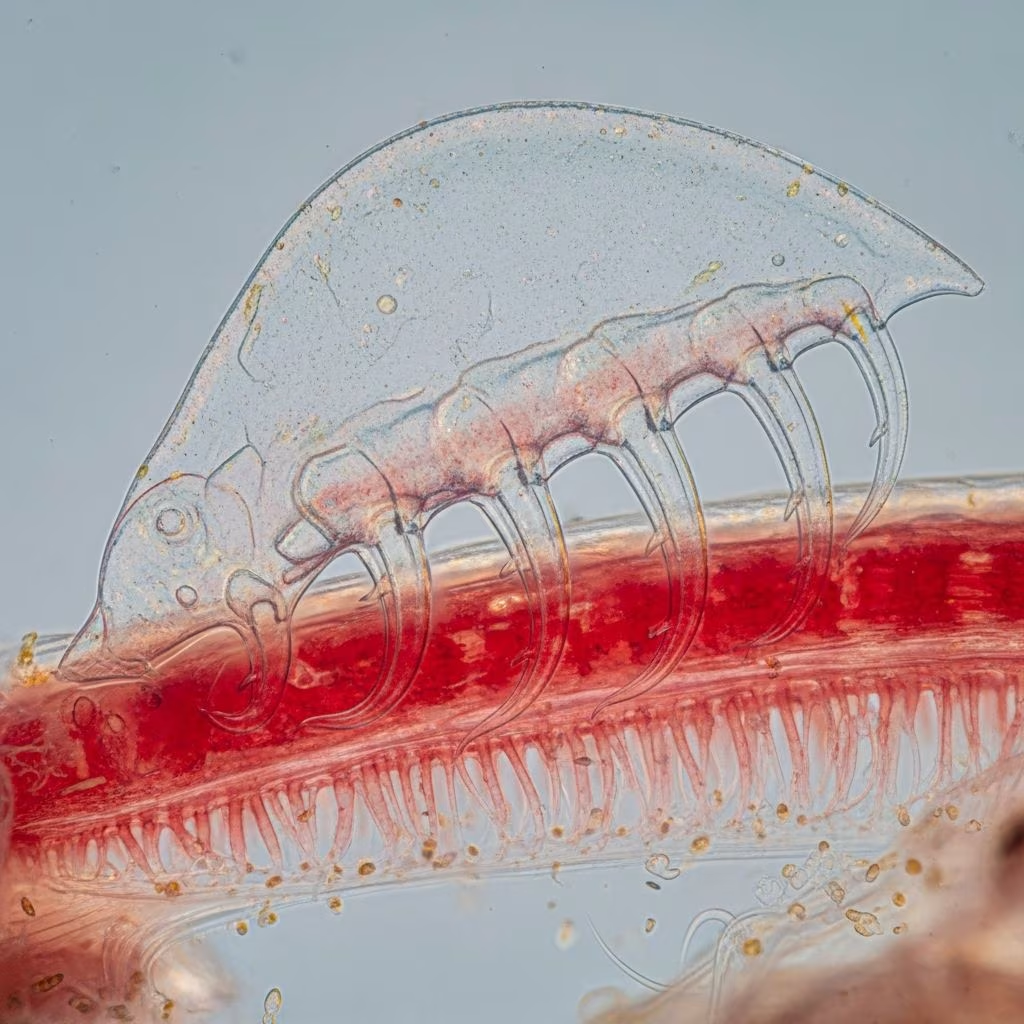
Fish flukes are parasitic flatworms that attach themselves to the skin and gills of aquarium fish, causing significant stress and potential mortality if left untreated. Unlike some other aquarium diseases that may resolve on their own, fluke infestations require active intervention and a structured treatment approach. Understanding the nature of these parasites and the most effective treatment strategies is essential for any aquarium keeper who wants to maintain healthy fish populations.
Understanding Fish Flukes and Their Lifecycle
Flukes belong to a group of parasitic flatworms that have adapted to live on fish hosts. These microscopic organisms attach to the fish’s skin and gill tissue, where they feed on mucus and blood. When a fish is infected, it may exhibit behavioral changes such as increased scratching against tank decorations, coughing, erratic swimming patterns, and visible discoloration or damage to the affected areas. The parasites can be physically observed as small, white, flatworm-like structures, particularly when they begin to die during treatment.
The lifecycle of flukes is critical to understanding why treatment must be persistent and methodical. Adult flukes reproduce while attached to the host fish, releasing eggs that can survive in the aquarium water. This is the crucial factor that makes fluke eradication challenging—a single treatment may eliminate adult parasites, but if eggs remain in the water, they will hatch and reinfect the fish once the medication becomes inactive.
Preparation and Quarantine Considerations
Before initiating fluke treatment, it is important to establish a proper quarantine setup separate from the main aquarium. This prevents the spread of parasites to other fish and allows for focused treatment without affecting the larger system. The quarantine tank should be adequately cycled or treated to maintain stable water parameters while accommodating the medicated water required for treatment.
Preparation steps include:
- Setting up a dedicated treatment aquarium with appropriate filtration and aeration
- Testing water parameters before introducing the affected fish to ensure stability
- Performing a substantial water change in the treatment tank before beginning medication
- Removing any activated carbon from filters, as it will absorb medication and reduce effectiveness
- Turning off any ultraviolet sterilizers that may deactivate the treatment
- Relocating invertebrates or sensitive species to another tank to prevent medication-related harm
Praziquantel: The Primary Treatment Option
Praziquantel, commonly available as PraziPro or similar brand formulations, is the most effective and widely recommended medication for treating fish flukes. This antiparasitic compound has been proven effective against various parasitic flatworms and is considered safe for use in both freshwater and saltwater aquarium environments. The medication works by disrupting the nervous system of the parasites, causing them to detach from the fish and die.
One significant advantage of praziquantel is its compatibility with reef tank environments, including tanks with SPS corals and carpet anemones. This makes it an excellent choice for marine aquarists who cannot use more aggressive treatments that might damage coral systems. The medication can also be safely combined with other therapeutic approaches if necessary.
Dosing and Application Protocol
The standard dosing recommendation for praziquantel products is approximately 5 milliliters per 20 gallons of aquarium water. However, it is essential to read the specific instructions on your chosen product, as concentrations may vary between manufacturers. The medication should be distributed evenly throughout the tank to ensure all fish receive adequate treatment.
After dosing, the medication remains active in the water for approximately three days. This is a critical aspect of the treatment timeline—the inactive period between doses is necessary because fluke eggs will not hatch when praziquantel is present in the water. Once the medication breaks down, the eggs can hatch, which is why repeated dosing is required to catch newly emerged parasites before they mature and reproduce.
The Multi-Dose Treatment Schedule
Effective fluke treatment requires multiple applications rather than a single dose. The most commonly recommended approach involves:
| Day | Action | Purpose |
|---|---|---|
| Day 1 | Perform 50-90% water change and dose praziquantel | Remove debris and introduce initial medication dose |
| Days 2-3 | No action; maintain current water conditions | Medication remains active, continuing to kill parasites |
| Days 4-5 | No action; medication becomes inactive | Allow eggs to hatch and emerging flukes to develop |
| Day 6 | Perform 50-90% water change and redose praziquantel | Remove newly hatched parasites and restart medication cycle |
This protocol is repeated for a total of three to six rounds, depending on the severity of the infestation. Light infestations typically require three to four treatment cycles, while heavy infestations may necessitate five to six rounds. The key is consistency and patience—incomplete treatment cycles will allow the parasite population to recover.
Alternative Treatment: The 100% Water Change Approach
Another established protocol involves 100% water changes performed every three days in conjunction with praziquantel dosing. In this method, fish are temporarily removed to a clean saltwater bath, the treatment tank is completely emptied and rinsed, and fresh medicated water is added. The fish are then returned to the newly prepared tank with fresh praziquantel added.
This approach is particularly effective for marine aquariums and offers the advantage of removing accumulated waste products while ensuring fresh medication. The complete water change eliminates any dead parasites or debris that may accumulate, potentially reducing secondary bacterial infections from wounds left by attached flukes.
Managing Water Parameters During Treatment
Maintaining stable water parameters is crucial during fluke treatment. The fish are already stressed by the parasitic infection and require optimal conditions to facilitate healing. Temperature should remain consistent, typically within the range the fish species requires, and salinity levels in marine tanks should be carefully monitored and maintained at appropriate levels.
One helpful addition during treatment is the gradual introduction of aquarium salt at a concentration of approximately 0.1% (roughly one teaspoon per gallon). This concentration provides osmotic support and helps prevent secondary bacterial infections that commonly occur in the micro-wounds left behind when flukes detach from the fish’s skin and gills.
Formalin as an Alternative Treatment Method
Formalin represents an alternative treatment option that is highly effective against flukes. When fish are treated with formalin, visible flukes can be observed falling off the fish during the treatment process, appearing as small white flatworms. Some fish may cough or display erratic behavior as they attempt to dislodge dying parasites.
However, formalin carries significant toxicity concerns and requires careful handling and precise dosing. Treatment with formalin should not be undertaken lightly, and many aquarists prefer the safer profile of praziquantel. If formalin is included in an established quarantine protocol—such as in early phases targeting other parasites like Brooklynella or Uronema—additional fluke-specific treatment may not be necessary.
Monitoring Fish Response and Recovery
As treatment progresses, aquarists should observe the fish for signs of improvement. Healthy fish should gradually resume normal feeding behavior, display less scratching and erratic swimming, and show healing of any visible damage to fins or skin. The recovery timeline varies depending on the severity of infection and individual fish resilience, but noticeable improvement typically appears within the first two treatment cycles.
Continued observation is important even after completing the full treatment protocol. Any recurrence of scratching behavior or visible parasites warrants additional treatment cycles. Some cases of particularly resistant infestations may require extended treatment beyond the standard six-round maximum.
Combining Treatments for Severe Infestations
In cases where flukes are confirmed through microscopic examination to be present in high numbers within the fish’s slime coat, combining praziquantel treatment in both the water and food can enhance effectiveness. This dual approach ensures the medication reaches parasites through multiple pathways—both through water absorption and through the digestive system. Praziquantel is absorbed through the fish’s gut and is expressed in the mucus coat, directly targeting parasites in this critical location.
Medicated food should be provided according to the fish’s normal feeding schedule and dietary preferences. Quality aquarium pellets or flake foods can be supplemented with praziquantel, though commercially prepared medicated foods are often more convenient and ensure proper dosing.
Preventing Secondary Infections
The wounds and irritation caused by flukes create entry points for secondary bacterial infections, which can be as dangerous as the parasite infestation itself. Beyond maintaining water quality and adding aquarium salt, aquarists should monitor fish for signs of bacterial infection such as increased mucus production, fin deterioration, or cotton-like growth on the body.
Keeping the immune system strong through proper nutrition, stable water parameters, and stress reduction will help the fish’s natural defenses combat secondary pathogens. In some cases, antibiotic treatment may be necessary if bacterial infection becomes evident, though this should be coordinated with parasite treatment protocols.
Returning Fish to the Main Aquarium
Once the full treatment protocol is complete and the fish shows no signs of parasites for a period of several weeks, it can be returned to the main aquarium. Some aquarists prefer to observe fish for an additional 7-10 days after completing treatment before making this transition.
It is important to note that the main aquarium housing fish during treatment does not require complete sterilization or extended downtime if it was not directly exposed to treated water. However, if multiple fish have been affected, the main tank should be monitored for any signs of remaining parasites before restocking.
Frequently Asked Questions
How long does fluke treatment typically take?
Complete treatment generally requires three to six weeks, depending on the infestation severity. Each treatment cycle spans six days, and multiple cycles are needed to address both adult parasites and newly hatched eggs.
Can flukes be treated in the main aquarium?
While possible, treatment is most effective and safest in a separate quarantine tank. This prevents medication exposure to sensitive species like invertebrates and allows for better control of the treatment protocol.
What happens if I skip a treatment dose?
Skipping doses significantly reduces treatment effectiveness. Without repeated applications, newly hatched fluke eggs will develop into adult parasites, potentially reinfecting the fish before the previous treatment completes its cycle.
Is praziquantel safe for all fish species?
Praziquantel is generally safe for most aquarium fish, but some sensitive species may require dose adjustments. Always research your specific fish species or consult with an aquatic veterinarian before treatment.
Can flukes return after successful treatment?
Yes, if treated fish are reintroduced to an infested environment or if new infected fish are added without proper quarantine. Maintaining strict quarantine protocols for all new fish additions prevents reinfection.
References
- Identify and Eliminate Flukes: Phase 3 of 80/20 — Bulk Reef Supply. 2024. https://www.bulkreefsupply.com/content/post/identify-and-eliminate-flukes-fish-health-ep-8
- Treating for Flukes with Aqua Prazi — Solid Gold Aquatics. 2013. https://www.youtube.com/watch?v=UCesMRFlLIU
- Flukes in Marine Fish — Reef Aquarium. 2014. https://www.reefaquarium.com/2014/flukes-marine-fish/
- 10.6. Flukes — Aquarium Science. https://aquariumscience.org/10-6-flukes/



