

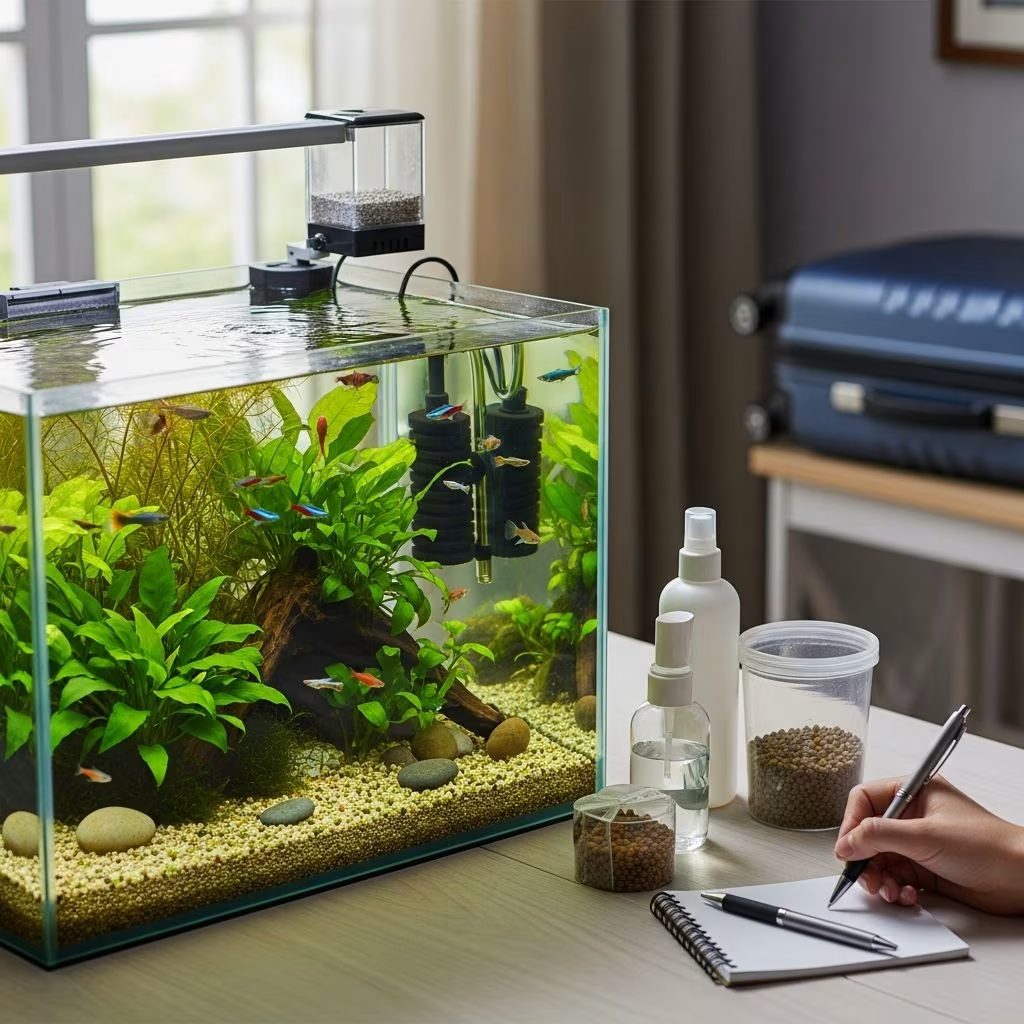
Traveling doesn’t mean neglecting your aquarium. With proper planning, your fish can remain healthy for days or weeks without your daily attention. This guide outlines practical solutions like automated devices, slow-release foods, trusted caregivers, and essential tank preparations to ensure a smooth experience.
Understanding Your Fish’s Needs During Absences
Fish species vary in resilience. Hardy types like goldfish can skip meals for a week, drawing on fat reserves, while delicate ones such as discus or fry require more consistent nutrition. Overfeeding poses greater risks than underfeeding, leading to ammonia spikes from uneaten food decay. Aim for stability in water quality, temperature, and light cycles over constant feeding.
Smaller fish and juveniles have less tolerance for fasting, so match methods to tank inhabitants. Pre-trip assessments help identify vulnerabilities, ensuring tailored strategies.
Automated Feeding Solutions for Hands-Free Care
Technology simplifies long absences. Automatic feeders dispense precise portions on schedules, mimicking your routine.
- Timer-Based Dispensers: Set intervals (daily, twice-daily) and amounts. Fill reservoirs with enough dry flakes or pellets for the trip duration. Test a week prior to confirm reliability.
- Digital Models: Advanced units offer app connectivity for remote adjustments, portion control, and battery backups against power outages.
- Placement Tips: Mount above waterline to avoid humidity damage; ensure even food distribution across the tank.
These outperform manual methods for trips over three days, preventing waste buildup. Budget options start low, while feature-rich versions provide peace of mind.
Slow-Dissolving Food Blocks for Extended Trips
For vacations spanning 7-14 days, vacation feeder blocks offer passive nutrition. Composed of gel or calcium matrices embedding food particles, they erode gradually, releasing sustenance as needed.
| Duration | Block Type | Best For | Precautions |
|---|---|---|---|
| 2-3 days | Small gel blocks | Small tanks, community fish | Test dissolution rate |
| 7 days | Standard feeders | Medium aquariums | Requires filtration |
| 14+ days | Large blocks | Large setups, hardy species | Monitor for over-release |
Not ideal for unfiltered bowls, as stagnation causes cloudiness. Introduce one week early to observe fish response and water clarity.
Hiring and Preparing a Reliable Fish Sitter
Entrust a neighbor, friend, or professional for personalized oversight, especially with multiple tanks or live plants.
- Selection: Choose someone detail-oriented with aquarium interest. Avoid over-feeders.
- Training Session: Demonstrate feeding amounts, equipment checks, and emergency signs like gasping or lethargy.
- Supplies Prep: Portion food into daily bags or boxes, labeled by tank and date. Include test kits, spare filters, and contact info.
- Schedule: Light visits every 2-3 days suffice for most; provide written protocols.
Dry-run a visit to build confidence. Professionals offer insurance and expertise for complex setups.
Essential Pre-Departure Tank Maintenance Routine
A week before leaving, execute a comprehensive checklist to optimize conditions.
- Perform 25-30% water change to dilute nitrates; vacuum gravel for debris.
- Clean filter media gently, retaining beneficial bacteria colonies.
- Top off evaporation with dechlorinated water; verify heater stability at species-optimal temps (e.g., 78°F for tropicals).
- Inspect for illness: quarantine suspects.
- Secure lid, test lights on timers (12-hour cycles to curb algae).
48 hours prior, final partial change and parameter tests (ammonia 0ppm, nitrite 0ppm, nitrate <20ppm) ensure a clean baseline.
Species-Specific Vacation Strategies
Tailor approaches to inhabitants for best outcomes.
- Goldfish: Robust; vacation blocks or every-3-day sitter feeds work well. Prioritize aeration.
- Betta Fish: Solitary; auto-feeders with small pellets. Dim lights to reduce stress.
- Guppies and Livebearers: Fry-heavy tanks need frequent light feeds or live food cubes.
- Delicate Species (Discus, Angels): Sitter preferred; measured portions twice daily.
Avoid new foods or decor pre-trip to prevent digestive upset.
Remote Monitoring Tools for Extra Assurance
Smart tech bridges gaps. Wi-Fi cameras stream live views; sensors track pH, temp, and oxygen via apps. Alerts notify of anomalies like filter failure. Affordable kits integrate with feeders for full automation.
Common Pitfalls and How to Avoid Them
Mistakes amplify risks.
- Overfeeding: Pre-portion to enforce restraint.
- Power Failures: Battery backups on critical gear.
- Algae Overgrowth: Timers limit photoperiod.
- Uneaten Food: Hardy, sinking pellets minimize waste.
Fasting mature fish 3-5 days is safer than risky feeding in some cases.
Returning Home: Post-Vacation Recovery Steps
Reintegration prevents shock.
- Test parameters immediately; 10-20% water change if nitrates elevated.
- Observe 48 hours sans feeding; resume half-portions.
- Clean selectively; review sitter notes for issues.
- Gradual light ramp-up if dimmed.
Consult vets for persistent symptoms.
Frequently Asked Questions
How long can fish go without food?
Healthy adults: 1-2 weeks. Juveniles: 3-5 days max.
Are vacation blocks safe?
Yes, with filtration and testing; not for bowls.
What’s better: auto-feeder or sitter?
Auto for short trips; sitter for complex needs.
Should I turn off tank lights?
Use 12-hour timers to prevent algae.
Can I fast my fish entirely?
Viable for hardy species under a week.
Advanced Tips for Frequent Travelers
Invest in redundant systems: dual heaters, UPS power supplies. Log parameters pre-trip for baselines. Join forums for community advice, but verify with tests. Sustainable feeding reduces waste; consider algae eaters for natural cleanup.
For multi-tank homes, centralize controls. Eco-friendly blocks appeal to green aquarists. Ultimately, preparation scales with trip length and tank complexity, yielding healthy returns every time.
References
- Feeding Fish When On Vacation | Learn More | Modern Aquarium — Modern Aquarium. 2023. https://www.modernaquarium.com/blog/feeding-fish-when-on-vacation-learn-more-modern-aquarium/
- Vacation Fish Sitter & Care Plan Vet Guide 2025 — Ask A Vet. 2025. https://askavet.com/blogs/news/vacation-fish-sitter-care-plan-%F0%9F%90%9F-vet-guide-2025
- Feeding Your Fish While Away on Vacation – YouTube — YouTube. 2023. https://www.youtube.com/watch?v=82VTxI8c1Vk
- Care Tips for Leaving Your Pet Fish While on Vacation — Critter-Sitters. 2024. https://critter-sitters.com/leaving-fish-while-vacation/



