

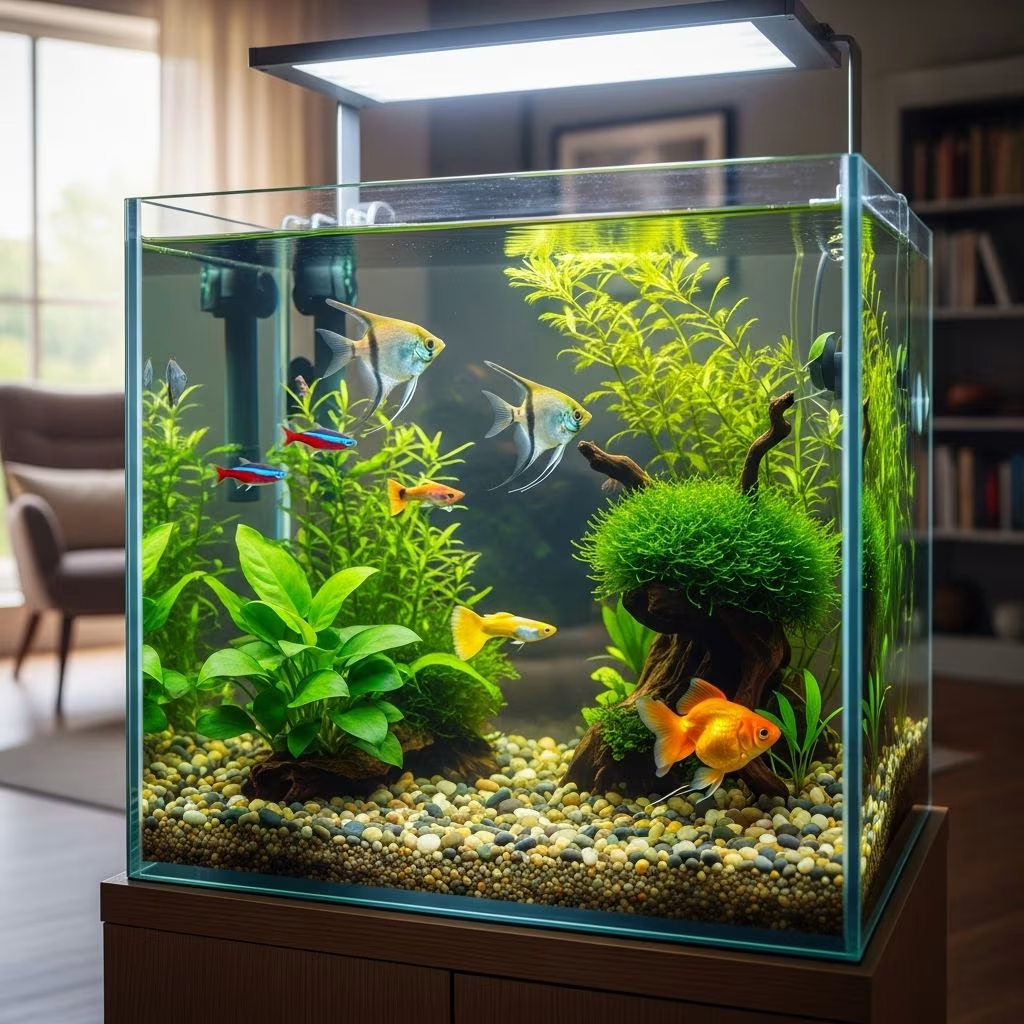
Starting a freshwater aquarium brings the beauty of an underwater ecosystem into your home. Proper setup and ongoing care ensure fish thrive, creating a low-maintenance hobby that rewards patience and attention to detail. This guide covers everything from initial preparation to long-term health management.
Planning Your Aquarium Space
Before purchasing equipment, evaluate your living space carefully. Select a stable, level surface away from direct sunlight, drafts, and high-traffic areas to maintain consistent temperature and minimize stress on inhabitants. Ensure proximity to electrical outlets and a water source for effortless maintenance. A 10-20 gallon tank suits beginners, providing enough volume to stabilize water conditions without overwhelming newcomers.
- Check floor strength: Full aquariums weigh 10 pounds per gallon.
- Avoid windowsills or exterior walls to prevent temperature swings.
- Account for space around the tank for equipment access.
Consider tank dimensions based on desired inhabitants. Longer tanks offer more swimming room for schooling fish, while taller ones suit vertical plant growth.
Essential Equipment Checklist
Gather all components prior to setup to avoid interruptions. Quality items prevent common pitfalls like poor filtration or unstable temperatures.
| Item | Purpose | Beginner Recommendation |
|---|---|---|
| Tank | Main habitat | 10-29 gallons, glass preferred for durability |
| Stand/Cabinet | Support | Matching aquarium stand, load-bearing certified |
| Filter | Water circulation and biological cleaning | Hang-on-back (HOB) or sponge for gentle flow |
| Heater | Temperature control | 5 watts per gallon, with thermostat |
| Lights | Plant growth and visibility | LED, 8-10 hours daily cycle |
| Substrate | Bottom layer, anchors plants | Inert gravel or planted substrate; rinse non-bioactive types |
| Thermometer | Monitoring | Digital stick-on for accuracy |
| Test Kits | Water parameter checks | Ammonia, nitrite, nitrate, pH, GH/KH |
Additional tools include water conditioner to neutralize chlorine, siphon for gravel vacuuming, and nets for safe handling.
Step-by-Step Tank Assembly
Assemble methodically to test for issues early. Clean the tank with warm water and no soap to remove residues.
- Position and Inspect: Place stand, ensure level, add background if desired.
- Leak Test: Fill one-third with water, wait 24 hours for leaks.
- Substrate Layer: Rinse gravel, spread 1-2 inches evenly.
- Decor Placement: Arrange rocks, driftwood securely to avoid collapses.
- Fill Gradually: Add conditioned water via plate to protect substrate.
- Install Equipment: Heater (submerged, away from filter intake), filter (primed with water), lights, thermometer.
- Power Up: Plug in, route cords safely to avoid water travel to outlets.
Run system 24-48 hours to confirm stability before cycling.
Understanding the Nitrogen Cycle
Aquariums require a biological filter to convert toxic ammonia from fish waste into safer nitrate. Skipping this ‘cycling’ phase leads to ‘new tank syndrome,’ fatal for livestock.
- Ammonia Source: Add pure ammonia or hardy bacteria feeders like fish food.
- Bacteria Growth: Nitrosomonas oxidizes ammonia to nitrite (2-4 weeks).
- Second Stage: Nitrospira converts nitrite to nitrate.
- Monitor: Test daily; zero ammonia/nitrite, rising nitrate signals readiness.
Fishless cycling takes 4-6 weeks. Use bottled bacteria to accelerate. Patience here prevents losses.
Selecting Compatible Fish
Choose hardy species suited to community tanks. Research adult sizes and behaviors to avoid overcrowding.
| Fish Type | Size | Tank Size Min | Temperament |
|---|---|---|---|
| Neon Tetra | 1.5 inches | 10 gal | Schooling, peaceful |
| Guppy | 2 inches | 10 gal | Livebearer, active |
| Corydoras Catfish | 2.5 inches | 20 gal | Bottom dweller, group |
| Betta | 3 inches | 5 gal solo | Solitary male |
Follow the 1 inch per gallon rule loosely; prioritize swimming space. Introduce in small groups, quarantine new arrivals.
Daily and Weekly Maintenance Routines
Consistency keeps parameters stable. Overfeeding causes algae and poor water quality.
- Feeding: Small amounts 1-2 times daily; flakes or pellets, supplement veggies for herbivores.
- Water Changes: 25% weekly using dechlorinated, temperature-matched water.
- Gravel Vacuum: Siphon debris during changes.
- Testing: Weekly checks: pH 6.5-7.5, ammonia/nitrite 0 ppm, nitrate <20 ppm.
- Cleaning: Wipe algae, rinse filter media in tank water only.
Observe fish behavior: lethargy or gasping signals issues.
Enhancing with Live Plants
Plants oxygenate water, absorb nitrates, and provide hiding spots. Low-light options like Java Fern or Anubias suit beginners.
- Rinse roots gently, attach to hardscape with thread.
- Fertilize root tabs monthly for rooted species.
- Balance light to prevent algae: 6-8 hours daily.
Heavy planting reduces filtration needs but requires CO2 for demanding species.
Troubleshooting Common Problems
Issues arise but are fixable with prompt action.
| Problem | Symptoms | Solution |
|---|---|---|
| Algae Bloom | Green slime | Reduce light, add algae eaters, more changes |
| Ich (White Spots) | Spots on fish | Raise temp to 82°F, salt baths, meds |
| Cloudy Water | Haze | Bacteria die-off; patience or additives |
| Fin Rot | Ragged fins | Improve water, antibiotics if advanced |
Prevention via stable parameters outperforms cures.
Advanced Tips for Long-Term Success
Once established, experiment with shrimp or snails for cleanup. Automate with timers for lights/heaters. Log parameters in a journal to spot trends early.
Join online communities for species-specific advice, but verify with tests.
Frequently Asked Questions
How long to wait before adding fish?
Complete nitrogen cycle: 4-6 weeks fishless, confirmed by tests.
Can I use tap water?
Yes, after conditioning to remove chlorine/chloramine.
What if my heater fails?
Replace immediately; use temporary room heat, monitor closely.
How often to clean filter?
Monthly media rinse in tank water; never fully replace at once.
Are bettas good starters?
For solo tanks yes, but avoid with fin-nippers.
References
- Setting up a Freshwater Aquarium — PetMD. 2023-05-15. https://www.petmd.com/fish/setting-freshwater-aquarium
- Step-by-Step Guide For Starting an Epic Planted Tank — Dustin’s Fish Tanks. 2022-11-10. https://dustinsfishtanks.com/blogs/dustins-blog/planted-tank-setup
- How to Setup an Aquarium — Tetra Fish. 2024-01-20. https://www.tetra-fish.com/learning-center/getting-started/how-to-setup-an-aquarium



