

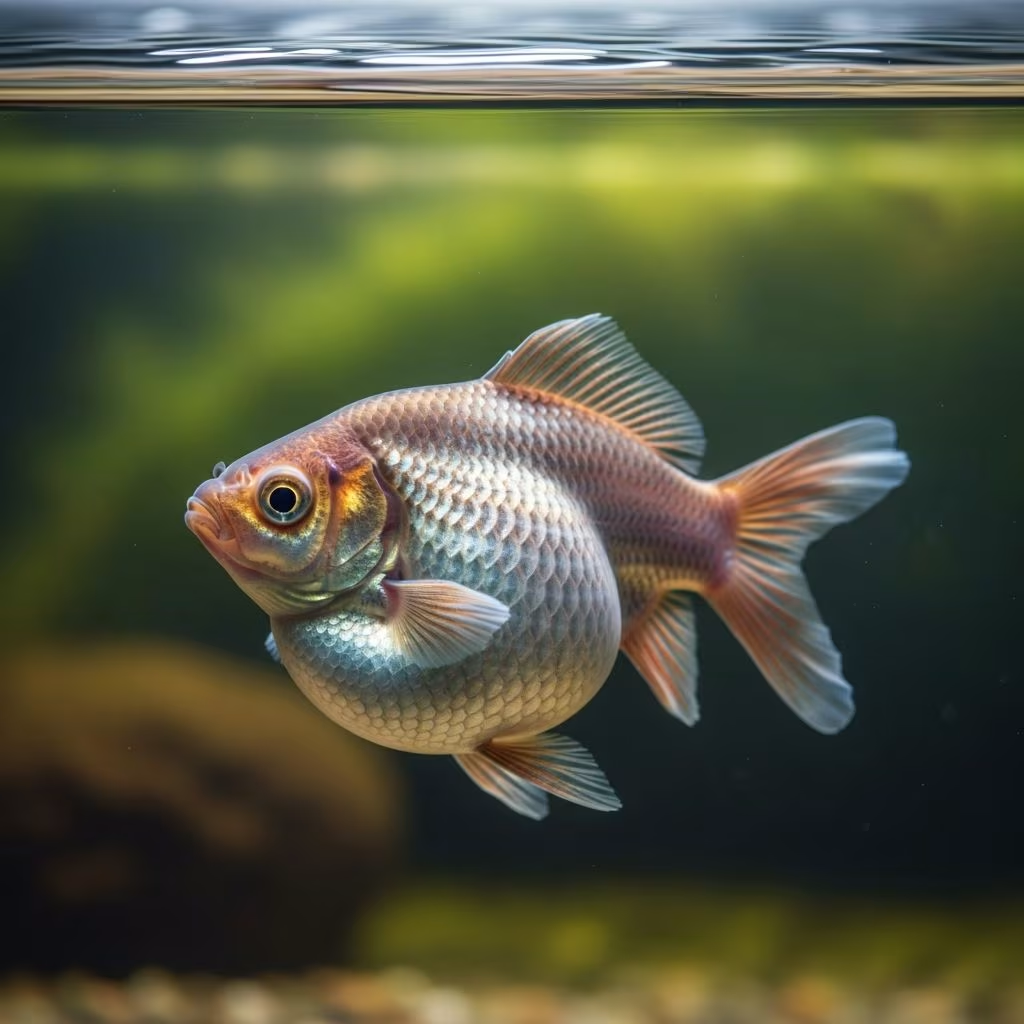
Fish bloat, characterized by an abnormal swelling in a fish’s abdomen, signals underlying health problems that demand prompt attention to prevent fatality. This condition often stems from digestive disruptions, infections, or environmental stressors, affecting species from discus to goldfish.
Recognizing the Signs of Trouble
Early detection hinges on observing subtle changes in your fish’s behavior and appearance. A distended belly is the hallmark symptom, often accompanied by lethargy where the fish hides more than usual or remains inactive. Affected fish may lose interest in food, refuse meals entirely, or exhibit clamped fins.
Buoyancy issues are common, with fish struggling to maintain position—either floating head-down at the surface, sinking to the bottom, or listing sideways. In severe cases, erratic swimming patterns emerge, such as spiraling or inability to swim straight, pointing to swim bladder involvement.
- Swollen abdomen: Appears rounded and unnaturally full, distinct from normal body shape.
- Appetite loss: Fish ignore floating food or spit it out.
- Behavioral shifts: Increased hiding, reduced activity, or aggression toward tank mates.
- Swimming difficulties: Upside-down floating, tail-up posture, or bottom-dwelling.
These indicators warrant immediate isolation to a quarantine tank to curb potential spread.
Unraveling the Root Causes
Fish bloat rarely occurs in isolation; multiple factors converge to disrupt internal balance. Constipation tops the list, triggered by overfeeding dry pellets that expand in the gut or diets lacking fiber, leading to blockages and gas buildup.
Poor water quality exacerbates risks, with spikes in ammonia, nitrites, or nitrates stressing the fish’s osmoregulation—the process maintaining fluid balance. Bacterial infections, particularly from Aeromonas or Pseudomonas, invade the gut or swim bladder, causing inflammation and fluid retention.
Other contributors include parasites burrowing into tissues, sudden temperature drops impairing digestion, or physical injuries from rough handling. Indigestible foods like uneaten flakes ferment internally, mimicking infection symptoms.
| Cause | Description | Common Triggers |
|---|---|---|
| Constipation | Blockage from undigested food | Overfeeding, low-fiber diet |
| Bacterial Infection | Internal inflammation | Poor hygiene, stress |
| Water Quality Issues | Toxin buildup affects organs | Infrequent changes, overstocking |
| Swim Bladder Disorder | Buoyancy organ malfunction | Trauma, parasites |
Differentiating these requires testing water parameters and monitoring progression; for instance, constipation resolves faster than infections.
Step-by-Step Treatment Strategies
Treatment success depends on accurate diagnosis and swift action in a hospital tank—never the main aquarium. Begin with a 24-48 hour fast to ease digestive load, then offer softened peas (skinned and mashed) as a natural laxative.
For suspected bacterial causes, metronidazole proves highly effective against anaerobes in the gut. Dissolve 400mg per 40 liters of water in a quarantine setup, treating for 3-5 days while performing daily 25% water changes. Combine with Epsom salt (magnesium sulfate) at 15g per 20 liters to relax muscles, reduce swelling, and promote evacuation.
Maintain stable temperature (ideally 82-86°F for tropicals) and oxygenation via air stones. Monitor closely; improvement shows as normalized swimming and appetite within days. Avoid antibiotics unless confirmed via vet swab, as overuse harms beneficial bacteria.
- Isolate the fish immediately.
- Fast for 1-2 days; test water parameters.
- Administer Epsom salt bath; observe response.
- If no improvement, add metronidazole.
- Gradually reintroduce to main tank post-recovery.
Severe cases resembling dropsy—pinecone scales from fluid retention—carry poor prognosis but respond similarly, emphasizing hygiene.
Preventing Recurrence in Your Aquarium
Proactive husbandry forms the cornerstone of prevention. Feed sparingly—small portions 1-2 times daily that vanish in 2 minutes—incorporating variety like frozen brine shrimp or algae wafers for fiber.
Perform weekly 20-30% water changes, using dechlorinated water matched to tank temperature. Invest in reliable filtration and test kits to keep ammonia/nitrite at 0ppm, nitrates under 20ppm. Quarantine newcomers for 2-4 weeks to block pathogens.
Species-specific needs matter: discus demand pristine conditions and frequent feeding, while hardy goldfish tolerate more variance but suffer from overstocking. Regular observation catches issues early.
- Optimal feeding: Variety, moderation, soaked foods.
- Water maintenance: Consistent parameters, clean substrate.
- Stress reduction: Proper stocking, hiding spots, stable temps.
Species-Specific Considerations
Bloat manifests differently across fish. Discus, with sensitive digestion, often face bacterial bloat from community tanks; treat aggressively with meds. Bettas, prone to constipation from floating foods, benefit from gelled or bottom-feeding diets.
Goldfish in bowls overfeed easily, bloating from poor oxygenation; upgrade to spacious setups. Koi in ponds risk parasites; integrate UV sterilizers. Tailor interventions to biology for best outcomes.
Frequently Asked Questions
Can fish bloat resolve on its own?
Mild constipation may self-correct with fasting, but infections worsen without intervention, risking death.
Is Epsom salt safe for all fish?
Yes, in recommended doses for freshwater; use cautiously in saltwater and never long-term.
How long does treatment take?
2-6 days typically; persistent symptoms need veterinary input.
Does dropsy always mean bloat?
Dropsy is advanced bloat with scale protrusion from organ failure; prognosis is guarded.
Can overfeeding cause permanent damage?
Repeated episodes strain organs, but early correction prevents escalation.
Advanced Monitoring and Tank Optimization
Beyond basics, employ UV clarifiers to zap free-floating bacteria and maintain mineral balance with remineralizers for osmoregulation. Log parameters daily during outbreaks to spot patterns.
For breeders, medicated foods soaked in antibiotics offer targeted delivery without water dosing. Community education via forums (observing, not relying) shares real-world successes, but vet consultations elevate care.
References
- How to Treat Fish Bloat: Symptoms, Causes, and Effective Treatment — OZ Discus. 2023. https://ozdiscus.com.au/how-to-treat-fish-bloat/
- Fish Bloat: Causes, Symptoms, Treatment and Prevention — Aquaholics Online. 2024. https://www.aquaholicsonline.com.au/buying/articles/aquarium-challenges-with-live-fish-how-to-treat/fish-bloat-or-dropsy-what-is-it-and-how-do-i-deal/
- What Is Swim Bladder Disease and How Is It Treated? — Chewy.com. 2024. https://www.chewy.com/education/fish/general/what-is-swim-bladder-disease-and-how-is-it-treated
- Understanding Edema in Saltwater Fish — Manta Systems. 2023. https://www.mantasystems.net/a/blog/post/edema
- Fish Dropsy | Fish Bloat – Symptoms, Causes, Prevention & Treatment — YouTube (Aquarium Co-Op). 2022-10-15. https://www.youtube.com/watch?v=2QDUHann9K0
- Dropsy in Fish — PetMD. 2024. https://www.petmd.com/fish/conditions/urinary/dropsy-fish



