
Fish Anatomy: An Essential Guide To Structures And Functions
Explore the diverse structures and adaptations that enable fish to thrive in varied aquatic environments worldwide.
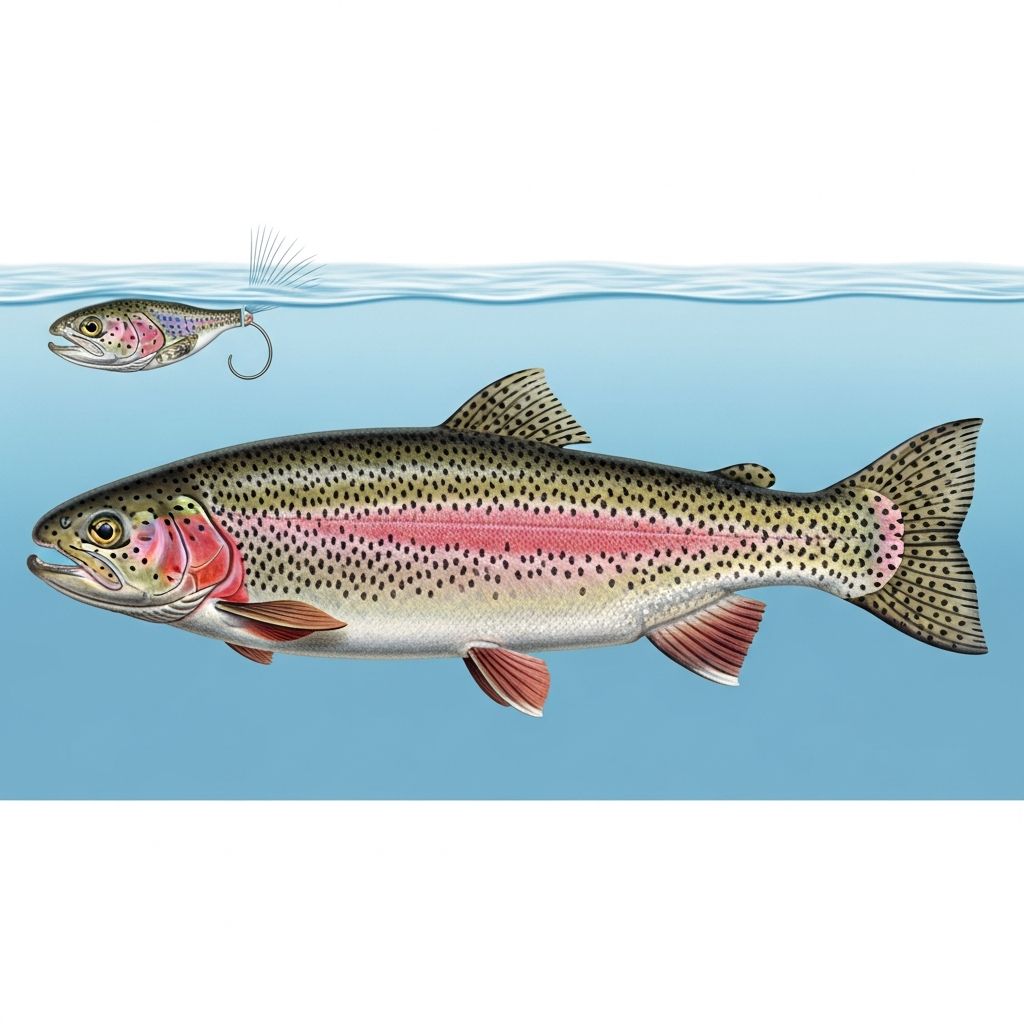
Fish exhibit remarkable diversity in their physical structures, tailored to specific aquatic lifestyles. These adaptations encompass body shapes, fin configurations, scale types, skeletal frameworks, and internal systems that facilitate efficient swimming, respiration, and predator avoidance.
Diversity in Fish Body Forms
The overall shape of a fish’s body profoundly influences its mobility and habitat preference. Streamlined designs reduce water resistance, while flattened forms aid in bottom-dwelling.
- Fusiform bodies: Resembling torpedoes, these are ideal for rapid, sustained swimming in open waters, minimizing drag.
- Anguilliform shapes: Eel-like and elongated, perfect for navigating tight spaces like reefs or crevices.
- Compressiform builds: Tall and narrow laterally, suited for vertical maneuvering in dense vegetation or rock formations.
- Depressiform structures: Flattened dorsoventrally, enabling fish to blend into sandy bottoms or hover near surfaces.
These variations reflect evolutionary responses to environmental pressures, with each form optimizing hydrodynamic efficiency or camouflage.
Critical Role of Fins in Locomotion
Fins serve as primary propulsors, stabilizers, and sensory tools. They vary widely in size, shape, and position to match ecological niches.
Dorsal Fins: Stability and Defense
Dorsal fins, located along the back, prevent rolling during swims and can intimidate predators when erected.
| Fin Type | Characteristics | Primary Function |
|---|---|---|
| Spiny-soft rayed | Flared structure with rigid spines | Intimidation display |
| Tucked | Retractable, low profile | Drag reduction in sprints |
| Locking spiny | Interlocking mechanisms | Anchoring in crevices |
| Elongated | Extended along body | Undulating propulsion |
Such features enhance agility in fast or evasive species.
Caudal Fins: Propulsion Powerhouses
The tail fin generates thrust through lateral oscillations, with shapes dictating speed versus maneuverability.
- Rounded tails support slow, precise movements in cluttered areas.
- Lunate tails enable endurance cruising over long distances.
- Forked designs balance speed bursts with agility.
- Heterocercal tails, asymmetrical with larger upper lobes, provide lift in primitive species.
These adaptations correlate directly with lifestyle, from ambush predators to migratory travelers.
Pectoral and Pelvic Fins: Versatility in Action
Paired fins mimic limbs, aiding in braking, turning, and substrate interaction.
Pectoral fins, positioned behind the gills, handle fine control. Fringe-like versions probe sediments, while wing-like ones facilitate gliding.
Pelvic fins, ventral and rearward, often feature suction for adhesion or thickened rays for perching.
Protective Scales and Skin
Scales form a flexible armor, varying by fish group for protection and flexibility.
- Ganoid scales: Thick, diamond-shaped, minimally overlapping; seen in gars for rigidity.
- Cycloid scales: Smooth, rounded edges, overlapping like roof tiles for smooth gliding.
- Ctenoid scales: Comb-toothed rear edges, enhancing traction in active swimmers.
These embed in the dermis, growing in rings that record age, much like tree increments. Skin mucus reduces friction and wards off parasites.
Skeletal Frameworks: Support and Flexibility
Fish skeletons are either cartilaginous or bony, balancing strength with lightness for buoyancy.
Cartilaginous skeletons in sharks feature calcified vertebrae with continuous arches enclosing the spinal cord. Bony fish have ossified axial (skull, spine) and appendicular (fin supports) elements.
Vertebrae are amphicoelous, concave-ended for limited flex but efficient thrust transmission. Fin rays, lepidotrichia, are segmented bony supports around flexible actinotrichia.
Respiratory and Circulatory Systems
Gills, sheltered by the operculum—a bony gill cover—extract oxygen via countercurrent flow. Active species like sharks ram water over gills while swimming.
The two-chambered heart (atrium, ventricle) plus sinus venosus and conus arteriosus forms an S-shaped pump. Blood circuits gills first, then the body in a single loop, optimized for oxygen delivery.
Operculum and Head Structures
The operculum shields delicate gills, often with preopercular spines for defense. Spiracles in some cartilaginous fish supplement gill intake.
Internal Digestive Adaptations
Pyloric caeca, intestinal finger-like projections, amplify nutrient absorption surface area. Their count varies; absent in some, compensated by elongated guts.
Measurement and Identification Features
Standard lengths (snout to tail fork) and proportions aid species ID. Mouth position (terminal, inferior) indicates feeding strategy.
Common Misconceptions in Fish Anatomy
- Fish lack true necks; head-trunk transitions are seamless.
- Not all have scales; some like catfish rely on skin.
- Swim bladders in bony fish aid buoyancy, absent in cartilaginous ones.
Frequently Asked Questions
What determines a fish’s swimming speed?
Body shape, fin design, and muscle power primarily dictate velocity and endurance.
How do fish scales help in age determination?
Annual growth rings on cycloid/ctenoid scales mirror tree rings for aging.
Why do some fish lack pelvic fins?
Eel-like species prioritize undulation over finned locomotion.
What is the function of the swim bladder?
It regulates buoyancy by adjusting gas volume, absent in sharks.
How many gill arches do most fish have?
Bony fish typically possess five pairs, protected by operculum.
Comparative Table: Cartilaginous vs. Bony Fish
| Feature | Cartilaginous Fish | Bony Fish |
|---|---|---|
| Skeleton | Cartilage, often calcified | Bone |
| Scales | Placoid denticles | Cycloid/ctenoid/ganoid |
| Buoyancy | Large oily liver | Swim bladder |
| Gills | Exposed slits (5-7) | Operculum-covered |
This table underscores key evolutionary divergences.
In summary, fish anatomy’s intricacy underpins their global success across oceans, rivers, and lakes. Understanding these traits illuminates aquatic ecology and informs aquaculture and conservation.
References
- Structure and Function – Fish — University of Hawaii Manoa. 2023. https://manoa.hawaii.edu/exploringourfluidearth/biological/fish/structure-and-function-fish
- Fish Anatomy — Wikipedia (informed by primary sources). 2024. https://en.wikipedia.org/wiki/Fish_anatomy
- Fish Anatomy Fact Sheet — Marine Waters, Government of Western Australia. 2022. https://marinewaters.fish.wa.gov.au/resource/fish-anatomy/?pdf_export=1
- Fish Anatomy — South Carolina Department of Natural Resources (.gov). 2023. https://www.dnr.sc.gov/fish/anatomy.html
- Features & Measurements — Florida Museum of Natural History (.edu). 2024. https://www.floridamuseum.ufl.edu/discover-fish/fish/anatomy/features-measurements/
Similar Articles








Read full bio of Sneha Tete


