First Aid for Bleeding in Dogs: Quick Response Guide
Learn essential first aid techniques to manage dog bleeding emergencies and save lives.
First Aid for Bleeding in Dogs: A Complete Emergency Response Guide
Bleeding emergencies in dogs can occur unexpectedly, whether from accidents, injuries, or trauma. Knowing how to respond quickly and effectively can mean the difference between a minor injury and a life-threatening situation. This comprehensive guide covers essential first aid techniques for managing bleeding in dogs, helping you take immediate action while ensuring your pet receives professional veterinary care as soon as possible.
Understanding the Severity of Dog Bleeding
Not all bleeding requires the same level of emergency response. Understanding the severity of your dog’s bleeding condition is crucial for determining the appropriate first aid measures and urgency of veterinary care. Minor cuts and scrapes may stop bleeding naturally with minimal intervention, while severe hemorrhage demands immediate action and emergency veterinary treatment.
Assess your dog’s bleeding by observing the flow rate, the amount of blood being lost, and your dog’s overall condition. If blood is soaking through bandages quickly, if your dog appears weak or disoriented, or if bleeding is profuse and uncontrolled, these are signs of severe bleeding requiring immediate emergency care.
Initial Assessment and Safety Precautions
Before attempting to treat your dog’s bleeding wound, prioritize safety for both you and your pet. An injured or frightened dog may bite out of pain or fear, so approach calmly and speak in soothing tones.
Key safety steps include:
- Keep yourself calm and composed, as dogs sense and respond to your anxiety
- Approach your dog slowly and speak reassuringly
- Consider muzzling your dog if necessary to safely assess the injury, using a commercial muzzle or improvised cloth around the snout
- Wear disposable gloves to protect against contamination and disease
- Keep other pets and people away from the injured dog to minimize stress and distractions
Direct Pressure: The First Line of Defense
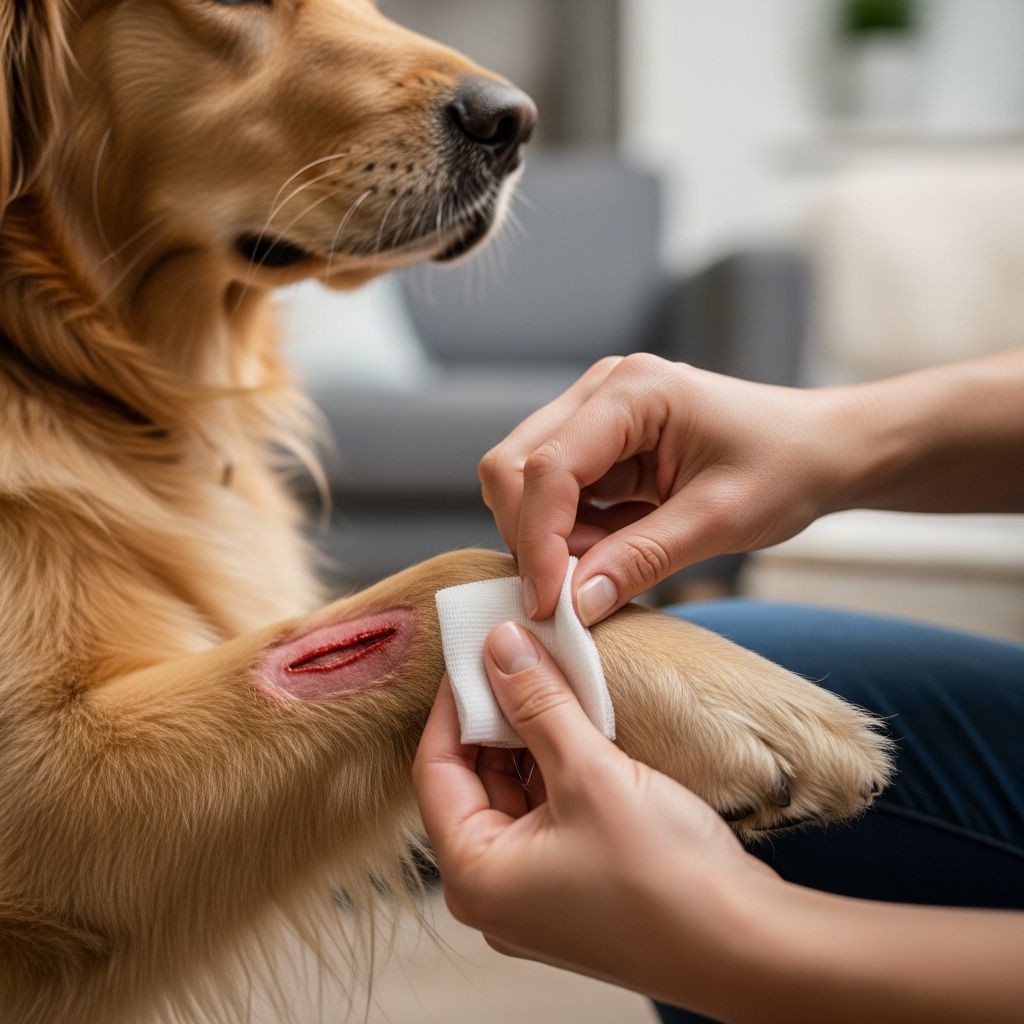
The most effective initial treatment for bleeding in dogs is applying direct pressure to the wound. This technique works by promoting clot formation and reducing blood flow from the injury site.
Steps for applying direct pressure:
- Use a clean, dry gauze pad, clean cloth, or absorbent dressing as your primary material
- Press firmly against the bleeding wound without removing the initial dressing to check progress
- Maintain continuous pressure for at least two to three minutes before lifting the dressing to assess bleeding
- If bleeding continues, apply a fresh gauze pad with continued pressure rather than removing the original dressing
- Layer additional bandage material or clean cloth over the gauze to provide further protection and absorption
- Once bleeding slows or stops, secure the dressing with nonstick tape, being careful not to wrap bandages too tightly
The key to successful pressure application is patience. Resist the urge to frequently check the wound, as this disrupts clot formation. Maintain steady pressure throughout the recommended time before assessing progress.
Wound Cleaning and Care
After bleeding has been controlled, proper wound care becomes essential to prevent infection and promote healing.
Post-bleeding wound management includes:
- Flush the wound with sterile saline solution to remove debris, dirt, and contaminants
- Gently clean around the wound edges with clean gauze or cotton swabs
- Use a turkey baster or large syringe to flush deeper wounds effectively
- Allow the wound to air dry naturally before applying fresh dressings
- Apply nonstick bandages to protect the cleaned wound from further contamination
- Secure bandages with gauze and tape, ensuring wrapping is snug but not restrictive to circulation
Avoid using hydrogen peroxide or other harsh chemicals unless specifically directed by your veterinarian, as these can damage healthy tissue and impair healing. Saline solution is the safest choice for most wound cleaning situations.
Managing Severe Bleeding and Hemorrhage
Severe bleeding that cannot be controlled with direct pressure requires more aggressive intervention and immediate emergency veterinary care. Recognizing signs of severe hemorrhage helps you respond appropriately and get your dog to professional help quickly.
Signs of severe bleeding include:
- Blood soaking through multiple layers of bandaging within minutes
- Continuous bright red bleeding that doesn’t slow with direct pressure
- Weakness, lethargy, or signs of shock
- Pale gums and tongue
- Rapid or weak pulse
- Rapid, shallow breathing
- Confusion or unconsciousness
Advanced bleeding control techniques:
When standard pressure techniques prove insufficient for severe bleeding from limbs, a tourniquet may be necessary as a temporary emergency measure.
- Use a thin strip of gauze, elastic band, or similar material to create a tourniquet between the wound and the body
- Apply the tourniquet above the bleeding site, pulling snugly enough to stop blood flow
- Cover the wound with a gauze pad and maintain gentle pressure
- Loosen the tourniquet for approximately 30 seconds every 15 to 20 minutes to prevent tissue damage from prolonged circulation loss
- Transport your dog to an emergency veterinary clinic immediately, as severe blood loss is life-threatening
Internal Bleeding: Recognition and Response
Internal bleeding is not immediately visible but poses serious danger to your dog’s health and survival. Recognizing signs of internal hemorrhage allows you to seek emergency care before the situation becomes critical.
Signs of internal bleeding in dogs:
- Coughing up blood or bloody foam
- Bleeding from the nose, mouth, or rectum
- Blood in the urine
- Pale or white gums
- Rapid or weak pulse rate
- Lethargy and weakness
- Abdominal distension or swelling
- Difficulty breathing
- Shock symptoms including confusion or unconsciousness
First aid for suspected internal bleeding:
- Keep your dog as warm and comfortable as possible using blankets or towels
- Minimize movement and stress to prevent further internal bleeding
- Keep your dog calm and quiet, limiting activity
- Transport immediately to an emergency veterinary hospital
- Do not attempt to treat internal bleeding at home; professional veterinary diagnostics and intervention are essential
Nosebleeds (Epistaxis) in Dogs
Nosebleeds are a specific type of bleeding that requires a slightly different first aid approach compared to external wounds. While often alarming to pet owners, many nosebleeds can be managed with simple at-home techniques.
First aid for dog nosebleeds:
- Keep your dog calm and quiet, as excitement and elevated blood pressure increase bleeding
- Remain calm yourself, as your composure helps reduce your pet’s anxiety
- Apply an ice pack to the bridge of the nose on top of the muzzle
- The cold constricts small blood vessels, slowing the bleeding
- For short-faced breeds, ensure your dog can breathe around the ice pack
- Apply ice for 5 to 10 minutes at a time
- Contact your veterinarian if nosebleeds are frequent, severe, or accompanied by other symptoms
Essential First Aid Kit for Dog Bleeding Emergencies
Having a well-stocked first aid kit readily available ensures you can respond quickly to bleeding emergencies. Preparation before an emergency occurs can save critical time when your dog needs immediate care.
Recommended items for your pet first aid kit:
- Sterile gauze pads and gauze rolls of various sizes
- Nonstick bandages and waterproof adhesive tape
- Clean, dry towels and cloth strips
- Elastic bands or strips of gauze for tourniquets
- Saline solution for wound cleaning
- Turkey baster or large syringe for flushing wounds
- Cotton balls and sterile swabs
- Sterile water-based lubricating jelly
- Styptic powder or liquid to stop minor bleeding
- Disposable gloves
- Tweezers for removing foreign objects
- Small flashlight for examining wounds
- Digital thermometer
- Scissors with blunt ends for cutting bandage materials
- Eye dropper or syringe without needle
- Muzzle or materials to fashion an emergency muzzle
Transportation and Emergency Care
Safe transportation of a bleeding dog to veterinary care is critical for preventing further injury and ensuring your dog receives professional treatment promptly.
Guidelines for safe dog transport:
- Get assistance from another person to help move and transport your dog
- For small dogs, use a carrier with the top removed for easy access, or place your dog in a strong cardboard box
- For larger dogs, create a makeshift stretcher from rigid material such as sturdy wood or a reinforced board
- Carefully maneuver your dog onto a blanket or coat to gently move them to the carrier or stretcher
- Avoid unnecessary movement or bending that could aggravate injuries
- Keep pressure on bleeding wounds during transport
- Contact your veterinary hospital immediately to alert them of your arrival
- Drive safely but expeditiously to the nearest veterinary emergency facility
When to Seek Immediate Emergency Veterinary Care
Understanding which bleeding situations require emergency veterinary intervention versus home care is essential for protecting your dog’s health and life.
Seek immediate emergency veterinary care if:
- Bleeding is severe and uncontrolled after 10 minutes of direct pressure
- Blood continues soaking through bandage layers
- Your dog shows signs of shock or significant blood loss
- Bleeding originates from the head, chest, or abdomen
- You suspect internal bleeding
- The wound appears deep, gaping, or contaminated
- Your dog has been hit by a car or experienced major trauma
- Bleeding is accompanied by other severe symptoms
- Nosebleeds are frequent, severe, or accompanied by labored breathing
- Your dog is unconscious or showing signs of shock
Recovery and Follow-Up Care
After initial first aid and emergency treatment, proper wound care during recovery promotes healing and prevents complications such as infection or re-opening of the wound.
Post-treatment care includes:
- Follow all veterinary instructions regarding bandage changes and wound cleaning
- Keep the wound clean and dry between veterinary visits
- Prevent your dog from licking or chewing the wound by using an Elizabethan collar if recommended
- Limit activity and exercise during the healing period
- Monitor the wound daily for signs of infection such as increased redness, swelling, discharge, or odor
- Attend follow-up veterinary appointments as scheduled
- Administer prescribed antibiotics or pain medications as directed
Frequently Asked Questions About Dog Bleeding
Q: How long should I apply pressure to a bleeding wound?
A: Apply continuous pressure for at least two to three minutes before checking the wound. Resist the urge to lift the dressing frequently, as this disrupts clot formation. If bleeding continues after checking, apply fresh gauze and continue pressure for another 2-3 minutes.
Q: Can I use hydrogen peroxide to clean my dog’s bleeding wound?
A: Only use hydrogen peroxide if specifically directed by your veterinarian. Saline solution is generally preferred for wound cleaning as it is gentler on healthy tissue and does not damage cells that are important for healing.
Q: What should I do if my dog has a nosebleed?
A: Keep your dog calm, apply an ice pack to the bridge of the nose for 5-10 minutes, and contact your veterinarian. Ensure your dog can breathe around the ice pack, especially for short-faced breeds. If nosebleeds are frequent or severe, professional veterinary evaluation is necessary.
Q: How can I tell if my dog has internal bleeding?
A: Signs of internal bleeding include coughing up blood, bleeding from the nose or mouth, blood in urine, pale gums, rapid or weak pulse, lethargy, and difficulty breathing. If you suspect internal bleeding, seek immediate emergency veterinary care.
Q: When should I use a tourniquet on my dog’s bleeding limb?
A: Use a tourniquet only for severe bleeding from a limb that cannot be controlled with direct pressure. Apply it above the wound site, loosen it briefly every 15-20 minutes, and seek emergency veterinary care immediately, as tourniquets are a temporary emergency measure only.
Q: Is it safe to wrap bandages tightly around my dog’s wound?
A: No, avoid wrapping bandages too tightly, as this restricts circulation and can cause tissue damage. Bandages should be snug enough to hold in place and apply gentle pressure but loose enough that you can fit a finger underneath.
Q: What are the main principles of first aid for any pet bleeding emergency?
A: The main principles are: keep calm and assess the situation, maintain your dog’s airway, control bleeding with direct pressure, keep your dog warm and quiet, minimize movement, and seek veterinary care as soon as possible.
References
- First Aid for Dogs: Shock, Rescue Breathing, and CPR — VCA Animal Hospitals. https://vcahospitals.com/know-your-pet/first-aid-for-dogs
- Nose Bleeds (Epistaxis) in Dogs — VCA Animal Hospitals. https://vcahospitals.com/know-your-pet/nose-bleeds-or-epistaxis-in-dogs
- Care of Open Wounds in Dogs — VCA Animal Hospitals. https://vcahospitals.com/know-your-pet/care-of-open-wounds-in-dogs
- First Aid for Pets: Tips at Lomita Pet Hospital — Lomita Pet Hospital. https://www.lomitapethospital.com/articles/first-aid-for-pets.html
- Emergency Guide: How to Give Pets First Aid — Shoreland Animal Hospital. https://www.shorelandanimalhospital.com/site/blog/2024/04/23/give-pets-first-aid
- First Aid Tips for Pet Owners — American Veterinary Medical Association. https://www.avma.org/resources-tools/pet-owners/emergencycare/first-aid-tips-pet-owners
Similar Articles








Read full bio of medha deb