

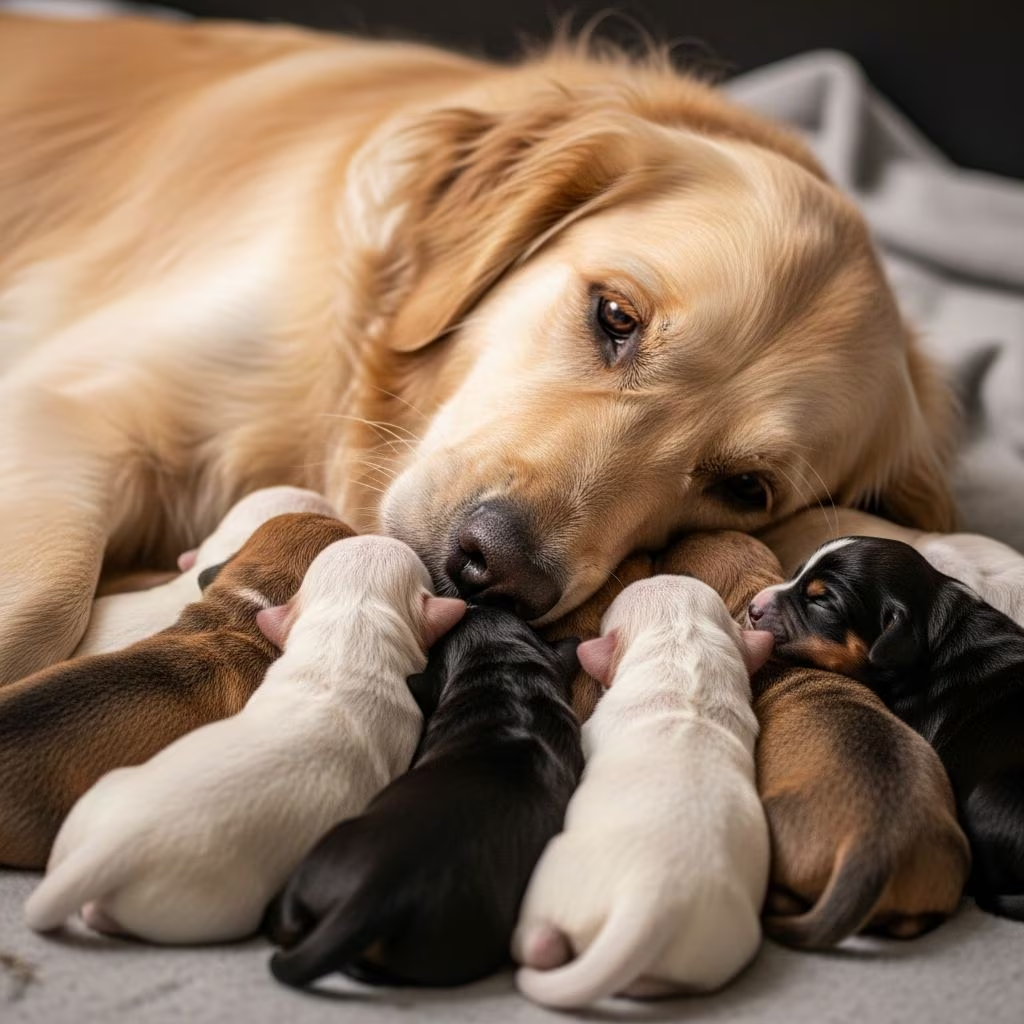
The initial 48 hours after birth represent a make-or-break period for newborn puppies. During this time, they transition from the womb to the outside world, relying entirely on their mother and careful human intervention for survival. Proper management of temperature, nutrition, hygiene, and health monitoring can dramatically improve outcomes, as puppies are highly vulnerable to conditions like hypothermia and low blood sugar.
Understanding Newborn Puppy Physiology
Newborn puppies enter the world underdeveloped and dependent. They cannot regulate their body temperature, maintain hydration independently, or eliminate waste without stimulation. Their primary needs center on warmth, colostrum intake, and frequent nursing to build immunity and energy reserves.
At birth, puppies possess innate reflexes such as sucking, rooting, and righting themselves, which activate during activated sleep—a phase comprising 90% of their day that aids muscle development. These reflexes ensure they seek nourishment and respond to maternal care. However, their kidneys are immature, leading to frequent urination and high dehydration risk, as neonates consist of less than 80% water and cannot concentrate urine effectively.
Creating the Ideal Whelping Environment
A safe, controlled space is paramount. Use a whelping box in a quiet, draft-free room with ambient temperature around 75°F (24°C). The puppies’ resting surface must be maintained at 90-95°F (32-35°C) for the first 24 hours, dropping gradually to support natural development.
- Heat sources: Employ heat lamps, heating pads, or under-tank heaters, positioned to allow puppies to move away if overheated.
- Bedding: Provide clean, absorbent materials like towels or puppy pads, changed frequently to prevent chilling from urine and feces.
- Monitoring tools: Use infrared thermometers for surface checks and rectal thermometers for puppies (aim for 94°F/34°C initially, rising to 96°F/35.5°C by day two).
Avoid overheating, which causes constant crying; cool overheated pups with damp cloths on their belly and head. Chilled puppies whinge and fail to suckle—warm them slowly in wool with hot water bottles for circulation.
Post-Birth Immediate Actions
Right after delivery, clear airways by gently rubbing the puppy with a clean towel to stimulate breathing and dry them. The mother typically severs the umbilical cord and licks to stimulate respiration and elimination.
If the dam is absent or exhausted:
- Suction mouth and nostrils with a bulb syringe.
- Position in sternal recumbency (chest down) and swing gently nose-down to drain fluids.
- Administer oxygen if available via puppy warmer.
Weigh each puppy at birth and daily to track growth; healthy ones gain 5-10% body weight per day initially.
Nutrition and Feeding Essentials
Colostrum—the mother’s first milk rich in antibodies—is critical within hours of birth to bolster immunity. Puppies nurse 8-10 times daily in week one, every 2 hours around the clock.
Monitor for weak nursers; larger littermates may dominate. Signs of healthy feeding include wiggling, vocalizing, and firm bodies when handled. Limp, weak puppies signal hypoglycemia after 24 hours without food—provide glucose immediately.
| Age | Feeding Frequency | Amount per Feed | Formula Notes |
|---|---|---|---|
| 0-24 hours | Every 2 hours | 1-2 mL/100g body weight | Colostrum priority; supplement if needed |
| 24-48 hours | Every 2-3 hours | 2-4 mL/100g | Warm to wrist temperature; tube feed if necessary |
For tube feeding: Pre-measure tube to last rib, lubricate, insert slowly (30-60 seconds), using commercial milk replacer. Feed porridge-like mixtures high in protein (25-30%) before nursing to ease competition.
Hygiene and Elimination Support
Puppies lack bowel and bladder control; the dam licks their genitals and anus post-feeding to trigger urination and defecation. First stools (meconium) are yellow-brown and pasty, shifting to tan.
Manually stimulate orphans with a warm, damp cotton ball after feeds, mimicking the tongue. Maintain hygiene to prevent infections—sepsis is a top killer. Expect maternal discharge (black, brown, green) and mild lochia for 48 hours post-whelping.
Recognizing and Addressing Health Red Flags
Vigilance prevents ‘fading puppy syndrome,’ where healthy neonates decline rapidly within 48 hours.
- Hypothermia: Cold to touch, lethargic, poor suckle—warm gradually.
- Dehydration: Tacky gums, sunken eyes—subcutaneous glucose/electrolytes every 6-12 hours.
- Hypoglycemia: Weakness, seizures—small, frequent feeds.
- Respiratory distress: Blue gums, labored breathing—seek vet for epinephrine/caffeine.
- Cleft palate: Milk from nostrils—requires surgery.
Puppies scoring low on Apgar-like scales (0-3) need intensive resuscitation.
Maternal Care and Monitoring
The dam provides warmth, milk, and cleaning but may reject weak pups. Ensure she eats nutrient-dense food, rests, and bonds. Watch for metritis (foul discharge) or eclampsia (tremors).
Daily Routine Checklist for First 48 Hours
- Hourly: Check temp, nestling.
- Every 2 hours: Feed, stimulate elimination, weigh.
- Daily: Full health exam, dam check.
Frequently Asked Questions (FAQs)
How often should newborn puppies eat in the first 48 hours?
Every 2 hours, day and night, to prevent blood sugar drops.
What temperature is safe for newborn puppies?
Surface at 90-95°F (32-35°C), rectal 94-96°F (34-35.5°C).
What if a puppy won’t nurse?
Tube feed warmed replacer and consult a vet for underlying issues like cleft palate.
Is puppy crying normal?
Briefly yes, but constant crying signals cold, hunger, or overheating—address immediately.
When to call a vet?
For hypothermia, dehydration, weakness, or no improvement in 24 hours.
Long-Term Outlook Beyond 48 Hours
Surviving the first two days sets the foundation. Gradually reduce heat (1°F/week), introduce solid cues by week 3, and vaccinate at 6-8 weeks. Consistent care yields robust adults.
References
- New Puppy Care: 0-7 Weeks — PetMD. 2023. https://www.petmd.com/dog/care/new-puppy-care-0-7-weeks
- What To Expect The First 48hrs For Newborn Puppies — YouTube (Whelping 101). 2022. https://www.youtube.com/watch?v=iC9QNxg7_mI
- Care of Puppies from Birth to Ten Days — Dogs NSW. 2015-09. https://www.dogsnsw.org.au/media/2952/care-of-puppies-birth-to-10-days-sept-2015.pdf
- Newborn Puppy Care: The First Breath and Beyond Webinar — Revival Animal Health. 2023. https://www.revivalanimal.com/learning-center/newborn-puppy-care-the-first-breath-and-beyond-webinar
- How to Care for Newborn Puppies — Shackleford Vet Clinic. 2024. https://www.shacklefordvetclinic.com/uncategorized/how-to-care-for-newborn-puppies
- Canine: Guide to Raising Unweaned Puppies — University of Wisconsin Shelter Medicine. 2023. https://sheltermedicine.wisc.edu/library/resources/canine-guide-to-raising-unweaned-puppies



