

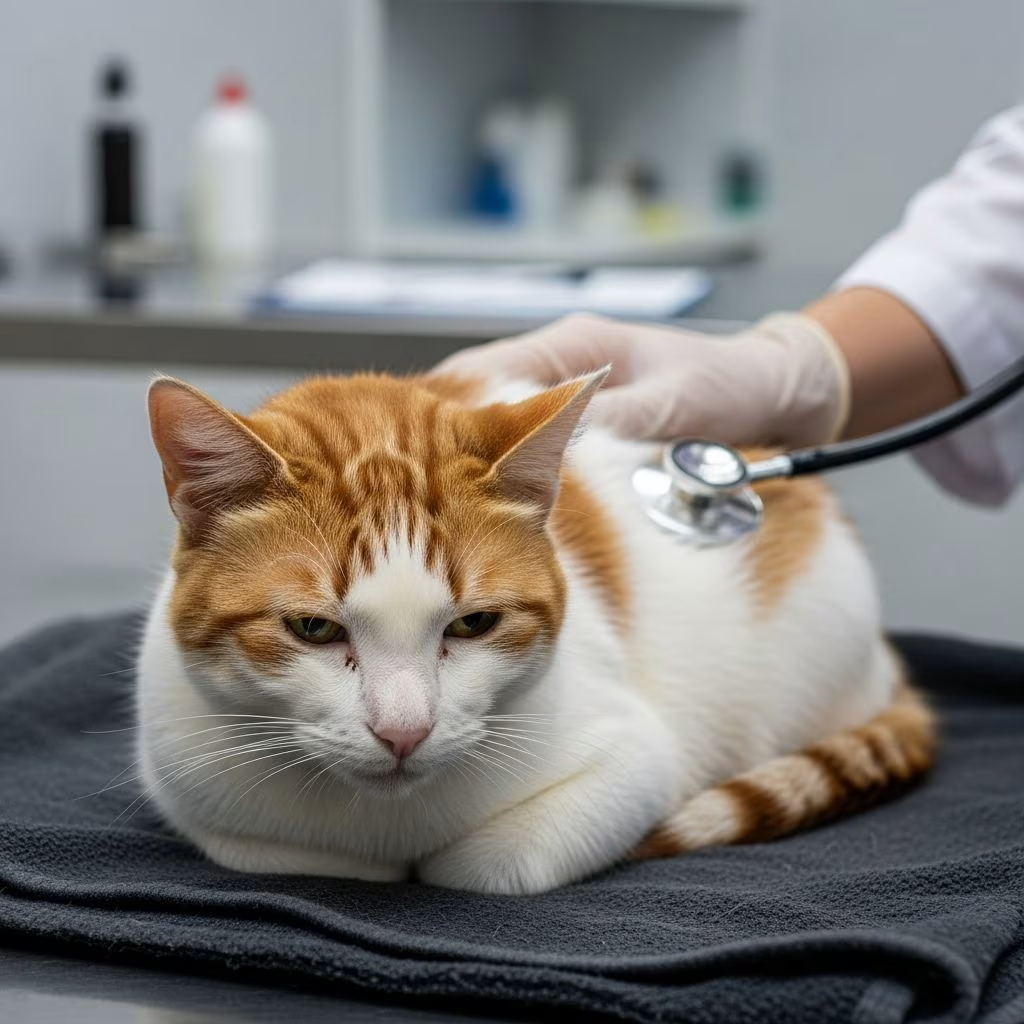
Feline infectious peritonitis (FIP) represents a severe, immune-mediated condition in cats triggered by a mutation in the common feline coronavirus. Once viewed as invariably fatal, recent antiviral therapies have dramatically improved prognosis for many affected felines.
Understanding the Nature of FIP
FIP arises when a typically benign feline enteric coronavirus mutates into a pathogenic form, prompting an exaggerated immune response that damages blood vessels and organs. This mutation occurs within the cat’s body, not through direct transmission of the disease-causing strain. Young cats, especially those in multi-cat environments like catteries or shelters, face higher risk due to frequent exposure to the parent virus.
The disease manifests in two primary forms: effusive (wet) and noneffusive (dry), though many cats exhibit mixed features. Wet FIP involves fluid accumulation in body cavities, while dry FIP leads to granulomatous inflammation in organs such as the eyes, brain, kidneys, or liver.
Recognizing Early Warning Signs
Initial symptoms of FIP often mimic other illnesses, complicating prompt identification. Common early indicators include:
- Persistent or fluctuating fever unresponsive to antibiotics
- Progressive weight loss despite normal eating habits
- Lethargy and reduced activity levels
- Loss of appetite or intermittent inappetence
- Mild diarrhea, usually self-resolving
As FIP advances, signs become more specific to the form and affected organs.
Signs of Wet (Effusive) FIP
In the wet form, cats develop ascites (abdominal fluid buildup), causing a pot-bellied appearance, and sometimes pleural effusion (chest fluid), leading to labored breathing or muffled heart sounds. Affected cats may show pale or jaundiced gums and experience rapid deterioration without intervention.
Signs of Dry (Noneffusive) FIP
Dry FIP produces diverse symptoms based on organ involvement:
- Ocular: Cloudy eyes, uveitis, retinal detachment, squinting, or blindness
- Neurological: Ataxia (wobbly gait), seizures, tremors, behavioral changes, or hypersensitivity to touch
- Renal/Hepatic: Increased thirst and urination, vomiting, jaundice, or organ failure
- Other: Enlarged lymph nodes, skin lesions, or intestinal issues
Cats may transition between forms, starting dry and progressing to wet, underscoring the need for vigilant monitoring.
Risk Factors and Transmission Dynamics
Not all cats exposed to feline coronavirus develop FIP; only a small percentage (estimated 5-10%) experience the mutation. Key risk factors include:
| Factor | Description | Risk Level |
|---|---|---|
| Age | Cats under 2 years, especially kittens | High |
| Environment | Crowded shelters, catteries, or multi-cat homes | High |
| Genetics | Certain breeds like Purebreds may have predispositions | Moderate |
| Stress | Surgery, relocation, or concurrent illness | Moderate |
| Immune Status | Weakened immunity from other diseases | High |
The parent coronavirus spreads via fecal-oral route, persisting in environments for weeks. However, FIP itself is not directly contagious, as the mutation is host-specific.
Diagnostic Approaches for FIP
Confirming FIP remains challenging due to no single definitive test. Veterinarians employ a multi-faceted strategy:
- Clinical History and Exam: Assessing nonspecific signs, fluid accumulation, or organ-specific issues.
- Bloodwork: Hyperglobulinemia, low albumin:globulin ratio, lymphopenia, neutrophilia.
- Fluid Analysis (Wet FIP): Effusion with high protein (>3.5 g/dL) and low cell count, Rivalta test positive.
- Imaging: Ultrasound revealing abdominal fluid, organ changes, or lymphadenopathy.
- Biopsy: Gold standard—pyogranulomatous inflammation in tissues.
- PCR and Immunohistochemistry: Detect viral presence, though not always conclusive due to false positives/negatives.
High-risk profiles (young age, overcrowding) combined with supportive tests yield probable diagnosis, guiding treatment decisions.
Breakthrough Treatments Revolutionizing FIP Care
Historically fatal, FIP now responds to nucleoside analogues targeting viral replication. GS-441524 (parent compound of remdesivir) and remdesivir form the cornerstone of therapy.
- Dosage and Duration: 4-6 mg/kg subcutaneously daily for 84 days; higher for neurological FIP (8-10 mg/kg).
- Success Rates: Over 80-90% remission in treated cases, with long-term cures common.
- Monitoring: Weekly bloodwork to track globulin levels, weight gain, and symptom resolution.
Supportive care includes fluids, nutrition, and anti-inflammatories. Availability varies by region; compassionate use programs and compounding pharmacies facilitate access.
Prevention Strategies for Cat Owners
Vaccines offer limited efficacy and are not widely recommended. Focus on reducing coronavirus exposure:
- Maintain hygiene: Daily litter box scooping, disinfect with bleach (1:32 dilution).
- Limit population density: Avoid overcrowding, quarantine new cats.
- Boost immunity: Stress reduction, balanced diet, routine wellness checks.
- Breeding practices: Test for coronavirus shedding, select low-risk lines.
Early intervention at symptom onset markedly improves outcomes.
Living with a Cat Diagnosed with FIP
Post-treatment, monitor for relapse via clinical exams and titers. Most cured cats lead normal lives, though lifelong vigilance is advised. Emotional support for owners is crucial given the diagnosis’s psychological toll.
Frequently Asked Questions (FAQs)
Is FIP contagious to other cats or humans?
No, FIP itself is not directly transmissible; only the common coronavirus is, via feces.
Can older cats get FIP?
Yes, though rarer; most cases occur in cats under 2 years.
How much does FIP treatment cost?
Typically $3,000-$10,000 USD for full course, varying by weight and form.
Is there a cure for FIP?
Antivirals like GS-441524 achieve cure rates over 80% with proper adherence.
Can FIP go into remission without treatment?
Rarely; spontaneous recovery is exceptional.
References
- Feline Infectious Peritonitis: Signs, Diagnosis, and Treatment of FIP — PetMD. 2023. https://www.petmd.com/cat/conditions/infectious-parasitic/feline-infectious-peritonitis
- Feline Infectious Peritonitis (FIP): Symptoms, Causes, and Treatments — WebMD. 2023. https://www.webmd.com/pets/cats/cat-fip-feline-infectious-peritonitis
- Feline Infectious Peritonitis (FIP) – Cat Owners — Merck Veterinary Manual. 2023. https://www.merckvetmanual.com/cat-owners/disorders-affecting-multiple-body-systems-of-cats/feline-infectious-peritonitis-fip
- FELINE INFECTIOUS PERITONITIS — PMC – NIH. 2020-04-01. https://pmc.ncbi.nlm.nih.gov/articles/PMC7152141/
- Feline Infectious Peritonitis – FIP in Cats — VCA Animal Hospitals. 2023. https://vcahospitals.com/know-your-pet/feline-infectious-peritonitis



