

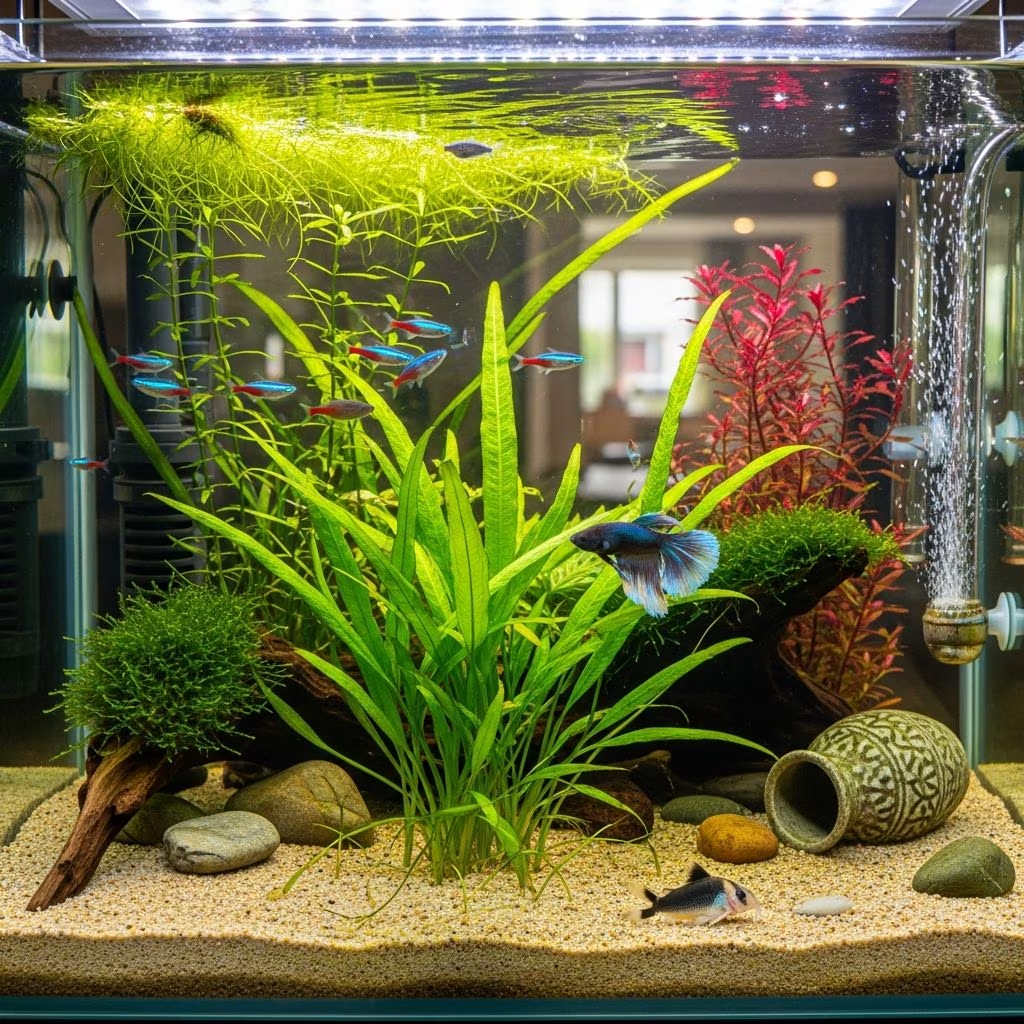
Finding the Right Aquarium Lighting for Your Tank
Proper aquarium lighting is one of the most critical components of a healthy and thriving aquatic environment. Whether you’re maintaining a simple community tank or a complex planted aquascape, the right lighting system can make the difference between vibrant, flourishing inhabitants and a lackluster, struggling ecosystem. Understanding the fundamentals of aquarium illumination will help you create an environment where your fish thrive and your plants grow beautifully.
Why Aquarium Lighting Matters
Aquarium lighting serves multiple essential functions beyond simple visibility. Light regulates fish behavior, influences their coloration, and affects their circadian rhythms. For planted tanks, lighting is absolutely fundamental to photosynthesis, plant growth, and the overall aesthetic appeal of your aquascape. The right lighting can enhance the natural colors of your fish, promote healthy plant development, and create a visually stunning display that you’ll enjoy for years to come.
Types of Aquarium Lighting Systems
Understanding the different lighting technologies available will help you make an informed decision about which system best suits your needs and budget.
LED (Light Emitting Diode) Lighting
LED lighting has revolutionized the aquarium hobby and is now considered the gold standard for most aquatic environments. These energy-efficient lights offer numerous advantages that make them the preferred choice for both beginners and experienced aquarists. LEDs consume significantly less electricity than traditional fluorescent systems, generating minimal heat while delivering powerful illumination. Most quality LED fixtures last up to 50,000 hours, meaning you’ll rarely need to replace them. Many modern LED systems feature adjustable intensity and color spectrum controls, allowing precise customization for your specific tank requirements.
LED lights are available with a wide range of color temperatures and can be programmed to simulate natural day-night cycles. For planted aquariums, LEDs provide the flexibility to adjust the light spectrum to optimize photosynthesis and plant growth. Many advanced models include app control, allowing you to adjust settings remotely and create custom lighting schedules.
Fluorescent Lighting
Fluorescent lighting, available in T5 and T8 varieties, has been a staple in the aquarium hobby for decades. While still popular and more affordable than LED systems, fluorescent lights are gradually being replaced by more advanced technologies. T5 bulbs are more efficient than T8 and provide better light penetration for deeper tanks. However, fluorescent bulbs dim over time and typically require replacement every 10 to 12 months, adding to long-term maintenance costs. These lights consume more energy than LEDs and generate more heat, which can be problematic in smaller tanks or warm climates.
HQI and Metal Halide Lamps
High-intensity discharge lighting, including HQI and metal halide systems, is primarily used in professional marine aquariums and large planted tanks with particularly demanding species. These powerful fixtures provide intense, high-temperature light that penetrates deep into the water column. However, they come with significant drawbacks: they are expensive to purchase and operate, generate substantial heat requiring additional cooling equipment, and consume considerable amounts of electricity. For most home aquarists, these systems are unnecessary, but they represent the cutting edge of aquarium illumination technology for specialized applications.
Understanding Light Spectrum and Color Temperature
The color temperature of aquarium lighting, measured in Kelvin (K), profoundly affects photosynthesis, plant health, fish coloration, and overall aquarium aesthetics. Selecting the right color temperature for your specific setup is crucial for optimal results.
| Color Temperature (K) | Light Appearance | Best Uses | Fish/Plant Impact |
|---|---|---|---|
| <4500K | Warm, yellowish light | Community tanks with few plants | Enhances red tones in fish but less effective for plant growth |
| 5000–6500K | Neutral white daylight | General use, community tanks | Natural appearance; good for most applications |
| 6500–8000K | Bright white | Planted aquariums | Optimal for plant growth and aquascaping |
| 8000–10000K+ | Cool blue-white | Marine and reef aquariums | Essential for coral and reef organisms; creates stunning blue atmosphere |
Beyond general color temperature, understanding specific wavelengths is crucial for plant growth. Plants primarily utilize light around 480 nanometers (blue light) for vegetative growth and approximately 680 nanometers (red light) for flowering and coloration. Many advanced aquarists look for RGB (red-green-blue) lighting systems that emphasize these specific wavelengths while minimizing wasteful light spectrum that contributes to algae overgrowth without benefiting plant growth.
Choosing Lighting Based on Tank Type
Community Tanks (Fish Plus Basic Plants)
For community tanks housing standard fish species and low-light plant species like Anubias, Cryptocoryne, Java fern, and various mosses, LED lights with a color temperature of 6500–8000K work exceptionally well. A power output of 0.3–0.5 watts per liter provides sufficient illumination without promoting excessive algae growth. These setups prioritize displaying your fish’s natural colors while maintaining basic plant health, so simplicity and affordability are often key considerations.
Planted Aquariums (High-Tech Aquascaping)
Serious planted tank enthusiasts require much more intensive lighting to support demanding aquatic plants. High-tech aquascaping with species like Rotala, Glossostigma, and Hemianthus cuba demands approximately 0.8–1 watt per liter of lighting intensity. These tanks typically require specialized LED lights that allow detailed spectral adjustments, enabling fine-tuning of the light spectrum to match specific plant requirements. High-tech planted tanks usually also incorporate CO₂ supplementation and comprehensive nutrient dosing to fully utilize the intense lighting provided.
Marine and Reef Aquariums
Marine aquariums, particularly reef systems, have the most specialized lighting requirements. Light spectrum is paramount, with heavy emphasis on the blue range (8000–10000K and higher) to meet the specific needs of corals and other light-sensitive reef organisms. Marine systems typically require 1–2 watts per liter of lighting and benefit from advanced control systems that allow programmable sunrise and sunset effects, mimicking natural reef light cycles. The investment in quality marine lighting is essential for the health and coloration of sensitive coral species.
Calculating Light Intensity for Your Tank
Understanding how to measure and calculate appropriate light intensity for your specific tank prevents both under- and over-lighting, which can lead to plant health issues and excessive algae growth. Light intensity is typically measured in PAR (Photosynthetically Active Radiation), expressed in micromoles of photons per square meter per second (μmol/m²/s). Different plant species have different PAR requirements, ranging from low-light plants requiring 10–20 μmol/m²/s to high-light demanding plants requiring 40–80+ μmol/m²/s or higher.
The general rule of thumb using watts per liter provides a simplified approach: 0.3–0.5 watts/liter for low-light community tanks, 0.5–0.8 watts/liter for medium-light planted tanks, and 0.8–1+ watts/liter for high-tech planted tanks. However, light distribution varies significantly depending on fixture design, water depth, and tank width. Fixtures with wider light spread (120 degrees or greater) cover larger areas more effectively than narrow-beam designs.
Lighting Duration and Photoperiod Management
The length of time your aquarium lights remain on each day, known as the photoperiod, is just as important as the intensity and spectrum of the light. Most aquariums thrive with a consistent 8–10 hour photoperiod, which mimics natural day-night cycles and helps regulate fish behavior and plant growth. Installing a timer to automate your lighting schedule maintains this consistency, preventing stress on your aquatic inhabitants and preventing rapid plant growth fluctuations.
Using a timer prevents the common mistake of leaving lights on too long, which can lead to excessive algae blooms and plant stress. Conversely, insufficient lighting duration stunts plant growth and reduces the energy available for photosynthesis. Programmable timers with sunrise and sunset simulation features, available on many modern LED systems, add aesthetic appeal by gradually brightening the tank in the morning and dimming at night, creating a more natural environment.
Matching Tank Size to Lighting Requirements
Different aquarium sizes require different lighting configurations. Smaller tanks, particularly desktop or nano aquariums under 20 gallons, typically need only a single appropriately-sized fixture. Mid-size tanks in the 20–50 gallon range often benefit from intermediate-grade LED systems that provide sufficient coverage and spectral customization. Larger aquariums exceeding 50 gallons may require multiple fixtures to ensure even lighting coverage across the entire tank, particularly if the tank exceeds 18–24 inches in width. Tank length is also important: tanks significantly longer than 18–24 inches may need two lighting units, one covering the front section and another covering the rear.
Beginner, Intermediate, and Advanced Lighting Options
Beginner-Friendly Lighting
Beginner aquarists should prioritize affordability, easy installation, and full-spectrum lighting that enhances fish and plant colors naturally. Excellent starter options include budget-friendly LED systems offering balanced spectrums, solid full-spectrum coverage with simple plug-and-play setups, and compact models ideal for smaller tanks with adjustable settings. These lights provide excellent value without requiring extensive technical knowledge to operate effectively.
Intermediate Lighting Systems
As your experience grows, intermediate lighting systems offer greater control over spectrum and intensity, enabling confident plant growth in larger tanks. These fixtures effectively support tanks ranging from 20–75 gallons and feature customizable settings for fine-tuning light delivery. Many intermediate options allow stacking multiple units to cover larger aquascapes, providing flexibility as your aquarium hobby evolves.
Advanced Professional-Grade Lighting
Advanced aquarists pursuing high-tech planted tanks demand the highest level of control, intensity, and customization. Professional-grade systems feature fully customizable spectrums, high-intensity output, and advanced features like app control and programmable schedules. These lights deliver exceptional precision tuning, enhanced shimmer effects, and stunning visual aesthetics that make fish and plants appear absolutely vibrant. While expensive, these systems represent the pinnacle of aquarium lighting technology.
Practical Tips for Selecting Your Aquarium Lighting
Consider your tank size and depth: Different tank dimensions require different light intensities and coverage patterns. Deeper tanks require more powerful lights, while shallow tanks may be adequately served by simpler systems.
Evaluate your inhabitants’ needs: Community fish with live plants have different requirements than reef organisms or high-tech aquascapers. Match your lighting to your specific inhabitants’ requirements.
Install a timer: Automated timers maintain consistent photoperiods, regulate the day-night cycle, and prevent the common mistake of excessive light exposure that promotes algae blooms.
Account for light spread: Verify the fixture’s light spread angle before purchasing. Fixtures with 120-degree spread cover wider areas than narrow-beam designs, potentially saving you from purchasing multiple units.
Plan for future expansion: Consider purchasing a system scalable to your evolving needs. Many modern LED fixtures allow stacking or daisy-chaining to increase coverage as your tank grows.
Prioritize energy efficiency: LED lighting reduces long-term operational costs and minimizes heat generation, making it the most practical choice for most aquarists.
Frequently Asked Questions (FAQs)
Q: How many hours per day should aquarium lights be on?
A: Most aquariums thrive with 8–10 hours of consistent daily lighting. This photoperiod mimics natural day-night cycles and prevents stress on fish while supporting healthy plant growth. Using a timer ensures consistency.
Q: Can I use regular household LED lights for my aquarium?
A: While possible, regular household LED lights are not recommended. Aquarium-specific lights are designed with appropriate color spectrums for aquatic plants and fish coloration, and they’re engineered to withstand humid aquarium environments safely.
Q: What’s the difference between PAR and lumens?
A: PAR (Photosynthetically Active Radiation) measures light energy plants can actually use, while lumens measure perceived brightness to the human eye. PAR is more relevant for evaluating aquarium lighting effectiveness for plant growth.
Q: How often should I replace my aquarium light bulbs?
A: LED lights rarely need replacement, lasting 50,000+ hours. Fluorescent bulbs require replacement every 10–12 months as they gradually dim over time, reducing effectiveness.
Q: Will stronger lighting prevent algae growth?
A: Actually, excessive lighting promotes algae growth. Balance lighting intensity with appropriate photoperiod duration, proper nutrient management, and adequate plant biomass to outcompete algae for resources.
Q: Can I adjust lighting intensity on all LED aquarium lights?
A: Not all LED lights offer dimming capabilities. Budget models typically have fixed intensity, while intermediate and advanced systems usually feature adjustable dimming and spectral controls.
References
- Aquarium Lighting: A Beginner’s Guide to Illuminating Your Fish Tank — Truvu Aquariums. https://truvuaquariums.com/blogs/news/aquarium-lighting-a-beginners-guide-to-illuminating-your-fish-tank
- Aquarium Lighting Guide – Your Most Common Questions Answered — Reef2Reef. https://www.reef2reef.com/threads/aquarium-lighting-guide-your-most-common-questions-answered-aquaforest.1109405/
- Guide to Aquarium Lighting: Beginner, Intermediate & Advanced — Bulk Reef Supply. https://fresh.bulkreefsupply.com/content/post/ultimate-guide-to-aquarium-lighting-beginner-intermediate-and-advanced
- Choosing the Right Aquarium Light — Aqueon. https://www.aqueon.com/articles/choosing-the-right-aquarium-light
- How to Pick the Best Light for Freshwater Planted Aquariums — Aquarium Coop. https://www.aquariumcoop.com/blogs/aquarium/how-to-pick-the-best-planted-aquarium-light
- The Best (And Worst) Planted Tank Aquarium Lights — Sunken Treasure Aquatics. https://www.sunkentreasureaquatics.com/guides/lights



