

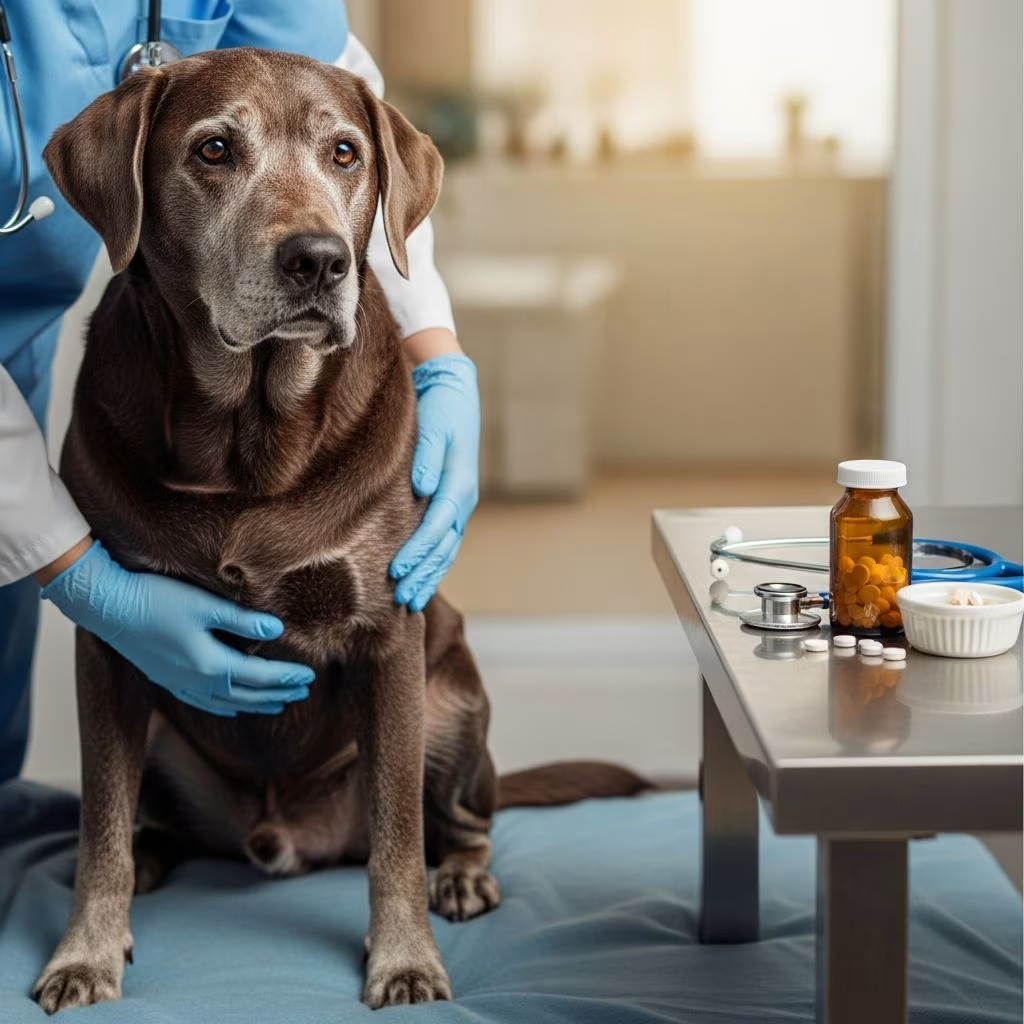
Understanding Finasteride for Dogs
Finasteride (brand names Proscar® and Propecia®) is a prescription medication commonly used in veterinary medicine to address infertility issues in dogs caused by benign prostatic hypertrophy (BPH), commonly known as an enlarged prostate. This medication works by inhibiting the enzyme 5-alpha reductase, which is responsible for converting testosterone into dihydrotestosterone (DHT). By reducing DHT levels, finasteride helps shrink the prostate gland and alleviates associated symptoms without affecting a dog’s reproductive capacity.
What is Benign Prostatic Hypertrophy?
Benign prostatic hypertrophy is a common condition in older, intact male dogs where the prostate gland becomes enlarged due to hormonal changes. This enlargement can cause various clinical signs that affect a dog’s quality of life. Unlike some other prostate conditions, BPH is not cancerous, but it does warrant medical attention to prevent discomfort and secondary complications.
The condition typically develops in male dogs that have not been neutered and occurs naturally as dogs age. Dihydrotestosterone (DHT) plays a crucial role in the normal growth and development of the prostate, and in dogs with BPH, this hormone contributes to excessive prostate enlargement.
Uses of Finasteride in Dogs
Primary Treatment: Benign Prostatic Hypertrophy
The primary use of finasteride in dogs is treating benign prostatic hypertrophy. In intact, non-breeding dogs, finasteride helps alleviate signs related to BPH, including:
– Increased urge to urinate- Straining to defecate- Blood in the urine- Difficulty with normal urination
Finasteride is particularly valuable for dogs that owners wish to keep intact for breeding purposes, as it maintains fertility while treating the prostate condition.
Additional Uses
Beyond BPH treatment, finasteride is also used to treat adrenal disease in ferrets. However, its use in dogs and ferrets for these purposes is considered off-label, meaning the medication is being used in a way not formally approved by the U.S. Food and Drug Administration (FDA) or Health Canada.
How Finasteride Works
Finasteride functions as a 5-alpha reductase inhibitor, working at the biochemical level to interrupt hormone conversion. The medication inhibits the enzyme responsible for converting testosterone to dihydrotestosterone, thereby lowering DHT concentration in the prostate tissue. This reduction leads to decreased prostate size and improved urinary function.
Importantly, finasteride does not significantly change blood testosterone levels, which means it has minimal effects on sperm production. This characteristic makes it an excellent choice for dogs whose owners intend to breed them while managing prostate health. Research has demonstrated that doses of 1 mg/kg of finasteride administered for seven weeks can reduce prostate volume by approximately 61%.
Dosage Information for Dogs
Proper dosing is essential for achieving therapeutic benefits while minimizing potential risks. The recommended dosage of finasteride varies based on a dog’s body weight:
– Dogs weighing less than 15 kg: 1.5 mg once daily- Dogs weighing 15-30 kg: 2.5 mg once daily- Dogs weighing more than 30 kg: 5 mg once daily
Alternatively, dosing can be calculated at 0.1 to 0.5 mg per kilogram of body weight, administered once daily. Finasteride tablets can be administered with or without food, though giving the medication with food may enhance compliance and reduce gastrointestinal upset.
Consistency in daily administration is crucial for achieving optimal results. Pet owners should follow their veterinarian’s specific dosing instructions carefully, as individual cases may require dose adjustments based on the dog’s response to treatment.
Administration Guidelines
Administering finasteride correctly ensures maximum effectiveness and safety. The medication should be given orally as directed by your veterinarian. While finasteride can be given with or without food, administering it with a meal may improve tolerability for some pets.
When handling finasteride tablets, certain precautions are important. Pregnant women and women who may become pregnant should handle the medication with extreme caution or preferably wear gloves, as finasteride can affect fetal development. This precaution reflects the medication’s hormonal nature and its potential effects on developing fetuses.
Potential Side Effects
Finasteride is generally well-tolerated in dogs, with an excellent safety profile. However, some dogs may experience side effects. Reported gastrointestinal effects include:
– Reduced appetite- Vomiting- Diarrhea- Decreased semen volume
Despite these potential side effects, clinical reports indicate that finasteride does not adversely affect semen quality or serum testosterone levels in dogs receiving the medication. If you notice anything unusual in your dog’s behavior or health during finasteride treatment, contact your veterinarian immediately.
The medication is short-acting and should stop working within 24 hours of discontinuation, although effects may persist longer in pets with liver or kidney disease.
Important Safety Considerations and Contraindications
While finasteride is generally safe, certain conditions and situations require special attention. Your veterinarian will assess whether finasteride is appropriate for your dog.
Do Not Use Finasteride In:
– Young dogs or dogs that are sexually developing- Female dogs that are sexually mature, pregnant, or nursing- Dogs with known hypersensitivity to finasteride
Use With Caution In:
– Dogs with significant liver disease
Dogs with liver disease require careful monitoring, as the medication is metabolized in the liver. Your veterinarian may recommend more frequent check-ups or laboratory monitoring if your dog has hepatic concerns.
Off-Label Use in Veterinary Medicine
Finasteride’s use in dogs and ferrets is classified as off-label, meaning the drug is prescribed in a manner not formally reviewed or approved by regulatory agencies. Off-label medication use is common in veterinary medicine and is legal when prescribed by a licensed veterinarian.
When your veterinarian prescribes finasteride off-label, it’s crucial to follow their directions and cautions carefully, as these may differ significantly from the medication’s original label instructions. Your veterinarian has determined that the benefits of treatment outweigh potential risks specific to your pet’s condition.
Monitoring and Follow-Up
Regular monitoring helps ensure finasteride is working effectively for your dog. You should observe your pet for signs of improvement, such as reduced straining during urination or defecation, decreased urgency, and absence of blood in the urine.
Report any concerning symptoms or adverse reactions to your veterinarian promptly. Periodic veterinary examinations may include physical palpation of the prostate or ultrasound imaging to assess treatment progress. Blood work may be recommended, especially for dogs with concurrent health conditions.
Frequently Asked Questions
Q: How long does it take for finasteride to work in dogs?
A: Finasteride typically begins showing effects within several weeks of starting treatment. However, maximum benefit may take several months to achieve. Your veterinarian will guide you on what to expect during the treatment timeline.
Q: Can finasteride be used in female dogs?
A: No, finasteride should not be used in sexually mature female dogs, pregnant dogs, or nursing dogs due to potential effects on fetal development and hormone-sensitive tissues.
Q: Is finasteride a permanent solution for enlarged prostate?
A: Finasteride manages BPH symptoms and reduces prostate size but is not a permanent cure. If treatment is discontinued, the prostate may enlarge again. Spaying or neutering remains the only permanent solution to prevent BPH.
Q: What should I do if I miss a dose?
A: If you miss a dose, give it as soon as you remember unless it’s almost time for the next scheduled dose. Never double-dose to make up for a missed dose. Contact your veterinarian for specific guidance.
Q: Are there drug interactions with finasteride?
A: Inform your veterinarian about all medications and supplements your dog takes. While serious interactions are uncommon, your veterinarian should review your dog’s complete medication profile before prescribing finasteride.
Q: Can finasteride affect my dog’s fertility?
A: No, finasteride does not adversely affect semen quality or fertility in male dogs. This makes it an excellent choice for breeding dogs requiring prostate treatment.
References
- Finasteride for Dogs — VCA Animal Hospitals. 2024. https://vcahospitals.com/know-your-pet/finasteride
- Finasteride 5mg for Pets – Product Information — SmartyVets. 2024. https://www.smartyvets.com/products/finasteridefor-pets-5mg-90-count
- Finasteride Tablets for Dogs – Enlarged Prostate — VetRxDirect. 2024. https://www.vetrxdirect.com/product/view/finasteride-generic-tablets-enlarged-prostate-in-dogs-rx
- Finasteride Tablets — Revival Animal Health. 2024. https://www.revivalanimal.com/product/finasteride-tablets
- Finasteride therapy in a dog with benign prostatic hyperplasia — Journal of Animal Reproduction and Biotechnology. 2023-03-31. https://www.e-jarb.org/journal/view.html?doi=10.12750%2FJARB.37.3.209
- Effects of finasteride on size of the prostate gland and semen quality in dogs — PubMed Central/National Center for Biotechnology Information. 2001. https://pubmed.ncbi.nlm.nih.gov/11330612/



