

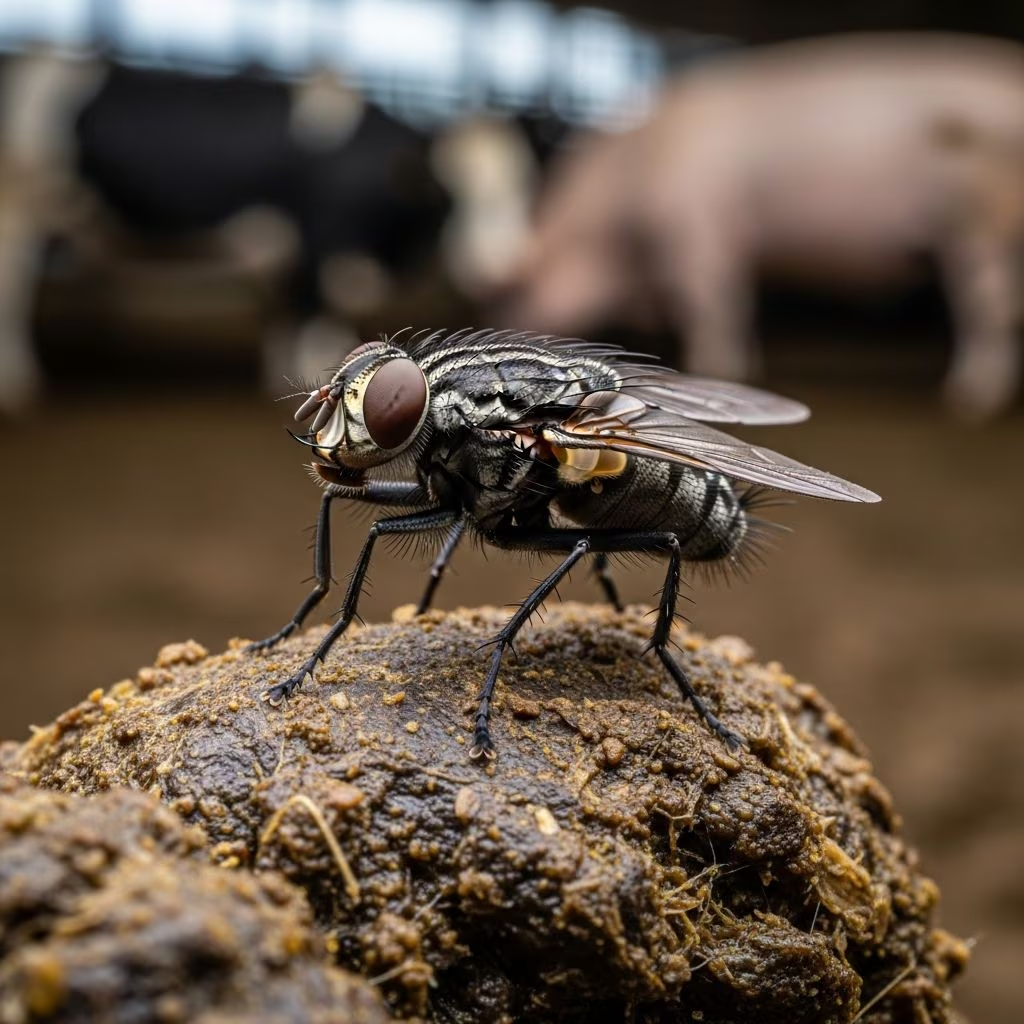
Filth-breeding flies represent a significant challenge in modern animal agriculture, thriving in organic waste like manure and spoiled feed to multiply rapidly and spread pathogens. These pests annoy animals, reduce productivity, and act as vectors for diseases affecting both livestock and humans.
The Biology of Filth Flies
Filth flies undergo complete metamorphosis with four life stages: egg, larva (maggot), pupa, and adult. Eggs hatch quickly in moist organic matter, larvae feed voraciously on decaying material, pupae form protective cases, and adults emerge to feed and reproduce. The full cycle often completes in 1-3 weeks under warm conditions, enabling explosive population growth.
Common species include the house fly (Musca domestica), which prefers fresh manure; stable flies (Stomoxys calcitrans), favoring older, moist waste mixed with bedding; and blow flies or bottle flies that target carrion and fermenting feed. House flies, for instance, can produce over 21,000 offspring from a single day’s horse manure output from a 1000 lb animal.
- House flies: Non-biting, breed in fresh feces, transmit pathogens mechanically.
- Stable flies: Biting pests, develop in aging manure with vegetation.
- Blow and flesh flies: Larvae in rotting matter, adults on secretions.
Economic and Health Impacts on Animal Production
Filth flies inflict direct damage through irritation and blood-feeding, leading to reduced weight gain, milk yield, and hide quality. Indirectly, they vector pathogens like Cryptosporidium, protozoans, and bacteria, posing zoonotic risks. In U.S. livestock sectors—from beef cattle to poultry—these pests cause billions in losses annually.
| Livestock Type | Key Fly Species | Primary Impacts |
|---|---|---|
| Beef Cattle (Range/Confined) | Horn, face, stable flies | Blood loss, pinkeye, reduced gains |
| Dairy Cattle | House, stable flies | Milk drop (up to 15%), mastitis spread |
| Horses/Equids | House, stable flies | Weight loss, dermatitis, stress |
| Poultry/Swine | House flies | Feed contamination, disease transmission |
In dairy operations, high fly densities correlate with lower production; one study noted significant parasite loads in flies, with Cryptosporidium prevalent in 64-100% of samples from Egyptian farms. For horses, unmanaged manure piles generate thousands of flies weekly, exacerbating skin issues and behavioral stress.
Breeding Sites and Environmental Factors
These flies exploit animal facilities’ organic accumulations: manure pats, spilled feed, silage runoff, wet bedding, and compost heaps. Fresh manure suits house flies, while stable flies target moist, straw-mixed waste over two weeks old. Poultry litter, swine lagoons, and calf pens offer ideal humidity and nutrients.
Climate influences outbreaks—warm, humid conditions accelerate breeding. Winter barns provide overwintering sites, with flies surviving in cracks or insulated manure. Poor sanitation amplifies risks; for example, dairies see breeding around feed bunks and drainage areas.
Integrated Pest Management Strategies
Effective control combines sanitation, biological, mechanical, and chemical methods. Sanitation remains foundational: remove manure daily, compost properly (turning piles to aerate and dry), and manage moisture.
- Sanitation: Scrape stalls frequently, spread manure thinly (<3 cm) for drying, or use lagoons.
- Biological Controls: Introduce parasites like Muscidifurax wasps or predators such as soldier fly larvae that outcompete pests.
- Mechanical Barriers: Screens, traps (light-sticky or baited), and fans disrupt flight.
- Chemical Options: Larvicides in breeding sites, adulticides judiciously to avoid resistance.
Monitoring is key—count flies on animal legs (e.g., >10 stable flies per cow signals action). Tailor strategies by species and facility; for instance, horse barns prioritize daily manure removal.
Species-Specific Challenges Across Farm Types
Cattle Operations
In cow-calf systems, horn and face flies use fresh droppings, causing anemia and eye diseases. Confined feedlots breed house and stable flies in waste feed.
Dairy and Swine Facilities
Dairies battle flies in silage spills and pens; swine units in lagoons and gutters. High densities transmit mastitis agents and enteric pathogens.
Poultry and Equine Settings
Poultry houses accumulate litter fostering flies; horse stables generate flies from manure unless composted hot (above 140°F).
Disease Transmission Risks
Flies mechanically transfer pathogens on legs and mouthparts from feces to feed or wounds. Studies confirm high protozoan/helminth loads in Musca domestica (96.6% infested), including zoonotic Cryptosporidium and Giardia. In livestock-dense areas, this heightens outbreak risks.
Unlike biting flies, filth flies do not inject saliva but contaminate surfaces, amplifying spread in confined spaces.
Prevention Through Facility Design
Build for fly exclusion: sloped floors for drainage, covered feed storage, ventilated roofs preventing roosting. Manure alleys should allow daily scraping; waste systems promote rapid drying or decomposition.
- Compost manure at high temperatures to kill larvae.
- Install fly lights away from entrances.
- Rotate pastures to disrupt breeding.
Monitoring and Thresholds
Use sticky cards or animal counts to track populations. Action thresholds: 100+ house flies per card weekly in barns; 10+ stable flies per animal. Early intervention prevents surges.
Future Directions in Fly Control
Research advances sterile insect techniques (as in screwworm eradication, saving $1.3B) and biopesticides. Education empowers producers; integrated approaches yield sustainable results.
Frequently Asked Questions (FAQs)
What attracts filth flies to farms?
Moist organic matter like fresh manure, spilled feed, and wet bedding provides ideal breeding grounds.
How quickly do filth flies reproduce?
Under optimal conditions, a generation completes in 7-21 days, leading to rapid infestations.
Are filth flies dangerous to livestock?
Yes, they irritate animals, reduce productivity, and spread diseases like cryptosporidiosis and salmonellosis.
What’s the best first step in fly control?
Sanitation—daily manure removal and moisture management eliminate most breeding sites.
Can natural predators help?
Yes, parasitic wasps and predatory beetles target fly pupae effectively in IPM programs.
References
- Filth Fly Impacts to Animal Production in the United States — Journal of Integrated Pest Management, Oxford Academic. 2021-09-02. https://academic.oup.com/jipm/article/12/1/41/6412689
- Evaluating the role of synanthropic filth flies in the transmission of parasitic zoonoses — PMC / NIH. 2024. https://pmc.ncbi.nlm.nih.gov/articles/PMC11924607/
- Filth Breeding Flies PDF Course — SlideShare. 2022. https://www.slideshare.net/slideshow/filth-breeding-flies-pdf-coursepdf/253555114
- Focus on Filth Flies: House flies around the horse barn — Horse Health Products. 2023. https://www.horsehealthproducts.com/horsemans-report/fly-pest-control/focus-on-filth-flies-house-flies-around-the-horse-barn
- Vector: Filth Flies — Clemson University Extension. 2020. https://www.clemson.edu/extension/camm/manuals/common_chapters/pch10b_03.pdf
- House Fly — Texas A&M AgriLife Extension (Livestock Veterinary Entomology). 2023. https://livestockvetento.tamu.edu/insectspests/house-fly/



