

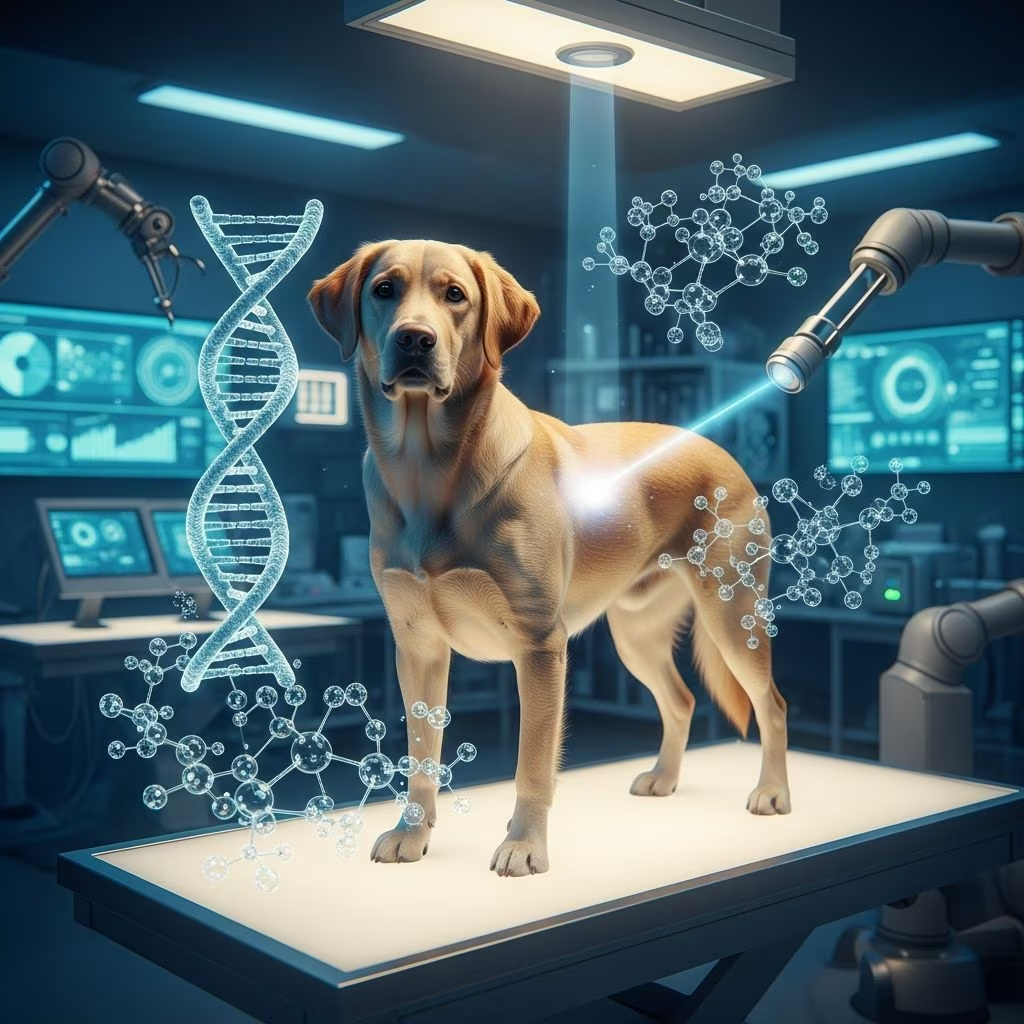
Cancer strikes fear into the hearts of pet owners, and for good reason: one in four dogs will face a cancer diagnosis in their lifetime, mirroring human rates closely. Traditional treatments like chemotherapy and radiation often come with harsh side effects and limited success, especially for aggressive cancers. Enter FidoCure, a pioneering precision medicine solution from One Health that tailors treatments to a dog’s unique genetic profile, using FDA-approved drugs in pill form administered at home. This approach promises longer survival, better quality of life, and costs less than conventional chemo.
Developed by a California biotech firm focused on bridging canine and human cancer therapeutics, FidoCure represents a shift from one-size-fits-all therapies to personalized care. By sequencing tumor DNA, it identifies actionable mutations and matches them to targeted inhibitors, sparing healthy cells unlike chemo’s indiscriminate attack on rapidly dividing cells. Experts like Cheryl London, DVM, PhD from Tufts University, note the irony: dogs often test human cancer drugs first, yet vets have lagged in adopting these precision tools.
Why Dogs and Humans Share Cancer Similarities
Dogs and humans develop strikingly similar cancers, making canines ideal models for research. The National Cancer Institute’s Comparative Oncology Trials Consortium has run dog-focused studies for over 20 years, translating findings to human treatments while prioritizing pet quality of life. Spontaneous tumors in dogs mimic human disease progression more accurately than lab mice, offering real-world insights into metastasis, drug resistance, and genetics.
Common canine cancers like hemangiosarcoma (HSA), osteosarcoma, and lymphoma parallel human angiosarcoma, bone cancer, and blood cancers. Genomic overlaps abound: mutations in TP53, PIK3CA, and NRAS drive both species’ tumors, enabling cross-species breakthroughs. FidoCure leverages this by collecting outcome data from treated dogs to inform human trials, closing the one-health loop.
How Does FidoCure Work?
The FidoCure process is straightforward yet powered by cutting-edge tech:
- Sample Submission: A veterinary oncologist biopsies the tumor and ships it to a CLIA-certified lab for whole-genome sequencing.
- Genomic Analysis: AI-driven analysis scans for 300+ cancer-related mutations, generating a personalized report with drug recommendations.
- Custom Compounding: An FDA-approved pharmacy formulates flavored pills (beef liver is a hit) at precise dog-specific dosages, delivered for at-home use.
- Ongoing Monitoring: Vets track progress; therapies adapt as needed.
Under the Animal Medicinal Drug Use Clarification Act of 1994, vets can prescribe human FDA-approved drugs off-label for pets, streamlining access without new approvals. Most pet insurance covers it, making precision care accessible. FidoCure suits advanced cases: inoperable tumors, chemo failures, metastases, or rare cancers.
What is FidoCure’s Success Rate?
Early data is encouraging. In an initial cohort of 38 terminal dogs, 63% (24 dogs) survived 2-13 months post-treatment, defying expectations. A landmark 2025 study in Nature Scientific Reports analyzed 508 hemangiosarcoma cases—the deadliest dog cancer, often leading to swift euthanasia. Key results:
- Targeted therapies alone extended median survival 1.8-fold over surgery.
- Combined with chemo, gains hit 2.6-fold.
- p53 and PIK3CA mutations predict poor prognosis; NRAS signals a less aggressive subtype.
Another study in Veterinary and Comparative Oncology profiled HSA genomics, linking TP53, NRAS, PIK3CA changes to survival, age, breed, and metastasis. SETD2/NOTCH1 germline variants worsen outcomes. Across 2,119 canine patients, shared human-dog genes like TP53 tied mutations to prognosis. These findings validate FidoCure’s approach, with dogs living longer and better.
Targeted Therapies vs. Traditional Treatments
| Aspect | Traditional Chemo/Radiation | FidoCure Targeted Therapy |
|---|---|---|
| Mechanism | Indiscriminate cell killing | Mutation-specific inhibition |
| Side Effects | Severe nausea, hair loss, immunosuppression | Mild; dogs often maintain normal activity |
| Administration | Clinic visits, IV infusions | At-home pills |
| Cost | Higher long-term | Cheaper overall |
| Survival Impact (HSA) | Baseline | 1.8-2.6x improvement |
Targeted drugs block proteins fueling cancer growth, like kinase inhibitors for PIK3CA mutations. Chemo’s blanket approach ravages healthy tissues; FidoCure’s precision minimizes this, enhancing quality of life.
Common Cancers Treated with FidoCure
While open to all cancers, FidoCure shines in tough cases:
- Hemangiosarcoma (HSA): Most common; spleen/heart tumors. Genomic subtyping guides therapy.
- Bladder Cancer: Transitional cell carcinoma responds to targeted inhibitors.
- Histiocytic Sarcoma: Rare, aggressive; precision options extend life.
- Osteosarcoma, Lymphoma: Ongoing successes reported.
Half of cases follow traditional therapy failures, proving FidoCure’s role as a lifeline.
Benefits for Dogs and Owners
Beyond survival stats, FidoCure prioritizes comfort. At-home pills reduce stress—no more frequent vet trips. Dogs eat, play, and cuddle normally, unlike chemo-weakened patients. Owners gain peace: data-driven reports demystify treatment, insurance compatibility eases finances. One Health anonymizes outcomes to fuel research, benefiting future pups and humans.
FidoCure’s Role in Human Medicine
Dogs’ naturally occurring cancers model human disease superiorly. FidoCure data on rare mutations informs trials; e.g., canine HSA parallels human angiosarcoma, aiding Eisai’s pharma work. PubMed reviews affirm dogs’ translational value for drug development. This one-health synergy accelerates cures across species.
Frequently Asked Questions (FAQs)
What cancers can FidoCure treat?
All canine cancers qualify, but it’s ideal for advanced, refractory, or inoperable cases like hemangiosarcoma, bladder cancer, and histiocytic sarcoma.
How much does FidoCure cost?
Cheaper than chemo overall; most pet insurance covers sequencing and drugs. Exact pricing varies by case—consult your vet.
Is FidoCure safe for my dog?
Yes, uses FDA-approved human drugs at safe canine doses with proven safety profiles from human use. Side effects are minimal.
How do I start FidoCure treatment?
Your oncologist biopsies the tumor, submits to FidoCure lab. Get a report in weeks, then flavored pills ship home.
Can FidoCure cure cancer?
It targets mutations to extend life and improve quality, not always a cure—but many terminal dogs far outlive expectations.
Getting Started with FidoCure
Consult a veterinary oncologist experienced with precision medicine. Platforms like Thrive Petcare partner with FidoCure for seamless integration. Early intervention maximizes benefits—don’t wait for crises.
FidoCure heralds a new era, empowering vets with genomics to outsmart cancer. As data grows, expect even better outcomes, proving dogs’ dual role as beloved companions and medical pioneers.
References
- Fidocure: A New Approach to Canine Cancers — Kinship. 2023. https://www.kinship.com/dog-health/fidocure
- FidoCure Study Unlocks Breakthroughs in Deadliest Dog Cancer — Business Wire. 2025-05-14. https://www.businesswire.com/news/home/20250514423630/en/FidoCure-Study-Unlocks-Breakthroughs-in-Deadliest-Dog-Cancer
- FidoCure Brings Precision Medicine to the Forefront of Canine Cancer — FidoCure Blog. 2025. https://fidocure.com/fidocure-blog/fidocure-brings-precision-medicine-to-the-forefront-of-canine-cancer-2/
- How Genomic Testing Is Revolutionizing Canine Cancer Treatment — FidoCure Blog. 2025. https://fidocure.com/fidocure-blog/how-genomic-testing-is-revolutionizing-canine-cancer-treatment-29/
- The Role of Canine Models of Human Cancer: Overcoming Drug Development Challenges — PubMed. 2024. https://pubmed.ncbi.nlm.nih.gov/40563676/



