

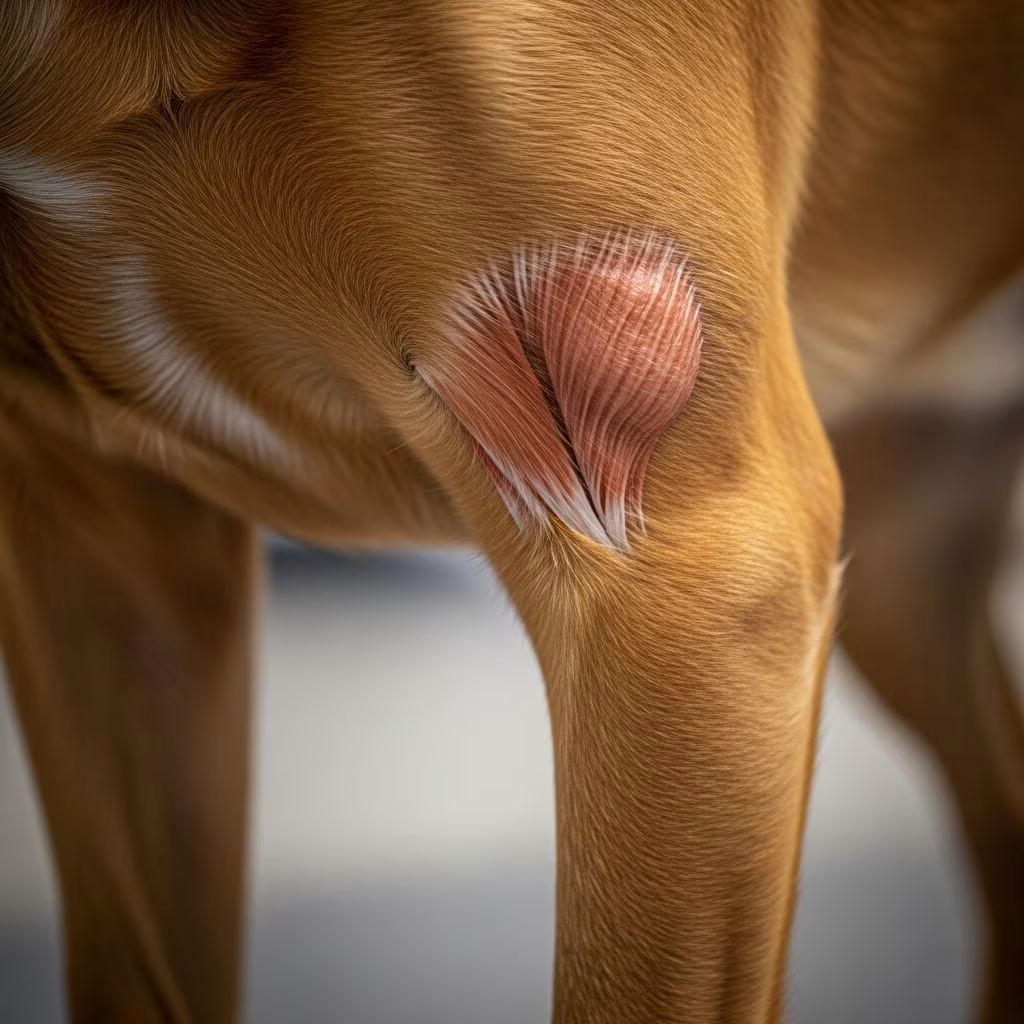
Fibrotic myopathy represents a challenging musculoskeletal disorder primarily observed in dogs, with rarer occurrences in cats, characterized by the development of scar tissue within specific muscles, leading to contractures and distinctive gait abnormalities. This condition often stems from injury-induced fibrosis, impairing normal limb function and mobility.
Understanding the Pathophysiology of Muscle Fibrosis
The core issue in fibrotic myopathy involves the replacement of normal muscle fibers with dense fibrous connective tissue, which contracts over time and restricts joint movement. In dogs, this frequently targets the caudal thigh muscles, such as the semitendinosus and gracilis, responsible for knee flexion and stabilization during locomotion. Trauma, whether acute or repetitive, triggers an exaggerated healing response, resulting in excessive collagen deposition rather than muscle regeneration.
This fibrotic transformation shortens the muscle’s effective length, preventing full extension of the hip, stifle (knee), and tarsus (hock). Histological analysis typically reveals complete myofiber replacement by avascular scar tissue, underscoring the irreversible nature of advanced cases. In cats, similar pathology has been documented in the semitendinosus muscle, though cases are less common and often unilateral.
Breeds and Demographics at Highest Risk
Certain breeds exhibit a predisposition to fibrotic myopathy, with German Shepherds being the most frequently affected, particularly young males around 8-9 months of age. Other large, active breeds like Doberman Pinschers, Rottweilers, Boxers, St. Bernards, and Old English Sheepdogs also show increased susceptibility. This pattern suggests a possible genetic component combined with environmental factors, such as intense physical activity in working or sporting dogs.
Males predominate in reported cases, and the condition can be unilateral or bilateral. In hunting or agility dogs, the risk escalates due to high-impact activities involving sprinting, jumping, or sudden directional changes. Cats appear less prone, but when affected, they mirror the progressive lameness seen in canines.
Recognizing Clinical Signs and Gait Abnormalities
Early detection hinges on identifying subtle shifts in gait and limb function. Initial signs often follow trauma: acute lameness, localized pain, swelling, and tenderness in the affected muscle group. As fibrosis develops over 2-4 weeks, pain subsides, but a permanent gait deficit emerges.
The hallmark gait in hindlimb fibrotic myopathy features a shortened stride length, rapid medial (internal) rotation of the paw during swing phase, external rotation of the hock, and internal rotation of the stifle. This creates a distinctive ‘medial whip’ or ‘goosestepping’ appearance, especially noticeable at a walk or trot. Affected pets may stand with the limb externally rotated, and passive stifle extension is markedly reduced due to palpable firm scar tissue.
- Acute phase indicators: Pain on palpation, swelling, reluctance to bear weight.
- Chronic phase features: Firm, cord-like bands in muscle, reduced joint range of motion, no overt pain.
- Bilateral cases: Symmetrical gait issues, increased disability.
Forelimb variants, like infraspinatus contracture, present differently: elbow adduction, foreleg abduction, and carpal external rotation, often post-trauma in working dogs. Quadriceps contracture, linked to femoral fractures, causes limb extension and secondary joint deformities.
Diagnostic Approaches for Confirmation
Diagnosis primarily relies on clinical examination, as the characteristic gait and physical findings are pathognomonic. Palpation reveals thickened, non-yielding muscle bands, and restricted extension confirms contracture.
Ancillary tests enhance certainty:
- Ultrasonography: Detects hyperechoic scar tissue, muscle atrophy, or calcifications.
- Radiography: Rules out fractures or assesses secondary osteoarthritis.
- Electromyography (EMG): May show fibrillation potentials in chronic fibrosis.
- Biopsy: Definitive, revealing fibrous replacement of myofibers.
History of trauma or strenuous activity supports the diagnosis, distinguishing it from neurological or orthopedic issues.
Management Strategies and Treatment Options
Treatment aims to alleviate contracture and restore function, though complete reversal is rare. Conservative approaches include strict rest, non-steroidal anti-inflammatory drugs (NSAIDs) for pain, and physical therapy to maintain flexibility.
Surgical intervention, such as Z-plasty tenotomy or muscle release, offers temporary improvement by lengthening the fibrotic segment. In one feline case, Z-plasty resolved lameness initially, but recurrence occurred within weeks, with mild gait abnormality persisting at one year. Prognosis remains guarded, with lifelong disability common despite therapy.
| Treatment Type | Description | Expected Outcome | Suitability |
|---|---|---|---|
| Medical Management | Rest, NSAIDs, controlled exercise | Pain relief, prevents worsening | Early/mild cases |
| Physical Therapy | Stretching, hydrotherapy, massage | Improved ROM, muscle maintenance | All stages |
| Surgical Release | Z-plasty, tenotomy | Temporary gait normalization | Moderate-severe, unilateral |
| Supportive Care | Orthotics, weight management | Functional adaptation | Chronic cases |
Preventive Measures for At-Risk Pets
Prevention focuses on minimizing trauma in predisposed breeds. Gradual conditioning for puppies, avoiding overexertion in young dogs, and proper warm-ups before activity reduce injury risk. Regular veterinary check-ups for working dogs enable early intervention.
For breeds like German Shepherds, controlled exercise programs emphasizing balanced training over high-intensity drills are advisable. Post-injury protocols with immediate rest and monitoring can halt progression to fibrosis.
Related Myopathies and Differential Diagnoses
Fibrotic myopathy must be differentiated from other contractures:
- Infraspinatus contracture: Forelimb, post-trauma, medial shoulder carry.
- Quadriceps contracture: Post-fracture, fixed stifle extension.
- Iliopsoas strain: Hip pain on extension/rotation, resolves with rest.
- Inflammatory myopathies: Diffuse weakness, elevated enzymes, responsive to immunosuppressants.
Neurologic conditions like lumbosacral stenosis or polyneuropathy may mimic signs, necessitating comprehensive evaluation.
Prognosis and Long-Term Outlook
While fibrotic myopathy imparts permanent changes, many pets adapt well, maintaining good quality of life with management. Bilateral cases pose greater challenges, potentially limiting activity levels. Owners report that affected dogs remain playful, though agility is compromised. Ongoing research into anti-fibrotic therapies may improve outcomes in the future.
Frequently Asked Questions (FAQs)
What causes fibrotic myopathy in dogs?
Primarily trauma leading to scar tissue formation in thigh muscles, common in active young males of large breeds.
Can cats get fibrotic myopathy?
Yes, though rare; one reported case involved semitendinosus fibrosis causing hindlimb lameness.
Is surgery curative?
Surgery provides temporary relief but recurrence is common; prognosis is poor for full resolution.
How do I know if my dog has it?
Look for shortened stride, paw rotation, and firm thigh bands; consult a vet for exam.
Can it be prevented?
Avoid trauma through proper training and rest after injuries.
References
- Fibrotic myopathy of the semitendinosus muscle in a cat — PubMed. 1988. https://pubmed.ncbi.nlm.nih.gov/3403356/
- Muscular Trauma in Dogs and Cats — Merck Veterinary Manual. Accessed 2026. https://www.merckvetmanual.com/musculoskeletal-system/lameness-in-small-animals/muscular-trauma-in-dogs-and-cats
- Semitendinosus and Gracilis Fibrotic Myopathy — Animal Surgical Center. Accessed 2026. https://animalsurgicalcenter.com/semitendinosus-and-gracilis-fibrotic-myopathy
- Muscle Disorders and Rehabilitation in Canine — Greyfort Greyhounds (PDF). Accessed 2026. https://greyfortgreyhounds.com/ArticlesPDF/files/Muscle%20Disorders.pdf
- Fibrotic Myopathy Information — University of Wisconsin School of Veterinary Medicine. Accessed 2026. http://www.vetmed.wisc.edu/lab/corl/fibrotic-myopathy-information/



