

Understanding Fibrocartilaginous Embolus (FCE) in Dogs
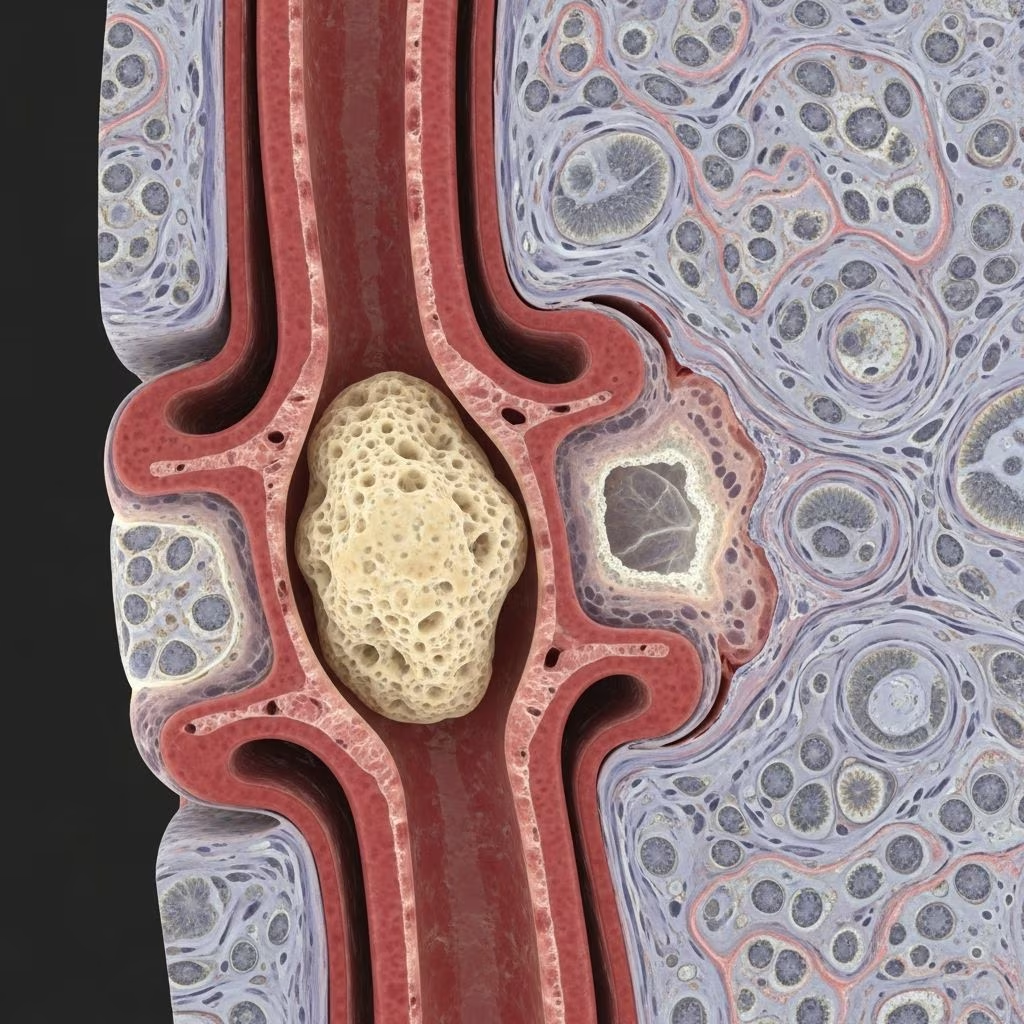
Fibrocartilaginous embolus (FCE), also known as fibrocartilaginous embolic myelopathy, is a serious neurological condition that affects dogs of all ages and breeds. This condition occurs when a piece of fibrocartilage from the intervertebral disc becomes dislodged and travels through the blood vessels of the spinal cord, blocking blood flow to the affected area. Unlike traditional disc herniation, FCE does not involve physical compression of the spinal cord but rather an interruption of blood supply, which can result in sudden and severe neurological deficits. Understanding this condition is crucial for dog owners, as prompt recognition and appropriate management can significantly impact recovery outcomes.
FCE is a relatively uncommon condition in veterinary medicine, but when it occurs, it typically strikes suddenly and without warning. The condition can affect any portion of the spinal cord, leading to a wide range of clinical presentations depending on the location and extent of the vascular disruption. Dogs may experience symptoms ranging from mild limping to complete paralysis within hours of the event.
What Causes Fibrocartilaginous Embolus?
The exact cause of FCE remains somewhat unclear, though it is believed to result from a piece of nucleus pulposus—the jelly-like center of an intervertebral disc—becoming dislodged and entering the arterial supply of the spinal cord. This typically happens during normal activity, particularly during vigorous exercise or play. When the fibrocartilage enters a blood vessel, it acts as an embolus, blocking circulation to the spinal cord tissue it supplies.
FCE can occur in dogs of any age, breed, or size, though it appears to be more common in large-breed dogs and those between four to eight years of age. Unlike intervertebral disc disease, which develops gradually, FCE occurs acutely and dramatically, often leaving owners confused about what happened to their seemingly healthy pet.
Recognizing the Symptoms of FCE
The hallmark feature of FCE is the sudden onset of neurological signs. Symptoms occur quickly and are often noticed during or immediately after exercise or play. Owners may observe their dog experiencing significant acute pain, with some dogs crying out from discomfort. The following signs may develop immediately or within hours of the initial event:
- Loss of coordination or stumbling
- Sudden weakness in one or more legs
- Difficulty walking or complete inability to walk
- Limping or struggling to walk
- Loss of bladder and bowel control
- Loss of deep pain perception in affected limbs
- Partial or complete paralysis
- Reluctance to move
In the best-case scenario, an FCE dog will only experience mild neurological deficits in one leg and never lose sensation in the affected limb. These dogs often make a full or nearly full recovery to normal function. In the worst-case scenario, the FCE will cause paralysis and loss of sensation in all four legs. While certainly a challenge, patients in this scenario are not without hope.
Dogs with FCE generally experience significant acute pain initially, but pain typically subsides quickly and is not a lasting symptom of the condition. Usually, the worst of the symptoms have appeared within the first 12-24 hours, and patients will start to improve from that point, with pain subsiding within 24 hours.
Diagnosing Fibrocartilaginous Embolus
Diagnosis of FCE begins with your veterinarian’s clinical suspicion based on the sudden onset of clinical signs and physical examination findings. Your veterinarian may suspect FCE has occurred based on how quickly the symptoms developed and the specific neurological deficits observed during the physical examination.
Advanced Imaging
Advanced imaging, such as MRI, is often used to confirm a diagnosis and rule out other conditions. MRI is particularly valuable because it can visualize the spinal cord and identify the location and extent of any damage. MRI may show spinal cord swelling (myelomalacia) at the site of the vascular insult, helping veterinarians understand the severity of the injury.
Spinal Tap (Cerebrospinal Fluid Analysis)
For some dogs, a spinal tap will be recommended to rule out the presence of inflammation or infection of the spinal cord. The spinal fluid is sent to a laboratory for analysis. Most animals with FCE have an increased protein level in their spinal fluid, though this finding is not specific to FCE.
Neurological Consultation
Referral to a veterinary neurologist may be recommended, particularly if the diagnosis is unclear or if the dog’s condition is severe. Neurologists can perform specialized neurological examinations and recommend appropriate diagnostic testing and management strategies.
Treatment Options for FCE
There is no specific medical treatment for FCE. Surgery is not helpful since the spinal cord is not compressed by this jelly-like nucleus pulposus. Additionally, no medications, including high-dose steroids, have been proven to help speed the recovery from FCE. Instead, the emphasis is on supportive care and physical assistance.
Supportive Care
Most dogs who experience FCE are hospitalized in the acute phase so that diagnostic tests can be performed to rule out other causes of acute-onset weakness or paralysis. If the dog cannot walk, then intensive nursing care is needed, including keeping the dog on a padded surface and turning them frequently to prevent pressure sores.
Supportive care may include:
- Providing soft bedding and frequent repositioning to prevent pressure sores
- Assisting with mobility using slings or harnesses (e.g., the Help ‘Em Up® Harness)
- Manual bladder expression if the dog cannot urinate independently
- Monitoring for urinary accidents and keeping the dog clean and dry to prevent skin irritation
- Assistance to relieve themselves and frequent repositioning to avoid the development of decubital ulcers (bed sores)
Dogs with minimal symptoms may just need some assistance getting up or walking around, but dogs that cannot walk will need more intensive care. The worst-affected patients will need additional veterinary care to support hydration and nutrition if they cannot eat or drink on their own. This may look like hospitalization for several days with intravenous fluids and medications, after which the dog will still require dedicated, round-the-clock care once back at home to ensure that they are kept clean, hydrated, and regularly repositioned.
Pain Management
Dogs with FCE may need pain relief during the first 24 hours, but they are generally not painful after that initial period. Your veterinarian will assess your dog’s pain level and provide appropriate analgesics as needed.
Physical Rehabilitation and Therapy
The only treatment which has been proven to help speed the recovery from FCE is physical therapy. Physical therapy is strongly recommended for most dogs recovering from FCE. As soon as your veterinarian deems it safe, starting physical rehabilitation therapy as soon as possible will significantly increase your dog’s chances of maximum recovery.
It is important to encourage these dogs to move and walk as soon as possible. Using assistive devices (e.g., a lightweight harness with a handle along the back, a fabric sling, or a walking cart) can facilitate healing and early restoration of mobility.
Rehabilitation Techniques
Rehabilitation may involve:
- Passive range of motion exercises
- Assisted standing and walking
- Massage and stretching exercises
- Physical therapy exercises
- Underwater treadmill therapy
- Neuromuscular stimulation
- Wobble board exercises
- Walking through weave poles and over cavaletti poles
Therapeutic Modalities
Through the recovery process, rehabilitation therapists continue to challenge the pet with a variety of exercises while also treating any pain that the pet experiences. Thermotherapy and therapeutic massage help to relieve tense muscles and increase blood flow. Therapeutic laser not only helps increase circulation to the tissues but also encourages healing at a cellular level. Veterinary medical acupuncture stimulates the nervous system while also releasing endorphins which helps with pain relief.
Some alternative therapies that may help with improvement are hyperbaric oxygen therapy, laser therapy, and acupuncture.
Recovery and Prognosis
The prognosis of FCE depends on the severity of spinal cord damage. Recovery depends on the severity and location of spinal cord damage, and many dogs show improvement over a few weeks. Pets that show improvement in their clinical signs within two weeks often have a better prognosis for functional recovery.
Timeline for Improvement
Many dogs begin to show improvement within five to fourteen days. Most of the improvement typically occurs in the first few weeks, though the recovery process can take weeks to months. Some dogs may recover fully, though it is often more common to have some lasting neurological deficits.
Best and Worst Case Scenarios
In the best-case scenario, an FCE dog will only experience mild neurological deficits in one leg and never lose sensation in the affected limb. These dogs often make a full or nearly full recovery to normal function. In the worst-case scenario, the FCE will cause paralysis and loss of sensation in all four legs. While certainly a challenge, patients in this scenario are not without hope, as rehabilitation specialists have successfully treated cases of FCE in which the patient is unable to even lift their head or swallow.
Prognosis for Severe Cases
Unfortunately, if your pet has complete loss of pain sensation in the affected limb(s), the prognosis for regaining function of the limb is considered poor. However, even with severe deficits, appropriate care and rehabilitation can help many dogs with FCE return to a good quality of life, even if some neurologic deficits persist.
Long-term Outlook
While no one can guarantee that your pet will regain 100% normal function, there’s plenty to be done to give them the very best chance of doing so. With appropriate care and rehabilitation, many dogs with FCE can return to a good quality of life. The key is early recognition, immediate veterinary care, and commitment to a comprehensive rehabilitation program.
Some animals affected with FCE may resolve spontaneously without any therapy, though this is less common than with active management. The majority of dogs may show signs of improvement within the first one to two weeks, whereas full recovery may take much longer.
Frequently Asked Questions (FAQs)
Q: Is FCE in dogs fatal?
A: FCE itself is not typically fatal, though severe cases affecting all four limbs or the upper spinal cord can be life-threatening if they affect breathing. However, with appropriate supportive care and rehabilitation, most dogs survive FCE and can achieve a good quality of life.
Q: Can FCE happen again in the same dog?
A: While FCE can theoretically occur again, it is relatively uncommon for dogs to experience multiple FCE events. Once a dog has recovered from FCE, they can typically return to normal activity without significant increased risk of recurrence.
Q: How long does recovery from FCE take?
A: Recovery timelines vary significantly depending on the severity of the injury. Many dogs show improvement within one to two weeks, but full recovery can take weeks to months. Some dogs may experience lasting neurological deficits despite improvement.
Q: What is the cost of treating FCE?
A: Costs vary depending on the severity of the condition and the extent of treatment required. Hospitalization, diagnostic testing (particularly MRI), and ongoing rehabilitation can be expensive. It is best to discuss costs with your veterinarian.
Q: Is there a way to prevent FCE?
A: There is no known way to prevent FCE, as it occurs randomly when a piece of disc material becomes dislodged. Maintaining appropriate weight and fitness may help reduce overall spinal stress, but FCE can still occur in healthy, active dogs.
Q: Can cats get FCE?
A: Yes, FCE can occur in cats as well as dogs, though it is less commonly reported in feline patients. Cats with FCE present with similar clinical signs and require similar management strategies.
References
- Fibrocartilaginous Embolism (FCE) — Canine Rehabilitation and Orthopedic Clinic (CROC). 2025. https://www.caninerehaboc.com/post/rehabbingfce
- Fibrocartilaginous embolism (FCE) in dogs — Cornell University College of Veterinary Medicine, Riney Canine Health Center. 2025. https://www.vet.cornell.edu/departments-centers-and-institutes/riney-canine-health-center/health-topics/canine-health-information/fibrocartilaginous-embolism-fce-dogs
- Fibrocartilaginous Embolism (FCE) — University of Missouri College of Veterinary Medicine, Veterinary Health Center. 2025. https://vhc.missouri.edu/small-animal-hospital/neurology-neurosurgery/facts-on-neurologic-diseases/fibrocartilaginous-embolism-fce/
- Fibrocartilaginous Embolus (FCE) in Dogs — VCA Animal Hospitals. 2025. https://vcahospitals.com/know-your-pet/fibrocartilaginous-embolusemboli-fce-in-dogs
- Fibrocartilaginous Embolism (FCE) — Partner Veterinary Specialty Services. 2025. https://partnervesc.com/neurology-handouts/fibrocartilaginous-embolism-fce/
- Fibrocartilaginous Embolism (FCE) — Fitzpatrick Referrals, Neurology. 2025. https://www.fitzpatrickreferrals.co.uk/neurology/fibrocartilaginous-embolism-fce/
- Fibrocartilaginous Embolism (FCE) in Pets | Dogs and Cats — VetSpecialists. 2025. https://www.vetspecialists.com/vet-blog-landing/animal-health-articles/2020/04/07/fibrocartilaginous-embolism-(fce)-in-pets-dogs-and-cats



