

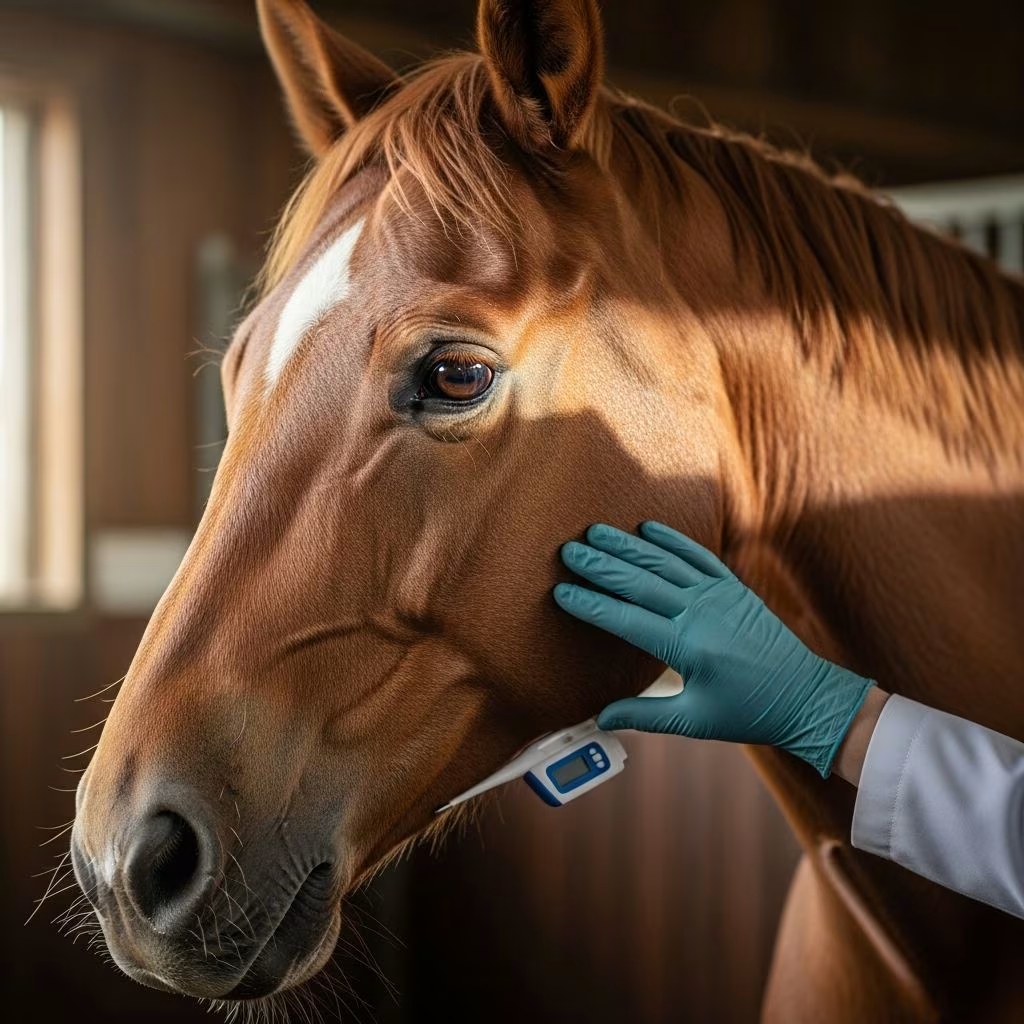
Persistent elevated body temperature in horses without clear symptoms poses a diagnostic puzzle for veterinarians and owners alike. Known as fever of unknown origin (FUO), this condition often signals underlying infections, inflammation, or rarer issues like neoplasia, requiring a methodical approach to uncover the root cause.
Understanding the Basics of Equine Pyrexia
Pyrexia, or fever, occurs when a horse’s hypothalamic thermostat resets to combat perceived threats like pathogens or tissue damage. Normal equine temperature ranges from 99°F to 101°F (37.2°C to 38.3°C), but FUO involves repeated elevations above 102°F (38.9°C) lasting weeks without obvious localizing signs such as cough or diarrhea. In one case series, 43% of FUO cases stemmed from infections, 22% from tumors, and others from immune issues or undetermined factors.
Horses with FUO typically show nonspecific signs: profound lethargy, reduced appetite, and depression. Median temperatures hover around 103.3°F, with anorexia and lethargy scoring highest in severity among observed symptoms. Unlike hyperthermia from environmental heat, true fever is an adaptive immune response.
Common Culprits Behind Persistent Fevers
Infectious agents dominate FUO etiologies, particularly those evading initial detection. Tick-borne pathogens like Anaplasma phagocytophilum account for about 19% of cases in recent studies, often presenting with higher fevers, limb edema, and icterus. Human-associated strains have been identified, underscoring zoonotic risks.
Enteric viruses, notably equine coronavirus (ECoV), frequently appear in FUO without overt gastrointestinal upset. Elevated serum titers occur in affected horses, though not always statistically higher than controls. Over 60% of FUO cases show intestinal microbial DNA in circulation, hinting at gut barrier leaks allowing bacterial translocation.
- Tick-borne infections: A. phagocytophilum, with ticks on 76% of premises.
- Viral agents: ECoV, novel Erythroparvovirus in some cases.
- Bacterial invaders: Neorickettsia risticii, Salmonella serovars like Typhimurium.
Non-infectious causes include immune-mediated diseases (6.5%) and neoplasia (22%), while miscellaneous factors like abscesses fill the rest. Respiratory diseases, though common for fever generally, are excluded in true FUO by definition.
Clinical Signs and Early Indicators
FUO horses rarely exhibit dramatic symptoms initially. Key observations include:
| Sign | Frequency/Severity | Associated Pathogens |
|---|---|---|
| Lethargy | High (median score 2-4) | A. phagocytophilum, ECoV |
| Anorexia | Most severe (80% affected) | General FUO |
| Limb edema | Common in tick-borne | A. phagocytophilum |
| Icterus | Occasional | Tick-borne agents |
| Abnormal feces | Linked to blood microbes | Enteric barrier issues |
No diarrhea defines many cases, yet fecal changes correlate with bacteremia, supporting intestinal permeability theories. Ticks on premises or recent travel heighten suspicion for vector-borne diseases.
Step-by-Step Diagnostic Approach
Diagnosing FUO demands persistence. A tiered strategy starts with basics and escalates based on findings.
Initial Assessment
- Thorough history: Travel, tick exposure, vaccinations, deworming.
- Physical exam: Focus on eyes, neurology, lymph nodes, abdomen.
- Baseline labs: CBC (anemia, thrombocytopenia in anaplasmosis), chemistry (liver enzymes), urinalysis.
Rectal temperatures confirm patterns; multiple fevers over three weeks solidify FUO per criteria.
Advanced Testing
Second-line includes PCR panels for FUO pathogens like Salmonella, ECoV, and tick-borne agents. Cornell’s EFUOP panel detects subclinical shedders. Blood microbiome analysis reveals enteric DNA in over 60%.
- Imaging: Ultrasound for abscesses, thoracoabdominal foci.
- Serology: ECoV titers, though overlapping with controls.
- Biopsies: For suspected neoplasia or immune disease.
Repeat tests track progress; equine herpesvirus or rhinitis viruses may require nasopharyngeal swabs.
Treatment Strategies for FUO
Empiric antibiotics (e.g., oxytetracycline for anaplasmosis) often resolve fevers pending diagnosis. Supportive care—fluids, anti-inflammatories—addresses anorexia and dehydration. For ECoV, monitoring suffices as most self-limit.
In confirmed tick-borne cases, targeted antimicrobials yield quick drops in temperature. Neoplasia or immune issues may need chemotherapy or immunosuppressants, with guarded prognoses.
Prevention: Proactive Measures for Horse Owners
Mitigate risks through:
- Tick control: Regular checks, permethrin sprays, environmental management.
- Biosecurity: Quarantine new arrivals, monitor for travel-related exposures.
- Vaccination/deworming: Up-to-date schedules reduce secondary risks.
- Early monitoring: Daily temperature logs for at-risk horses.
Property tick presence in 76% of cases highlights vigilance needs.
Prognosis and Long-Term Outlook
Most FUO resolves with identification—over 90% in series—but undiagnosed cases linger. Infectious etiologies fare best; tumors worsen outcomes. Persistent FUO warrants specialist referral.
Frequently Asked Questions (FAQs)
What temperature defines FUO in horses?
Multiple fevers exceeding 101.5°F (38.6°C) over three weeks, post-initial negative workup.
Can FUO resolve without treatment?
Yes, some viral cases self-limit, but monitoring prevents complications.
Is equine coronavirus always symptomatic?
No, many carriers are asymptomatic; FUO may reflect mild infection.
How do I check for ticks on my horse?
Inspect mane, tail, ears, underbelly daily, especially post-outings.
When should I call a vet for fever?
Immediately if over 102°F persists beyond 24-48 hours without cause.
Case Studies: Real-World Insights
In a study of 74 cases, three A. phagocytophilum positives showed marginal fever elevation (p=0.046), with lethargy dominant. Another detected Neorickettsia in a 102.6°F Maryland horse with anorexia. Salmonella Typhimurium caused isolated fevers in six cases pre-GI signs. These underscore diverse presentations.
FUO challenges equine medicine, but advances in PCR and microbiome profiling enhance detection. Owners partnering with vets via systematic diagnostics improve outcomes.
References
- Investigation of the Blood Microbiome in Horses With Fever of Unknown Origin — PMC/NCBI. 2024. https://pmc.ncbi.nlm.nih.gov/articles/PMC11893731/
- Fever of Unknown Origin in Horses — Merck Veterinary Manual. 2023. https://www.merckvetmanual.com/horse-owners/metabolic-disorders-of-horses/fever-of-unknown-origin-in-horses
- AHDC Update: Equine Fever of Unknown Origin Panel — Cornell University College of Veterinary Medicine. 2025-05-02. https://www.vet.cornell.edu/about-us/news/20250502/ahdc-update-equine-fever-unknown-origin-panel
- Veterinary Insights – Etiology of Fever in the Horse — Dechra. 2021. https://www.dechra-us.com/Files/Files/SupportMaterialDownloads/US/04DM-ZIM50341-0221_Dechra_Insights_Etiology_Of_Fever_In_The_Horse_FINAL.pdf
- Investigating and managing pyrexia in the adult horse — Vet Times. 2023. https://www.vettimes.com/news/vets/equine/investigating-and-managing-pyrexia-in-the-adult-horse



