

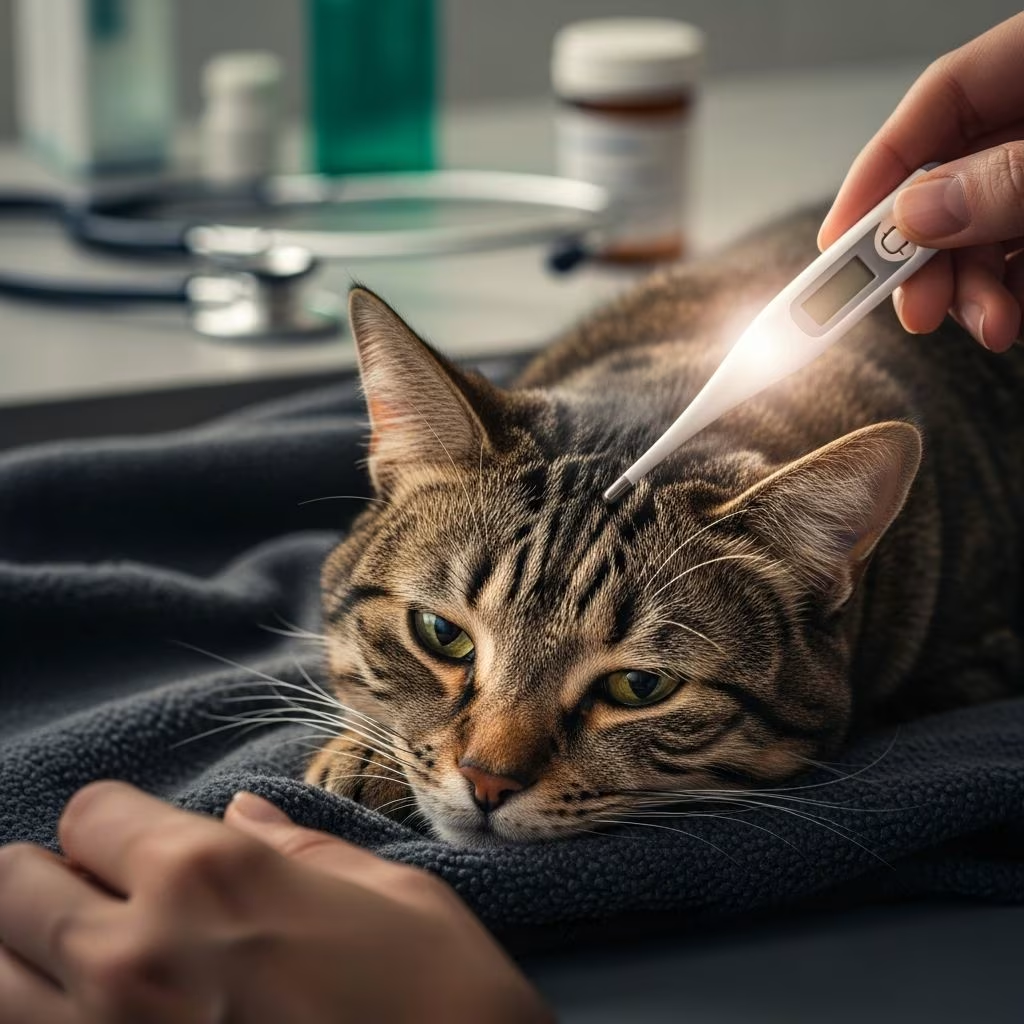
Fever of Unknown Origin in Cats
Fever of unknown origin, commonly referred to as FUO, is a condition that affects cats when their body temperature remains elevated without an obvious or readily identifiable cause. This condition can be concerning for pet owners, as it requires careful investigation and monitoring by a veterinarian to determine the underlying reason for the fever and establish an appropriate treatment plan.
Understanding Clinical Signs of Fever of Unknown Origin
When a cat develops a fever of unknown origin, the symptoms are typically noticeable and consistent with general febrile illness. Pet owners should be aware of the common clinical presentations that indicate their cat may be experiencing FUO.
Most cats with a fever of unknown origin display several characteristic signs. These cats are typically lethargic and show a reluctance to move or engage in their normal activities. Loss of appetite is a common symptom, and owners may notice that their cat is consuming significantly less food than usual. Additionally, cats with FUO often exhibit increased heart and breathing rates, which may be detected during examination at the veterinary clinic. Dehydration is frequently present in these cases, and affected cats may appear visibly uncomfortable.
Physical manifestations can include shivering and stiffness in the cat’s movements. Some cats may also display other signs such as lethargy and general malaise. The severity of these clinical signs can vary depending on the underlying cause of the fever and how long the condition has been present.
What Causes Fever of Unknown Origin in Cats?
By definition, FUO is a fever without a demonstrable or easily identifiable cause. However, understanding the common underlying causes can help veterinarians and pet owners better manage the condition.
Viral Infections
Most cases of fever in cats are caused by viral infections. Common viral pathogens include feline leukemia virus (FeLV), feline immunodeficiency virus (FIV), feline infectious peritonitis (FIP), feline panleukopenia virus, herpesvirus, and calicivirus. These viral infections often cause fever as part of the immune response. Many viral infections in cats follow a pattern where symptoms wax and wane before eventual resolution. For example, it is common for a cat with a viral infection to appear completely well and then experience a relapse a week or two later, which can complicate diagnosis.
Bacterial Infections
While bacterial infections can cause fever in cats, these are usually accompanied by obvious signs such as wounds or visible swelling. Unusual bacterial infections that may be secondary to bite wounds include Yersinia, Mycobacteria, Nocardia, Actinomyces, and Brucella. These infections may be localized in various areas of the body, including the chest cavity (pyothorax), kidneys (pyelonephritis), abdominal cavity (from penetrating intestinal injuries resulting in low-grade peritonitis), mouth, or from tooth root abscesses.
Other Infectious Agents
Beyond viral and common bacterial infections, cats can develop fevers from rickettsial infections, mycoplasmal infections, fungal infections, and protozoal infections. These atypical infections may require specialized diagnostic testing and treatment approaches.
Diagnostic Approach to Fever of Unknown Origin
When a cat presents with a fever of unknown origin, veterinarians follow a systematic diagnostic approach to identify the underlying cause. It is important to understand that this diagnostic work-up can be quite involved and may require multiple tests and careful evaluation.
Initial Assessment
The diagnostic process begins with a thorough history and physical examination. During the physical exam, the veterinarian will carefully auscultate the chest to listen for cardiac murmurs, muffled heart or lung sounds, pulmonary crackles, or wheezes. The chest may be gently compressed to evaluate for mediastinal masses. External lymph nodes and the spleen are palpated to assess for enlargement, which may indicate immune stimulation or neoplasia.
Obvious causes of fever, such as subcutaneous abscessation or bite wounds, should be identified and treated appropriately during this initial assessment.
Minimal Diagnostic Panel
For most cats with fever without a readily apparent cause, a minimal diagnostic plan is recommended. This should include:
– Complete blood cell count (CBC)- Serum biochemical panel- Urinalysis- FeLV antigen test- FIV antibody test
Advanced Diagnostic Testing
Depending on the results of the initial diagnostic panel and physical examination findings, additional testing may be warranted. Enlarged peripheral lymph nodes should be aspirated to differentiate neoplastic causes from hyperplasia due to primary immune-mediated diseases or infectious diseases.
Aerobic and anaerobic bacterial cultures, as well as fungal cultures, may be indicated in some cases. Special media is required to support the growth of certain organisms such as Mycobacterium and Mycoplasma, which will not grow on routine culture media. Fungal or protozoal agents can sometimes be detected cytologically in affected cats.
Serologic Testing
Serologic testing is indicated in some cats with fever, with choices based on the combination of clinical and routine laboratory findings. A FeLV antigen test and FIV antibody test are standard components of the FUO workup. While fever is rarely induced by FeLV infection and when related to FIV is most commonly present during the acute phase of infection, both viruses cause immunodeficiency and predispose cats to infection by other infectious agents.
Treatment Options for Fever of Unknown Origin
Treatment for FUO varies depending on the underlying cause once it is identified. However, even when the specific cause cannot be immediately determined, supportive care and empirical treatment options are available.
Supportive Care
Most cats respond well to basic supportive care, particularly keeping them warm and dry, providing plenty of water and nourishment, and administering antibiotics when indicated. Dehydration must be treated by either subcutaneous or intravenous fluid administration to maintain proper hydration and support overall body function.
Fever Management
It is important to note that fever in general is biologically helpful, and artificial lowering of body temperature is usually not indicated. Therefore, the routine use of fever-reducing medications is generally contraindicated. On rare occasions when medications to reduce fever are necessary, only specific options are available for cats.
Many common fever medications used in humans are extremely toxic to cats. Acetylsalicylic acid (Aspirin) and acetaminophen (Tylenol) should never be administered to cats without explicit direction from a veterinarian, as these medications can cause serious harm. For chronic fevers that result in morbidity such as depression or inappetence, aspirin at 5 mg/kg orally once daily can be used under veterinary supervision. Multiple non-steroidal anti-inflammatory agents such as ketoprofen are available and can transiently decrease body temperature if clinically indicated.
Antibiotic Therapy
Antibiotics should be given to cats with presumed bacterial, rickettsial, or mycoplasmal infections. Ultimately, treatment should be based on culture and sensitivity results when possible. Feline hemoplasmas and Ehrlichia/Anaplasma infections generally respond to doxycycline at 10 mg/kg orally once daily.
Toxoplasma gondii infections generally respond to clindamycin at 10 mg/kg orally twice daily or trimethoprim sulfa at 15 mg/kg orally twice daily, with treatment continuing for 28 days if the cat is responding. Azithromycin can be used as a rescue drug for bartonellosis and toxoplasmosis but is ineffective for hemoplasmosis.
Treatment for Other Conditions
For fungal infections such as cryptococcosis, intraconazole or fluconazole are commonly used for chronic therapy. Fluconazole should be used in cats with ocular or central nervous system involvement due to its superior penetration.
Once infectious and neoplastic causes of fever are excluded, glucocorticoids may be indicated for treatment of primary immune-mediated diseases. For viral infections, fever is rarely treated primarily since most are acute in nature, though AZT has been used successfully to improve quality of life in some cats infected with FeLV or FIV.
Prognosis for Cats with Fever of Unknown Origin
The prognosis for a cat diagnosed with FUO depends significantly on whether the underlying cause can be identified and treated. By definition, with FUO the exact cause is unknown; therefore, an accurate prognosis cannot be given until more information is available.
Many cats respond well to basic supportive care and will recover from a fever within one to five days if the underlying cause can be cured or managed. However, cats that have persistent fever or a fever that waxes and wanes must undergo thorough diagnostic work-up so that the cause of fever can be discovered and treated before irreversible damage occurs.
In cases where this pattern of recurring fever repeats more than once, it is imperative that a thorough diagnostic work-up is undertaken. The prognosis also depends on the specific underlying condition once identified, the cat’s overall health status, and how promptly appropriate treatment is initiated.
When to Seek Veterinary Care
Pet owners should recognize when veterinary attention is necessary. Cats exhibiting signs of a fever for more than 24 hours or a fever above 104°F at any point need to see their veterinarian. If your cat shows clinical signs consistent with fever such as lethargy, loss of appetite, or unusual behavior patterns, prompt veterinary evaluation is recommended.
Important Considerations for Pet Owners
Never give your cat medication without the advice of your veterinarian. Some medications for fever, such as acetaminophen, are toxic to cats and can cause serious complications. Always consult with your veterinary professional before administering any over-the-counter or prescription medications.
If moderate or severe dehydration is present, treatment with intravenous or subcutaneous fluids will be necessary. Your veterinarian will determine the most appropriate treatment approach based on your individual cat’s condition and diagnostic findings.
Frequently Asked Questions About Fever of Unknown Origin in Cats
Q: How long does it typically take to diagnose the cause of FUO?
A: The diagnostic timeline can vary significantly. It can take some time and several different tests before a cause is found and the correct treatment is started. However, it is very common to never find the specific cause, but the high temperature improves in a short period of time with supportive care.
Q: Is fever always harmful to my cat?
A: No, fever in general is biologically helpful as it is part of the body’s immune response to infection or other conditions. Artificial lowering of body temperature is usually not indicated unless the fever becomes dangerously high or causes significant morbidity.
Q: Can I give my cat aspirin for fever?
A: Aspirin should only be given under explicit veterinary direction. While aspirin can be used at 5 mg/kg orally once daily for chronic fevers causing depression or inappetence, it requires professional guidance. Never administer any fever-reducing medication without veterinary approval.
Q: What is the difference between FUO and regular fever?
A: The main difference is that FUO is a fever without an obvious or readily identifiable cause, whereas regular fever can be directly attributed to a specific infection, injury, or condition that can be identified through examination or testing.
Q: Will my cat definitely recover from FUO?
A: Most cats respond well to supportive care and will recover within one to five days. However, prognosis depends on whether the underlying cause can be identified and treated. Cats with persistent or recurring fever require thorough diagnostic investigation to prevent irreversible damage.
References
- Fever of Unknown Origin in Cats (Proceedings) — DVM360. Accessed 2025. https://www.dvm360.com/view/fever-unknown-origin-cats-proceedings
- Fever of Unknown Origin in Cats — VCA Animal Hospitals. Accessed 2025. https://vcahospitals.com/know-your-pet/fever-of-unknown-origin-for-cats
- Fever in Cats — PetMD. Accessed 2025. https://www.petmd.com/cat/symptom/fever-cats
- High Temperature (Fever) in Cats — PDSA. April 2020. https://www.pdsa.org.uk/pet-help-and-advice/pet-health-hub/symptoms/high-temperature-fever-in-cats
- Fever in Cats: Symptoms and Treatments — WebMD. Accessed 2025. https://www.webmd.com/pets/cats/fevers-in-cats



