

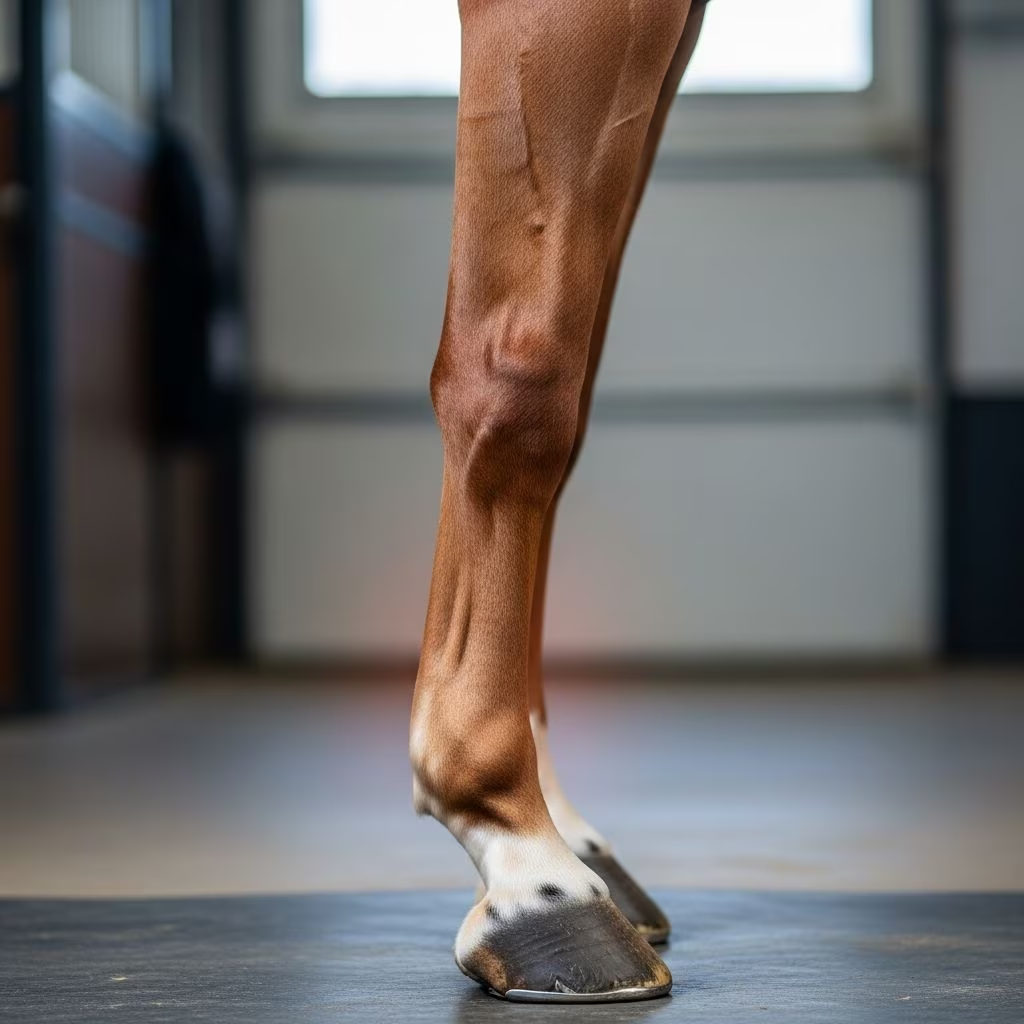
The fetlock and pastern regions are critical for a horse’s locomotion, acting as primary shock absorbers during movement. These areas endure immense stress, making them prone to injuries that can cause lameness and impair performance.
Understanding Equine Lower Limb Anatomy
The fetlock joint, often called the horse’s ankle, connects the cannon bone to the pastern and is a high-motion hinge joint vital for flexibility and force absorption. It comprises the metacarpophalangeal (front) or metatarsophalangeal (hind) joint, involving the third metacarpal or metatarsal bone, the proximal phalanx (long pastern bone, P1), and two proximal sesamoid bones at the rear.
The pastern extends from the fetlock to the hoof, consisting of the long pastern (P1) and short pastern (P2) bones, which provide leverage and shock absorption during strides. Key supporting structures include:
- Suspensory ligament: Runs along the back of the cannon bone, branching to sesamoids to prevent fetlock hyperextension.
- Superficial digital flexor (SDF) tendon: Flexes the fetlock and pastern, susceptible to strains.
- Deep digital flexor (DDF) tendon: Continues to the hoof, aiding flexion.
- Extensor tendons: Straighten the joint on the front side.
- Annular ligaments: Bind flexor structures tightly around the fetlock and pastern.
Ideal pastern length is 13-17% of body length, with proper alignment where the fetlock centers above midway between heel bulbs. Misalignments, like spiraling hairlines or uneven heel bulbs, signal conformational flaws leading to disorders.
Common Disorders Affecting the Fetlock
Fetlock issues often stem from repetitive hyperextension, where the joint sinks under weight, stressing soft tissues.
Suspensory Ligament Desmitis
This inflammation or tearing of the suspensory ligament is prevalent in performance horses. Proximal desmitis affects the body near the cannon, while branch injuries occur at sesamoid attachments. Symptoms include heat, swelling, and grade 2-3 lameness worsening on circles. High-speed activities exacerbate it due to leverage forces.
Sesamoid Bone Injuries
Sesamoids, embedded in flexor tendons, stabilize the joint but fracture from torque or hyperextension. Sesamoiditis involves inflammation from overuse, common in front legs, causing heel pain and lameness. Chip fractures on the pastern or sesamoids lead to cartilage damage and arthritis.
Fetlock Joint Synovitis and Capsulitis
Inflammation of the joint capsule or synovial fluid causes effusion (windpuffs), mild lameness, and distension. Chronic cases erode cartilage, progressing to osteoarthritis.
Pastern-Specific Conditions
The pastern’s length amplifies leverage, fatiguing flexors and risking hyperextension.
Tendon and Ligament Strains
SDF tendonitis (bowed tendon) features filling behind the fetlock, progressing to core lesions visible on ultrasound. Too-tight SDF causes fetlock contracture. Pastern annular ligament constriction traps synovialis, mimicking tendonitis with pastern thickening.
Fractures and Angular Deformities
Pastern fractures, often from slips, cause acute lameness and swelling. Conformational issues like upright pasterns overload joints, while long, sloping ones strain tendons.
Hoof-Pastern Axis Breakdown
Misaligned hoof-pastern axis alters pastern angle, leading to underrun heels or sheared hooves, promoting soft tissue injuries.
| Region | Common Issues | Symptoms | Risk Factors |
|---|---|---|---|
| Fetlock | Suspensory desmitis, sesamoiditis, synovitis | Swelling, heat, hyperextension lameness | High-speed work, poor conformation |
| Pastern | Tendonitis, fractures, annular constriction | Thickening, bowing, angular lameness | Long pasterns, uneven heels |
Recognizing Symptoms of Lameness
Early detection prevents career-ending damage. Watch for:
- Subtle head nodding or hip drop on the affected limb.
- Heat, swelling, or fluid distension post-exercise.
- Shortened stride, reluctance to extend, or toe-dragging.
- Rear view anomalies: leaning hairlines, mismatched heel bulbs.
Lameness grades range from 1 (intermittent) to 5 (non-weight-bearing). Fetlock issues often worsen on hard ground or turns.
Diagnostic Approaches
Veterinarians use flexion tests, hoof testers, and nerve blocks to localize pain. Imaging includes:
- Ultrasound: Gold standard for soft tissues, revealing fiber tears or core lesions.
- Radiographs: Detect fractures, sesamoid changes, or joint space narrowing.
- MRI/CT: For complex cases assessing cartilage or bone marrow.
Conformation assessments measure pastern angles and hoof balance.
Treatment Strategies
Tailor treatments to severity:
- Conservative: Stall rest (4-8 weeks), cold therapy, NSAIDs like phenylbutazone, and controlled exercise.
- Regenerative: Stem cell therapy or PRP injections for desmitis, promoting healing.
- Surgical: Arthroscopy for chips, neurectomy for chronic pain, or pastern fusions in arthritis.
- Supportive: Shockwave therapy, laser, or magnetic fields to reduce inflammation.
Farriery corrections, like wedge pads or hoof angles, realign axes.
Prevention Through Management
Minimize risks with:
- Balanced nutrition supporting tendon health (biotin, omega-3s).
- Proper warm-ups, graduated training, and terrain variety.
- Regular farrier work maintaining hoof-pastern alignment.
- Conformation screening in young horses to select sound athletes.
Avoid overwork; monitor for fatigue signs like fetlock dropping.
FAQs
What causes fetlock swelling in horses?
Swelling often results from synovitis, desmitis, or trauma, with synovial fluid accumulation signaling inflammation.
How long does suspensory injury recovery take?
Mild cases heal in 3-6 months with rest and therapy; severe tears may require 12+ months or retirement.
Can pastern conformation be corrected?
Farriery adjustments help manage issues, but severe deformities may need surgery in foals.
Is sesamoiditis curable?
Yes, with rest and anti-inflammatories, though recurrent in high-performance horses.
When should I call a vet for lameness?
Immediately for grade 3+ lameness, heat, or swelling to prevent progression.
References
- Assessing Pastern Conformation & Its Effects — American Farriers Journal. 2023. https://www.americanfarriers.com/articles/15239-assessing-pastern-conformation-and-its-effects
- Tendon and Ligament Anatomy – Large Animal Surgery — University of Minnesota Libraries Publishing. 2022. https://open.lib.umn.edu/largeanimalsurgery/chapter/tendon-anatomy/
- Fetlock Lameness in Horses: Signs, Diagnosis & Treatment — Mad Barn. 2024. https://madbarn.com/fetlock-lameness-in-horses/
- Horse Fetlock: Everything You Need to Know — Gladiator Equine. 2023. https://gladiatorequine.com/what-is-the-horse-fetlock/
- Understanding the Pastern: A Key Component of Equine Anatomy — Orea TAI. 2024. https://www.oreateai.com/blog/understanding-the-pastern-a-key-component-of-equine-anatomy/a4d8227bc658efff7d63792f4da5e535
- Where is the Fetlock On A Horse | Symptoms, Causes & Treatments — StreamZ Global. 2023. https://us.streamz-global.com/blogs/articles/where-is-the-fetlock-on-a-horse-symptoms-causes-treatments-streamz-global



