Ferrets – Housing: Complete Guide to Ferret Care
Create a safe, comfortable home for your ferret with proper housing setup and environmental conditions.
Ferrets – Housing: A Complete Guide to Creating the Perfect Home
Ferrets are intelligent, playful, and social animals that require thoughtful housing arrangements to thrive in captivity. Unlike many other small pets, ferrets need more than just a basic cage; they require a well-designed living space that accommodates their natural behaviors, provides adequate ventilation, and maintains appropriate environmental conditions. Whether you’re a first-time ferret owner or an experienced caretaker, understanding proper housing requirements is essential to ensuring your ferret’s health, happiness, and longevity.
What Type of Cage Does My Ferret Require?
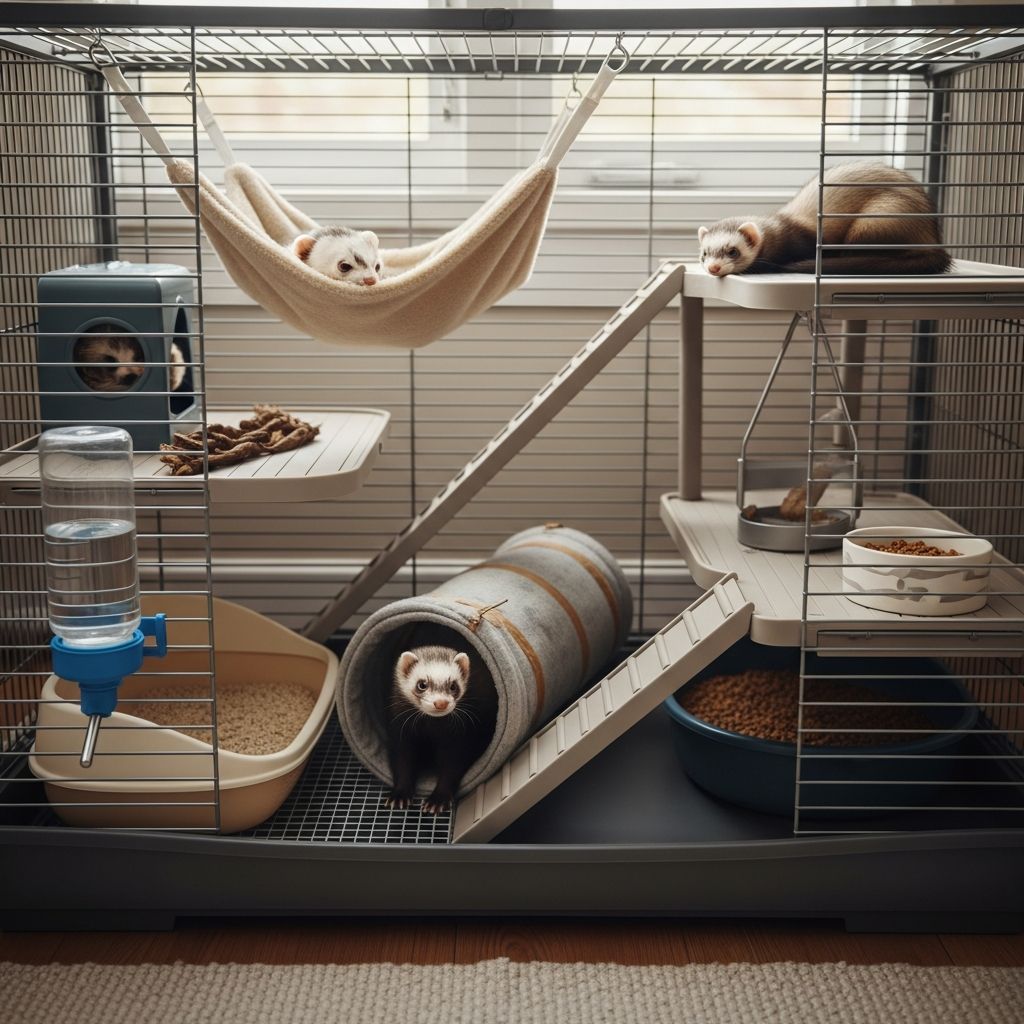
Due to their well-deserved reputation as escape artists, ferrets should be housed in a cage that can be securely closed and locked. The cage should be as large as you can afford; a suggested minimum size might be 24" x 24" x 18" high (60 cm x 60 cm x 45 cm). However, larger cages are always preferable as they provide more space for movement and enrichment. The cage should be well ventilated to prevent respiratory issues and maintain proper air circulation.
Cage flooring can be solid or wire, but wooden flooring should be avoided as it will soak up urine and feces and emit a foul odor that will be difficult to eliminate. If using wire flooring, ensure the wires are not too wide, as ferrets’ delicate paw pads can be injured by bare wire. Padding the bottom of the cage or purchasing one with a solid bottom is highly recommended. Multi-tiered cages are preferred as they provide vertical space for climbing and exploration.
Most owners have a multi-level cage for their ferret(s). Hammocks can be set up on the second or third level to allow for a space for eating, drinking, and toileting on the first level and sleeping on the upper level(s). This compartmentalization helps maintain cleanliness and respects the ferret’s natural tendency to designate different areas for different activities.
Environmental Conditions for Ferret Housing
Temperature Requirements
Ferret housing should maintain appropriate temperature ranges to keep your pet comfortable and healthy. Ferrets thrive in temperatures between 15 and 24°C (59-75°F), but will adapt to colder temperatures between 7 to 10°C (44-50°F), with the exception of unweaned kits, which should always be kept between 15°C and 24°C (59-75°F). Ferrets are particularly susceptible to heat stress above 30°C (86°F), especially if humidity is high. Most ferret owners maintain household temperatures around 15 to 21°C (59-70°F) for optimal comfort.
Ventilation and Humidity
Ferret housing should be well ventilated, dry and draught-free. High humidity levels should be avoided, and enclosures should have adequate air circulation to prevent respiratory problems and bacterial growth. The optimum humidity level is between 40% and 65%. Glass and plastic habitats are not recommended, as their solid walls block air circulation and can trap heat and moisture.
Bedding and Substrate
Selecting appropriate bedding is crucial for your ferret’s comfort and health. Place 1–2 inches of high-quality, paper-based bedding (like absorbent shredded or pelleted paper material) in the habitat. Paper-based bedding is preferred over wood bedding, like cedar shavings, because paper is digestible and will not obstruct a ferret’s gastrointestinal tract if ingested. Cedar bedding products also contain oils that can irritate a ferret’s respiratory tract and cause illness.
For sleeping areas, a clean towel or small blanket works well, but if you use fabric, check that it will not unravel and that the ferret does not eat it. Do not use newspaper or wood chips, as these items can harbor bacteria or create dust that may irritate the respiratory tract. Since ferrets enjoy burrowing, bedding that provides a place to “tunnel in” is perfect for sleeping or resting.
Creating a Complex and Stimulating Environment
Ferrets are intelligent and active animals that require mental stimulation and physical enrichment. They need a safe, “ferret-proofed” play area or room where they can explore and investigate while supervised. This area should contain various objects to occupy them, such as boxes, paper bags, blankets, and plastic tubes or PVC piping, as well as things to climb into, over, on top of, and under.
Physical enrichment options include:
- Containers and tubes for exploration
- Paper bags for tunneling and playing
- Hammocks for resting and observing
- Water baths for cooling and recreation
- Ladders for climbing
- Ramps for traversing multiple levels
- Shelves for perching
These enrichment items help prevent boredom and allow ferrets to exhibit natural behaviors such as foraging, hiding, and marking territory.
Escape Prevention and Safety
Ferrets are notorious escape artists and will squeeze through even tiny gaps. Accommodation needs to be designed with care and rendered ‘ferret-proof’, with secure fastenings. Be careful with heavy furniture that your ferret could get trapped behind and couches that he could tunnel into through the lining or padding. Ferrets will burrow into the foam of couches, chairs, and mattresses, and climb into the back of stereo speakers, closets, and drawers. These areas must be blocked or sealed off with thin plywood or hardware cloth to prevent escape or injury.
If your ferret can put his head through an opening, his body will fit through as well. Therefore, all potential escape routes and hazardous areas must be carefully identified and secured. Check the cage for sharp, jagged, or rough wire and for any openings large enough for the ferret to escape.
Space Requirements and Compartmentalization
Enclosures should be large enough to allow compartmentalization of space for different activities. A properly designed ferret habitat should include:
- An elimination area with a vertical surface for scent marking and use as a latrine, well away from eating and sleeping areas
- An eating and food storage area with access to food and water
- A resting and sleeping chamber that is warm, dry, and contains comfortable nesting material
- An area for social play and interaction with environmental enrichment
Floors should be smooth, solid, non-slip and covered with substrate. This design allows ferrets to naturally organize their space according to their instincts and preferences.
Sleeping and Resting Areas
Ferrets play hard and sleep hard. They will sleep 12-18 hours a day. A warm, dry resting and sleeping chamber containing comfortable nesting material should be provided. Most ferrets prefer to sleep in a relatively small, confined space and often enjoy hammocks or fabric huts as sleeping quarters. Ferrets sleep or rest for up to 20 hours a day and are most active at dusk.
Make sure you include a secure, safe place for them to rest and sleep. You could use an old T-shirt, hammock, or sleeping box and provide dust-free bedding. The sleeping area should be positioned away from the main play and elimination areas to maintain cleanliness and provide a quiet retreat.
Vertical Space and Multi-Level Design
Enclosures should be secure and escape-proof, with enough vertical height to at least allow the animals to stand fully upright on their back legs. Multi-tiered cages are especially beneficial for ferrets, as they provide vertical climbing opportunities and create separate functional spaces within a single enclosure.
Look for a habitat with ramps, shelves, and multiple levels to climb and perch on, and always provide the largest habitat possible. These vertical elements not only maximize usable space but also provide mental stimulation and exercise opportunities for your active ferret.
Cage Ventilation and Maintenance
Proper cage maintenance is essential for your ferret’s health. Clean water and food bowls and toilet areas every day. Clean their housing, play and resting areas as needed and at least weekly. A good home design should be easy to clean with no hard-to-reach places.
The cage should be well ventilated to prevent the buildup of ammonia from urine and to maintain proper air circulation. Poor ventilation can lead to respiratory problems and infections. Ensure that your cage design allows for thorough cleaning without trapping debris or moisture.
Housing Compatible Social Groups
Ferrets should be housed in compatible social groups when possible. However, compatibility depends on the individual ferrets’ personalities and their prior socialization. Proper introduction and gradual acclimation are necessary when housing multiple ferrets together. Male ferrets, or “hobs,” may be more territorial, so neutering and spaying are typically recommended before housing ferrets together.
Diet and Feeding Considerations
Your ferret’s housing should accommodate proper feeding practices. Diet should be high in animal protein and fat content and low in fibre and carbohydrate content. Feeding should be ad lib or little and often, with free access to water. The eating area within the cage should be positioned away from the elimination area to promote hygiene and prevent contamination of food and water.
Play Area and Supervised Exploration
While a properly designed cage is essential, ferrets also need a safe, “ferret-proofed” play area or room where they can explore and investigate while supervised. This area should contain various objects to occupy them and allow them to engage in natural behaviors like foraging, exploring, hiding, resting, grooming, and marking territory.
When setting up a play area, remove or secure any hazardous items, electrical wires, and poisonous plants. Ferrets love to explore by mouthing or chewing objects in their environment, so keeping their home safe is crucial. Be careful with heavy furniture that your ferret could get trapped behind and couches that he could tunnel into through the lining or padding.
Frequently Asked Questions About Ferret Housing
Q: What is the minimum cage size for a ferret?
A: The suggested minimum size is 24" x 24" x 18" high (60 cm x 60 cm x 45 cm), though larger cages are always preferable. Multi-level cages are recommended to maximize usable space.
Q: Can ferrets be housed outdoors?
A: No, ferrets should live indoors with you where temperature can be controlled and they can be properly supervised. Indoor housing protects them from predators, extreme temperatures, and escape.
Q: What type of bedding is safest for ferrets?
A: Paper-based bedding is safest as it is digestible and will not obstruct a ferret’s gastrointestinal tract if ingested. Avoid cedar and wood shavings, which contain oils that can irritate respiratory tracts.
Q: How often should I clean my ferret’s cage?
A: Clean water and food bowls and toilet areas daily. Clean the entire housing, play and resting areas as needed and at least weekly.
Q: Can I use a glass or plastic cage for my ferret?
A: No, glass and plastic habitats are not recommended because their solid walls block air circulation, which is essential for ferret health.
Q: How much time do ferrets spend sleeping?
A: Ferrets will sleep 12-18 hours a day and are most active at dusk. They play hard and sleep hard, so a comfortable sleeping area is essential.
Q: What enrichment items do ferrets enjoy?
A: Ferrets enjoy containers and tubes for exploration, paper bags for tunneling, hammocks for resting, water baths, ladders, ramps, shelves, boxes, and blankets.
Q: How can I prevent my ferret from escaping?
A: Use a cage with secure locks, check for openings larger than your ferret’s head, and block off all potential escape routes including behind furniture, inside couches, closets, and drawers.
Conclusion: Creating the Ideal Ferret Home
Creating the ideal living environment for your ferret requires careful consideration of multiple factors including cage size, temperature control, ventilation, enrichment, and safety. By following these guidelines and investing in a well-designed, multi-level cage with proper environmental controls and enrichment opportunities, you can provide your ferret with a comfortable, stimulating home where they can thrive. Regular maintenance, appropriate bedding selection, and supervised play time outside the cage will contribute to your ferret’s overall health, happiness, and longevity.
References
- Housing and Husbandry: Ferret — NC3Rs (National Centre for the 3Rs). 2024. https://nc3rs.org.uk/3rs-resources/housing-and-husbandry-ferret
- Creating a Good Home for Your Ferrets — RSPCA (Royal Society for the Prevention of Cruelty to Animals). 2024. https://www.rspca.org.uk/adviceandwelfare/pets/ferrets/environment
- Providing a Home for a Ferret — Merck Veterinary Manual, Cornell University College of Veterinary Medicine. 2024. https://www.merckvetmanual.com/all-other-pets/ferrets/providing-a-home-for-a-ferret
- Ferrets – Housing — VCA Animal Hospitals. 2024. https://vcahospitals.com/know-your-pet/ferrets—housing
- Ferret Care Sheet — PetMD. 2024. https://www.petmd.com/ferret/ferret-care-sheet
- Ferret Basics – Animal Rescue League of Boston — Animal Rescue League of Boston. 2013. https://www.arlboston.org/
Similar Articles








Read full bio of Sneha Tete