Understanding Ferret Health & Behavior Needs
Master the unique physiological and behavioral requirements for optimal ferret wellness
Ferrets represent a unique category of domesticated pets with specialized requirements that distinguish them significantly from conventional household animals. As members of the Mustelidae family, these small carnivores possess distinct physiological characteristics and behavioral patterns that directly influence their care, health management, and overall quality of life. Understanding these distinctive needs is fundamental to providing appropriate husbandry and preventing common health complications that can affect ferret populations.
The Physiology of Ferrets and Metabolic Demands
Ferrets possess a fundamentally different metabolic structure compared to other small pets, characterized by an exceptionally rapid digestive transit time. Their gastrointestinal system processes food extremely quickly, necessitating frequent feeding throughout the day rather than traditional once or twice daily meals. This accelerated metabolism reflects their evolutionary history as obligate carnivores, requiring consistent access to nutrient-dense food sources. The implications of this physiological reality extend beyond simple feeding schedules, influencing housing design, enrichment strategies, and daily care routines.
The ferret’s thermoregulatory capacity also differs markedly from many other domesticated animals. These creatures are highly sensitive to temperature fluctuations and require carefully maintained environmental conditions to prevent stress-related health complications. Maintaining appropriate thermal environments becomes not merely a comfort consideration but a genuine health necessity, requiring vigilant monitoring and adjustment throughout seasonal variations.
Nutritional Requirements and Dietary Considerations
Ferrets are obligate carnivores, meaning their nutritional architecture depends almost entirely on animal-based protein sources. Unlike omnivorous pets that can thrive on varied diets, ferrets require specially formulated commercial foods designed specifically for their species. These specialized formulations must contain elevated protein and fat content while maintaining minimal carbohydrates. Standard cat food may serve as a temporary alternative but cannot replicate the precise nutritional balance required for long-term health maintenance.
The feeding approach for ferrets differs fundamentally from typical pet management. Rather than scheduled meals, ferrets should have access to food continuously or receive multiple small meals throughout the day. This approach aligns with their rapid metabolic processes and prevents the metabolic stress that can result from extended periods without nutrition. Water sources require equal attention, with multiple access points and daily refreshing essential to maintaining proper hydration.
Key Dietary Principles:
- Protein content should comprise at least 30-40% of total diet composition
- Fat content typically ranges from 15-20% for optimal energy availability
- Carbohydrates should remain minimal, ideally below 5% of total caloric intake
- Continuous food availability or multiple daily feedings prevent metabolic complications
- Fresh water sources must be available at all times with daily replenishment
- Specialized ferret kibble provides superior nutrition compared to generic alternatives
Environmental Enrichment and Behavioral Expression
Ferrets exhibit complex behavioral repertoires driven by evolutionary instincts that persist even in domesticated populations. These animals possess powerful drives to burrow, dig, and forage, reflecting their ancestry as hunters and den-dwelling creatures. Providing environmental structures that accommodate these instinctive behaviors is essential for psychological well-being and preventing stress-related behavioral problems.
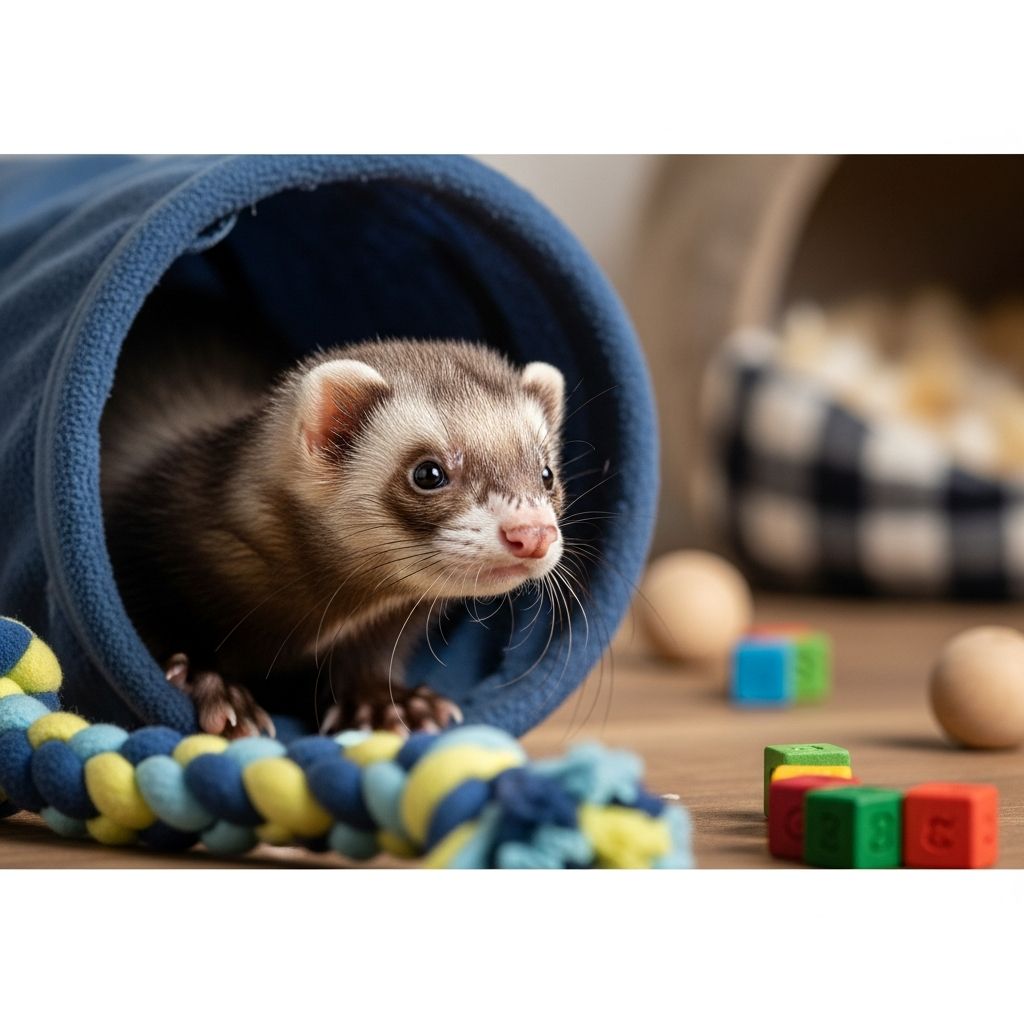
An enriched ferret environment incorporates multiple elements designed to stimulate natural behaviors while maintaining safety. Hideaways, hammocks, and tunnel systems provide secure spaces that satisfy burrowing instincts. Toys designed for manipulation and exploration facilitate mental engagement and physical activity. Regular rotation of environmental enrichment prevents habituation and maintains ongoing cognitive stimulation.
Social engagement represents another critical dimension of ferret behavioral needs. These animals are inherently social creatures that benefit from regular interaction with human caregivers. Daily handling, supervised play sessions, and positive social contact contribute to emotional development and behavioral balance. Extended periods of isolation can result in behavioral problems and psychological stress.
Common Health Conditions and Disease Management
Ferrets are predisposed to several significant health conditions that require ongoing vigilance and preventive management. Understanding these conditions enables early detection and intervention, improving outcomes and quality of life.
Adrenal Disease: This endocrine disorder ranks among the most prevalent health concerns in domestic ferret populations. The condition involves abnormal adrenal gland function, leading to hormone imbalances that produce visible clinical signs. Affected ferrets often display alopecia (hair loss), behavioral changes, and reproductive organ enlargement. Spaying or neutering ferrets substantially reduces adrenal disease risk, making surgical intervention a critical preventive measure during young adulthood.
Gastrointestinal Complications: The ferret’s rapid digestive transit time predisposes these animals to gastrointestinal obstruction, particularly during seasonal shedding when hairball formation increases. Foreign body ingestion represents another significant concern, as ferrets’ curious nature and manipulative mouth movements create substantial risk for accidental ingestion of harmful materials. Symptoms including lethargy, appetite loss, and vomiting warrant immediate veterinary evaluation.
Parasitic Infections: Ferrets can develop parasitic infestations affecting multiple body systems. Ear mites, gastrointestinal parasites, and other pathogenic organisms require professional diagnosis and targeted treatment. Regular parasite prevention protocols established through veterinary consultation provide essential protection.
Cardiac Conditions: Dilated cardiomyopathy and other heart conditions occur with notable frequency in ferret populations. These conditions may develop silently without obvious external signs until significant disease progression occurs. Regular veterinary examinations including cardiac screening become increasingly important as ferrets age.
Neoplastic Diseases: Cancer represents a significant health risk in aging ferrets, with various tumor types affecting different organ systems. Lymphoma, adrenal tumors, and other malignancies require professional diagnosis and management planning.
Preventive Healthcare and Veterinary Partnerships
Ferrets require access to veterinary professionals with specialized knowledge of exotic pet medicine. Standard dog and cat veterinarians may lack the specific training necessary for ferret care, making the identification of qualified exotic animal veterinarians essential before acquiring a ferret.
Preventive healthcare protocols for ferrets include several critical components. Annual or biannual veterinary examinations provide opportunities for early disease detection and health monitoring. Vaccination against distemper is considered standard preventive care in most regions, with rabies vaccination recommendations varying by jurisdiction and individual risk assessment. Spaying and neutering procedures, typically performed in juvenile ferrets, provide significant disease prevention benefits alongside behavioral advantages.
Parasite prevention requires year-round attention, with products selected specifically for ferret safety. Many treatments formulated for other small animals prove toxic to ferrets, necessitating veterinary guidance for all parasite management decisions.
Housing Standards and Environmental Management
Appropriate ferret housing extends beyond merely confining the animal; it must actively support health, facilitate natural behaviors, and maintain hygiene standards. Multi-level cages with solid, non-slip flooring provide secure spaces while preventing leg injuries from slated surfaces. Habitat size should allow for movement and separation of functional areas for sleeping, elimination, and activity.
Bedding materials require careful selection to avoid respiratory irritation and ingestion risks. Aromatic cedar and pine shavings produce volatile compounds harmful to ferret respiratory systems and must be avoided. Fleece, aspen, or paper-based bedding options provide safer alternatives while supporting comfort and absorbency.
Ventilation and temperature regulation demand consistent attention. Ferrets require environments maintained between 65-75°F (18-24°C), with humidity control preventing respiratory complications. Poor ventilation leads to ammonia accumulation from waste products, creating respiratory hazards even when other parameters remain adequate.
Cleaning protocols must balance thorough sanitation with operational practicality. Spot-cleaning of soiled bedding and uneaten food should occur daily, while comprehensive habitat cleaning with appropriate disinfectants should be performed weekly. This regular maintenance prevents pathogen accumulation and odor development while maintaining animal health and household aesthetics.
Grooming, Hygiene, and Physical Maintenance
Ferret grooming requirements differ from many other small pets, reflecting their unique physiology and behavioral characteristics. Nail trimming every two to three weeks prevents overgrowth that can cause discomfort and mobility issues. Professional trimming by trained individuals minimizes injury risks, though experienced owners can perform this task with appropriate techniques and tools.
Ear care requires gentle attention, particularly given ferrets’ susceptibility to ear mite infections. Regular cleaning with ferret-safe solutions and cotton materials removes waxy debris and allows early detection of problems. Dental hygiene, though often overlooked, contributes to overall health, with daily tooth brushing using ferret-appropriate toothpaste providing preventive benefits.
Bathing should be performed infrequently, as regular water exposure removes natural oils that protect the skin and coat. Ferrets generally require bathing only when visibly soiled, with most routine cleaning accomplished through their own grooming behaviors. When bathing becomes necessary, ferret-specific shampoos prevent skin irritation and maintain the coat’s protective properties.
During seasonal shedding cycles occurring in spring and autumn, increased grooming becomes essential. Daily brushing with fine-toothed combs or soft-bristled brushes removes loose fur before ingestion, significantly reducing hairball formation risks. Supplemental hairball laxatives, applied as directed by veterinary professionals, provide additional protection during heavy shedding periods.
Behavioral Training and Litter Management
Ferrets demonstrate notable capacity for behavioral training, with litter box use being among the most successfully trained behaviors. Most ferrets naturally prefer specific locations for elimination, making litter box placement in preferred areas highly effective. Multiple boxes positioned throughout accessible spaces accommodates multiple ferrets and increases compliance rates.
Appropriate litter selection influences training success and health outcomes. Pellet-based litters designed for small animals provide absorbency while minimizing dust production. Clumping litters, effective for feline use, prove problematic for ferrets due to ingestion risks and gastrointestinal complications.
Social behaviors including gentle nipping and wrestling represent normal ferret interactions rather than aggressive behaviors. Understanding these instinctive patterns allows owners to engage appropriately while establishing behavioral boundaries. Supervised playtime with appropriate toys redirects natural predatory drives toward acceptable outlets.
Ferret-Proofing Home Environments
Creating ferret-safe living spaces requires comprehensive examination of potential hazards. Ferrets’ flexible bodies allow access to surprisingly small spaces, requiring sealing of gaps between furniture and walls. Toxic houseplants must be relocated to inaccessible areas, as ferrets explore their environment through oral manipulation. Electrical cords, particularly those from heating devices, pose both electrocution and burn hazards requiring protective barriers.
Small objects that ferrets might ingest represent significant ingestion hazard. Rubber toys, foam materials, and small decorative items must be removed from accessible areas. Chemically treated materials, pesticides, and household cleaners require secure storage away from ferret activity spaces.
Water sources, heating equipment, and temperature-sensitive areas demand special attention. Ferrets cannot tolerate extreme temperatures and require protection from heat sources including direct sunlight through windows. Cold drafts similarly present health risks, making environmental temperature consistency paramount.
Frequently Asked Questions
How often should ferrets visit veterinarians?
Annual veterinary examinations represent the minimum standard, with biannual visits recommended for aging ferrets or those with existing health conditions. Regular professional monitoring enables early disease detection and health optimization.
Can ferrets live in outdoor environments?
While ferrets are primarily indoor pets in North America, outdoor housing occurs in some European regions. Indoor housing remains the standard recommendation in most areas due to temperature sensitivity, predation risks, and escape hazards.
What is the typical lifespan of domestic ferrets?
With appropriate care and veterinary management, ferrets typically live 6-10 years, with some individuals reaching 12+ years. Genetics, environmental conditions, and disease prevalence influence individual longevity.
Are ferrets suitable for families with young children?
Ferrets require careful handling and supervision, making them better suited for families with older children capable of gentle, respectful interaction. Young children may inadvertently injure ferrets through rough handling.
References
- Ferret Care Sheet — PetMD. 2025. https://www.petmd.com/ferret/ferret-care-sheet
- Comprehensive Guide to Ferret Care: Essential Tips for 2025 — Flamingo Pet Clinic. 2025. https://flamingopetclinic.com/essential-ferret-care/
- Ultimate Vet Guide 2025: Ferret Care 101 — AskAVet. 2025. https://askavet.com/blogs/news/ultimate-vet-guide-2025-ferret-care-101
- Ferret care and husbandry — National Center for Biotechnology Information (NCBI/NIH). 2020. https://pmc.ncbi.nlm.nih.gov/articles/PMC7128698/
- Caring for your FERRET — Oxbow Animal Health. 2022. https://oxbowanimalhealth.com/wp-content/uploads/2023/10/Ferret-Care-Guide-Jul-2022.pdf
Similar Articles








Read full bio of medha deb