Ferret Breeding Essentials: Guide For Responsible Breeders
Master the essentials of ferret reproduction, from maturity to nurturing kits, for responsible pet ownership.
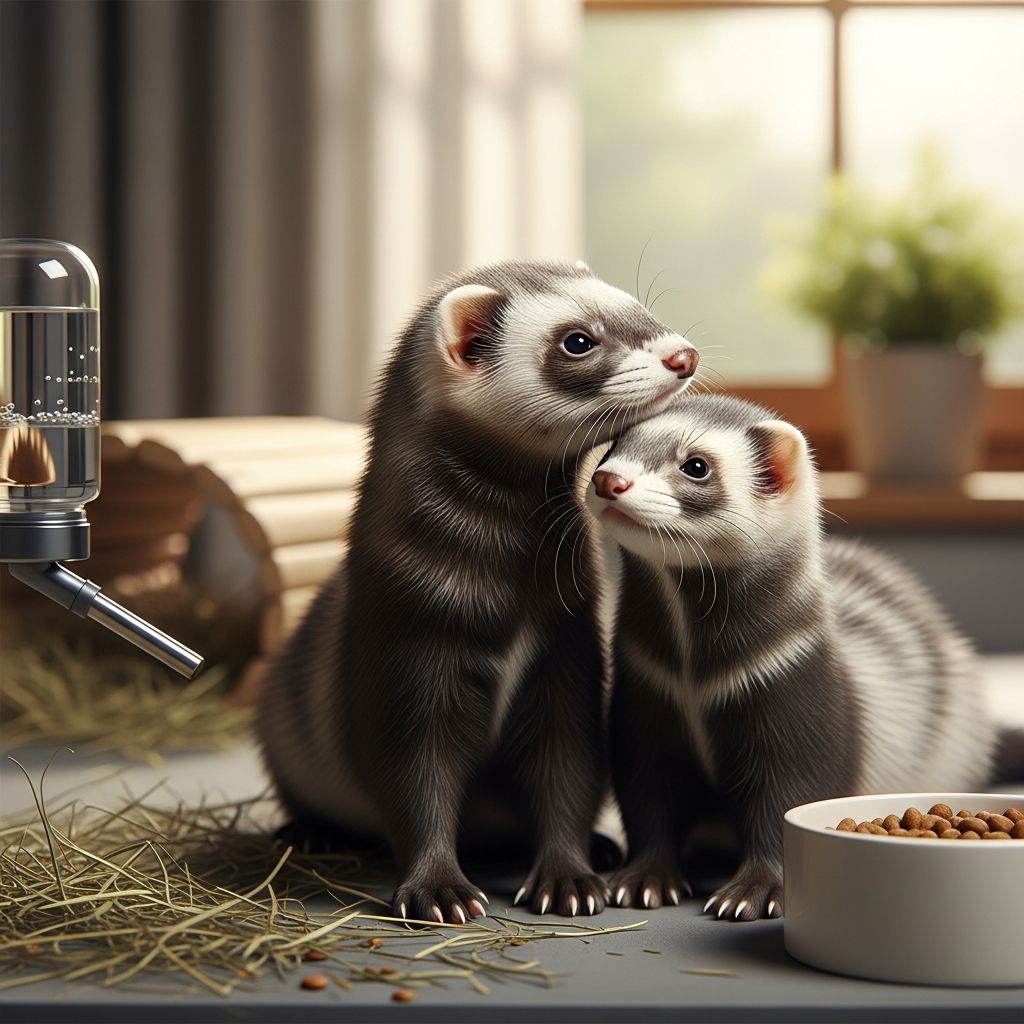
Breeding ferrets requires a deep understanding of their unique reproductive biology to ensure the health of both parents and offspring. Ferrets, or Mustela putorius furo, exhibit seasonal breeding patterns influenced by daylight length, making timing critical for success.
Understanding Sexual Maturity in Ferrets
Ferrets typically achieve sexual maturity between 4 and 8 months of age, aligning with their first spring after birth. This milestone triggers significant physiological changes, particularly in unspayed females known as jills, who enter a prolonged heat unless bred or medically managed. Males, or hobs, also show seasonal readiness twice a year, marked by behavioral shifts and physical traits like a musky odor and oily fur.
Most pet ferrets undergo spaying or neutering before 6 weeks to prevent reproductive complications, but breeders must recognize these signs for planned pairings. Early maturity demands vigilant monitoring to avoid health risks associated with extended estrus in jills.
The Role of Photoperiod in Ferret Heat Cycles
Ferrets are long-day breeders, with reproductive activity peaking when daylight exceeds 12 hours. Jills enter estrus in spring, displaying a swollen vulva as the primary indicator. Unlike spontaneous ovulators, jills require physical stimulation from mating to induce ovulation, occurring 30-36 hours post-coitus.
- Seasonal Timing: Northern hemisphere jills heat around March-August; southern around September-December.
- Male Seasonality: Hobs exhibit heightened aggression and scent-marking biannually.
- Prolonged Heat Risks: Unbred jills remain in estrus indefinitely, risking bone marrow suppression and aplastic anemia.
Artificial lighting can manipulate cycles in controlled environments, but natural photoperiods yield optimal results for breeders.
Preparing for Successful Mating
Prospective breeders should select healthy, mature ferrets with verified pedigrees to minimize genetic issues. Wait until the jill’s vulva is fully swollen—typically 2-3 weeks into heat—for peak fertility and safe mating. Introduce the pair in the hob’s territory to reduce territorial disputes.
| Preparation Step | Details | Timeline |
|---|---|---|
| Health Check | Vet exam for parasites, vaccinations | Pre-season |
| Vulva Assessment | Full swelling confirmation | 2-3 weeks into heat |
| Nutrition Boost | High-protein diet | 1-2 weeks prior |
| Isolation | Separate from other ferrets | During mating |
Mating appears aggressive: the hob grasps the jill’s scruff, drags her, and mounts repeatedly. A J-shaped os penis locks them for hours, essential for ovulation. Monitor for injuries post-mating, such as neck punctures or vaginal issues. Leave together up to 24 hours for conception assurance, then separate.
Pregnancy: Gestation and Maternal Care
Successful mating leads to a 42-day gestation. Early signs include vulva recession within 1-2 weeks, weight gain, and nest-building behaviors like hair-pulling from the tail. Jills become nest-oriented, preferring quiet, warm spaces.
Provide spacious housing with nesting materials, elevated food/water to avoid kit trampling, and a high-calorie diet (25-30% protein). Avoid handling the jill excessively to minimize stress. Monitor weight weekly without disturbing the nest.
- Litter Size: 4-8 kits average; up to 14 possible.
- Birth Process: Kits born hairless, eyes closed; jill handles delivery solo.
- Post-Birth: Ensure privacy; supplement feeding if jill neglects kits.
Raising Ferret Kits: From Birth to Weaning
Newborn kits weigh 6-12 grams, dependent on mother’s milk for 3-4 weeks. Eyes open at 3 weeks, with weaning around 6-8 weeks. Socialization begins at 4 weeks through gentle human interaction.
Key care milestones:
- Weeks 1-3: Nest monitoring only; no handling.
- Weeks 4-6: Introduce solid foods; vaccinate at 8 weeks.
- Weeks 7-10: Full weaning; sex determination for future planning.
Sex kits by anogenital distance: males farther apart. Prioritize same-sex grouping post-weaning to curb precocious breeding.
Health Risks and Alternatives to Breeding
Breeding poses risks like hyperadrenocorticism in neutered ferrets, linked to early sterilization disrupting hormone regulation. Prolonged heat in jills can cause fatal anemia. Alternatives include:
- Vasectomized Hob: Induces ovulation sans pregnancy.
- Hormone Injections: Proligestone (40-50mg SC) suppresses estrus for 3-4 months.
- Spaying/Neutering: Recommended for pets; performed post-maturity if breeding planned.
Consult veterinarians for tailored protocols, especially for repeated cycles.
Ethical Breeding Practices
Responsible breeding prioritizes welfare over quantity. Screen for hereditary conditions like cardiomyopathy. Avoid overbreeding jills (max 3-4 litters lifetime). Rehoming plans essential for kits.
Legal considerations vary; some regions require licenses. Join breeder associations for standards and support.
Frequently Asked Questions (FAQs)
Can I breed my ferret at home without experience?
No; novices risk maternal/kit mortality. Gain knowledge and vet guidance first.
How do I know if mating succeeded?
Vulva shrinks in 1-2 weeks; confirm pregnancy via ultrasound at 2-3 weeks.
What if my jill won’t go out of heat?
Use vasectomized hob or vet-prescribed hormones promptly to avert health crises.
At what age can kits be sold?
Minimum 8-10 weeks, fully weaned and socialized.
Is breeding ferrets profitable?
Rarely; costs for care/vet often exceed sales. Focus on preservation.
Nutrition Table for Breeding Ferrets
| Life Stage | Protein % | Fat % | Key Additives |
|---|---|---|---|
| Jill in Heat | 25-30 | 15-20 | Calcium, Omega-3 |
| Pregnant/Lactating | 30-35 | 20-25 | Taurine, Vitamins |
| Hob Pre-Mating | 28-32 | 18-22 | Zinc for fertility |
| Kits Weaning | 32-38 | 20-25 | DHA for brain dev. |
References
- Breeding and Reproduction of Ferrets — MSD Veterinary Manual. 2023. https://www.msdvetmanual.com/all-other-pets/ferrets/breeding-and-reproduction-of-ferrets
- Breeding and Reproduction of Ferrets — Merck Veterinary Manual. 2023. https://www.merckvetmanual.com/all-other-pets/ferrets/breeding-and-reproduction-of-ferrets
- Biology, Reproductive System Particularities and… — Biomedical Journal of Scientific & Technical Research. 2020-01-15. https://biomedres.us/fulltexts/BJSTR.MS.ID.003928.php
- How to Breed Ferrets — All About Ferrets. 2022. https://all-about-ferrets.com/how-to-breed-ferrets.html
- Ferret BREEDER Diary – #1 the MATING process — YouTube (Kingsdown Ferrets). 2023. https://www.youtube.com/watch?v=m2ElsHzcZTE
Similar Articles








Read full bio of Sneha Tete