Undefined Ferret Anatomy And Traits: 5 Key Facts For Care
Discover the unique physical features, behaviors, and care needs of ferrets as engaging pets.
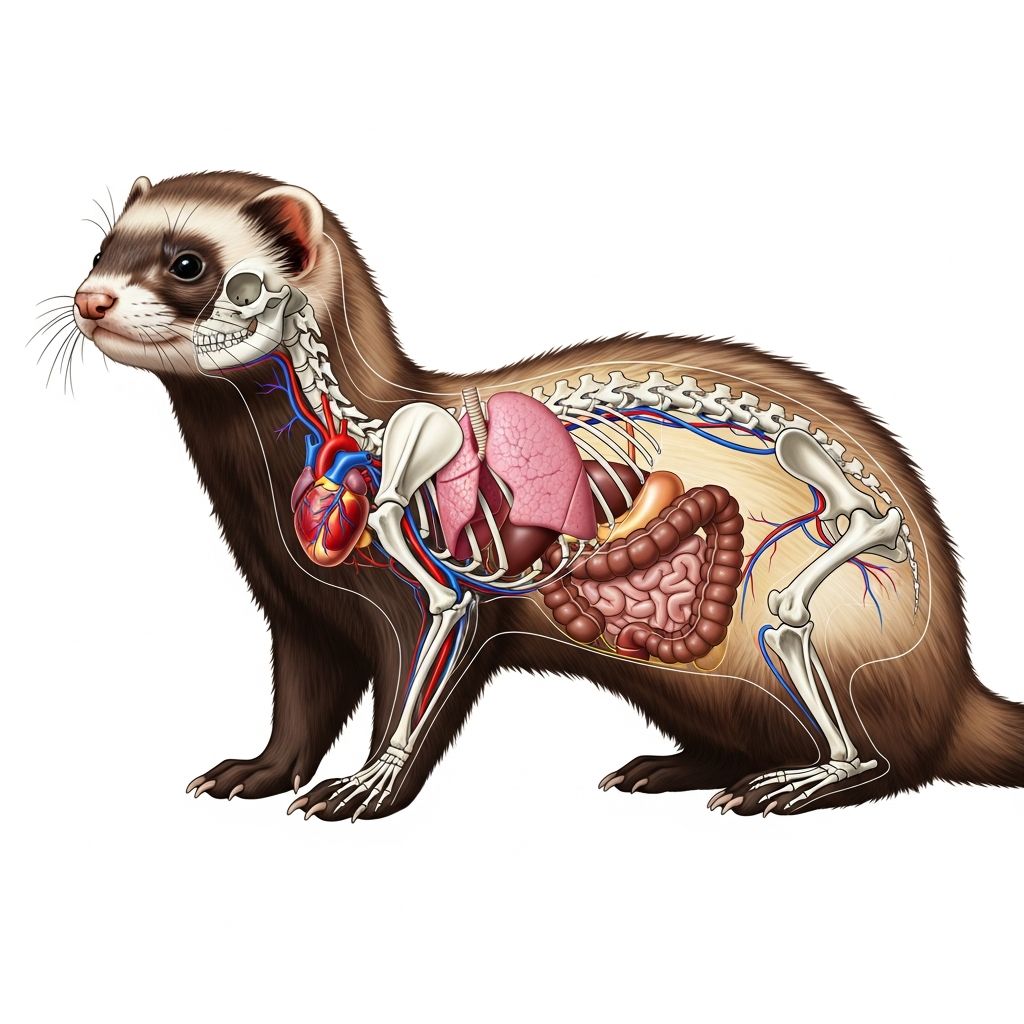
Ferrets possess a distinctive body plan adapted for agility and exploration, making them captivating companions for dedicated owners. Their mustelid heritage endows them with slender forms ideal for navigating tight spaces while maintaining robust strength.
Body Dimensions and Sexual Dimorphism
Domestic ferrets typically measure around 50 cm in total length, incorporating a tail of about 13 cm. Weight ranges from 0.7 to 2.0 kg, with males (hobs) reaching up to 2 kg and females (jills) up to 1.2 kg, showcasing clear sexual dimorphism where males are notably larger. This size difference influences their physical presence and care requirements.
| Characteristic | Male (Hob) | Female (Jill) |
|---|---|---|
| Average Weight | Up to 4 lb (2 kg) | Up to 2.5 lb (1.2 kg) |
| Body Length (incl. tail) | ~50 cm | ~50 cm (slightly smaller) |
Males exhibit heavier builds, particularly in the head, neck, and shoulders, reflecting secondary sexual traits. Females maintain a more compact frame, which can affect spaying considerations to prevent health issues.
Skeletal Framework and Muscular Power
The ferret’s skeleton features an elongated spine, especially in cervical and lumbar regions, paired with shortened legs suited for burrowing. This design provides exceptional flexibility, allowing contortions through narrow passages. Musculature is dense and powerful, disproportionate to body size, enabling prey capture and transport in confined areas. Intact males display firmer tone in jowls, chest, and shoulders compared to neutered individuals or females.
- Firm muscle feel across ribs, neck, and hips indicates health; avoid flabby or pendulous abdomens.
- Breeder ferrets show denser mass than early-altered ones, which may have reduced tone.
- Seasonal variations occur: winter weight includes more fat for insulation, while summer brings a leaner profile—both are normal if firm.
Skin, Coat Variations, and Grooming
Ferret fur comes in shades of brown, black, white, or mixes, with a sleek, dense undercoat for protection. Guard hairs provide weather resistance. Regular grooming prevents matting, as ferrets self-groom like cats but benefit from brushing to control shedding. Skin should remain supple without dryness, signaling good hydration and diet.
Sensory Adaptations for Hunting and Play
Vision and Visual Cues
Ferrets have binocular vision with horizontal slit pupils, optimized for detecting hopping prey motions like bouncing balls. Close-range acuity excels for body language reading, though distance vision is poorer, heightening interest in moving objects. They swivel eyes forward but turn heads sideways, using erect posturing—raised neck, pricked ears, extended whiskers—for scouting.
Other Senses
A keen sense of smell drives foraging, complemented by sensitive vibrissae for navigation. Hearing captures high frequencies, aiding play and predator avoidance. These senses fuel their inquisitive nature.
Movement Patterns and Locomotion Styles
Ferrets employ alternating four-legged gaits for normal travel, escalating to hopping or galloping during chases. Play involves repeatable patterns: chasing, ambushing, wrestling with inhibited bites, and vocalizations like dooking (excitement) or hissing (irritation). “Do the ferret flop” sees them slump low, inching with hind legs—echoing stalking—before bursting into action.
- Daily activity peaks at dawn and dusk (crepuscular), sleeping 14-18 hours but craving 1-2 hours of exercise.
- They relish running, jumping, climbing, and hiding; insufficient activity leads to obesity.
Daily Routines: Eating, Eliminating, and Resting
Ferrets consume multiple small meals totaling 200-300 kcal/kg daily, averaging 42-49 g dry matter per kg body weight. Winter intake rises 30% for fat storage, reversing in spring. They prefer high-quality, high-fat diets to match metabolism.
Defecation involves backing into corners, arching the back, raising the tail, and pulsing the abdomen—no burying, occasionally followed by anal dragging. Sleep favors warm, enclosed spots; provide hammocks or burrows.
Seasonal and Reproductive Influences
Day length regulates cycles: longer days reduce melatonin, boosting GnRH, LH, FSH, and sex hormones, heightening activity. Intact ferrets show pronounced behaviors; neutering moderates this but may soften muscle tone if early.
Care Essentials for Physical Health
Monitor vital signs: heart rate 200-250 bpm, respiration 30-40 breaths/min, temperature 100-103°F. Provide spacious habitats for burrowing and play, rotating toys to prevent boredom. Avoid soft rubber items to avert ingestion risks. Social groups suit most, unlike solitary wild ancestors.
| Vital Sign | Normal Range |
|---|---|
| Heart Rate | 200-250 bpm |
| Respiratory Rate | 30-40 breaths/min |
| Body Temperature | 100°F to 103°F |
Common Physical Indicators of Well-Being
- Bright eyes and clean ears: Alertness and hygiene.
- Firm abdomen: No bloat or weakness.
- Smooth gait: No limping from injury.
- Shiny coat: Nutritional balance.
Frequently Asked Questions (FAQs)
Are ferrets good for beginners?
Ferrets demand active engagement due to high energy; experienced owners best manage their exercise and mischief.
How much exercise do ferrets need?
At least 1-2 hours daily out-of-cage for running and play to prevent boredom and obesity.
Do ferrets make noise?
Yes, dooking signals joy, hissing warns—key to reading moods.
Can ferrets live alone?
Most thrive in pairs or groups, enjoying social play.
What diet suits ferrets best?
High-fat, meat-based kibble in small frequent meals; avoid obesity triggers.
Ideal Habitat Setup
Multi-level cages with shelves, tunnels, and litter boxes mimic natural burrows. Include hard toys, wheels, and hideouts. Temperature control prevents chilling, as ferrets lack thick insulation.
References
- Ferret Breed Standard — American Ferret Association. Accessed 2026. https://www.ferret.org/pdfs/general/BreedStandard.pdf
- FERRET BEHAVIOR — National Center for Biotechnology Information (PMC). 2020-04-07. https://pmc.ncbi.nlm.nih.gov/articles/PMC7158301/
- Description and Physical Characteristics of Ferrets — Merck Veterinary Manual. Recent update. https://www.merckvetmanual.com/all-other-pets/ferrets/description-and-physical-characteristics-of-ferrets
- Ferret Biology and Characteristics — Wikipedia (sourced from primary refs). Ongoing. https://en.wikipedia.org/wiki/Ferret
- 11 Ferret Facts: What to Know About Ferrets as Pets — PetMD. Recent. https://www.petmd.com/ferret/care/evr_ft_first_ferret
Similar Articles








Read full bio of Sneha Tete