

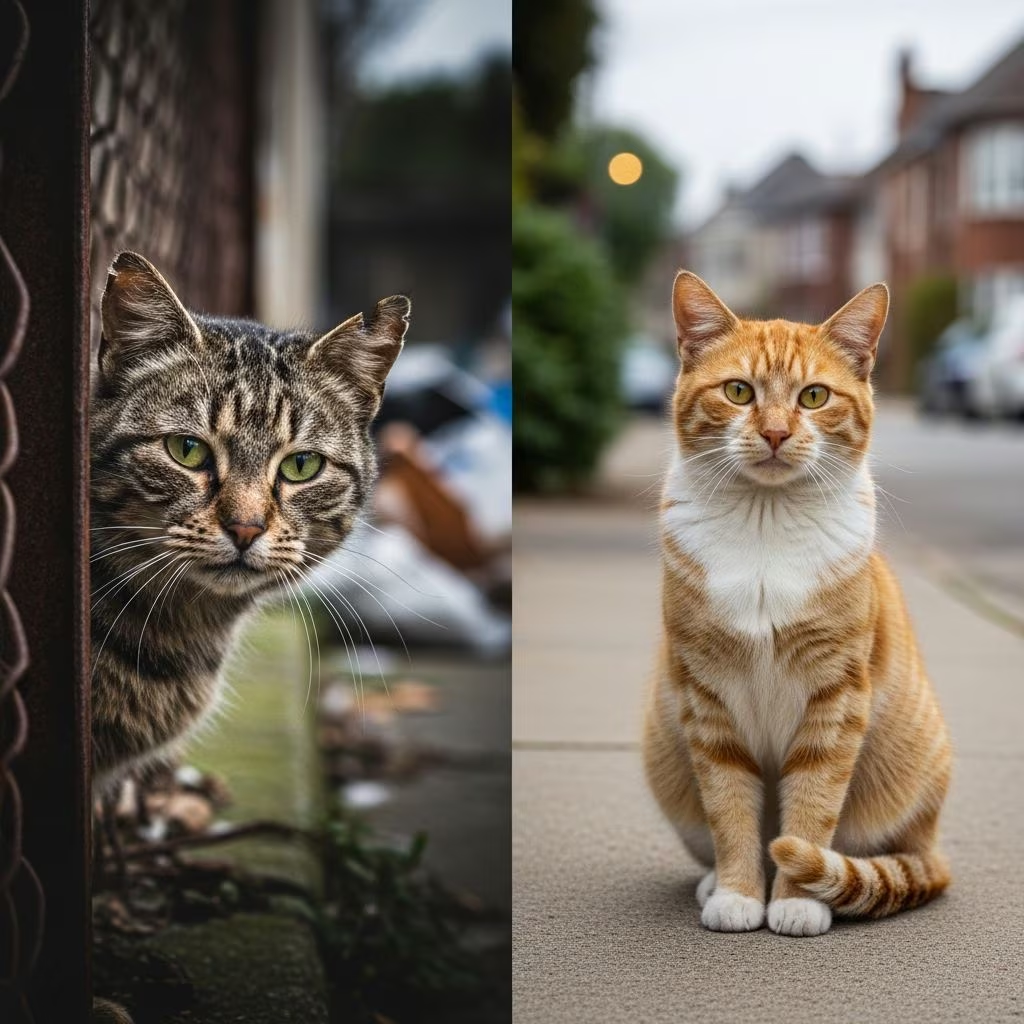
Feral vs Stray Cats: Understanding the Crucial Differences
When you encounter a cat on the streets, it can be challenging to determine whether the animal is a stray cat that has lost its home or a feral cat that has never known one. While both types of cats live outdoors, the differences between them are substantial and affect how they should be approached, handled, and cared for. Understanding these distinctions is essential for anyone who wants to help outdoor cats in their community.
A stray cat is a domestic cat that has been socialized to people at some point in her life but has left or lost her indoor home and most of her human contact and dependence. In contrast, a feral cat is a cat who has either never had any contact with people or her contact with people has diminished significantly over time. She is not socialized to people and has reverted to wild behavioral patterns. The key difference lies in their socialization history and current behavioral patterns.
Behavioral Characteristics
The most telling differences between feral and stray cats manifest in their behavior. Understanding these behavioral distinctions can help you identify which type of cat you are encountering and determine the most appropriate way to interact with it.
Interaction with Humans
Stray cats typically retain some comfort around humans and may approach people, especially at meal times. They are more likely to make eye contact, vocalize in response to human interaction, and maintain many of the domestic characteristics familiar to cat owners. A stray cat may meow, purr, rub against your legs, or even allow you to pet her.
Feral cats, on the other hand, usually avoid direct human interaction. They won’t meow or purr at humans and instead might hiss or spit when approached. Feral cats have well-honed survival instincts and are expert hunters. They see humans as a potential threat rather than a source of comfort or food. Even when a feral cat becomes accustomed to a regular feeder, they maintain their distance and are unlikely to accept direct contact.
Body Language and Movement
Body language provides crucial clues about whether a cat is stray or feral. Stray cats often walk and move like housecats, such as walking with their tails held up, which signals friendliness and confidence. They maintain an upright posture and appear relatively comfortable in their surroundings.
Feral cats typically exhibit different body language. They may crawl, crouch, and stay low to the ground, protecting their body with their tail. Their movements are cautious and calculated, designed to maintain distance and escape routes. When frightened, a feral cat will show signs of aggression including ears flattened back and dilated eyes.
Eye Contact and Vocalization
A stray cat will probably look at you, blink, or make direct eye contact. This is a sign that the cat has some comfort level with human presence. Stray cats are also vocal and may meow, answer your voice, or vocalize to express their needs.
Feral cats rarely make eye contact and are generally silent around humans. They won’t meow, beg, or purr in response to human interaction. This silence is a deliberate survival strategy that keeps them unnoticed and safe from potential threats.
Activity Patterns
Stray cats are typically visible primarily during the daytime and may approach homes, porches, or cars. Feral cats are more likely to be nocturnal or active during dawn and dusk, preferring to avoid human activity. This difference reflects their respective comfort levels with human presence and their survival strategies.
Social Structures
The way cats organize themselves socially also differs between strays and ferals. Stray cats might live alone but are often seen in the company of other cats, especially if there is a reliable food source nearby. They retain some of their domestic preferences for living arrangements and may tolerate other cats in their vicinity.
Feral cats tend to form sophisticated colonies around food sources. These colonies have established territories and social hierarchies that facilitate their survival as a group. Feral colony members work together to protect resources and offspring, creating complex social networks that optimize their chances of survival in the outdoor environment.
Physical Appearance
While appearance alone is not always a reliable indicator, it can provide additional clues about whether a cat is stray or feral. Since stray cats once had a home, they might appear cleaner or better groomed initially. However, over time without proper care, stray cats can look scruffier and less maintained than they did in their former homes.
Feral cats are constantly exposed to the elements and lack the care provided in a domestic setting. They might look noticeably unkempt, with rough or matted fur, visible scars from fighting, or other signs of outdoor survival. Male feral cats often have big heads and thick necks, muscular bodies, and battle scars that reflect their outdoor lifestyle. They may also have “stud tail”—hair loss, greasiness, or bumps at the base of the tail due to intact male hormones. The spiky coat appearance of some male ferals results from high testosterone levels and less time spent grooming compared to domestic cats.
Comparative Behavior Table
| Characteristic | Stray Cats | Feral Cats |
|---|---|---|
| Approach to Humans | May approach people, houses, porches, or cars | Will not approach and will seek hiding places to avoid people |
| Social Living | Will likely live alone, not part of a group | May belong to a colony |
| Body Language | Walk with tail up like a housecat—sign of friendliness | Crawl, crouch, stay low to ground, protect body with tail |
| Eye Contact | Will probably look at you and make eye contact | Unlikely to make eye contact |
| Vocalization | May be vocal, meow, or “answer” your voice | Won’t meow, beg, or purr |
| Activity Time | Visible primarily during the daytime | More likely to be nocturnal |
| Physical Appearance | Will probably be dirty or disheveled | Clean, well-kept coat; may have scars from fighting |
| Cage Behavior | May come to front of cage; may eventually rub against cage | Likely stay in back and retreat as far back as possible |
Special Considerations in Stressful Situations
It’s important to note that determining whether a cat is feral or stray becomes more complicated in frightening or stressful environments, such as a trap or a shelter. A friendly stray cat may behave like a feral cat when frightened, avoiding people and possibly showing aggression to avoid being touched. This defensive behavior is a fear response, not an indication that the cat is truly feral. Many cats seem feral in traps but are simply afraid.
When assessing cats in confined or new situations, look for additional behavioral clues. A stray cat may relax over time as it realizes the environment is safe, while a feral cat will remain tense and unsocial. Stray cats may eventually investigate toys or food placed near the cage and respond to household sounds like the opening of cat food cans. Feral cats will likely ignore all people and toys, and may not show interest in food or respond to familiar household sounds.
Potential for Domestication
One of the most important differences between stray and feral cats relates to their potential for domestication. A stray cat can, under the right circumstances, become a pet cat once again. Stray cats that are reintroduced to a home after living outdoors may require a period of time to readjust; they may be frightened and wary after spending time outside away from people. However, their previous socialization to humans provides a foundation for building trust and reestablishing domestic living.
A feral cat is not likely to ever become a lap cat or enjoy living indoors. However, young kittens born to feral cats can be socialized at an early age and adopted into homes. Kittens possess the critical socialization window to learn comfort around humans, whereas adult feral cats have passed this developmental period and cannot easily reprogram their behavioral responses to humans.
How to Safely Interact with Outdoor Cats
Distinguishing between feral and stray cats is crucial for safe interaction. If you encounter a cat that is friendly, approaches you without fear, rubs against your legs, and lets you pet it or pick it up, you can be reasonably certain it is not feral. This cat could be the neighbor’s pet, a lost stray, or a semi-feral cat that has learned to trust its regular feeder.
If a cat won’t let you get near it, hisses when you approach it while cornered, and generally avoids contact, it is most likely a feral cat. In these situations, it is wise to be cautious and avoid trying to touch or trap a feral cat without proper training. Feral cats perceive such attempts as threats and may injure themselves or you in their panic to escape.
Humane Management: TNR Programs
Trap-Neuter-Return (TNR) is an effective and humane method to manage and reduce feral cat populations. TNR programs involve humanely trapping feral cats, taking them to a veterinarian for spaying or neutering and vaccination, and then returning them to their territory where they continue to live. This approach prevents reproduction, reduces population growth, and improves the health and behavior of feral colonies. TNR is recognized as a more humane and effective alternative to extermination or indefinite confinement.
Frequently Asked Questions
Q: Can a feral cat ever become a pet?
A: Adult feral cats rarely become pets, as they have not been socialized to humans during their critical developmental period. However, young kittens born to feral mothers can be socialized if they receive gentle, consistent human interaction during their first 8-12 weeks of life. These kittens can then be adopted as domestic pets.
Q: Should I try to catch a stray cat I find?
A: If you encounter a friendly stray cat, you can attempt to help it by offering food and water, and potentially contacting local animal shelters or rescue organizations. However, if you’re unsure about the cat’s temperament, it’s safer to contact professionals who can assess the situation and provide appropriate assistance.
Q: How can I help feral cats in my neighborhood?
A: You can help feral cats by providing food and shelter, supporting or organizing TNR programs, and working with local animal welfare organizations. Feral cats benefit from consistent care, but they should not be subjected to stressful situations like trapping without professional assistance.
Q: What should I do if a stray cat won’t leave my property?
A: If a stray cat takes up residence on your property, contact your local animal control or a cat rescue organization. They can help determine if the cat is lost and attempt to reunite it with its owner, or assist with finding it a suitable home or shelter placement.
Q: Are feral cats dangerous?
A: Feral cats are not inherently dangerous to humans in normal circumstances. They typically avoid humans and only become aggressive if they feel cornered or threatened. However, like any wild animal, they should be treated with respect and caution, and direct contact should be avoided.
Q: Can stray and feral cats live together?
A: While both may live in outdoor environments, they have different behavioral patterns. Stray cats may or may not join feral colonies, depending on circumstances and the availability of resources. Some stray cats prefer solitary living, while others may integrate into existing feral cat colonies.
References
- Feral vs. Stray: Understanding the Differences — Wired Whisker. 2025. https://www.wiredwhisker.com/blog/feral-vs-stray
- Feral or Stray – An Important Difference — Feral Cat Focus. 2025. https://feralcatfocus.org/feral-or-stray/
- Feral and Stray Cats — An Important Difference — The Meow Mission. 2017. https://www.themeowmission.org
- How to Distinguish a Stray Cat from a Feral Cat or a Wildcat — Almo Nature. 2025. https://blog.almonature.com/en-gb/how-to-distinguish-stray-cat-from-feral-cat-wildcat
- A Feral Cat Or A Stray Cat? How To Tell The Difference — The Cat Site. 2025. https://thecatsite.com/c/a-feral-cat-or-a-stray-cat-how-to-tell-the-difference/



