

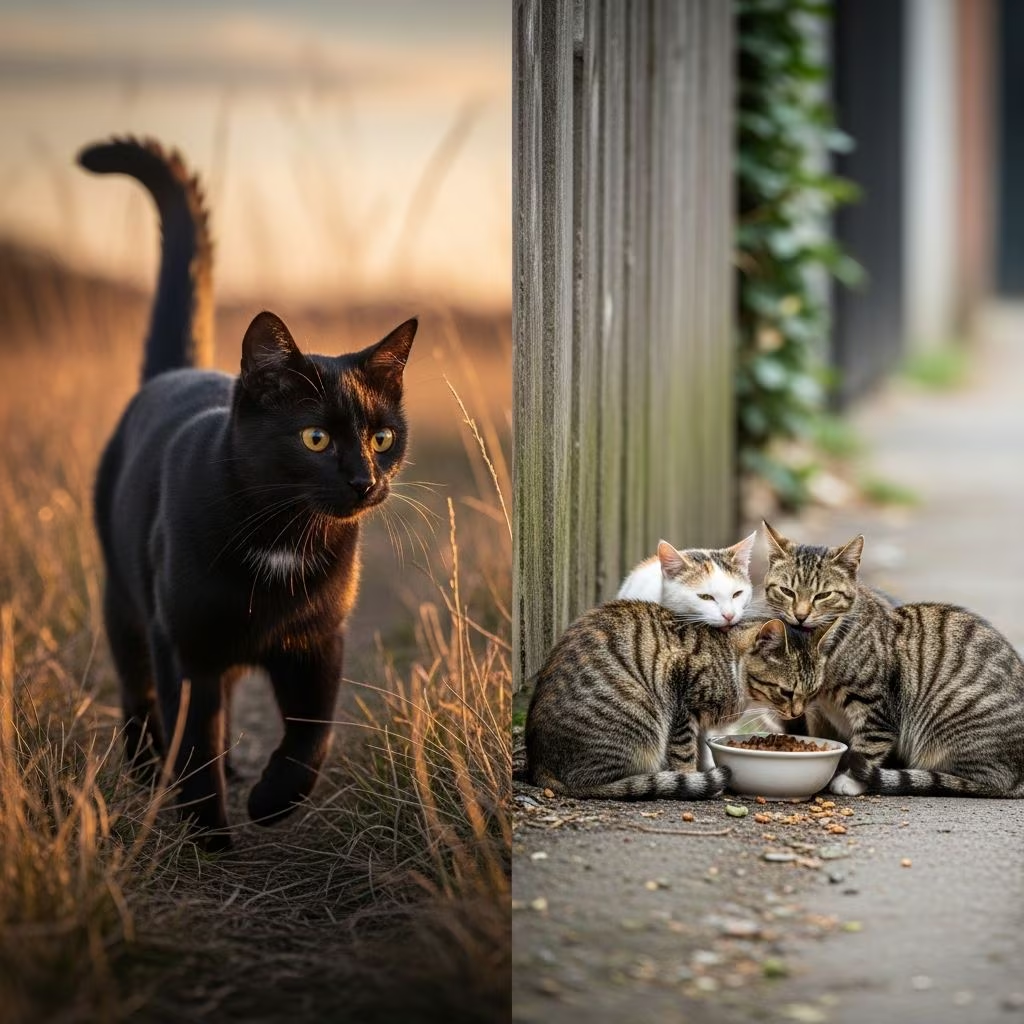
Feral cats primarily hunt alone rather than in groups, relying on individual stealth to capture small prey like rodents, with food sharing occurring mostly between mothers and their kittens in colony settings.
The Social World of Feral Cats
Feral cats, descendants of domesticated cats living independently outdoors, exhibit complex social behaviors that balance solitude with group living. Unlike lions or wolves that hunt cooperatively, feral cats form loose colonies centered around related females and their offspring. These groups provide mutual benefits like shared nursing and grooming, strengthening bonds through scent exchange and allogrooming. Adult males typically remain on the periphery, roaming larger territories for mating opportunities while tolerating limited interactions with the core group.
Colonies vary in size and composition, often stabilizing around reliable food sources such as urban trash or rural prey abundance. Females recognize colony members through familiar scents and behaviors, directing aggression toward outsiders to protect resources. This social tolerance reduces internal conflicts, fostering a cooperative environment for kitten-rearing despite the cats’ solitary predatory instincts.
Hunting Strategies: Independence Over Teamwork
Observations confirm that feral cats overwhelmingly prefer solo hunting expeditions, especially at dawn and dusk when rodents and small mammals are active. Their typical prey—small rodents requiring multiple catches daily—makes group hunting inefficient, as sharing tiny kills offers little advantage. Stealth, patience, and ambush tactics define their approach, with cats waiting near burrows rather than chasing birds, which demand more energy.
- Solo Predation: Each cat claims overlapping hunting zones but captures prey independently to meet personal caloric needs.
- Timing: Crepuscular activity peaks align with prey vulnerability, minimizing competition.
- Efficiency: Studies show rodents comprise the bulk of hunted meals, far outpacing birds or insects.
In high-density areas, cats may inadvertently benefit from group vigilance against predators like coyotes, but coordinated hunts remain absent. GPS tracking reveals individual movement patterns, underscoring their self-reliant foraging style.
Diets and Scavenging Dominance
While capable hunters, feral cats prioritize scavenging over active predation when possible. Human-generated waste, from garbage bins to discarded restaurant scraps, forms the dietary mainstay, proving easier and safer than pursuit. This opportunism sustains populations in urban fringes, where rodents attracted to trash provide secondary hunting targets.
| Food Source | Preference Level | Examples |
|---|---|---|
| Scavenged Human Food | High | Trash, compost, leftovers |
| Rodents | Medium-High (when hunting) | Mice, rats |
| Birds/Insects | Low | Sparrows, beetles |
| Other Mammals | Occasional | Squirrels, voles |
Rural ferals lean more on wild prey, adapting to wooded habitats with increased hunting reliance. Nutritional flexibility ensures survival across environments, though over-reliance on scavenging can alter natural behaviors.
Food Sharing: A Maternal Exception
Rarely do feral cats share kills beyond queen-kitten pairs. Mothers regurgitate or directly provide prey to weanlings, teaching vital skills while sustaining growth. In colonies, related females may allonurse, but adult food exchanges are minimal, limited to occasional grooming-reinforced tolerance around communal sites. Dominant males have been noted sharing scraps with colony kittens, possibly to curry favor with queens, but this is not normative.
Scientific analysis attributes this scarcity to prey size: unlike large-game hunters, cats cannot divide rodents effectively. Social bonds prioritize access to future resources over immediate splits, preserving individual autonomy.
Environmental Influences on Behavior
Habitat shapes feral dynamics profoundly. Urban cats near human activity scavenge more, exhibiting bolder scavenging amid trash abundance, while rural counterparts hone hunting prowess in prey-rich wilds. Predator presence, like coyotes, prompts heightened caution, reducing cat densities in overlapping zones—studies note feral occurrences drop below 2% in coyote territories.
Territorial marking via urine, scratches, and rubs delineates zones, with males patrolling expansively and females defending natal areas. Resource scarcity spikes aggression, particularly among maturing males ousted from colonies.
Colony Life: Bonds and Hierarchies
Within colonies, females form the nucleus, reciprocally caring for litters through nursing and protection. Allogrooming and rubbing reinforce unity, while males engage sporadically—intact toms fight for mates but may groom or intervene in kitten squabbles. Aggression stays low internally due to kinship, erupting mainly at borders against intruders.
- Female Core: Related queens collaborate on rearing.
- Male Role: Peripheral, focused on mating and territory.
- Kitten Integration: Communal care accelerates survival learning.
Distinguishing Strays from Ferals
Strays, once socialized pets, seek human interaction, meowing for food unlike elusive ferals. Prolonged isolation can feralize strays, blurring lines, but sociability aids adoptability. Feral kittens under 8 weeks remain tameable, offering TNR (Trap-Neuter-Return) pathways.
Management Implications
Understanding these patterns informs humane strategies. TNR stabilizes populations by curbing breeding without disrupting ecology. Feeding stations mimic natural scavenging but risk coyote attraction; targeted placement near colonies enhances efficacy. Wildlife tech like collars tracks movements, refining interventions.
Frequently Asked Questions (FAQs)
Do feral cats ever hunt together?
No, hunting remains solitary; colonies aid survival indirectly through safety, not coordination.
What percentage of feral cat diet is scavenged?
Most rely heavily on garbage, hunting only when necessary—exact figures vary by location.
Can feral cats be socialized?
Kittens yes; adults rarely, though strays often can.
How do colonies form?
Around food/shelter, starting with related females expanding via tolerant integration.
Are feral cats a threat to wildlife?
They target rodents primarily; impacts depend on habitat, mitigated by TNR.
References
- Unlocking the Secrets of Feral Cat Behavior Through Scientific Insights and Observation — GM Tracking. 2023. https://www.gm-tracking.com/blog/feral-cat-behavior-scientific-insights-and-observation/
- Do Feral Cats Hunt In Groups Or Share Their Kill? Facts & 3 Ways to … — Catster. 2023-10-15. https://www.catster.com/cat-behavior/feral-cats-hunt-in-groups-or-share-their-kill/
- Social organization in the cat: A modern understanding — PMC (NCBI). 2024-01-15. https://pmc.ncbi.nlm.nih.gov/articles/PMC10822437/
- Biology & Behavior of Cats – What they Eat & More — Alley Cat Allies. 2023. https://www.alleycat.org/resources/biology-and-behavior-of-the-cat/
- Life in a Feral Cat Colony — Cats on Broadway Veterinary Hospital. 2022. https://www.catsonbroadwayhospital.com/life-feral-cat-colony/
- Feral Cats — UC IPM (UCANR). 2024. https://ipm.ucanr.edu/home-and-landscape/feral-cats/pest-notes/



