

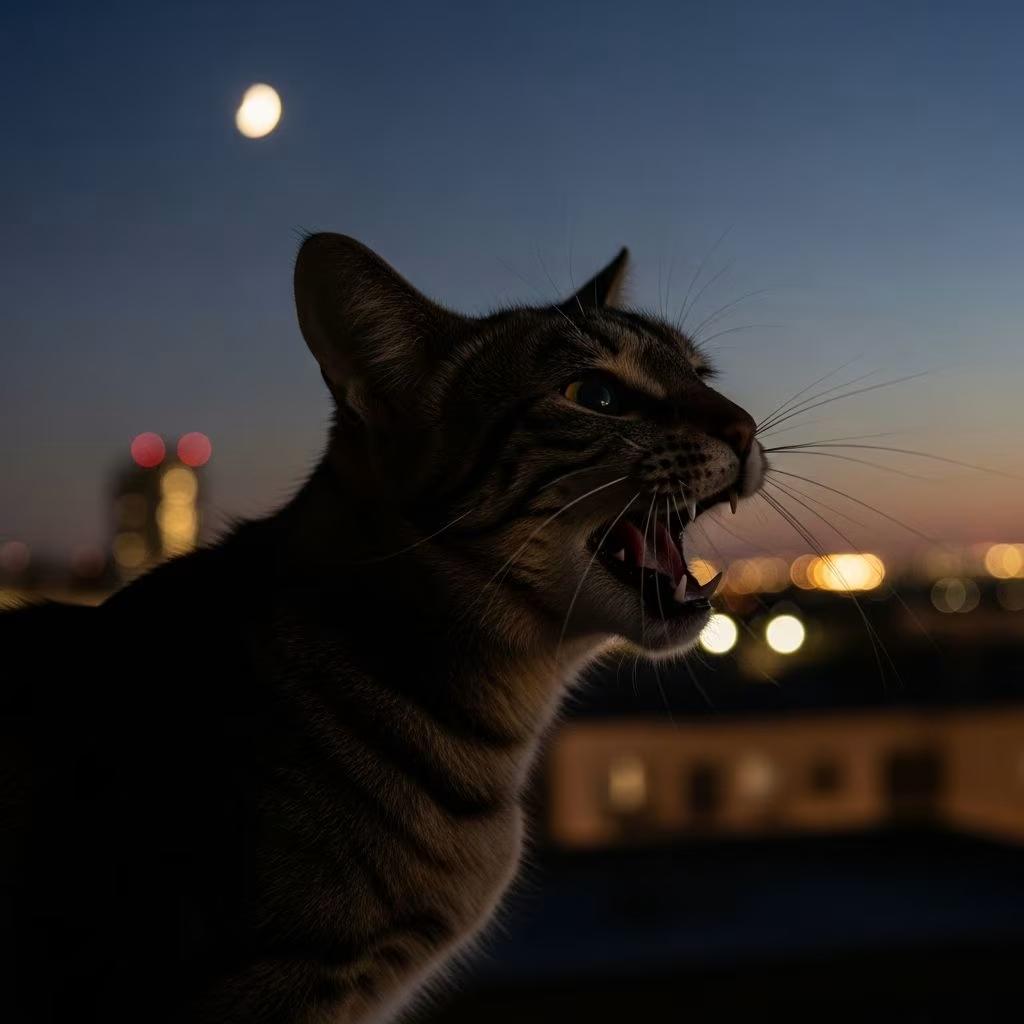
Feral cats produce piercing cries at night primarily due to mating instincts, hunger, territorial disputes, and survival needs in their challenging environment. These vocalizations serve as essential communication tools in the wild, echoing through neighborhoods and disrupting human sleep.
The Biology of Nocturnal Vocalizations in Feral Cats
Cats are naturally crepuscular, meaning they are most active during dawn and dusk, with heightened activity extending into the night. This evolutionary trait equips them with excellent night vision, thanks to a reflective layer in their eyes called the tapetum lucidum, which enhances low-light visibility. Feral cats, living without human schedules, amplify these instincts, leading to frequent yowling after dark.
In the absence of domestic routines, feral populations synchronize their behaviors around natural light cycles. Males patrol larger territories at night, announcing their presence with deep growls and howls, while females signal receptivity during estrus. This biological imperative peaks in warmer months, turning quiet evenings into symphonies of feline calls.
Primary Triggers for Nighttime Crying
Several interconnected factors drive these sounds, each rooted in the feral lifestyle’s demands.
Mating Instincts and Breeding Seasons
The most prominent cause is reproduction. Unneutered females enter heat cycles multiple times yearly, emitting loud, trilling cries to attract mates. Males respond with aggressive yowls, often leading to fights. These calls can persist for hours, especially in dense colonies where competition is fierce.
- Females in heat: Produce urgent, rising tones to solicit males.
- Males competing: Use low-pitched screams to deter rivals.
- Seasonal peaks: Intensify from spring through fall in temperate climates.
Hunger and Resource Scarcity
Feral cats scavenge inconsistently, leading to hunger-driven meows directed at potential human providers. Nighttime foraging yields slim pickings, prompting louder pleas near homes where garbage or handouts are anticipated.
Unlike house cats with scheduled meals, ferals must vocalize to beg effectively, associating human lights with food opportunities.
Territorial Claims and Social Dynamics
Nighttime is prime for defending turf. Feral toms mark boundaries with scent and sound, yowling to warn intruders. In managed colonies, hierarchy disputes erupt audibly, as cats establish dominance without physical contact.
Distress from Injury or Loneliness
Isolated or wounded ferals cry out for aid, mimicking distress signals that might draw colony mates. Kittens separated from mothers or adults facing predators use high-pitched wails.
Health-Related Causes of Excessive Vocalizing
Beyond behavioral norms, medical issues amplify nighttime noise in feral cats. Conditions like hyperthyroidism or kidney disease cause restlessness, increased thirst, and hunger, manifesting as persistent meowing.
| Condition | Symptoms | Impact on Vocalization |
|---|---|---|
| Hyperthyroidism | Weight loss, hyperactivity | Restless pacing and yowling |
| Kidney Disease | Thirst, frequent urination | Nocturnal wandering cries |
| Pain/Injury | Limping, hiding | Sharp distress calls |
| Cognitive Dysfunction (Seniors) | Disorientation | Confused meowing |
These ailments are common in strays due to poor nutrition and untreated illnesses, warranting veterinary intervention where possible.
Environmental Influences on Feral Cat Noise
Urban settings exacerbate crying through artificial lights mimicking dawn, stray dog threats, or vehicle traffic disrupting hunts. Seasonal changes, like cold snaps reducing food availability, intensify survival cries.
High feral densities in suburbs lead to more interactions, amplifying collective sound levels compared to rural areas.
Humane Strategies to Mitigate Nighttime Disturbances
Addressing the root causes humanely benefits both cats and residents.
Implement Trap-Neuter-Return (TNR) Programs
TNR reduces mating cries by sterilizing cats, curbing population growth and hormonal behaviors. Community efforts have silenced neighborhoods effectively.
- Partner with local rescues for trapping.
- Post-surgery, return cats to familiar territories.
- Monitor ear-tipping for identification.
Provide Consistent Food Sources
Scheduled evening feedings at managed stations lessen hunger cries. Use dry food timed to last through the night, avoiding dependency.
Create Safe Shelters
Insulated boxes with straw bedding offer refuge, reducing distress from weather or predators, thus quieting fearful yowls.
Environmental Modifications
Motion-activated deterrents like water sprays discourage loitering near homes without harm. Fencing prevents access to yards.
Comparing Feral vs. Domestic Cat Night Cries
| Aspect | Feral Cats | Domestic Cats |
|---|---|---|
| Main Causes | Mating, hunger, territory | Boredom, routine, health |
| Volume/Intensity | High, competitive | Variable, attention-seeking |
| Solutions | TNR, feeding stations | Play, vet checks, enrichment |
| Frequency | Seasonal peaks | Daily patterns |
While overlapping, feral cries stem from survival, contrasting domestic ones tied to human interaction.
Community and Legal Considerations
Local ordinances vary on feeding strays; check regulations before acting. Collaborate with animal control or nonprofits for sustainable management, avoiding relocation that stresses cats.
Educating neighbors fosters collective TNR adoption, yielding long-term quiet.
FAQs
Why do feral cats cry louder at night than during the day?
They are crepuscular hunters, more active in low light, using cries for communication when human activity is minimal.
Will feeding them stop the crying?
It reduces hunger cries short-term but pair with TNR for mating-related noise.
Are these cats dangerous at night?
Generally not; cries signal territory, not aggression toward humans.
How long does mating season last?
Multiple cycles from spring to fall, varying by climate.
Can I adopt a feral cat that’s crying?
Socialize gradually if young; adults often remain wild.
References
- Why do stray cats cry so loudly at night — Dial A Vet. 2023. https://www.dialavet.com/vet-answers/post/stray-cats-crying-at-night-49090
- Why Your Cat Meowing at Night & How to Prevent It — Purina UK. 2024. https://www.purina.co.uk/articles/cats/behaviour/training/cat-meowing-at-night
- 5 Reasons Your Cat Won’t Stop Meowing At Night & How To Stop It — YouTube (Jackson Galaxy). 2022-10-15. https://www.youtube.com/watch?v=1gWWnz8IhHA
- Meowing and Yowling — Alley Cat Rescue (saveacat.org). 2023. https://www.saveacat.org/meowing-and-yowling.html
- Meowing and Yowling — ASPCA. 2024. https://www.aspca.org/pet-care/cat-care/common-cat-behavior-issues/meowing-and-yowling



