

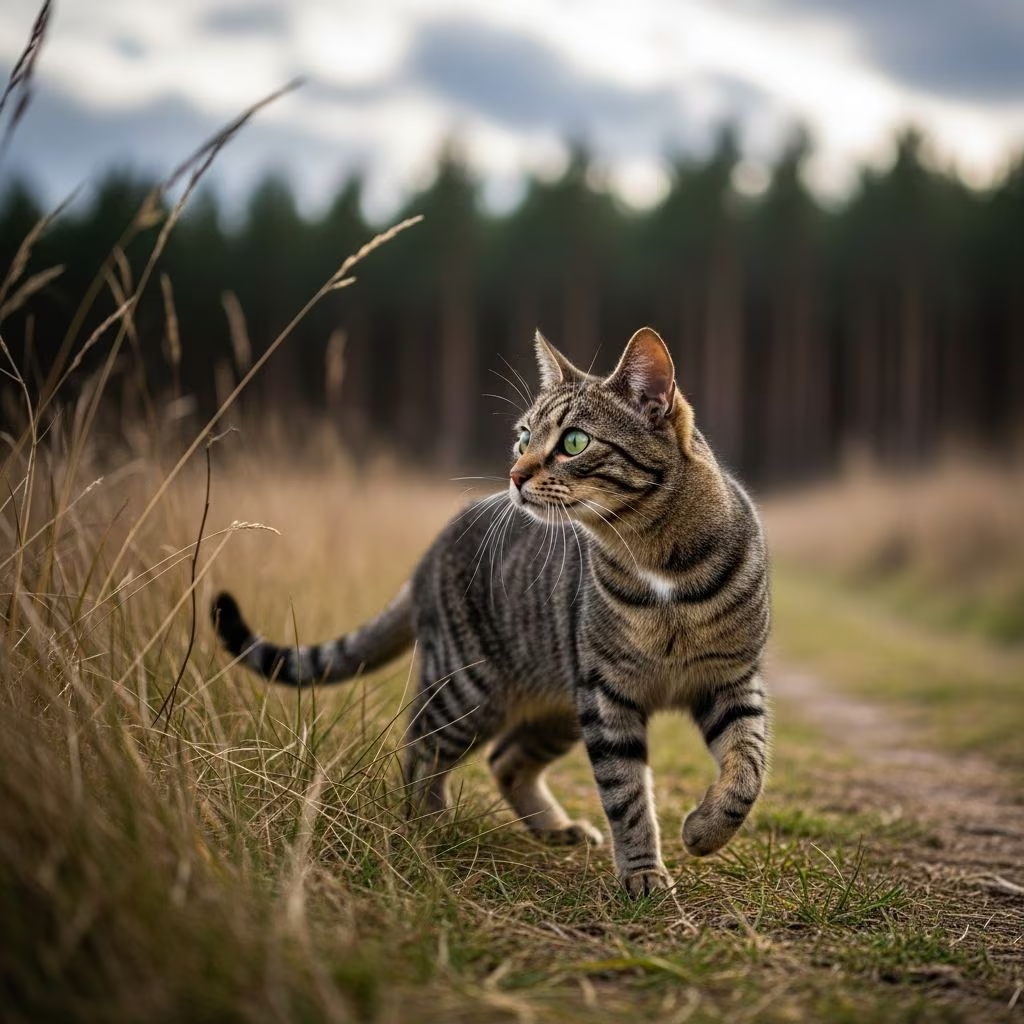
Feral mother cats exhibit complex maternal behaviors that differ significantly from their domestic counterparts. One of the most observable behaviors is their tendency to relocate their litters multiple times during the early weeks of a kitten’s life. This behavior, while sometimes concerning to human observers, reflects deeply ingrained survival instincts and protective mechanisms that have evolved over thousands of years. Understanding the motivations behind these relocations provides insight into the remarkable adaptability of feral cats living in challenging environments.
The Foundation of Maternal Instinct in Feral Cats
The maternal behavior of feral cats is driven by powerful biological imperatives. When a feral cat gives birth, her primary focus becomes ensuring the survival and safety of her offspring. This instinctive drive compels her to continuously evaluate her environment and make adjustments that she perceives will benefit her kittens. Unlike domestic cats who benefit from the protection and resources provided by human households, feral mothers must navigate a landscape filled with genuine threats while simultaneously meeting the nutritional and developmental needs of their young.
This maternal determination manifests in various ways, but relocation of the litter remains one of the most frequently observed protective strategies. A feral mother cat will assess whether her current nesting location meets her standards for cleanliness, security, temperature regulation, and proximity to food sources. If any of these factors fall short of her expectations, she will initiate the laborious process of moving her kittens to what she perceives as a superior location.
Environmental Triggers for Kitten Relocation
Feral cats are highly attuned to environmental conditions and will respond rapidly to changes that they interpret as threats or inconveniences. Several specific environmental factors commonly prompt mother cats to relocate their litters:
- Nesting site deterioration: When bedding becomes soiled or the nest loses its structural integrity, mother cats recognize these changes as problems requiring action
- Temperature fluctuations: Kittens cannot regulate their own body temperature effectively, so mothers seek locations that provide optimal warmth or cooling depending on seasonal conditions
- Excessive moisture or dampness: Wet conditions promote the growth of parasites and bacteria, compelling mothers to find drier alternatives
- Inadequate privacy: Cats are solitary animals by nature, and mothers become stressed when their nesting sites lack sufficient seclusion
The presence of excessive noise from traffic, human activity, or machinery can significantly stress a feral mother cat. Research on feline behavior demonstrates that cats have heightened sensitivity to sudden or loud sounds, which trigger their fight-or-flight responses. When a mother perceives her nesting site as too exposed to these auditory disturbances, relocation becomes her solution.
Safety Concerns and Predator Avoidance
The wild environment presents numerous predatory threats to vulnerable kittens. A feral mother cat’s ability to detect and respond to these dangers often determines whether her offspring will survive to independence. When a mother senses the presence of predators—whether actual or potential—she will move her litter to what she determines is a safer location.
These perceived threats might include the presence or scent of larger animals such as dogs, foxes, coyotes, or other predatory cats. Even the presence of unfamiliar humans can trigger relocation instincts, particularly if the mother has had negative experiences with people in the past. Additionally, if a mother cat has successfully defended her kittens against a threat at one location, she may choose to relocate preemptively rather than risk a future encounter.
The timing of relocation often coincides with when kittens reach 3 to 4 weeks of age. At this developmental stage, kittens begin requiring more space and resources as they transition from exclusive milk consumption to supplementary solid food. The original nesting site may no longer provide adequate room for growing animals, necessitating relocation to a larger territory.
Resource Availability and Proximity to Food
A critical factor influencing relocation decisions involves the availability and accessibility of food and water sources. Feral mothers must balance the need to hunt and forage with the requirement to remain close enough to their kittens to protect and nurse them. When a mother discovers a reliable food source far from her current nesting location, she faces a difficult calculation: maintain her current position or relocate closer to the resource.
Many feral mothers opt for relocation when they identify abundant food sources nearby. This strategy reduces the distance she must travel to hunt, allowing her to check on her litter more frequently and respond quickly to any threats. In urban environments, this might involve moving closer to garbage areas, restaurants with accessible food waste, or locations where sympathetic humans leave out provisions.
Water access represents another critical consideration. Nursing mother cats have significantly increased water requirements compared to non-lactating cats. If a nesting location lacks convenient access to clean water, a mother cat will actively seek a new site closer to water sources such as rain puddles, streams, or outdoor water bowls left by residents.
Nest Quality and Hygiene Standards
Feral cats maintain surprisingly high standards of cleanliness, particularly regarding their nesting areas. A mother cat instinctively understands that dirty environments harbor parasites, bacteria, and pathogens that threaten kitten health. If the original nesting location becomes soiled with fecal matter, urine, or other debris, the mother perceives this as an unacceptable living condition.
The frequency of relocation often correlates directly with environmental conditions. In locations with poor sanitation, limited shelter options, or high predation risk, feral mothers may relocate their litters multiple times within a single week. Conversely, when a mother finds a clean, secure, well-provisioned location, she may remain in place for the entire period until her kittens are weaned.
Some feral mothers demonstrate remarkable capacity for recognizing improved conditions. They may actively seek out superior nesting locations such as heated cat houses in winter, protected spaces under dense bushes, or accessible buildings where trusted humans allow entry. The ability to identify and utilize these superior locations demonstrates cognitive flexibility and learned behavior.
Developmental Milestones and Changing Needs
As kittens mature through their early weeks, their requirements change substantially. Newborn kittens require constant warmth and cannot thermoregulate independently. As they approach 3 to 4 weeks of age, they begin exploring their environment and require more space for physical development. By weeks 6 to 7, kittens are learning adult movement patterns and beginning the socialization process critical for their later success as independent hunters.
These developmental changes necessitate corresponding adjustments in nesting location and conditions. A cozy, confined space perfect for newborns becomes cramped and unsuitable for larger, more active kittens. Mother cats respond to these changing needs by relocating to larger spaces that provide room for the kittens to explore, play, and develop their emerging motor skills.
Geographic Limitations and Territory Boundaries
While feral cats may relocate their litters multiple times, they typically do not move far from their established territories. Most relocations occur within the same yard or to adjacent properties. Feral mothers avoid transporting their kittens to unfamiliar territory where they lack knowledge of resources, escape routes, and established danger zones.
This territorial constraint reflects the cats’ understanding that their local area represents known quantities. They have identified food sources, water access, shelter options, and relative safety levels. Moving kittens far beyond these familiar boundaries introduces unacceptable risk, as the mother loses her informational advantage about the environment.
Scenarios When Mother Cats Abandon Litters
While relocation is the norm, there are circumstances where feral mothers may abandon their kittens entirely. Understanding these scenarios helps explain situations where orphaned feral kittens appear without a mother:
Maternal Instinct Failure
First-time mothers occasionally experience failures in their instinctive responses. Some may enter estrus again shortly after birth, triggering conflicting hormonal signals that can result in abandonment of the litter. This biological dysregulation, while tragic for the kittens, can occur despite normal maternal behavior patterns in subsequent pregnancies.
Forced Separation and Disorientation
Feral mothers may become separated from their litters due to circumstances beyond their control. Sudden weather events, loud noises that trigger panic responses, or territorial conflicts with other animals can cause mothers to flee. Once separated, if the mother cannot locate her litter or becomes trapped, she cannot reunite with her kittens regardless of her maternal motivation.
Human Intervention and Relocation
Trapping and relocation efforts by animal control or rescue organizations can inadvertently separate mothers from their litters. When a mother cat is relocated away from her nesting site, she loses the ability to return to her kittens.
Physical Injury and Illness
The wild environment exposes feral cats to numerous hazards. Injuries from fights with other animals, vehicle collisions, toxic exposures, or predator attacks can incapacitate a mother cat and prevent her from returning to her kittens. Similarly, when mother cats become ill and lack the energy to hunt and nurse simultaneously, they may make the instinctive decision to abandon kittens to focus on their own survival, ensuring their ability to reproduce again in the future.
Immune Compromise and Disease
When kittens lack adequate maternal antibodies through insufficient nursing, their immune systems become compromised, increasing disease vulnerability. In these situations, some mother cats may separate or abandon affected kittens to preserve the health of the remainder of the litter.
Signs of Healthy Maternal Behavior
Observers who encounter feral litters should recognize that relocation activity indicates active, protective maternal behavior rather than abandonment. Signs of a conscientious feral mother include:
- Regular visitation for nursing sessions
- Removal of soiled bedding and fecal matter from the nesting site
- Strategic repositioning of kittens within the immediate territory
- Defensive behavior toward perceived threats
- Adequate kitten weight gain and apparent health
Supporting Feral Mothers and Litters
Those who encounter feral mother cats with litters can support maternal efforts by providing resources that reduce the necessity for frequent relocations. Offering clean water, appropriate food sources, and protected shelter can stabilize a mother’s environment. Maintaining distance and minimizing disturbance respects the mother’s protective instincts and reduces stress-induced relocations.
Understanding that relocation represents maternal commitment rather than neglect encourages a more compassionate perspective on feral cat behavior. These remarkable animals navigate complex survival challenges while maintaining strong protective bonds with their offspring, demonstrating resilience and adaptability in the face of environmental pressures that vastly exceed those encountered by domestic cats.
References
- How Often Will a Feral Cat Move Her Kittens? Vet Approved Facts — Catster. January 2024. https://www.catster.com/cat-behavior/how-often-will-a-feral-cat-move-her-kittens/
- Six Reasons Why Mama Cats Move Their Kittens — Tel-Aviv’s Feral Cats. January 13, 2023. https://telavivsferalcats.home.blog/2023/01/13/six-reasons-why-mama-cats-move-their-kittens/
- Kittens in Their Formative Weeks — Cat Clinic of Roswell. https://www.catclinicofroswell.com/kittens-in-their-formative-weeks/



