

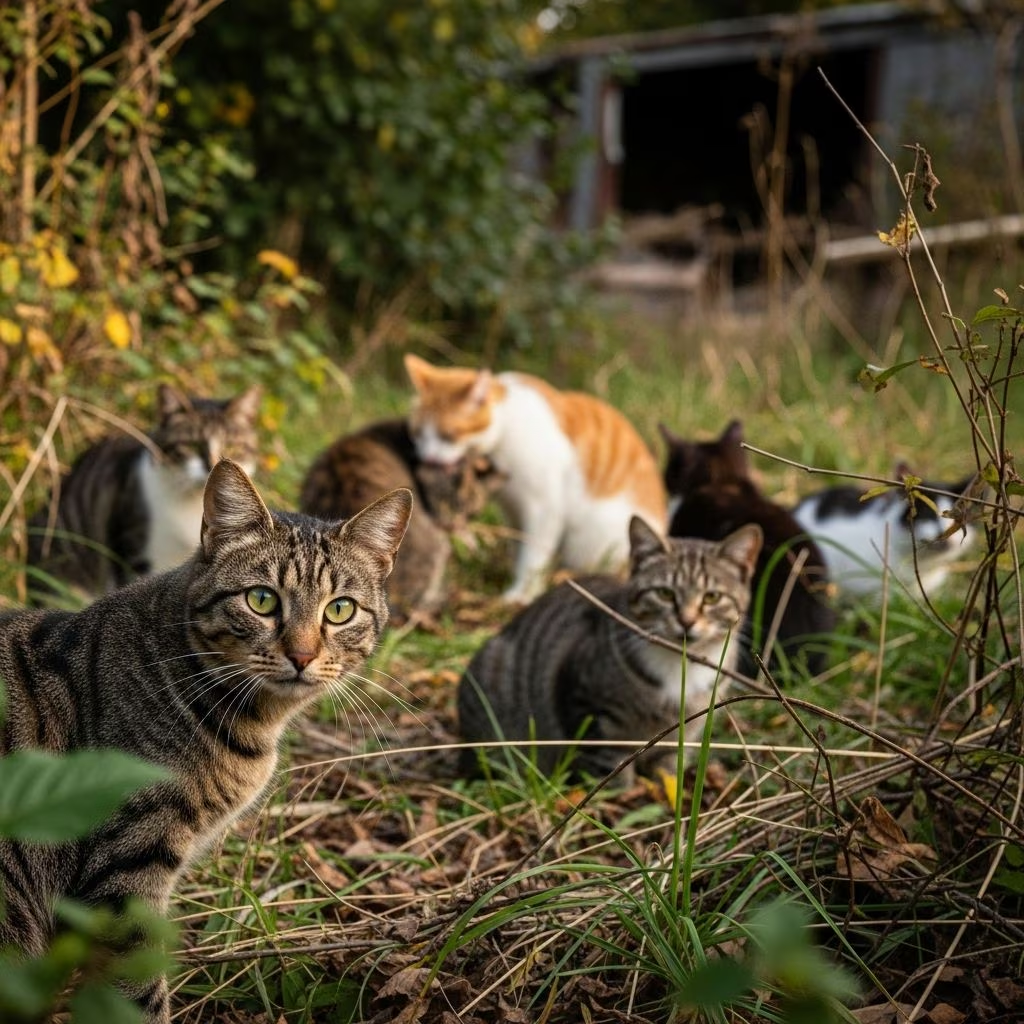
Feral cat colonies represent resilient communities of unowned domestic cats living outdoors, bound by shared resources and mutual survival needs. These groups typically form near reliable food sources, enabling cats to navigate urban, suburban, or rural challenges collectively.
Defining Feral Cats and Their Group Living
Feral cats are free-roaming domestic cats (Felis catus) that avoid human contact and sustain themselves independently, often descending from abandoned pets or born in the wild. Unlike stray cats, which may seek human interaction, ferals prioritize self-reliance and form colonies—defined as three or more sexually mature cats living and feeding in close proximity. These colonies thrive in human-adjacent areas like industrial zones, parks, farms, dumpsters, vacant lots, and campuses, where food waste or prey is abundant.
Colony sizes vary from small clusters of 3-15 cats to larger groups exceeding dozens, influenced by resource availability. Cats in these settings exhibit semi-social behaviors atypical of their solitary hunting origins, adapting to tolerate familiar companions for protection and efficiency.
Core Reasons Colonies Emerge and Persist
Feral cats cluster for practical survival advantages, overriding their innate solitary tendencies. Key drivers include:
- Enhanced Protection: Group presence deters predators such as coyotes, dogs, birds of prey, and rival colonies vying for territory. Early warning systems allow quick evasion, amplifying individual safety.
- Reduced Rivalry: Familiar members minimize competition over food, water, and shelter. Cats ‘tolerate’ known individuals when resources suffice, avoiding energy-draining conflicts.
- Social Development: Interactions foster play, grooming, and bonding, supporting mental health and behavioral maturity, especially for kittens.
- Reproductive Efficiency: Expanded mating opportunities boost genetic diversity. Females collaborate on kitten-rearing, sharing nursing and defense duties across generations.
- Resource Stability: Proximity to consistent human-provided or scavenged food sustains larger groups without nomadic shifts.
Social Organization Within Colonies
Feral cat societies lack rigid pack structures like wolves or lions, featuring loose hierarchies instead. Research notes varying dominance patterns: some colonies show despotic or linear rankings, while others display relative hierarchies shifting by context, time, or activity like feeding. Typically, related females form the core, with a dominant older queen accessing prime resources first. Males roam peripherally, with intact ones holding larger territories overlapping multiple colonies.
Bonding rituals reinforce unity:
- Allogrooming and allorubbing exchange scents, solidifying group identity.
- Subgroups of closely bonded cats—often kin—maintain intense physical contact.
- Queens allomother, communally nursing and teaching kittens survival skills.
Males may groom or feed kittens, intervening in squabbles, though hunting remains solitary. Newcomers face scrutiny; repeated neutral interactions can lead to acceptance, but intruders trigger hissing, growling, or fights.
Reproduction and Family Dynamics
Colonies center on matrilineal lines, spanning multiple generations of cooperating females. Unspayed queens cycle reproductively up to five times yearly, birthing 1-12 kittens per litter. Communal nests facilitate allomothering, where non-mothers nurse, groom, and guard young, enhancing survival rates.
Males from overlapping territories sire kittens, promoting hybrid vigor. Neutered males integrate more peacefully with smaller ranges. Kittens mature into contributors, perpetuating the cycle unless human intervention occurs.
| Aspect | Female Role | Male Role |
|---|---|---|
| Core Residence | Stable in colony | Peripheral, roaming |
| Reproduction | Communal rearing | Mating access |
| Social Bonds | Strong kin groups | Looser tolerances |
| Territory | Shared colony area | Large overlaps |
Common Habitats and Daily Life
Colonies anchor near sustenance: farm barns for rodent hunting, urban alleys for scraps, or managed sites with caretaker support. Daily routines involve individual hunts overlapping territories, evening grooming sessions, and vigilant patrols. Populations flux as cats relocate to adjacent groups or get socialized into homes.
Human proximity influences ferality degrees—frequent feeders yield semi-feral, approachable cats versus wary wild ones. Farm colonies, for instance, reach 30 cats, blending hunting with supplemental milk.
Human Impacts and Management Strategies
While colonies adapt resiliently, unchecked growth strains ecosystems and health. Effective interventions prioritize humane Trap-Neuter-Return (TNR): trap, sterilize, vaccinate, and release cats, stabilizing populations without culling.
Managed colonies receive food, water, shelters, and veterinary aid from caretakers, alongside socialization for adoptable kittens. TNR curbs reproduction, reduces nuisance behaviors like yowling, and fosters healthier groups.
- Benefits: Lowers intake at shelters, improves cat welfare, minimizes conflicts.
- Challenges: Requires community buy-in, consistent effort.
Distinguishing Feral from Stray Cats
Feral cats shun handling, hiding from people, while strays approach homes or porches seeking aid. Ferals embed in colonies; strays often solitary. Early socialization windows (up to 8 weeks) determine tameness potential.
Practical Ways to Assist Colonies
Compassionate aid sustains welfare:
- Observe without feeding initially to assess needs.
- Partner with TNR groups for sterilization.
- Provide sheltered feeding stations.
- Report threats like abuse or disease.
- Advocate for colony recognition in local policies.
FAQs
What defines a feral cat colony?
A group of 3+ unowned cats sharing a food source and territory outdoors.
Do feral cats have leaders?
Hierarchies are loose; dominant females access resources first, but no strict linearity.
Can feral cats become pets?
Kittens under 8 weeks or semi-ferals can socialize; adults rarely do.
Is TNR effective?
Yes, it stabilizes populations humanely.
How large can colonies grow?
Typically 3-15, up to 30+ on farms with ample resources.
References
- What Is a Feral Cat Colony? Important Facts, How to Help & More — Catster. 2023. https://www.catster.com/lifestyle/what-is-a-feral-cat-colony/
- Feral cat — Wikipedia. 2024-01-15. https://en.wikipedia.org/wiki/Feral_cat
- A review of feral cat control — PubMed Central (PMC). 2024. https://pmc.ncbi.nlm.nih.gov/articles/PMC10832895/
- Life in a Feral Cat Colony — Cats on Broadway Veterinary Hospital. 2023. https://www.catsonbroadwayhospital.com/life-feral-cat-colony/
- Feral and Stray Cats: An Important Difference — Alley Cat Allies. 2023-05-01. https://www.alleycat.org/resources/feral-and-stray-cats-an-important-difference/
- About Feral Cats & Colonies — CA-R-MA. 2023. https://catrescuemaritimes.ca/about-feral-cats-colonies/
- Feral Cats — Florida Fish and Wildlife Conservation Commission (FWC). 2024. https://myfwc.com/wildlifehabitats/nonnatives/feral-cats/



