

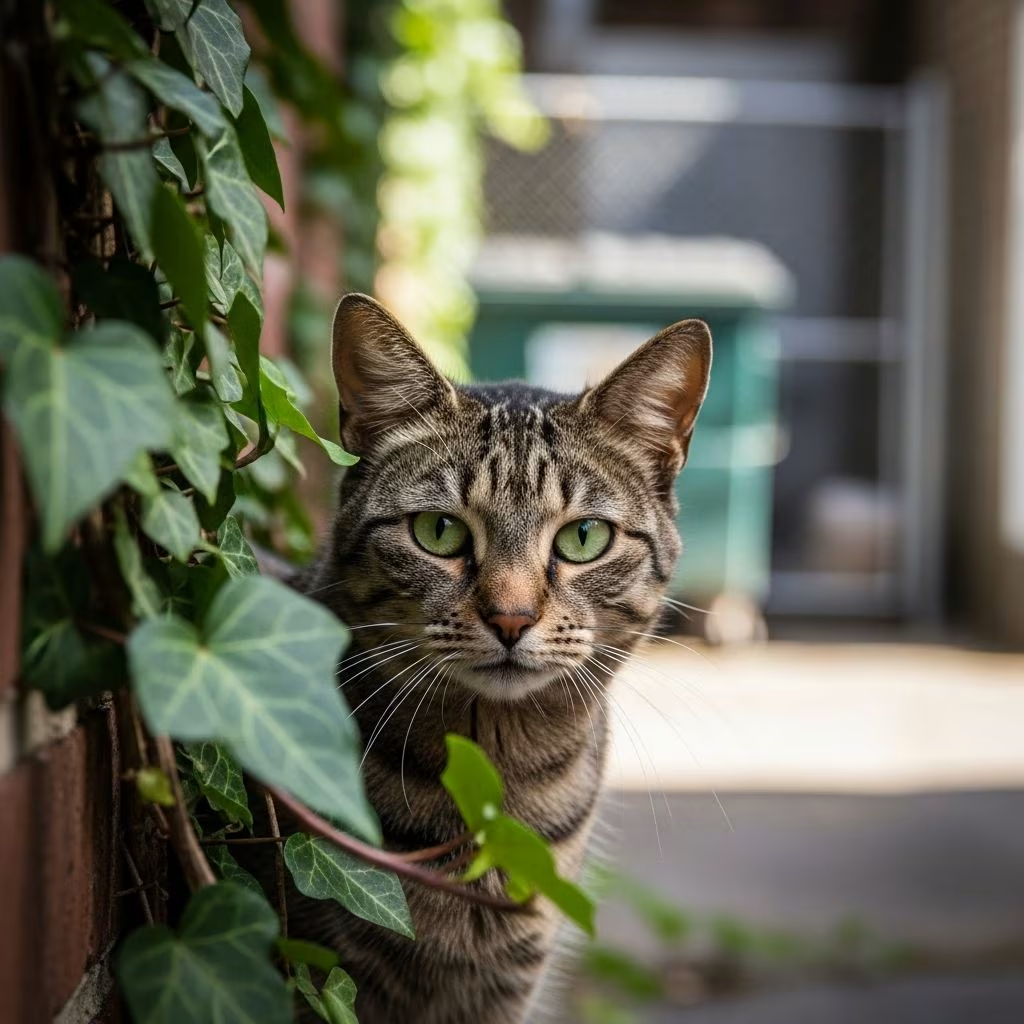
Understanding Feral Cat Behavior: Debunking Common Myths
Feral cats have long been misunderstood creatures, surrounded by myths and misconceptions that often lead to fear and negative perceptions. Many people confuse feral cats with stray cats, assume they are dangerous, or believe they pose health risks to communities. However, the reality of feral cat behavior is far more nuanced and, in many cases, quite different from popular belief. Understanding these differences is essential for anyone living near cat colonies or considering how to interact with outdoor cats in their neighborhood. This article explores six of the most common misconceptions about feral cat behavior and provides accurate, science-based information to help you better understand these resilient and fascinating animals.
Misconception 1: Feral Cats Are the Same as Stray Cats
One of the most significant misunderstandings about feral cats is that they are simply stray cats living outdoors. While both feral and stray cats live outside, they are fundamentally different in terms of socialization and behavior. A feral cat is an unsocialized outdoor cat who has either never had physical contact with humans or has had so little contact that they no longer recognize or accept human interaction. These cats are fearful of people and are unlikely to ever become lap cats or adjust to indoor living, even with extensive efforts.
In contrast, stray cats are cats that have been socialized to people at some point in their lives but have lost their homes or human contact over time. Stray cats may approach people, seek food near houses, and can sometimes be re-socialized back into homes. The key difference lies in their relationship with humans: feral cats avoid humans altogether, while strays may still seek human interaction or assistance. This distinction is crucial because it affects how these cats should be managed and cared for in communities.
Misconception 2: Feral Cats Are Dangerous and Aggressive
Many people fear feral cats, believing they are aggressive animals that pose a threat to humans and pets. This perception could not be further from the truth. According to expert researchers, feral cats are absolutely not a danger to people. Unless they are forced into a situation they cannot escape from, feral cats generally avoid human interactions altogether. Their primary survival strategy is avoidance, not confrontation. These cats use their wariness of humans as a protective mechanism and will flee rather than fight when given the opportunity.
A significant 2011 study published in “Wildlife Management” found that due to vastly different behavioral patterns, pets and feral cats rarely cross paths. Feral cats are nocturnal and more active during colder months, while owned cats are typically more active during the daytime and in warmer weather. This temporal separation means that conflict between feral cats and household pets is minimal. In fact, there are communities all over the country that successfully coexist with colonies of feral cats, with families living alongside these cat communities without incident.
Misconception 3: Feral Cats Spread Disease
Another widespread concern is that feral cats will transmit diseases such as rabies or other common cat illnesses to humans and pets. This worry, while understandable, is largely unfounded. According to the Centers for Disease Control and Prevention (CDC), it is actually quite rare for cats to spread diseases to humans, and even more rare when it comes to feral cats, who mostly avoid human contact. Since feral cats actively avoid people, direct contact with humans is uncommon, making disease transmission through feral cats an extremely low-risk scenario.
Most feral cats that receive veterinary care through Trap-Neuter-Return (TNR) programs are vaccinated against rabies and other preventable diseases, further reducing any potential health risks to the community. The minimal interaction between feral cats and humans means that disease transmission is not a legitimate concern when it comes to these animals.
Misconception 4: Feral Cats Beg for Food and Are Pests
If you find a cat at your door meowing and begging for food, odds are it is a stray or pet cat, not a feral cat. This is one of the clearest ways to distinguish between the two. Feral cats are more than capable of finding food without human interaction and will not approach your home seeking meals. Feral cats are excellent hunters, according to research, occupying far-ranging habitats and changing locations seasonally to find prey. They are self-sufficient and do not rely on humans for survival.
However, it is important to note that if you begin leaving food out for feral cats, they will eventually accept it, as any cat would. But in their natural state, feral cats do not seek out human food sources. They are hunters first and foremost. The misconception that feral cats are pests that beg for handouts often stems from confusion with stray cats or the misinterpretation of feeding behavior that humans may have inadvertently encouraged.
Misconception 5: Feral Cats Cannot Change or Show Affection
While it is true that feral cats are not suitable candidates for indoor living and will not become traditional lap cats, they do have the capacity to show familiarity and even limited affection toward people who care for them over time. Feral cats may show signs of familiarity such as holding their tail up or hanging out on a caregiver’s porch, but these behaviors are usually limited to their interaction with that specific caregiver and only develop after a relationship has been built over considerable time.
Some feral cats can even become “friendly” toward caregivers who regularly feed them, though this should not be confused with domestication or suitability for indoor living. The relationship between a feral cat and their feeder remains fundamentally different from that of a pet and owner. The cat maintains its independence and wariness, showing comfort only in familiar circumstances with recognized individuals. It is crucial to understand that this behavior does not mean the cat is a good candidate for living indoors or becoming a traditional pet.
Misconception 6: Feral Cats Cannot Coexist with Communities
Some people believe that feral cats cannot successfully coexist with human communities and that they must be removed or eliminated. However, numerous communities across the country demonstrate that feral cat colonies and human residents can coexist peacefully and successfully. Through managed care, trap-neuter-return programs, and community education, feral cat populations can be humanely managed while allowing cats to continue living outdoors in their colonies.
When feral cats are part of an organized TNR program, they are vaccinated, neutered or spayed, and returned to their colony site to continue their lives outdoors. Even after receiving veterinary care through TNR programs, these cats remain in their colony site and do not pose any increased threat to the community. Many successful coexistence models show that with proper management and community support, feral cats can be valued members of the urban and rural landscape.
Key Differences Between Feral and Stray Cats
Understanding the specific behavioral and physical differences between feral and stray cats can help you determine which type of cat you are encountering. Here are the primary distinctions:
| Characteristic | Stray Cat | Feral Cat |
|---|---|---|
| Socialization to Humans | May approach people, houses, porches, or cars | Will not approach and will seek hiding places to avoid people |
| Social Structure | Likely to live alone, not part of a group | May belong to a colony |
| Body Language | Walks like a house cat with tail up; makes eye contact | Crouches low to ground, protects body with tail, avoids eye contact |
| Vocalization | May meow or “answer” your voice | Won’t meow, beg, or purr |
| Activity Pattern | Visible primarily during daytime | More likely to be nocturnal |
| Physical Appearance | May be dirty or disheveled | Usually has clean, well-kept coat; males may have scars or muscular build |
Behavioral Indicators When Feral Cats Are Trapped or Confined
When a cat is caught in a trap or confined to a shelter, distinguishing between a feral cat and a scared stray cat becomes more challenging. A friendly stray cat may act like a feral cat when frightened, avoiding people and possibly showing aggression to avoid being touched. However, there are still ways to identify a truly feral cat in these stressful situations:
Touch Barrier: Stray cats may eventually tolerate touching or allow contact with an object, while feral cats cannot be touched, even by their regular caregiver.
Cage Behavior: Stray cats may come to the front of the cage or eventually rub against it in a friendly manner. Feral cats will likely stay in the back of the cage and retreat as far back as possible, potentially injuring themselves if jolted or frightened.
Level of Relaxation: Stray cats may relax over time in a confined space. Feral cats remain tense and unsocial throughout confinement.
Responsiveness: Stray cats may investigate toys or food placed near the cage or respond to household sounds. Feral cats will likely ignore all stimuli, including food.
Fear and Anxiety Responses: Stray cats may hiss or growl to show anxiety, while feral cats will be aggressive and lash out if threatened or cornered, with ears back and dilated eyes.
Frequently Asked Questions About Feral Cats
Q: Can feral cats ever become pets?
A: Adult feral cats cannot be successfully converted into indoor pets. However, kittens born to feral cats can be socialized at an early age if removed from their mothers and adopted into homes before they become fully feral. Once a cat has fully matured without human socialization, the ability to adapt to indoor living becomes extremely limited or impossible.
Q: Are feral cats solitary or do they live in groups?
A: Feral cats often live in colonies, which are close-knit groups of related and unrelated cats that share territory and resources. These colonies function as family units, with members showing social bonds and cooperative behaviors. In contrast, stray cats typically live alone.
Q: How can I tell if a cat eating from my porch is feral or stray?
A: If the cat approaches you, makes eye contact, vocalizes, or allows you to touch it, it is most likely a stray cat or semi-feral cat. If the cat avoids you, stays low to the ground, does not make eye contact, and remains silent, it is likely a feral cat.
Q: Do feral cats pose a threat to wildlife?
A: Yes, feral cats are skilled hunters and do prey on wildlife including birds, small mammals, and insects. However, this is part of their natural survival behavior and separate from concerns about whether they pose a threat to humans or human pets.
Q: What should I do if I encounter a feral cat?
A: The best approach is to leave the cat alone and allow it to move away. Feral cats will naturally avoid confrontation and will retreat if given the opportunity. If you are concerned about a colony in your area, contact local animal welfare organizations about trap-neuter-return programs.
References
- Feral and Stray Cats: An Important Difference — Alley Cat Allies. Accessed November 2025. https://www.alleycat.org/resources/feral-and-stray-cats-an-important-difference/
- Feral Cat Behavior: 6 Common Misconceptions — Chewy Education. Accessed November 2025. https://www.chewy.com/education/cat/training-and-behavior/feral-cat-behavior
- Feral or Stray: An Important Difference — Feral Cat Focus. Accessed November 2025. https://feralcatfocus.org/feral-or-stray/
- Feral Cats 101 — Animal Humane Society. Accessed November 2025. https://www.animalhumanesociety.org/resource/feral-cats-101



