

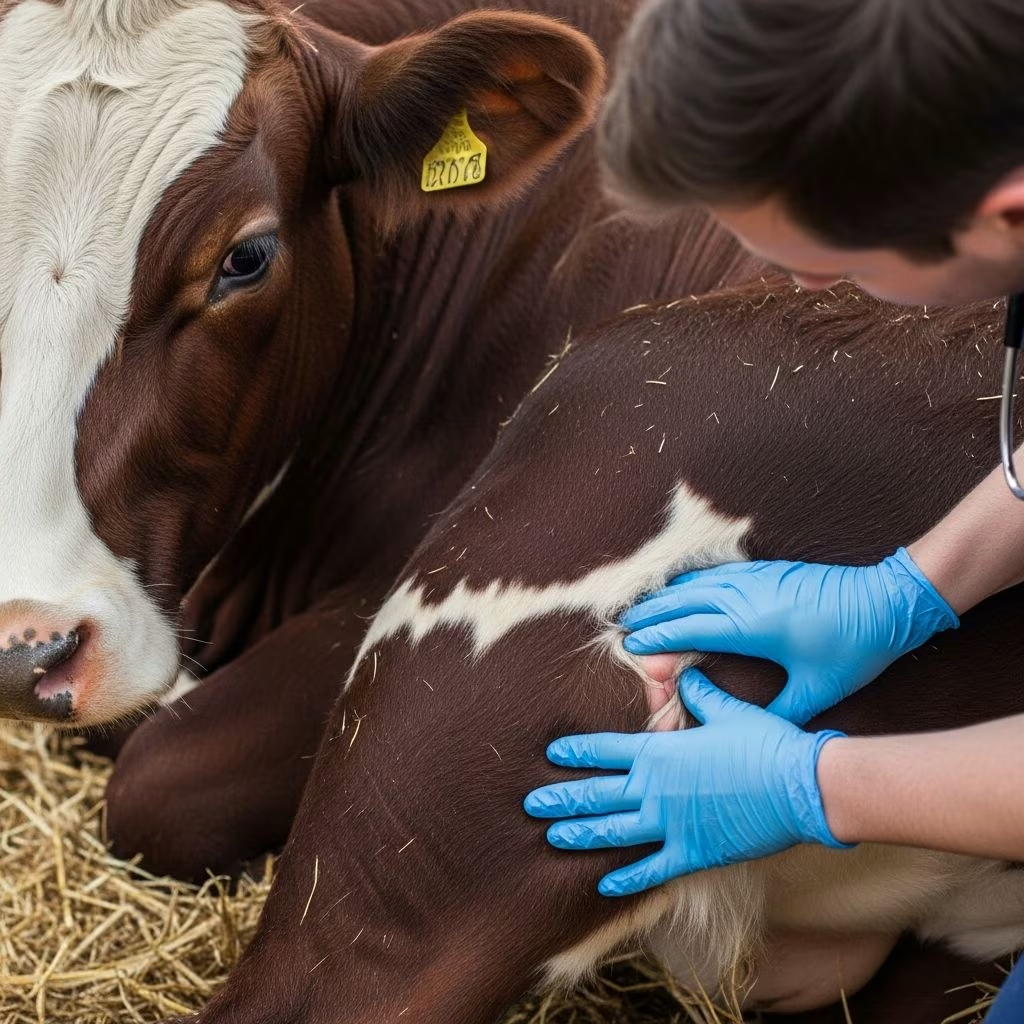
Understanding the Femoral Nerve and Its Function
The femoral nerve is a critical component of the nervous system in cattle, originating from the spinal cord at the L5 region and extending downward to innervate essential muscle groups in the hindlimbs. This nerve serves multiple important functions, including the innervation of the quadriceps muscle mass, which is responsible for extending the stifle joint—a movement essential for weight-bearing and locomotion. Additionally, the femoral nerve supplies the sartorius muscle, which assists in adducting the limb and providing flexion to the hip joint. A saphenous branch of this nerve provides sensory function to the medial thigh region.Understanding the anatomy and function of the femoral nerve is crucial for veterinarians and cattle producers because damage to this nerve can result in severe locomotor dysfunction. The nerve’s anatomical position anterior to the wing of the ilium typically provides protection from direct trauma during the normal calving process. However, under certain circumstances—particularly during difficult births or when excessive force is applied—this protection may be insufficient to prevent injury.
How Femoral Nerve Injury Develops During Calving
Femoral nerve injury in cattle most commonly occurs in large newborn calves, particularly those from breeds known for larger body size such as Charolais and Simmental cattle. The primary mechanism of injury involves the use of mechanical force during assisted delivery. When a calf is positioned abnormally in the birth canal or when excessive traction is applied to the hindlimbs during extraction, the nerve becomes stretched beyond its normal physiological limits.This stretching injury causes damage to the nerve fibers, leading to disruption of normal neuromuscular transmission. The injury typically manifests immediately following the traumatic event, though in some cases where swelling of surrounding tissues occurs, the clinical signs may appear to progress gradually over hours or days. In addition to direct stretching, femoral nerve paralysis can result from pressure exerted by hematomas, abscesses, or other space-occupying lesions in the region where the nerve travels.
Clinical Presentation and Observable Signs
Calves affected with femoral nerve injury display a characteristic constellation of clinical signs that become apparent immediately or very soon after birth. The most prominent feature is a marked reduction in the tone of the quadriceps muscles combined with visible muscle atrophy. This loss of muscle tone and strength fundamentally compromises the calf’s ability to extend the stifle joint, which is essential for supporting body weight on the affected limb or limbs.When an affected calf attempts to bear weight on the injured leg, the stifle joint flexes uncontrollably because the paralyzed quadriceps muscles cannot generate the necessary extension force. This results in a dramatic collapse of the joint and complete inability to support weight normally. The calf may exhibit difficulty advancing the affected limb or limbs, and the condition may involve one or both hindlegs.Additional clinical findings include the absence of the patella reflex, which is normally present in healthy cattle. This reflex requires an intact femoral nerve to function properly; therefore, its absence is a diagnostic indicator of femoral nerve damage. Some affected calves may also experience skin analgesia (loss of sensation) over the medial aspect of the tibia and in the medial thigh region supplied by the saphenous branch of the femoral nerve.
Secondary Complications
A significant secondary complication of femoral nerve injury is the development of lateral patellar luxation. Normally, muscle tone in the quadriceps maintains appropriate tension on the patellar ligament, positioning the patella correctly within the femoral groove. With paralysis of the quadriceps, this stabilizing tension is lost, allowing the patella to shift laterally out of its normal position. While the luxated patella can typically be manually reduced with relative ease, the animal experiences extreme difficulty walking and may be unable to achieve normal locomotion even after reduction.Another potential complication includes fractures and dislocations of the hip and shoulder, which can occur during the dystocia event itself. These injuries may clinically resemble femoral nerve paralysis in the early stages before neurogenic muscle atrophy becomes apparent.
Diagnostic Approach and Differentiation
Accurate diagnosis of femoral nerve injury requires a systematic clinical and diagnostic approach. Veterinarians begin with a thorough history of the calving event, noting any reports of difficult delivery, use of traction, or signs of dystocia. Physical examination reveals the characteristic signs previously described: quadriceps muscle weakness or paralysis, absence of the patellar reflex, and possible patellar luxation.Radiographic imaging is essential in the diagnostic workup because it allows exclusion of fractures that may clinically resemble femoral nerve paralysis. Of particular importance is assessment for slipped capital physis or proximal femoral fractures, conditions that can present with similar lameness but require different management approaches. Plain radiographs of the femur and hip region should be obtained before initiating treatment.Differentiation of femoral nerve injury from other causes of hindlimb paralysis may occasionally be necessary. Other nerve injuries that can occur during dystocia include sciatic nerve paralysis, which produces different clinical signs including inability to support weight and absence of stifle extension despite intact quadriceps function. Peroneal nerve injury, a branch of the sciatic nerve, results in hyperflexion of the fetlock joint and inability to extend the digit. These distinctions are important because they influence both prognosis and treatment recommendations.
Prognosis and Prognostic Factors
The prognosis for cattle with femoral nerve injury is generally considered fair to good, particularly when the injury is unilateral. Calves with bilateral femoral nerve damage face a more guarded prognosis because both hindlimbs are compromised. The severity of the initial clinical signs serves as an important prognostic indicator, with calves showing milder signs generally having better outcomes than those with complete paralysis.Spontaneous recovery is possible in many cases, particularly when the nerve injury is incomplete and does not involve complete transection of the nerve fibers. Some studies have documented cases where lameness essentially disappeared within four days after the initial injury, with evidence suggesting that other muscles, particularly the tensor fascia lata, may partially compensate for the deficient quadriceps muscle function. Individual variation and temperament also appear to play a role in the clinical manifestation of signs; some calves may show minimal lameness when moving quickly but more pronounced signs at slower speeds.
Management and Supportive Care Strategies
Despite the fair to good prognosis, affected calves require intensive supportive care, particularly in the immediate postpartum period. A fundamental aspect of management is ensuring adequate nutrition and passive transfer of maternal antibodies. Colostrum should be administered as soon as possible after birth, and ideally before the calf exhibits complete inability to suckle. In calves that cannot suckle unaided, alternative feeding methods such as bottle feeding or nasogastric tube feeding may be necessary to ensure adequate caloric and antibody intake.Environmental modifications are critical for successful management. The affected calf should be maintained in a well-bedded area that provides comfort and reduces pressure on the affected limb. Adequate bedding helps prevent the development of secondary issues such as pressure sores or additional trauma to the already compromised leg. The stall or pen should be kept scrupulously clean to reduce the risk of secondary infections.
Pharmacological Interventions
Administration of anti-inflammatory medications may prove beneficial in the management of femoral nerve injury. Non-steroidal anti-inflammatory drugs (NSAIDs) can help reduce inflammation surrounding the injured nerve and may alleviate pain associated with the injury or secondary joint involvement. These medications may facilitate the calf’s willingness to attempt weight-bearing and movement, which can promote recovery.Pain management is an important but often overlooked aspect of care. Affected calves may experience significant discomfort, particularly when attempting to bear weight or move. Appropriate analgesic therapy can improve comfort and encourage the calf to engage in therapeutic movement.
Long-term Management and Monitoring
As the acute phase of injury resolves, long-term management focuses on monitoring for complications and supporting rehabilitation. Careful observation for signs of hip dislocation or other orthopedic complications is essential, as these may develop following the initial nerve injury. Some calves may benefit from controlled exercise programs that promote gradual weight-bearing as nerve function recovers.The timeline for recovery varies considerably between individuals. Some calves show rapid improvement within days, while others may require weeks to achieve normal or near-normal locomotion. Continued assessment of muscle function, patellar reflex recovery, and overall mobility should guide decisions regarding the animal’s ultimate fitness for survival and productivity.
Prevention and Risk Reduction
Prevention of femoral nerve injury centers on minimizing dystocia and avoiding excessive traction during assisted deliveries. Careful selection of breeding animals to reduce the incidence of feto-pelvic disproportion is fundamental. When dystocia occurs and assistance is required, judicious use of mechanical force, proper positioning of the calf, and consideration of alternative delivery methods when appropriate can reduce the risk of nerve injury. Cesarean section may be indicated in cases where severe dystocia is anticipated or when initial traction attempts are unsuccessful.Education of farm personnel regarding proper calving assistance techniques is essential for reducing iatrogenic nerve injuries. Understanding the anatomy of the birth canal and the risks associated with excessive force application can prevent many cases of preventable nerve damage.
Frequently Asked Questions
Can femoral nerve damage be permanent?
While many cases of femoral nerve injury in calves are temporary and resolve with supportive care, some cases may result in permanent nerve damage, particularly if the nerve fibers are completely severed. However, even in cases with significant initial damage, partial recovery or compensation through other muscles is possible.
How long does recovery typically take?
Recovery timelines vary considerably. Some calves show improvement within days, while others may require weeks for significant functional recovery. The severity of the initial injury and the individual calf’s response to treatment influence the recovery timeline.
Are there any preventive measures for femoral nerve injury?
Prevention focuses primarily on minimizing dystocia through careful breeding selection, avoiding excessive traction during assisted deliveries, and ensuring proper calving assistance techniques are employed.
What is the success rate for affected calves becoming productive animals?
With appropriate supportive care and in unilateral cases, many calves can achieve sufficient recovery to become productive members of the herd. However, calves with bilateral nerve injury or severe permanent damage may face limitations in long-term productivity.
Conclusion
Femoral nerve injury in cattle represents a significant complication of dystocia that can profoundly affect a newborn calf’s ability to stand, walk, and nurse. Understanding the mechanisms of injury, recognizing clinical signs, and implementing appropriate diagnostic and supportive care strategies are essential for veterinarians managing these cases. While the prognosis is generally fair to good, particularly in unilateral cases, the condition requires intensive management and careful monitoring. Prevention through improved dystocia management and breeding practices remains the most effective approach to reducing the incidence of this debilitating condition in cattle operations.
References
- Diagnosing and Treating Downer Cattle — DVM360. Accessed February 24, 2026. https://www.dvm360.com/view/diagnosing-and-treating-downer-cattle-proceedings
- Femoral Nerve Injury in Cattle – Musculoskeletal System — Merck Veterinary Manual. Accessed February 24, 2026. https://www.merckvetmanual.com/musculoskeletal-system/lameness-in-cattle/femoral-nerve-injury-in-cattle
- Femoral Nerve Paralysis in Cattle — CORE. Accessed February 24, 2026. https://core.ac.uk/download/pdf/33370694.pdf
- Preventing Dystocia-Related Injury to Cow and Calf: Part II — Ag Proud. Accessed February 24, 2026. https://www.agproud.com/articles/48538-preventing-dystocia-related-injury-to-cow-and-calf-part-ii
- Femoral Paralysis in Cows (Bovis) — Vetlexicon. Accessed February 24, 2026. https://www.vetlexicon.com/bovis/musculoskeletal/articles/femoral-paralysis/
- Limb Paralysis in Animals – Nervous System — MSD Veterinary Manual. Accessed February 24, 2026. https://www.msdvetmanual.com/nervous-system/limb-paralysis/limb-paralysis-in-animals
- Nerve Damage – Large Animal Surgery – Supplemental Notes — University of Minnesota Open Textbook Library. Accessed February 24, 2026. https://open.lib.umn.edu/largeanimalsurgery/chapter/nerve-damage/



