

Femoral Head Ostectomy (FHO) in Dogs: Restoring Pain-Free Mobility
When dogs suffer from severe hip disease or injury, veterinarians must explore surgical options to restore their quality of life. Femoral head ostectomy (FHO) represents one of the most effective and commonly performed orthopedic procedures for addressing painful hip conditions in canine patients. This surgical approach eliminates the source of pain by removing the ball portion of the ball-and-socket hip joint, allowing the body to form a stable, pain-free false joint over time.
Understanding FHO surgery—what it involves, who benefits from it, and what recovery entails—can help pet owners make informed decisions about their dog’s orthopedic care. This comprehensive guide covers everything you need to know about this transformative procedure.
What is FHO Surgery?
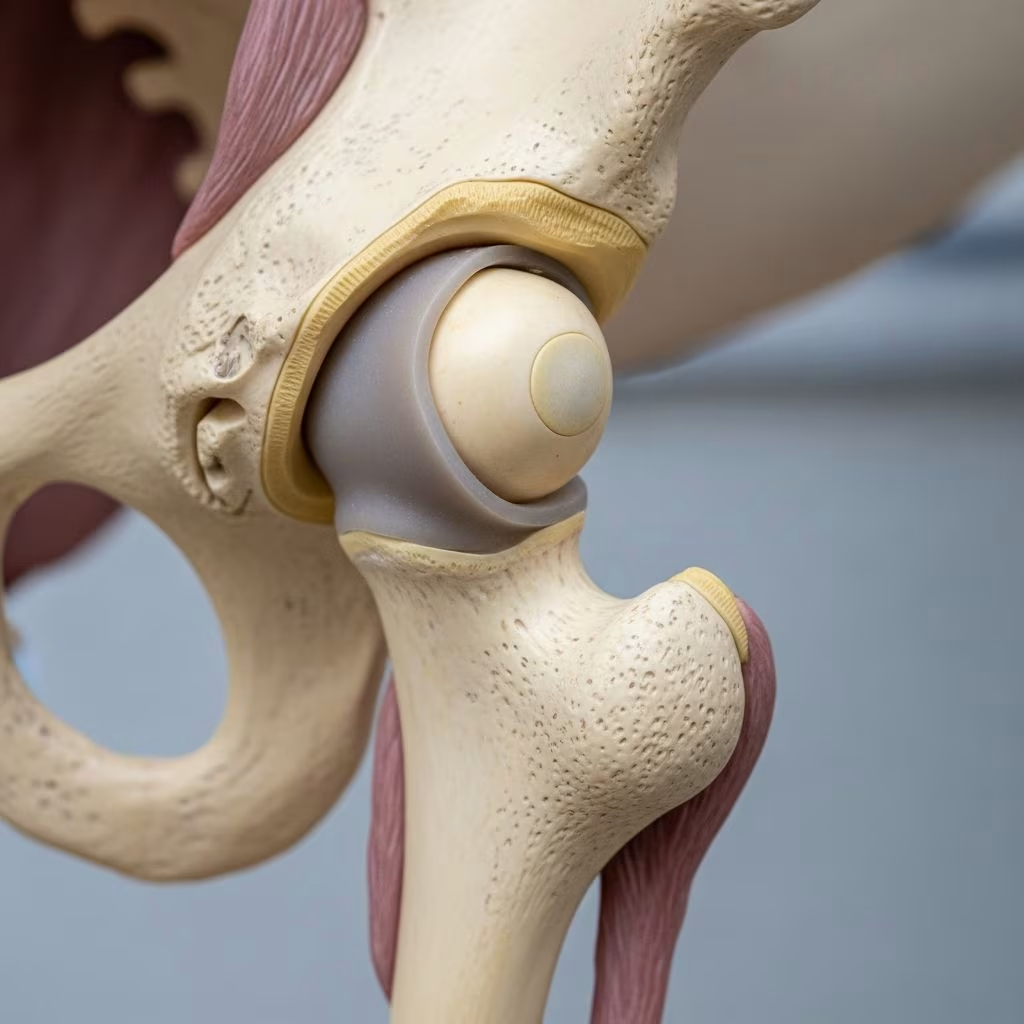
An FHO, or femoral head ostectomy, is a surgical procedure that aims to restore pain-free mobility to a diseased or damaged hip by removing the head and neck of the femur (the long leg bone or thighbone). The procedure is designed to eliminate the bone-on-bone contact that occurs when hip joints deteriorate, causing chronic pain and reduced mobility.
The surgical approach involves removing the ball of the ball-and-socket joint, leaving just an empty socket in place. This unique mechanism allows the body to naturally create what veterinarians call a “false joint” or pseudoarthrosis. Initially, the leg muscles hold the femur in position, and over time, scar tissue forms between the acetabulum (hip socket) and the femur to provide cushioning and stability. Although this joint is anatomically very different from a normal hip joint, it provides pain-free mobility in most patients who undergo the procedure.
Why is FHO Performed?
The primary goal of an FHO is to remove bone-on-bone contact, restoring pain-free mobility. Veterinarians recommend this procedure for several specific conditions:
Fractures Involving the Hip
When a fracture involves the hip joint and cannot be repaired surgically—either due to patient considerations or financial constraints—an FHO may provide the best option for pain-free mobility. This is particularly valuable for dogs that have experienced traumatic hip injuries.
Severe Arthritis of the Hip
In chronic, end-stage arthritis, the cartilage protecting both the femoral head and the acetabulum can become eroded away, leading to painful bone-on-bone grating whenever the hip moves. Performing an FHO can remove this point of contact and alleviate pain, significantly improving the dog’s quality of life.
Legg-Perthes Disease
Also known as avascular necrosis of the femoral head, this uncommon condition most frequently appears in miniature and toy breed dogs. The condition causes bone within the femoral head to begin deteriorating at an early age. The bone collapses due to these degenerative changes, leading to severe pain. Removing the femoral head via FHO removes the source of pain for the dog.
Is My Dog a Good Candidate for FHO?
While FHO can benefit many dogs, certain factors determine whether a dog is an ideal candidate for this procedure. Understanding these considerations helps veterinarians and pet owners evaluate the best treatment options.
Size and Weight Considerations
This procedure is primarily recommended for small dogs (under approximately 45 pounds) and cats, especially those who are at a healthy weight. The false joint created in an FHO works very well to support the weight of small animals but may be less effective in large-breed dogs. However, there are exceptions, and veterinarians may recommend an FHO for a dog over 50 pounds if the specifics of the case dictate that doing so would be appropriate.
Weight management is particularly crucial for dogs undergoing or recovering from FHO. Maintaining a healthy weight helps maximize the stability and function of the newly formed false joint.
Activity Level and Muscle Mass
Active dogs often experience better results with FHO than less active dogs. The muscle mass that has been built up through activity helps stabilize the joint, allowing the dog to regain pain-free mobility more quickly than inactive pets. Conversely, inactive dogs have less muscle mass around the joint, making the joint less stable post-operatively and leading to longer recovery times.
This factor demonstrates the importance of maintaining physical fitness before surgery and engaging in rehabilitation exercises post-operatively. Dogs with good baseline fitness and muscle tone tend to achieve superior outcomes.
The FHO Surgical Procedure
Understanding the surgical technique helps pet owners appreciate the complexity of the procedure and why it requires an experienced veterinary surgeon.
Surgical Approach
A standard cranio-lateral approach to the hip is performed. The surgeon makes an incision to access the hip joint from the side and top of the hip area. This approach provides optimal visualization and access to the femoral head and neck.
Procedure Steps
During the operation, the following steps occur:
Muscle Retraction and Joint Exposure: The muscles around the hip are carefully retracted, and the coxofemoral (hip) joint capsule is opened to provide clear access to the joint. Throughout this process, important muscle attachments are preserved to maintain the supporting structures around the hip.
Femoral Head Luxation: The femoral head is luxated (dislocated) from the pelvis and held in an externally rotated position to expose the femoral head and neck fully.
Transection: The head and neck are transected using a surgical saw. The surgeon carefully removes both the femoral head and neck, eliminating the source of pain.
Closure: The incision is closed with sutures or surgical staples. Some veterinarians use dissolving sutures that are placed under the skin, which may not be visible externally.
Anesthesia and Monitoring
The FHO procedure is performed under general anesthesia. Throughout the procedure, advanced monitoring equipment tracks the dog’s vital signs, and pain management protocols are in place to minimize discomfort.
Recovery Timeline and Post-Operative Care
Understanding what to expect after surgery helps pet owners provide appropriate care and manage their dog’s comfort during healing.
Immediate Post-Operative Period
After surgery, your dog will remain in the hospital for several hours to several days depending on the specific circumstances of their health and the surgery. When you pick up your dog from the hospital, they probably will not be bearing any weight on the leg that had surgery.
An incision will be visible in the area of the hip, and this incision may or may not have visible external sutures. Your dog will likely be wearing an Elizabethan collar (cone) to prevent licking at the surgical site.
First Weeks of Recovery
During the initial weeks following surgery, pain management becomes crucial. Veterinarians prioritize the dog’s comfort and pain relief through advanced pain management strategies, including pre-operative, intra-operative, and post-operative pain medications.
Controlled exercise is essential during this phase. Pet owners should follow their veterinarian’s guidelines regarding activity restrictions and gradual increases in movement. Physical therapy exercises may be recommended to promote proper healing and muscle development.
Complete Recovery Timeline
Most dogs will show signs of complete recovery approximately six weeks post-operatively. At this point, your dog can resume regular activities. However, the specific timeline varies depending on individual circumstances.
Healing may be more rapid in dogs that had normal function up until shortly before the FHO (such as a dog that suffered a sudden, traumatic injury to the hip) and may be slower in dogs with longstanding, chronic issues (because these chronic issues often lead to muscle atrophy, which takes time to resolve).
Post-Surgical Outcomes and Rehabilitation
While FHO dogs may experience some degree of limb shortening and gait abnormality, research indicates that with aggressive rehabilitation, these animals respond well to the procedure and return to an active lifestyle.
Rehabilitation and Physical Therapy
Comprehensive rehabilitation plans and post-operative care guidance are essential for optimal outcomes. This may include physical therapy exercises, controlled exercise regimens, pain management strategies, and regular follow-up examinations to monitor the dog’s progress and support recovery.
Physical therapy helps rebuild muscle mass around the hip, improves joint stability, and accelerates the formation of the stable false joint. Dogs that actively participate in rehabilitation typically return to normal function more quickly than those with minimal exercise.
Long-Term Success Factors
Several factors influence long-term success after FHO:
Muscle Mass: Muscle mass has been found to be one of the most important variables in determining outcomes of the procedure. Dogs with well-developed musculature tend to have better functional outcomes.
Weight Management: Maintaining healthy weight throughout recovery and beyond helps support the new joint structure and reduces stress on the surrounding tissues.
Consistent Exercise: Regular, moderate exercise promotes continued muscle development and joint stability.
Veterinary Follow-up: Regular examinations help monitor healing progress and address any complications early.
Advantages and Considerations
Key Advantages of FHO
FHO offers several significant benefits for appropriate candidates:
Pain Relief: The procedure effectively eliminates bone-on-bone contact, providing substantial pain relief in most cases.
Less Invasive Than Hip Replacement: Compared to total hip replacement surgery, FHO is less invasive and typically more affordable.
Applicable to Most Ages: The procedure can be performed on dogs of almost any age, making it a viable option for both young and senior dogs.
Successful Outcomes: When performed on appropriate candidates with proper rehabilitation, FHO delivers excellent long-term results.
Important Considerations
While FHO is effective for many dogs, certain considerations apply:
Weight Limitations: Large-breed dogs may not benefit as much from FHO due to the false joint’s reduced ability to support their weight.
Recovery Demands: Successful outcomes require dedicated post-operative care and rehabilitation.
Activity Requirements: Dogs must maintain adequate activity levels and muscle mass for optimal joint function.
Frequently Asked Questions
Q: What is the difference between FHO and total hip replacement?
A: FHO removes the femoral head to eliminate bone-on-bone contact, while total hip replacement involves removing the damaged joint and replacing it with a prosthetic implant. FHO is less invasive and more affordable, while hip replacement creates a more anatomically normal joint. The choice depends on the dog’s size, age, and specific condition.
Q: Can FHO be performed on both hips?
A: Yes, FHO can be performed bilaterally (on both hips) if both joints are severely damaged. Surgeons may perform the procedures simultaneously or sequentially, depending on the dog’s health and recovery progress.
Q: How long before my dog can run and play normally after FHO?
A: Most dogs return to normal activities around six weeks post-operatively, but the timeline varies. Individual factors like age, overall health, and compliance with rehabilitation affect recovery speed. Active participation in physical therapy can accelerate this timeline.
Q: Are there any permanent complications from FHO?
A: While some dogs may experience minor limb shortening or slight gait abnormalities, most experience excellent long-term outcomes with minimal permanent effects. Proper rehabilitation and weight management help minimize any complications.
Q: Is FHO covered by pet insurance?
A: Coverage varies by insurance provider and policy. Some insurers cover FHO as it’s considered an established, effective procedure. Check with your specific insurance carrier to understand your coverage options.
Q: What breeds are most commonly affected by conditions requiring FHO?
A: Small breeds and toy breeds are most commonly candidates for FHO. Legg-Perthes disease particularly affects miniature and toy breeds. However, any breed can develop hip arthritis, dysplasia, or hip fractures that might warrant FHO consideration.
When to Consider FHO for Your Dog
If your dog shows signs of hip pain—including limping, reluctance to jump or climb stairs, difficulty rising, or reduced activity levels—a veterinary evaluation is essential. Your veterinarian can conduct thorough examinations, including physical assessments and diagnostic imaging, to determine if FHO represents the best treatment option for your pet’s specific situation.
Early intervention often leads to better outcomes. Dogs that undergo FHO before chronic conditions cause significant muscle atrophy tend to recover more quickly and fully.
Conclusion
Femoral head ostectomy represents a proven, effective surgical solution for dogs suffering from debilitating hip conditions. By understanding the procedure, candidacy factors, recovery timeline, and rehabilitation requirements, pet owners can make informed decisions about whether FHO is appropriate for their dog. When performed on suitable candidates with proper post-operative care and rehabilitation, FHO consistently delivers excellent outcomes, restoring dogs to active, pain-free lives. If you believe your dog might benefit from this procedure, consult with your veterinarian to explore whether FHO could provide your cherished companion with renewed mobility and improved quality of life.
References
- Femoral Head Ostectomy (FHO) — Bloomfield Pointe Veterinary Hospital. Retrieved from https://www.bloomfieldpointeveterinaryhospital.com/services/femoral-head-ostectomy
- Femoral Head Ostectomy (FHO) in Dogs — VCA Animal Hospitals. Retrieved from https://vcahospitals.com/know-your-pet/femoral-head-ostectomy-fho-in-dogs
- Femoral Head & Neck Ostectomy: Step-by-Step Guide for Vets — Clinician’s Brief. Retrieved from https://www.cliniciansbrief.com/article/femoral-head-neck-ostectomy
- FHO (Femoral Head Ostectomy) Surgery for Pets — Animal Works Veterinary Surgery. Retrieved from https://www.arkanimalnola.com/services/fho-femoral-head-ostectomy
- Ventral Femoral Head and Neck Ostectomy — Today’s Veterinary Practice. Retrieved from https://todaysveterinarypractice.com/soft-tissue-surgery/ventral-femoral-head-and-neck-ostectomy/
- Understanding Femoral Head Ostectomy (FHO): When It’s a Great Solution — Animal Works Veterinary Surgery. Retrieved from https://animalworksvets.com/understanding-femoral-head-ostectomy-fho-when-its-a-great-solution/
- What to Expect During FHO Surgery for Pets — Garbizo Animal Clinic. Retrieved from https://www.garbizoanimalclinic.com/blog/what-to-expect-during-fho-surgery-for-pets



