

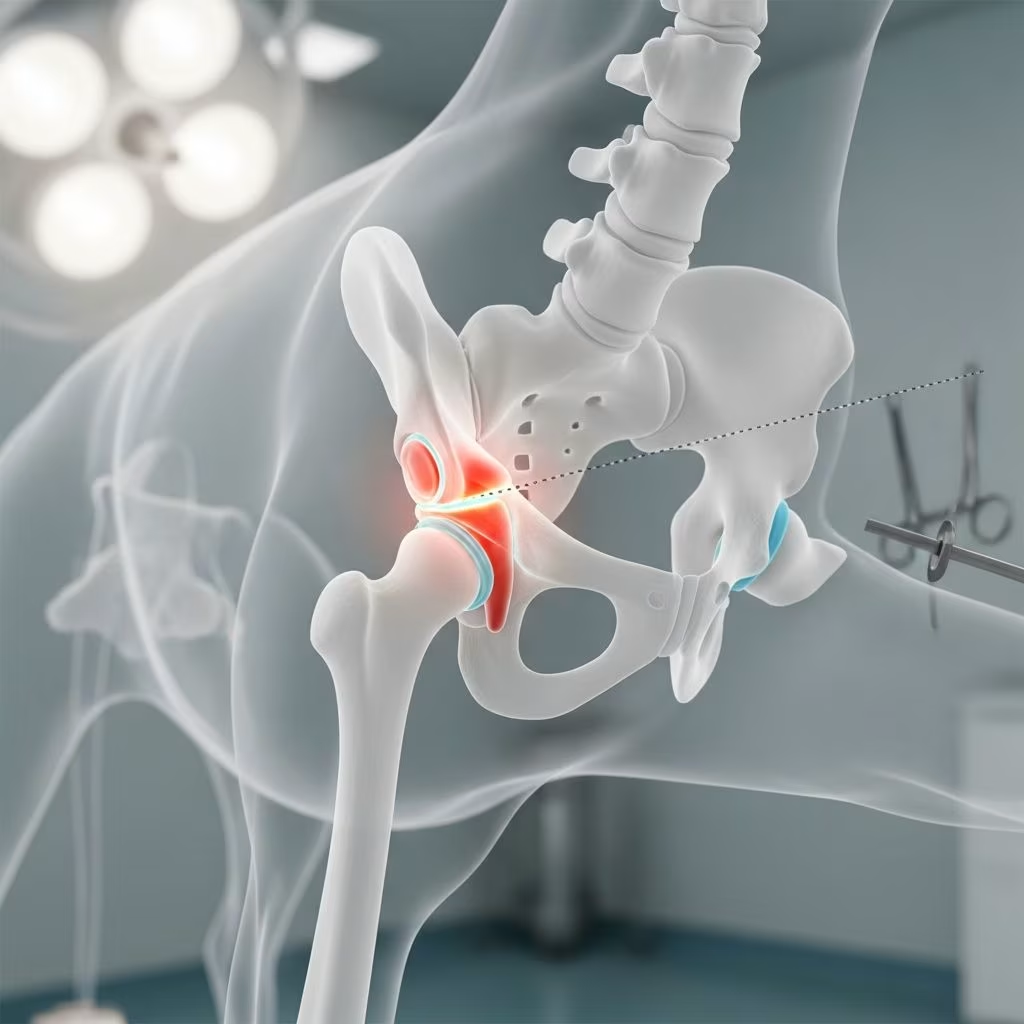
Understanding Femoral Head Ostectomy (FHO) Surgery in Dogs
Femoral head ostectomy, commonly referred to as FHO, is a surgical procedure designed to restore pain-free mobility to dogs suffering from diseased or damaged hip joints. This procedure involves removing the head and neck of the femur (the thighbone) to eliminate the painful bone-on-bone contact that occurs within the hip joint. For many dog owners facing their pet’s chronic hip pain, FHO represents a practical and effective surgical solution that can dramatically improve quality of life.
The procedure works by fundamentally changing how the hip joint functions. By removing the ball portion of the ball-and-socket hip joint, the surgeon leaves behind an empty socket. Initially, the muscles surrounding the leg hold the femur in place, but over time, scar tissue forms between the acetabulum (hip socket) and the femur to create what veterinarians call a “false joint.” Although this new joint structure is anatomically different from a normal hip joint, it provides pain-free mobility in the vast majority of patients, allowing dogs to return to active, comfortable lifestyles.
What is FHO Surgery?
An FHO is fundamentally a salvage procedure that eliminates the source of hip pain by removing bone-on-bone contact. Unlike procedures that attempt to repair or reconstruct the existing joint, FHO takes a different approach by creating an entirely new functional joint structure. The procedure can be performed on both dogs and cats of almost any age, though it is most commonly recommended for specific patient populations.
The genius of FHO lies in its simplicity and effectiveness. By removing the femoral head that has become damaged, fractured, or arthritic, the procedure eliminates the grinding bone-on-bone contact that causes pain with every movement. The body’s natural healing response then takes over, creating a stable, functional joint through scar tissue formation and muscular support.
Is Your Dog a Good Candidate for FHO?
Determining whether your dog is a suitable candidate for FHO depends on several important factors. This procedure is primarily recommended for small dogs weighing under approximately 45 pounds and cats, especially those maintaining a healthy weight. The false joint created during FHO works exceptionally well to support the weight of smaller animals but may be less effective in large-breed dogs due to biomechanical stress on the newly formed joint.
However, veterinarians recognize that exceptions exist. In some cases, FHO may be recommended for dogs weighing over 50 pounds if the specific circumstances of the case warrant this approach. Factors such as the dog’s overall health status, activity level, muscle mass, and the nature of the hip condition all influence candidacy decisions.
The Importance of Activity Level and Muscle Mass
One of the most significant factors determining FHO success is your dog’s activity level and muscle mass. Active dogs often experience substantially better results with FHO than less active dogs. The muscle mass built through regular activity helps stabilize the newly formed false joint, allowing dogs to regain pain-free mobility more quickly than inactive pets. Conversely, inactive dogs have less muscular support around the joint, resulting in a less stable post-operative joint and longer recovery times.
This relationship between physical fitness and surgical outcome underscores an important reality: dogs that maintain good muscle tone before surgery tend to rehabilitate faster and achieve better functional outcomes. Muscle mass has been identified as one of the most important variables in determining FHO procedure outcomes.
Why is FHO Surgery Performed?
The primary goal of FHO is to remove bone-on-bone contact and restore pain-free mobility. Several specific conditions warrant this surgical intervention, each representing a different pathway to hip joint dysfunction.
Fractures Involving the Hip
When a fracture involves the hip joint and cannot be repaired surgically—either due to patient considerations or financial constraints—FHO provides an excellent alternative for achieving pain-free mobility. Rather than attempting complex reconstructive surgery that may not be feasible, removing the damaged femoral head eliminates the source of pain while maintaining functional mobility through the false joint mechanism.
Severe Arthritis of the Hip
In chronic, end-stage arthritis, the protective cartilage covering both the femoral head and acetabulum erodes away over time. This degradation leads to painful bone-on-bone grating whenever the hip moves, significantly compromising the dog’s quality of life. FHO eliminates this point of contact, allowing the dog to move without pain despite the advanced joint degeneration.
Legg-Perthes Disease
Legg-Perthes disease, also known as avascular necrosis of the femoral head, is an uncommon but serious condition most frequently observed in miniature and toy breed dogs. This condition causes the bone within the femoral head to begin dying at an early age, with the bone ultimately collapsing due to these degenerative changes. The result is severe pain that significantly impacts the young dog’s quality of life. Removing the femoral head via FHO eliminates the source of this pain, often dramatically improving the dog’s comfort and mobility.
The FHO Surgical Procedure
Pre-operative Preparation
Before surgery begins, your dog undergoes routine anesthesia using premedication, an induction agent, and gas anesthesia. The dog is then positioned in lateral recumbency (lying on their side) with the affected limb carefully positioned and aseptically prepared for surgery. Proper surgical approach requires careful identification of specific anatomical landmarks, including the ischial tuberosity, greater trochanter, and iliac wing of the pelvis. These landmarks guide the surgeon in accessing the hip joint through a cranio-lateral approach.
Surgical Approach and Joint Access
A standard cranio-lateral approach to the hip is performed during FHO. The surgeon carefully retracts the muscles surrounding the hip and opens the coxofemoral (hip) joint capsule to access the joint interior. The femoral head is then luxated, or dislocated, from the pelvis and held in an externally rotated position to expose the full extent of the femoral head and neck that requires removal.
Femoral Head Removal
Once the femoral head is properly positioned and exposed, the surgeon uses a surgical saw to transect, or cut through, the head and neck. The recommended line of transection is carefully planned to remove the entire femoral head and neck while preserving as much of the femoral shaft as possible. This precision ensures optimal weight distribution and joint function in the post-operative period.
After the femoral head is removed, the surgical site is irrigated to remove any bone fragments or debris. The surrounding tissues and muscles remain intact and will play a crucial role in supporting the formation of the new false joint during the healing process.
Incision Closure
The incision is then carefully closed with sutures or surgical staples, depending on the surgeon’s preference and technique. Some veterinarians use dissolving sutures that are placed under the skin, while others use visible external sutures that require removal after the appropriate healing period.
Post-operative Care and Recovery
Immediate Post-operative Period
After surgery, your dog will remain in the hospital for several hours to several days depending on the specific circumstances of their health and the surgery performed. When you pick up your dog from the hospital, they will likely not be bearing any weight on the surgical leg. An incision will be visible in the hip area, and your dog will probably be wearing an Elizabethan collar (cone) to prevent licking at the surgical site, which could compromise healing.
Early Recovery Timeline
Most dogs show signs of complete recovery approximately six weeks post-operatively, at which point they can resume regular activities. However, the actual recovery timeline varies based on several factors. Dogs that had normal hip function until shortly before the FHO—such as those recovering from a sudden traumatic injury—typically heal more rapidly. Conversely, dogs with longstanding chronic hip issues may experience slower healing because chronic problems often lead to muscle atrophy, which requires additional time to resolve.
Rehabilitation and Physical Therapy
Comprehensive rehabilitation and post-operative care are essential components of successful FHO recovery. Your veterinarian will provide specific guidance on physical therapy exercises, controlled exercise regimens, and pain management strategies tailored to your dog’s needs. Regular follow-up examinations allow your veterinarian to monitor your pet’s progress and adjust rehabilitation protocols as needed to support optimal recovery.
Physical activity plays a vital role in recovery success. Controlled exercise helps rebuild muscle mass, strengthens the stabilizing muscles around the new false joint, and promotes scar tissue formation that creates the functional joint capsule. Your veterinarian will recommend specific exercise protocols that gradually increase in intensity as healing progresses.
Pain Management and Outcomes
Comprehensive Pain Control
Pain management is prioritized throughout the entire surgical process, from pre-operative through post-operative care. Veterinarians utilize advanced pain management strategies including pre-operative, intra-operative, and post-operative pain medications to ensure your pet’s comfort and well-being. This comprehensive approach to pain control accelerates healing and improves the overall recovery experience.
Long-term Functional Outcomes
Post-surgical FHO patients do experience some degree of limb shortening and gait abnormality, which is expected and normal. However, with aggressive rehabilitation and appropriate post-operative care, these animals respond well to the procedure and return to active lifestyles. The procedure has been shown to provide the best outcomes in mature pets and dogs weighing less than 17 kilograms, though physically fit dogs of all sizes tend to rehabilitate favorably regardless of weight.
The success of FHO ultimately depends on the quality of post-operative care, the dog’s pre-operative muscle mass and fitness level, and compliance with rehabilitation protocols. Dogs that receive appropriate rehabilitation and maintain regular activity tend to achieve the best functional outcomes and return to pain-free mobility most successfully.
Cost Considerations
FHO surgery is recognized as a relatively inexpensive procedure compared to other orthopedic surgical options such as total hip replacement. This affordability, combined with its effectiveness in restoring pain-free mobility to small dogs, makes it an attractive option for many dog owners facing their pet’s chronic hip pain. The relatively low cost should not diminish expectations regarding outcomes—the procedure remains highly effective despite its lower expense compared to more invasive alternatives.
Frequently Asked Questions About FHO Surgery
Q: What is the success rate for FHO surgery in dogs?
A: FHO has a high success rate, particularly in dogs under 45 pounds. Most dogs show signs of complete recovery within approximately six weeks and return to active, pain-free lifestyles. Success depends heavily on post-operative rehabilitation, pre-operative muscle mass, and the dog’s activity level.
Q: Can large breed dogs have FHO surgery?
A: FHO is primarily recommended for small dogs under 45 pounds because the false joint works better for supporting smaller body weights. However, exceptions exist, and some large breed dogs over 50 pounds may be candidates if specific case circumstances warrant the procedure. Your veterinarian will determine candidacy based on your individual dog’s condition.
Q: How long does FHO surgery take?
A: While specific surgical time varies by surgeon and individual case complexity, FHO is generally a relatively quick orthopedic procedure. Your veterinarian can provide more specific time estimates based on your dog’s particular situation.
Q: Will my dog need physical therapy after FHO surgery?
A: Yes, post-operative rehabilitation is crucial for optimal recovery. Physical therapy exercises, controlled exercise regimens, and pain management strategies help rebuild muscle mass and support the formation of the functional false joint. Your veterinarian will provide specific rehabilitation protocols tailored to your dog’s needs.
Q: What conditions warrant FHO surgery?
A: FHO is performed for hip fractures that cannot be surgically repaired, severe end-stage hip arthritis, Legg-Perthes disease, and other conditions causing painful bone-on-bone contact. Your veterinarian will determine whether FHO is appropriate for your dog’s specific condition.
Q: How does activity level affect FHO outcomes?
A: Active dogs typically experience better FHO outcomes than inactive dogs. Pre-operative muscle mass and activity level significantly influence post-operative stability and recovery speed. Dogs with good pre-operative fitness tend to return to pain-free mobility more quickly than less active pets.
Q: Will my dog have a normal gait after FHO?
A: Dogs typically experience some degree of limb shortening and gait abnormality after FHO, which is normal and expected. However, with appropriate rehabilitation and post-operative care, most dogs return to active lifestyles and achieve functional, pain-free mobility despite these minor changes.
References
- Femoral Head & Neck Ostectomy: Step-by-Step Guide for Vets — Clinician’s Brief. Accessed 2025-11-28. https://www.cliniciansbrief.com/article/femoral-head-neck-ostectomy
- Femoral Head Ostectomy (FHO) — Bloomfield Pointe Veterinary Hospital. Accessed 2025-11-28. https://www.bloomfieldpointeveterinaryhospital.com/services/femoral-head-ostectomy
- Femoral Head Ostectomy (FHO) in Dogs — VCA Animal Hospitals. Accessed 2025-11-28. https://vcahospitals.com/know-your-pet/femoral-head-ostectomy-fho-in-dogs
- A Dog Owner’s Guide to FHO Surgery in Dogs — Plains Vet. 2021-05-04. https://www.northeast-vet.com/site/pet-care-blog-plains-vet/2021/05/04/a-dog-owners-guide-to-fho-surgery-in-dogs
- Ventral Femoral Head and Neck Ostectomy — Today’s Veterinary Practice. Accessed 2025-11-28. https://todaysveterinarypractice.com/soft-tissue-surgery/ventral-femoral-head-and-neck-ostectomy/
- FHO (Femoral Head Ostectomy) Surgery for Pets — Ark Animal NOLA. Accessed 2025-11-28. https://www.arkanimalnola.com/services/fho-femoral-head-ostectomy
- Understanding Femoral Head Ostectomy (FHO): When It’s a Great Solution — Animal Works Veterinary Surgery. Accessed 2025-11-28. https://animalworksvets.com/understanding-femoral-head-ostectomy-fho-when-its-a-great-solution/



