

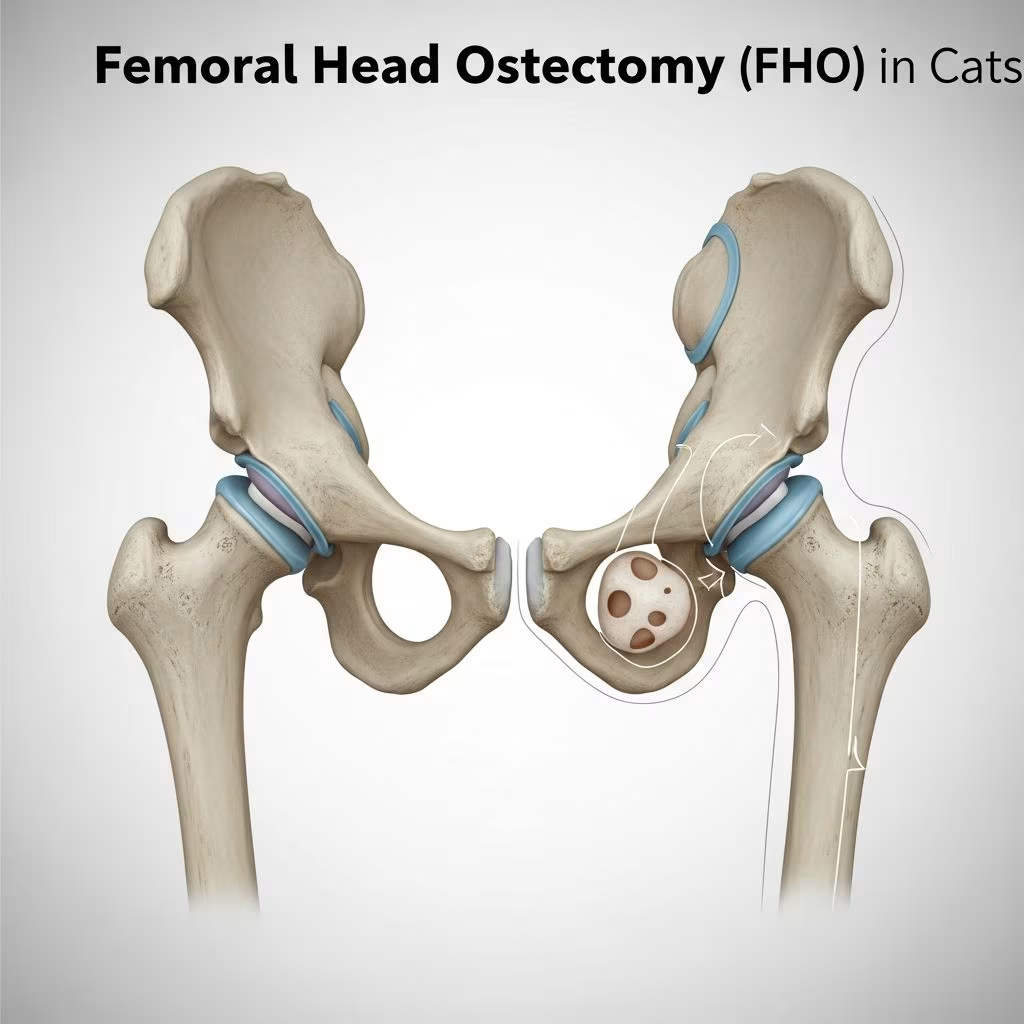
What is Femoral Head Ostectomy (FHO)?
Femoral Head Ostectomy (FHO) is a surgical procedure designed to restore pain-free mobility to a cat’s diseased or damaged hip by removing the head and neck of the femur bone. This orthopedic surgery represents an effective salvage procedure that can be performed on cats of various ages to alleviate chronic hip pain and improve quality of life. During the procedure, the veterinary surgeon removes the femoral head, which comprises the ball portion of the ball-and-socket hip joint, leaving the acetabulum (socket) empty.
The fundamental concept behind FHO is straightforward yet effective. By removing the bone-to-bone contact point that causes pain, the procedure eliminates the source of discomfort. Over time, the body’s natural healing processes create what is known as a “false joint.” Initially, the muscles surrounding the leg hold the femur in place, and gradually, scar tissue forms between the acetabulum and femur to provide cushioning, functioning as a pain-free alternative to the original joint.
How Does the FHO Procedure Work?
Understanding the mechanics of how FHO provides pain relief requires knowledge of the post-operative healing process. When the femoral head is removed, the leg’s musculature takes on the primary role of stabilizing the hip joint. This muscular support is crucial during the initial healing phase, preventing excessive movement and allowing proper scar tissue formation.
The formation of scar tissue between the acetabulum and femur is essential to the success of this procedure. This scar tissue gradually develops into a functional cushioning layer, creating what surgeons refer to as a “false joint.” Although this anatomically different joint bears little resemblance to a normal hip joint, it provides pain-free mobility in the majority of patients. The beauty of this approach lies in its elegance: rather than attempting to repair or replace the damaged joint, the body is allowed to create its own functional substitute through natural healing mechanisms.
Conditions Treated with FHO Surgery
Femoral Head Ostectomy is recommended for several hip-related conditions in cats. Understanding which conditions qualify for FHO treatment helps pet owners recognize when their feline companions might benefit from this surgical intervention.
Hip Fractures and Dislocations
Traumatic hip injuries, including fractures of the femoral head or neck and hip dislocations, are primary candidates for FHO surgery. When a cat sustains a direct injury to the hip, such as from a fall or collision, the resulting damage may not be amenable to conventional repair methods. In these cases, removing the damaged femoral head and allowing a false joint to form provides a superior outcome to attempting complex reconstruction.
Hip Dysplasia
Hip dysplasia is a developmental condition where the hip joint does not form properly, leading to instability and progressive joint damage. While more commonly associated with dogs, hip dysplasia can occur in cats and cause significant pain and mobility issues. FHO effectively addresses the pain associated with this condition by eliminating the abnormal joint contact.
Severe Arthritis of the Hip
In chronic, end-stage arthritis, the cartilage protecting both the femoral head and acetabulum becomes progressively eroded, eventually resulting in painful bone-on-bone contact during movement. For cats suffering from this debilitating condition, FHO offers a definitive solution by removing the damaged bone surfaces and creating a pain-free false joint.
Legg-Calve-Perthes Disease
This is a rare condition in cats characterized by disrupted blood flow to the femoral head, causing the bone to dissolve and collapse. The resulting joint damage and pain can be effectively managed through FHO surgery.
Slipped Capital Physis
An uncommon condition in young cats, slipped capital physis results from an abnormal growing center of bone, causing weakness in the femoral neck and resulting in a hip fracture. FHO provides an effective treatment option for this developmental orthopedic disease.
Is Your Cat a Good Candidate for FHO?
While FHO can be performed on most healthy cats, certain factors influence surgical success and recovery outcomes. Determining whether your cat is an ideal candidate requires evaluation by a veterinary professional, but understanding these criteria can help guide your discussions with your veterinarian.
Activity Level and Muscle Mass
Active cats generally experience better results with FHO than sedentary cats. The muscle mass built through regular activity helps stabilize the newly formed false joint, allowing faster recovery and better functional outcomes. Conversely, inactive cats with less developed musculature around the joint may experience longer recovery times and less stable post-operative results. This doesn’t mean inactive cats cannot have the procedure—rather, their recovery trajectory may differ.
Body Weight and Overall Health
Cats at a healthy weight are particularly good candidates for FHO surgery. Excess body weight places additional stress on the healing hip joint and can compromise the stability provided by the leg’s musculature. Additionally, cats in good overall health status without significant concurrent medical conditions tend to recover more efficiently from surgery.
Age Considerations
FHO can be performed on cats of virtually any age, from kittens to senior cats. The procedure’s versatility across age groups makes it a valuable treatment option for feline hip problems regardless of life stage.
Signs Your Cat May Have Hip Problems
Recognizing the symptoms of hip disease in your cat is essential for early intervention and treatment. Cats experiencing hip problems typically display one or more of the following clinical signs:
- Muscle loss around the back limbs: Atrophy of the hindquarters may be visible, indicating reduced activity due to pain or compromised nerve function.
- Increased stiffness and reduced range of motion: Cats may move more carefully or hesitantly, particularly when rising after rest.
- Difficulty jumping: Inability to jump onto furniture or climb stairs is a classic indicator of hip pain in cats.
- Limping when walking: Gait abnormalities, including favoring the affected limb, are common presentations of hip disease.
- Irritability: Pain can alter behavior, making normally docile cats irritable or aggressive.
- Reduced activity levels: Cats may be less playful or spend more time resting.
If you notice any of these signs in your cat, scheduling a veterinary examination is important to determine the underlying cause and discuss potential treatment options.
The FHO Surgical Procedure
Pre-operative Preparation
Before undergoing FHO surgery, your cat will receive a comprehensive pre-operative evaluation, including physical examination and laboratory work to ensure surgical fitness. Standard anesthesia protocols are employed, including premedication, induction agents, and gas anesthesia to ensure your cat’s safety and comfort throughout the procedure.
Surgical Approach
A standard cranio-lateral approach to the hip is performed by the surgical team. The surgeon carefully retracts the muscles surrounding the hip to access the coxofemoral (hip) joint. The hip joint capsule is opened, and the femoral head is luxated (dislocated) from the pelvis and held in an externally rotated position to fully expose the femoral head and neck.
Femoral Head Removal
Using a precise surgical saw, the surgeon transects (cuts) the head and neck of the femur along a carefully planned line connecting the mid-trochanteric fossa proximally to just proximal to the lesser trochanter distally. This precise cut minimizes bone trauma and ensures complete removal of the damaged joint surface. Following the initial transection, a bone rasp is used to smooth any sharp or irregular edges at the ostectomy site, preventing tissue irritation during healing.
Closure and Suturing
After the femoral head removal is complete and bone surfaces are properly smoothed, the surgical team carefully sutures all tissue layers, including muscles and the surgical incision, to ensure proper healing and tissue integration.
Recovery and Post-operative Care
Timeline for Recovery
Most cats show signs of complete recovery approximately six weeks after FHO surgery, at which point they can resume their regular activities. However, the recovery timeline varies depending on individual factors. Cats that had normal hip function until shortly before surgery—such as those recovering from acute traumatic injuries—often heal more rapidly than cats with longstanding chronic hip issues.
Chronic hip problems often involve significant muscle atrophy, which requires time to rebuild. Therefore, cats with pre-existing degenerative joint disease or prolonged lameness may require longer recovery periods extending beyond the typical six-week milestone.
Post-operative Management
Pain management is an important aspect of post-operative care, particularly during the initial healing phase. Most cats do not require long-term analgesia following adequate FHO surgery. However, your veterinarian will prescribe appropriate pain relief medications for the immediate post-operative period to ensure your cat’s comfort and encourage activity, which promotes healing.
Activity restriction during the early post-operative period is typically recommended to allow initial healing before progressive rehabilitation. Your veterinarian will provide specific guidelines regarding exercise limitations and activity progression based on your individual cat’s needs.
Outcomes and Success Rates
Functional Outcomes
Research demonstrates that cats achieve good-to-excellent functional outcomes following properly performed FHO surgery. Studies show that the vast majority of cats can perform normal feline activities without difficulty or with only minimal difficulty at follow-up evaluations. Most cats require between one and two months to resume normal activity levels following surgery.
Long-term Results
Cats show remarkable adaptation to the false joint created by FHO surgery. The newly formed articulation, while anatomically different from a normal hip joint, provides effective pain-free mobility in most patients. Behavior and demeanor typically remain unchanged post-operatively, indicating successful pain relief. Furthermore, the majority of cats do not require long-term pain medication following successful FHO surgery, demonstrating the procedure’s effectiveness in permanently addressing the source of discomfort.
Factors Affecting Success
Several factors contribute to successful FHO outcomes. Proper surgical technique, including complete removal of the femoral head and neck with smooth bone edges, is essential. Additionally, the cat’s muscular development, activity level, and overall health status influence post-operative stability and recovery speed. Cats with good muscle mass and higher activity levels typically recover faster and achieve more stable functional joints than less active cats.
Frequently Asked Questions About FHO in Cats
Q: Can all cats undergo FHO surgery?
A: Most cats in good health can undergo FHO surgery. However, your veterinarian will evaluate your cat’s overall health status, age, and specific hip condition to determine candidacy. Cats with severe systemic diseases may not be suitable candidates.
Q: How long does the FHO procedure take?
A: The actual surgical procedure typically takes between 30 to 45 minutes, depending on complexity and the surgeon’s experience. Total time under anesthesia, including preparation and recovery, will be longer.
Q: Will my cat need pain medication after surgery?
A: Yes, pain management is provided during the post-operative period. Most cats do not require long-term pain medication after adequate FHO surgery, though your veterinarian will determine the specific pain relief protocol for your cat.
Q: Can FHO be performed on both hips if needed?
A: Yes, bilateral FHO can be performed when both hips are affected. Typically, both surgeries are not performed simultaneously; instead, they are staged with adequate recovery time between procedures.
Q: How much does FHO surgery cost?
A: FHO is significantly less expensive than other hip joint procedures such as total hip replacement. Costs vary by location and veterinary facility, so consult with your veterinarian for specific pricing information.
Q: Will my cat have mobility issues after FHO?
A: Most cats resume normal activity and mobility following FHO surgery. The false joint created provides pain-free function, allowing cats to jump, climb, and move normally again.
Q: What is the success rate of FHO in cats?
A: Studies demonstrate excellent success rates, with the vast majority of cats achieving good-to-excellent functional outcomes following properly performed FHO surgery.
Conclusion
Femoral Head Ostectomy represents an excellent surgical option for cats suffering from various hip conditions, ranging from acute traumatic injuries to chronic degenerative disease. By removing the source of pain through the surgical removal of the damaged femoral head, FHO allows the body’s natural healing processes to create a functional false joint that provides pain-free mobility. With proper surgical technique, appropriate post-operative care, and realistic expectations regarding recovery timelines, most cats experience significant improvement in quality of life following FHO surgery. If your cat is showing signs of hip problems, discuss FHO with your veterinarian to determine whether this procedure might be beneficial for your feline companion.
References
- Cat FHO Surgery – Femoral Head Ostectomy — Carolina Veterinary Specialists, Charlotte Emergency & Specialty Veterinary Hospital. 2022-04-15. https://www.charlotte.carolinavet.com/site/charlotte-emergency-vet-blog/2022/04/15/cat-fho-surgery
- Femoral Head Ostectomy (FHO) in Cats — VCA Animal Hospitals. https://vcahospitals.com/know-your-pet/femoral-head-ostectomy-fho-in-cats
- Femoral Head & Neck Ostectomy: Step-by-Step Guide for Vets — Clinician’s Brief. https://www.cliniciansbrief.com/article/femoral-head-neck-ostectomy
- Femoral head and neck excision in cats: medium- to long-term functional outcome — National Institutes of Health (NIH/PubMed Central). 2024. https://pmc.ncbi.nlm.nih.gov/articles/PMC11104050/
- Femoral Head Ostectomy (FHO) in Dogs & Cats: Diagnosis & Surgery — Leipsic Birch Animal Hospital. https://lbah.com/feline/femoral-head-ostectomy-in-cats/
- Femoral Head Ostectomy (FHO) — Bloomfield Pointe Veterinary Hospital. https://www.bloomfieldpointeveterinaryhospital.com/services/femoral-head-ostectomy
- Femoral Head Ostectomy (FHO) – Cats and Dogs — PetVax Animal Hospital, Memphis Vets. 2022-09-29. https://www.petvaxah.com/site/blog/2022/09/29/fho-cat-dog



