
Female Reproductive Anomalies in Animals
Exploring congenital and inherited defects in female animal genitals, their diagnosis, impacts on fertility, and modern veterinary interventions across species.
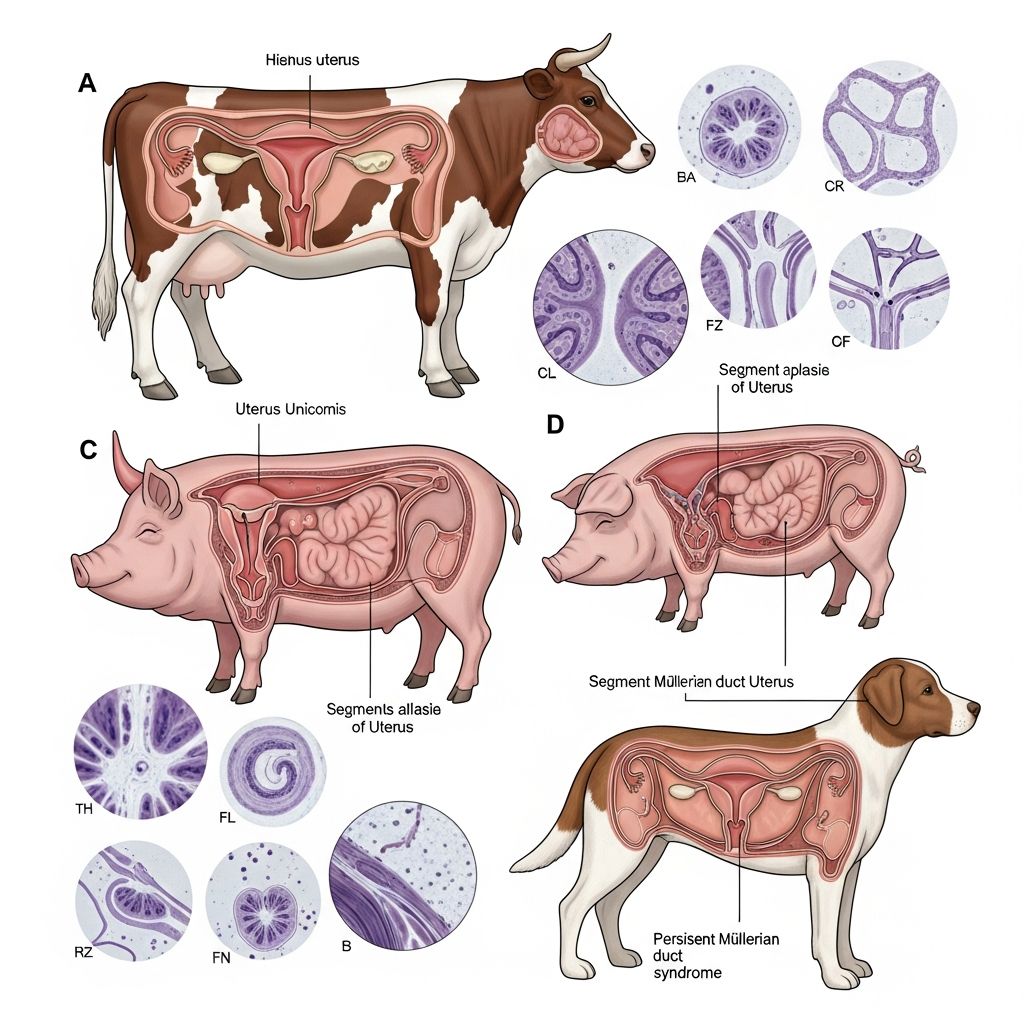
Congenital and inherited abnormalities in the female reproductive tract represent a significant challenge in veterinary practice, affecting fertility, overall health, and breeding programs across species such as dogs, cats, cattle, sheep, and horses. These defects arise during embryonic development or through genetic transmission, leading to structural malformations that can impede normal reproductive functions like mating, conception, and parturition. Understanding these conditions is crucial for timely diagnosis and intervention, enabling breeders and veterinarians to mitigate economic losses and improve animal welfare.
Origins and Developmental Basis of Reproductive Defects
The female genital system forms from the Müllerian ducts during early embryogenesis, a process vulnerable to genetic mutations, teratogens, or chromosomal imbalances. In mammals, failure in duct fusion, regression, or differentiation results in anomalies ranging from complete absence to partial obstructions. For instance, segmental aplasia—where sections of the uterus or vagina fail to develop—often correlates with ipsilateral kidney absence, a phenomenon observed in up to 30% of affected cats. Genetic factors play a prominent role; certain breeds like Freisian cattle exhibit heritable uterine hypoplasia, underscoring the need for selective breeding strategies.
Environmental influences, including viral infections or nutritional deficiencies during gestation, can exacerbate these risks. Hormonal disruptions, such as excess estrogen exposure, may also contribute to persistent hymenal structures or vaginal septa. Across species, these anomalies manifest variably: dogs commonly present with vaginal partitions, while cattle show higher incidences of cervical malformations impacting artificial insemination success.
Common Structural Malformations Across Species
Diverse anomalies affect specific genital segments, with prevalence varying by animal type. Below is a comparative overview:
| Anomaly | Primary Species Affected | Key Features | Fertility Impact |
|---|---|---|---|
| Vaginal Septum | Dogs, Cats | Longitudinal or transverse membrane dividing vaginal canal | Obstructs mating, causes dystocia |
| Imperforate Hymen | Dogs, Horses | Impermeable membrane at vaginal vestibule | Leads to mucometra or pyometra |
| Uterine Aplasia/Hypoplasia | Cattle, Sheep | Absent or underdeveloped uterine horns | Infertility, unilateral development common |
| Cervical Defects | Cattle, Pigs | Double cervix or stenosis | Complicates calving, semen passage |
| Ovarian Dysgenesis | Dogs, Cats | Streak ovaries, lack of follicular development | Anestrus, hormonal imbalances |
In dogs, vaginal abnormalities like septae or persistent hymens are frequently congenital, presenting as barriers to copulation or fluid drainage. Cats exhibit uterine anomalies alongside renal agenesis, necessitating comprehensive abdominal evaluations. Ruminants, particularly cattle, suffer from Müllerian duct fusion failures, resulting in bifurcated reproductive tracts that challenge herd productivity.
Clinical Manifestations and Species-Specific Signs
- Dogs: Vulvar discharge, excessive licking, straining during urination/defecation, attraction to males despite infertility, or refusal to mate. Juvenile pups may show recessed vulvas predisposing to infections.
- Cats: Infertility post-mating, abdominal distension from fluid accumulation, or failure to cycle normally, often linked to renal issues.
- Cattle: Repeat breeders with normal estrus but no conception, post-partum uterine prolapse, or heifers failing to exhibit heat.
- Horses: Maiden mares with urine pooling due to vestibulovaginal stenosis, leading to endometritis and subfertility.
- Sheep and Pigs: Intersex conditions or segmental aplasia causing lambing difficulties or sows with extended returns to estrus.
Symptoms often intensify during estrus, when hormonal surges exacerbate structural incompatibilities, resulting in secondary complications like vaginitis or pyometra. Early detection through vigilant monitoring of breeding records is essential.
Diagnostic Approaches: From Examination to Imaging
Veterinary diagnosis begins with a detailed history and physical exam, focusing on reproductive history and palpation of external genitalia. In dogs, vaginoscopy reveals internal septa or strictures, while vaginography—injecting contrast for radiographs—outlines anatomical distortions like persistent hymens or fistulas. Ultrasonography detects fluid accumulations (hydrocolpos) or uterine remnants, critical for imperforate cases.
For cats and larger animals, abdominal ultrasound evaluates ovarian and renal status, given agenesis associations. Endometrial biopsies and cytology assess cycle stage and inflammation. Blood profiles rule out endocrine disorders, with karyotyping for suspected chromosomal anomalies. In cattle, hysteroscopy or laparoscopy confirms uterine segmental defects, guiding culling decisions.
Diagnostic Protocol Steps:
- Physical and gynecological exam
- Vaginal cytology and culture
- Vaginoscopy and digital palpation
- Contrast vaginography or urography
- Abdominal ultrasonography
- Biopsy or exploratory laparotomy if needed
Management Strategies and Surgical Interventions
Treatment hinges on breeding value and anomaly severity. Non-breeding animals often undergo ovariohysterectomy to eliminate estrus-related signs and prevent pyometra. For valuable breeders, targeted surgeries correct defects: vaginal septotomy removes partitions, hymenectomy opens imperforate membranes, and reconstructive procedures address aplasias.
Manual dilation suits mild strictures in dogs, repeated under anesthesia over sessions. Post-operative care includes antibiotics, anti-inflammatories, and Elizabethan collars to prevent self-trauma. In ruminants, cesarean sections manage dystocias from cervical anomalies, though recurrence risks persist. Hormonal therapies rarely resolve structural issues but aid secondary infections.
Prognosis varies: simple vaginal corrections yield high fertility restoration in dogs (80-90% success), while complex uterine defects in cattle often necessitate culling. Genetic counseling for heritable conditions prevents propagation.
Inherited Risks and Breeding Implications
Many anomalies follow Mendelian inheritance, e.g., autosomal recessive uterine hypoplasia in cattle breeds. Breeders must employ genetic testing and pedigree analysis to identify carriers. In dogs, Brucella screening complements anomaly checks during infertility workups. International registries track incidence, promoting informed mating selections.
Emerging genomic tools like SNP arrays detect predispositions, revolutionizing prevention. Spaying complications, such as ovarian remnant syndrome, mimic congenital estrus persistence, resolved via exploratory surgery.
Preventive Measures and Future Directions
Pre-breeding exams, including vaginoscopy for bitches, mitigate surprises. Nutritional optimization and pathogen control during gestation reduce teratogenic risks. Advances in regenerative medicine, like tissue-engineered vaginas, promise novel treatments for severe aplasias.
Frequently Asked Questions (FAQs)
What causes congenital female genital anomalies in animals?
They stem from Müllerian duct maldevelopment, genetics, or environmental factors during embryogenesis.
Can dogs with vaginal septa still breed successfully?
Yes, after surgical correction via septotomy, fertility rates improve significantly.
Is renal agenesis always present with uterine defects in cats?
No, but it’s common (29.4% incidence), warranting kidney ultrasound.
How is imperforate hymen diagnosed in horses?
Via vaginography and ultrasound showing fluid buildup.
Should animals with these anomalies be culled?
Only if uncorrectable and non-valuable for breeding; surgery often restores function.
References
- Vaginal Abnormalities in Dogs — PetMD. Accessed 2026. https://www.petmd.com/dog/conditions/reproductive/c_dg_vaginal_abnormalities
- Reproductive Disorders of Female Dogs — MSD Veterinary Manual (MSDvetmanual.com). Accessed 2026. https://www.msdvetmanual.com/dog-owners/reproductive-disorders-of-dogs/reproductive-disorders-of-female-dogs
- Female Genital Tract — Veterian Key. Accessed 2026. https://veteriankey.com/female-genital-tract/
- Canine Reproductive Diseases and Abnormalities — dvm360. Accessed 2026. https://www.dvm360.com/view/canine-reproductive-diseases-and-abnormalities-proceedings
- Common Reproductive Disorders of Female Dogs — Carroll County Animal Hospital. 2023-03-23. https://www.carrollcountyah.com/site/blog/2023/03/23/reproductive-disorders-female-dogs
Similar Articles








Read full bio of Sneha Tete


