

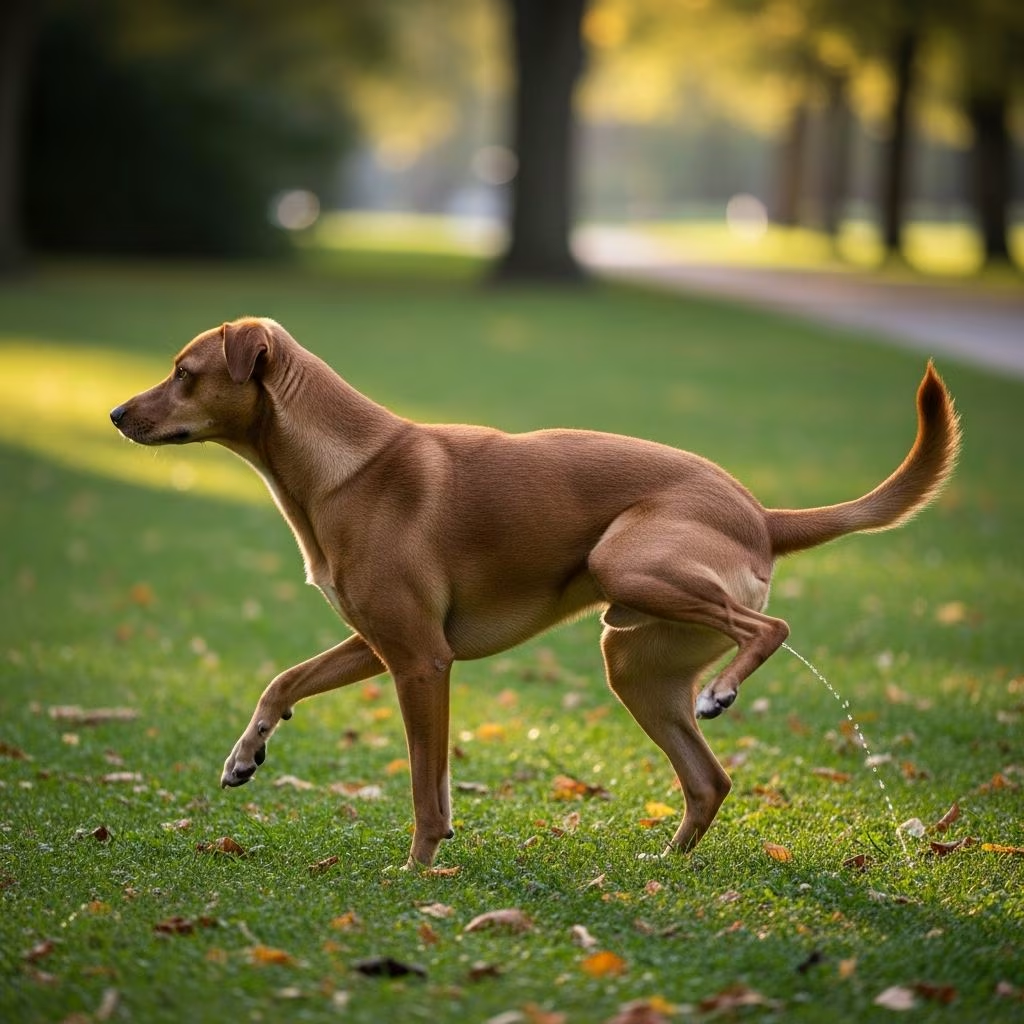
Many dog owners are puzzled when their female dog adopts a leg-lifting posture while urinating. Conventionally, people expect male dogs to lift their legs and female dogs to squat. When females deviate from this assumed norm, owners often wonder if something is wrong with their pet. However, female dogs lifting their legs to urinate is a natural behavior with multiple legitimate explanations, ranging from biological factors to environmental circumstances.
Understanding Canine Urination: Beyond Waste Elimination
To comprehend why female dogs sometimes lift their legs, it’s essential to understand that urination in dogs serves dual purposes. According to animal behaviorists, dogs don’t simply urinate to eliminate waste; they also use this process as a communication method. When a dog urinates, their urine deposits contain odor molecules that convey information about their presence, identity, and territorial claims to other animals in the vicinity.
This territorial marking behavior plays a crucial role in canine social structure. Dogs rely heavily on their olfactory senses to navigate and understand their environment. By depositing scent marks through urine, dogs effectively communicate messages about territory ownership, reproductive status, and individual identity. The higher the placement of urine, the more visible and detectable the message becomes to other dogs in the area.
The Biology Behind Leg-Lifting in Female Dogs
While male dogs are statistically more inclined to lift their legs during urination, research demonstrates that female dogs frequently employ this posture as well. The reasons vary, but they often relate to the dog’s size, hormonal status, and behavioral tendencies. Understanding these biological factors helps owners recognize that their female dog’s behavior is typically normal and adaptive.
Size and Physical Composition
One of the most significant factors influencing whether a female dog lifts her leg relates to her body size. Smaller female dogs are considerably more likely to adopt a leg-lifting posture compared to medium and large-sized females. This pattern makes intuitive sense: smaller dogs can more easily raise their legs, and the elevated position allows them to reach higher surfaces and project their scent more effectively. For diminutive breeds, lifting the leg may actually be easier and more comfortable than attempting to squat while maintaining balance.
Conversely, larger female dogs typically find squatting more practical and stable. The physical demands of lifting a heavier rear leg can be uncomfortable or unstable for big dogs, especially as they age. This size-related behavior illustrates how dogs adapt their urination postures to their individual anatomy and physical capabilities.
Hormonal Influences and Reproductive Cycles
Female dogs that have not been spayed may exhibit leg-lifting behavior during specific phases of their reproductive cycle. When a female dog enters heat, her body undergoes significant hormonal changes that can influence her behavior and urination posture. During this period, intact females sometimes lift their legs more deliberately as a signal to potential mates.
This behavioral change serves an evolutionary purpose. By adopting this more visible posture and depositing scent higher on surfaces, an in-heat female communicates her reproductive availability to male dogs. The elevated urine placement acts as a beacon, allowing males to detect her receptiveness from greater distances. It’s essentially a canine communication strategy optimized for reproductive success.
After spaying, many female dogs discontinue this behavior, though some spayed females continue lifting their legs indefinitely. This variation suggests that while hormonal factors contribute significantly to leg-lifting during heat cycles, they’re not the sole determinant of this posture choice.
Behavioral and Environmental Drivers
Beyond biological factors, environmental circumstances and behavioral motivations substantially influence how a female dog chooses to urinate. These elements often interact with each other, creating complex behavioral patterns that reflect each dog’s individual personality and experiences.
Territory Marking and Dominance Expression
Female dogs, like their male counterparts, possess an innate desire to establish and maintain territory. When a female dog lifts her leg to urinate, she’s frequently communicating territorial claims and establishing her presence in a particular area. Research examining female dog behavior away from home revealed compelling patterns: the farther a female dog traveled from her residence, the more frequently she urinated and the more deliberately she aimed her urine at objects and elevated surfaces.
This behavior indicates that female dogs engage in strategic marking when navigating unfamiliar territory or areas beyond their immediate home range. By lifting her leg and depositing scent higher on vertical surfaces, a female dog creates more noticeable markers that persist longer and communicate more effectively with other dogs passing through the area.
Stress Responses and Anxiety Management
Dogs sometimes modify their urination postures in response to stress and anxiety. Research conducted in shelter environments documented that dogs experiencing high-stress situations, such as recent adoption or environmental disruption, sometimes adopted different urination postures than their typical behavior. Some dogs resort to what researchers describe as a “lean posture” when experiencing heightened anxiety.
The connection between stress and urination posture suggests that dogs use behavioral flexibility to manage emotional discomfort. A female dog experiencing anxiety or territorial insecurity might adopt a leg-lifting posture as a psychological coping mechanism, essentially asserting control and presence in a stressful situation.
Comfort and Preference Variations
Beyond biological and environmental factors, individual comfort preferences play a role in urination posture selection. Some female dogs simply find the leg-lifting position more comfortable or more natural than squatting. This variation may relate to past experiences, learned behaviors, or inherent physical preferences.
Interestingly, not all female dogs maintain consistent urination postures. Many employ what researchers term a “squat-raise” position—essentially a hybrid between full squatting and complete leg-lifting. These flexible dogs adjust their posture depending on circumstances, sometimes squatting at home and lifting their leg when away from home. This behavioral adaptability demonstrates how sophisticated canine urination behaviors can be.
Health Considerations and Medical Concerns
While most leg-lifting behavior in female dogs is normal and behavioral, certain medical conditions can influence urination postures. Dog owners should remain vigilant about changes in their pet’s typical urination patterns, as these shifts sometimes indicate underlying health issues requiring veterinary attention.
Joint Pain and Mobility Issues
Older dogs or dogs suffering from arthritis and joint pain may alter their urination postures. An aging female dog with painful joints might transition from leg-lifting to squatting because lifting a rear leg becomes uncomfortable or painful. Similarly, a dog that traditionally squatted might shift to leg-lifting if crouching aggravates joint issues.
These postural changes serve as subtle indicators of discomfort, and observant owners can use them as early warning signs that their dog might benefit from veterinary evaluation or pain management strategies.
Urinary Tract Complications
Changes in urination patterns or postures can sometimes signal urinary tract infections, incontinence issues, or other urogenital problems. If a female dog suddenly begins lifting her leg when she previously squatted, or vice versa, consulting a veterinarian can help rule out medical complications.
Practical Considerations for Owners
Managing Wet Fur and Skin Irritation
One practical drawback to leg-lifting in female dogs involves urine contact with their own fur. Depending on a dog’s coat length and thickness, lifted-leg urination can result in urine dribbling onto the dog’s leg or body. For long-haired breeds, this moisture can accumulate beneath the coat, potentially causing skin irritation or odor problems.
Owners of long-haired female dogs that lift their legs may need to increase grooming frequency or gently rinse the affected areas after outdoor bathroom breaks. This simple hygiene measure prevents urine from lingering on the skin and causing irritation.
Behavioral Modifications and Training
If a female dog’s leg-lifting behavior becomes problematic—particularly if it involves indoor urine marking—owners can work with trainers or veterinary behaviorists to encourage alternative postures. However, it’s important to recognize that this behavior is often perfectly normal and may not warrant modification unless it’s creating specific problems.
When to Seek Veterinary Guidance
Dog owners should contact their veterinarian if:
- A female dog suddenly changes her established urination posture
- Urination patterns become significantly more frequent or less frequent
- The dog displays signs of pain, difficulty, or straining during urination
- New urination behaviors occur indoors when the dog was previously housetrained
- The behavior occurs alongside other behavioral or physical changes
Individual Variation and Canine Personality
Like humans, dogs exhibit individual preferences and personality traits that influence their behavior. Some female dogs are naturally more territorial and dominant in disposition, making leg-lifting a preferred expression of their personality. Others are more submissive or anxious, and their urination behaviors reflect these temperament differences.
Additionally, some female dogs demonstrate what researchers call “ambilateral” or “ambidextrous” behavior, meaning they flexibly lift either their right or left rear leg interchangeably. This adaptability suggests that canine urination behaviors involve learned preferences and behavioral flexibility, not purely instinctive responses.
Common Questions About Female Dogs and Leg-Lifting
Is it abnormal for female dogs to lift their legs?
No, leg-lifting in female dogs is completely normal. While statistically less common than in males, many female dogs naturally adopt this posture for various legitimate reasons.
Does spaying stop leg-lifting behavior?
Spaying often reduces leg-lifting, particularly if the behavior was hormonal in nature. However, some spayed females continue this behavior indefinitely, suggesting that other factors maintain the behavior independent of reproductive hormones.
Should I try to prevent my female dog from lifting her leg?
Unless the behavior is creating specific problems (such as indoor marking or hygiene issues), there’s generally no need to prevent it. It’s a natural expression of your dog’s individuality and communication style.
What does it mean if my female dog recently started lifting her leg?
This could reflect new confidence, territorial reassessment, hormonal changes, or environmental stress responses. Monitor the behavior and consult your veterinarian if it concerns you or accompanies other changes.
References
- Why Do Dogs Lift Their Legs to Pee? — American Kennel Club. Accessed 2026. https://www.akc.org/expert-advice/advice/why-do-dogs-lift-their-legs-to-pee/
- Why Do Dogs Lift Their Leg to Pee? — PetMD. Accessed 2026. https://www.petmd.com/dog/behavior/why-do-dogs-lift-their-leg-pee
- 12 Dog Peeing Positions and What They Mean — PetMD. Accessed 2026. https://www.petmd.com/dog/general-health/dog-peeing-positions-and-what-they-mean



